
A single, high-pitched beep in the dead of night—especially at exactly 3 a.m.—is enough to jolt anyone awake. You're not imagining things; this is a common experience for homeowners across the country. The mystery isn't supernatural, but scientific. Smoke detectors are designed to alert you to danger, but when they chirp repeatedly at the same time each night, it's usually not because of smoke. Instead, it's a signal from your device trying to communicate an issue—most often related to power, temperature, or battery life.
Understanding why this happens—and how to resolve it for good—is essential for both peace of mind and home safety. This guide breaks down the science behind late-night chirping, identifies the root causes, and provides permanent fixes so you can sleep soundly without being startled by that all-too-familiar beep.
The Science Behind 3 a.m. Chirping
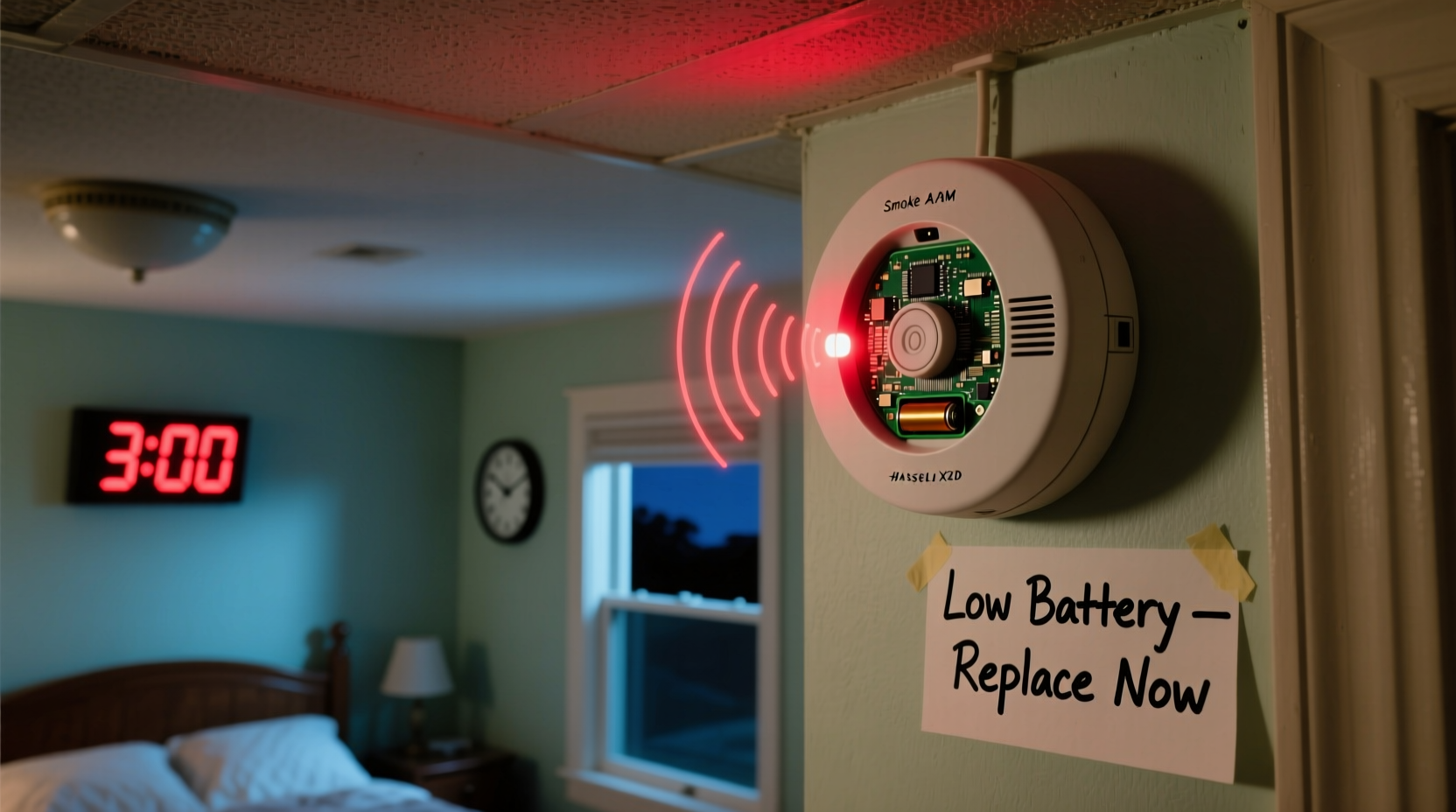
It may seem like your smoke detector has a vendetta against early morning sleep, but the timing isn’t random. Most chirping incidents occur between 2 a.m. and 4 a.m., with 3 a.m. being a frequent offender. The reason lies in how temperature affects battery performance—particularly in lithium and alkaline batteries used in most residential detectors.
As ambient temperatures drop during the night, especially in homes without consistent heating, the internal resistance of older or weak batteries increases. This causes a temporary voltage drop. The smoke alarm interprets this dip as a low-power condition and triggers the chirp to warn of potential failure. Once the room warms slightly—often just a few degrees—the voltage stabilizes, and the alarm stops… until the next cold cycle.
“Low battery chirps are more likely to occur in the early morning hours due to thermal contraction in aging batteries. It’s not a glitch—it’s physics.” — Dr. Alan Reeves, Electrical Safety Engineer, National Fire Protection Association (NFPA)
This phenomenon is especially common in battery-only units mounted on ceilings, where cold air sinks and creates micro-climates. Hardwired units with battery backups are also susceptible if the backup battery is nearing end-of-life.
Common Causes of Nighttime Chirping
While temperature-related battery issues are the top culprit, several other factors can cause your smoke detector to chirp at 3 a.m. Identifying the exact cause is key to fixing it permanently.
- Low battery: The most frequent reason. As batteries weaken, voltage fluctuates more easily under temperature changes.
- Dust or debris: Accumulated particles inside the sensor chamber can interfere with electrical signals, triggering false alerts.
- End-of-life warning: Most smoke detectors last 8–10 years. After that, internal components degrade, and chirping may signal replacement is needed.
- Interference from nearby electronics: Fluorescent lights, transformers, or Wi-Fi routers can emit electromagnetic noise that some older models misinterpret as a fault.
- Humidity fluctuations: In bathrooms or kitchens near bedrooms, overnight condensation can affect circuitry.
Step-by-Step Guide to Permanent Fixes
Replacing the battery temporarily silences the chirp, but doesn’t guarantee it won’t return. For a lasting solution, follow this systematic approach:
- Confirm the source: Stand quietly at night and listen. Is it one unit or multiple? Label each detector in your home (e.g., “Kitchen,” “Upstairs Hall”) to track patterns.
- Replace the battery with a fresh one: Use a high-quality alkaline or lithium battery (lithium performs better in cold). Even if the old battery tests “good” with a multimeter, replace it—voltage under load matters more than idle readings.
- Clean the detector: Remove the unit from its mount. Use compressed air to blow out dust from vents and sensors. Avoid vacuuming, which can generate static and damage sensitive components.
- Check the manufacture date: Flip the detector over. If it was made more than 8 years ago, it’s time to replace the entire unit. Sensors degrade over time, even if the chirp seems battery-related.
- Test after installation: Press the test button for 5 seconds. You should hear a loud alarm. Release and confirm it stops. Wait 24 hours to see if chirping returns.
- Upgrade to sealed long-life models: Consider replacing standard units with 10-year sealed battery alarms. These eliminate battery changes and reduce end-of-life surprises.
For Hardwired Detectors
If your detector is connected to household wiring, don’t overlook the backup battery. Even with constant power, the backup must function during outages. Follow the same steps above—but also:
- Turn off power at the breaker before removing the unit.
- Inspect wiring connections for looseness or corrosion.
- Ensure all interconnected units are from the same manufacturer and generation—mixing models can cause communication errors.
Do’s and Don’ts: Smoke Detector Maintenance Table
| Do’s | Don’ts |
|---|---|
| Replace batteries annually, even if no chirp occurs | Use rechargeable batteries—they have lower voltage and may not trigger proper alerts |
| Vacuum around vents every 6 months | Paint over or cover the detector—this blocks airflow and sensors |
| Test alarms monthly using the test button | Ignore chirps—even occasional beeping indicates a problem |
| Replace the entire unit every 10 years | Delay replacement based on appearance—a clean-looking unit can still be faulty |
| Install carbon monoxide combo units in sleeping areas | Mount detectors near windows, fans, or vents where airflow disrupts sensing |
Real-Life Example: The Case of the Persistent Beep
Sarah M., a homeowner in upstate New York, began hearing her hallway smoke alarm chirp every night at 3:07 a.m. She replaced the battery twice, cleaned the unit, and even moved it to another location—all to no avail. Frustrated, she contacted a licensed electrician who discovered two issues: first, the detector was manufactured in 2011—well past its service life. Second, the ceiling attic space above had poor insulation, causing dramatic overnight cooling. The combination triggered voltage instability in the backup battery.
The solution? Sarah replaced all three detectors in her home with 10-year sealed lithium models. She also added insulation above the ceiling to stabilize temperature. Since then, not a single chirp has occurred—even during sub-zero winter nights.
When to Replace vs. When to Repair
Not every chirping detector needs replacement—but knowing when to retire a unit is critical for safety. Here’s how to decide:
If your detector is less than 8 years old and chirps intermittently, start with troubleshooting: new battery, cleaning, reset. Most modern alarms have a “silence” button that suppresses nuisance alerts for up to 10 minutes—use this to verify if the environment (like cooking steam) is the trigger.
However, if any of these apply, replacement is non-negotiable:
- Manufacture date is over 10 years ago
- Chirping persists after battery change and cleaning
- The unit fails the test button check
- You smell burning plastic or notice discoloration on the casing
Sealed long-life models, such as those from First Alert, Kidde, or Nest, now dominate the market for good reason. They include built-in diagnostics and end-of-life notifications (a distinct chirp pattern: three beeps followed by silence, repeating hourly), making maintenance simpler and safer.
Preventative Maintenance Checklist
To avoid waking up to a chirp ever again, adopt this annual routine:
- ✅ Replace batteries in spring and fall (with daylight saving time changes)
- ✅ Test each detector monthly
- ✅ Clean units with compressed air every 6 months
- ✅ Record manufacture dates and set calendar reminders for 10-year replacements
- ✅ Ensure all alarms are interconnected—so one trigger activates all
- ✅ Verify placement: one on every level, inside each bedroom, and outside sleeping areas
Frequently Asked Questions
Why does my smoke detector chirp only at night?
Nighttime temperature drops affect weak batteries more dramatically. Cooler air increases internal resistance, causing voltage to dip below the threshold the alarm recognizes as “sufficient.” The chirp stops as temperatures rise in the morning.
Can I disable the chirp without fixing the cause?
You can remove the battery or disconnect hardwired units, but doing so disables life-saving protection. Temporary silencing is allowed during battery replacement, but never leave a detector inactive overnight.
Is a chirping smoke detector dangerous?
The chirp itself isn’t dangerous, but it indicates a compromised system. A failing battery or aging sensor could mean the alarm won’t activate during a real fire. Address the cause immediately.
Conclusion: Silence the Chirp, Secure Your Home
That 3 a.m. chirp is more than an annoyance—it’s a warning sign your home’s first line of defense may be faltering. While the immediate fix might seem as simple as swapping a battery, true safety comes from understanding the underlying causes and taking proactive measures. From monitoring temperature effects to replacing decade-old units, every action strengthens your household’s protection.
Don’t wait for a fire to test your detector’s reliability. Take inventory of your alarms today. Upgrade outdated models, establish a maintenance schedule, and put an end to midnight beeping for good. Your future self—awake, calm, and safe—will thank you.




 浙公网安备
33010002000092号
浙公网安备
33010002000092号 浙B2-20120091-4
Comments
No comments yet. Why don't you start the discussion?