
Smoothies are a go-to for quick nutrition, whether as a breakfast replacement, post-workout boost, or afternoon pick-me-up. But nothing ruins the experience faster than picking up your glass only to find a watery layer on top and a thick sludge at the bottom. Separation isn’t just unappealing—it can make your smoothie feel less satisfying and diminish its intended texture and flavor balance. The good news: this common issue is both understandable and fixable.
Understanding why smoothies separate—and how to prevent it—starts with knowing the science behind emulsions, ingredient density, and blending technique. With the right approach, you can enjoy a consistently creamy, well-blended drink every time.
The Science Behind Smoothie Separation
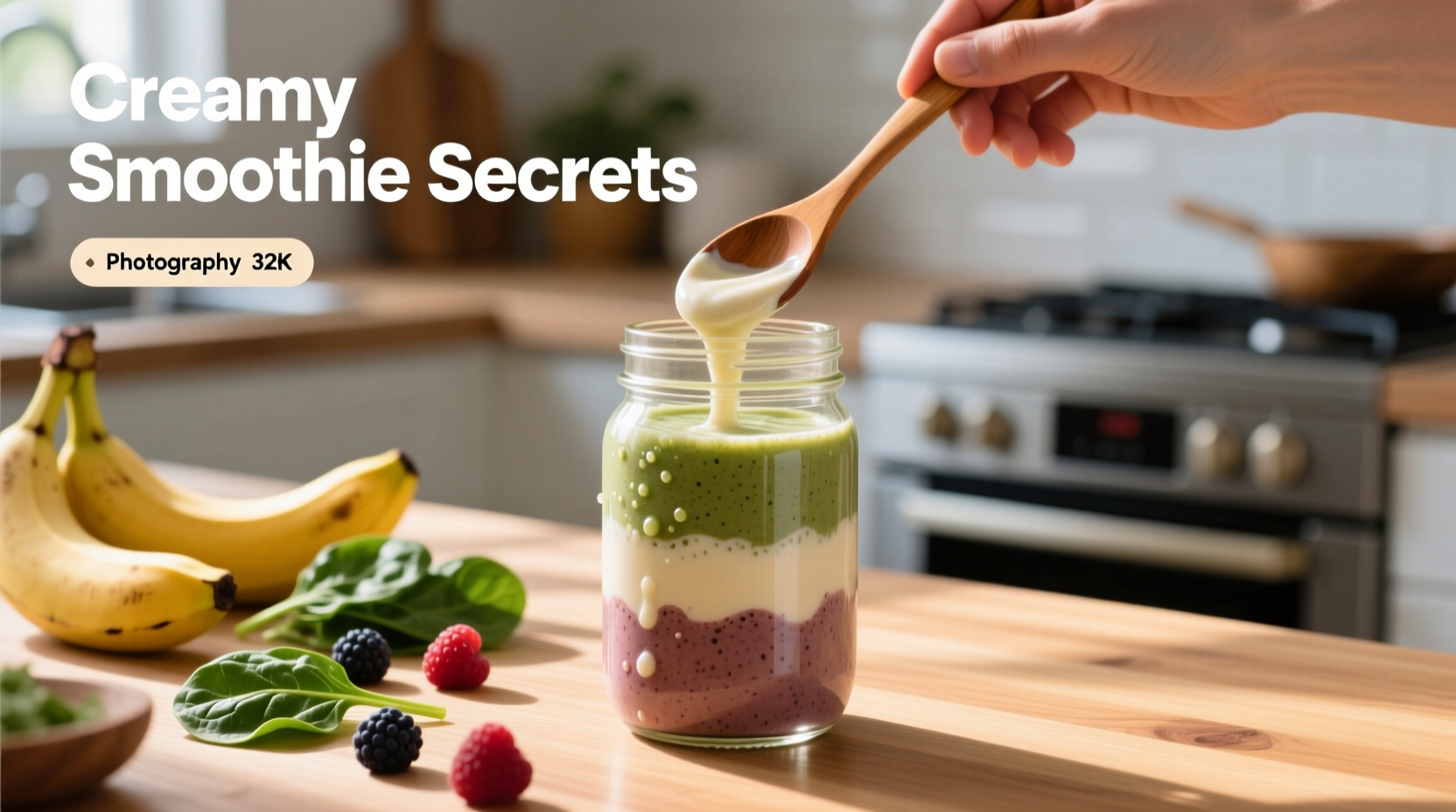
Smoothie separation occurs due to differences in the density and solubility of ingredients. When liquids, solids, and fats are blended together, they don’t always form a stable mixture. Over time, gravity pulls heavier components—like fruit pulp, protein powder, or nut butter—downward, while lighter liquids such as water, juice, or plant-based milk rise to the top.
This process, known as sedimentation, is natural but avoidable. It’s similar to what happens when oil and vinegar are mixed in a salad dressing: without an emulsifier, they eventually split. In smoothies, the lack of proper binding agents or incorrect blending order can accelerate this separation.
Temperature also plays a role. Cold ingredients slow molecular movement, which may delay separation temporarily, but once the smoothie warms slightly—either from room temperature or body heat—the layers begin to drift apart more quickly.
“Smoothie stability depends on ingredient compatibility and mechanical dispersion. A high-powered blender alone isn’t enough—you need the right ratios and emulsifiers.” — Dr. Lena Torres, Food Scientist & Nutritional Formulation Specialist
Key Factors That Cause Smoothie Separation
- Density mismatch: Ingredients like frozen fruit or oats are heavier than liquids and tend to sink.
- Lack of emulsifiers: Without natural binders (e.g., banana, avocado, flaxseed), oils and liquids don’t stay suspended.
- Over-dilution: Too much liquid relative to solids reduces viscosity, making separation more likely.
- Poor blending order: Adding ingredients in the wrong sequence prevents uniform mixing.
- Using low-quality blenders: Weak motors or dull blades fail to break down fibers thoroughly, leaving clumps that settle quickly.
How to Keep Your Smoothie Creamy: 7 Proven Strategies
1. Use Natural Thickeners and Emulsifiers
Incorporate ingredients that naturally stabilize mixtures. These not only enhance creaminess but also act as emulsifying agents to bind fats and liquids.
- Bananas: Their pectin and starch content create a smooth, gel-like consistency.
- Avocado: High in healthy fats and fiber, it adds richness and helps suspend particles.
- Chia or flax seeds: When soaked, they form a mucilaginous gel that stabilizes texture.
- Nut butters: Peanut, almond, or cashew butter contain natural oils that integrate well when properly blended.
2. Balance Your Liquid-to-Solid Ratio
A common mistake is adding too much liquid upfront. Aim for a ratio of roughly 2:1—two parts solid (fruits, veggies, ice) to one part liquid. Adjust based on desired thickness.
| Texture Preference | Solids | Liquids | Recommended Ratio |
|---|---|---|---|
| Thick & Spoonable | 1.5 cups frozen fruit + ½ cup oats | ¾ cup almond milk | 3:1.5 |
| Drinkable & Balanced | 1 cup fruit + 1 handful spinach | 1 cup coconut water | 2:1 |
| Light & Refreshing | 1 cup melon + cucumber | 1.25 cups water | 1:1.25 |
3. Layer Ingredients Properly Before Blending
The order in which you add ingredients affects blending efficiency. Follow this sequence for optimal results:
- Liquids (milk, juice, water)
- Soft ingredients (yogurt, nut butter, honey)
- Frozen items (fruit, ice cubes)
- Dense additions (spinach, kale, oats, protein powder)
This method allows the liquid to cushion the impact of heavy items and ensures even distribution during blending.
4. Blend Long Enough—and in Stages
Many people stop blending too soon. For a truly homogeneous texture, blend for at least 45–60 seconds, pausing to scrape down the sides if needed. If using fibrous greens like kale or celery, blend greens with liquid first before adding other ingredients.
5. Add a Touch of Fat or Protein
Fats and proteins contribute to mouthfeel and stability. They slow down particle movement and increase viscosity. Consider including:
- Plain Greek yogurt or plant-based alternatives
- Collagen peptides or whey protein
- Coconut cream or full-fat coconut milk
- Tahini or sunflower seed butter (for nut-free options)
6. Avoid Overloading with Watery Fruits
Fruits like watermelon, oranges, and strawberries have high water content. While nutritious, they dilute smoothies quickly. If using them, balance with thicker ingredients like banana, mango, or avocado.
7. Store and Transport Correctly
If you're preparing smoothies ahead of time, minimize separation by storing them properly:
- Use an airtight container filled to the brim to reduce air exposure.
- Keep refrigerated and consume within 12–24 hours.
- Shake or stir vigorously before drinking—never rely on standing alone.
“Pre-made smoothies will always separate slightly. The key is minimizing it through formulation and encouraging reintegration before consumption.” — Chef Rafael Nguyen, Plant-Based Culinary Instructor
Step-by-Step Guide to a Non-Separating Smoothie
Follow this routine every time for consistent, creamy results:
- Gather ingredients: Choose a base liquid, 1–2 fruits, leafy greens, a thickener, and optional protein/fat.
- Add liquid first: Pour ¾ to 1 cup of milk, water, or juice into the blender.
- Add soft components: Include yogurt, honey, or nut butter.
- Add frozen and dense items: Place frozen fruit, ice, or oats on top.
- Top with greens or powders: Add spinach, protein powder, or chia seeds last.
- Blend in stages: Pulse 3–5 times, then blend continuously for 45–60 seconds.
- Check consistency: It should pour slowly and coat the back of a spoon.
- Adjust if needed: Add more liquid to thin or more solids to thicken.
- Immediate consumption or storage: Drink right away or store in a sealed jar for later.
Real-Life Example: From Soggy to Silky
Jamie, a fitness instructor, used to prepare her morning smoothie the night before. She’d combine spinach, banana, protein powder, almond milk, and ice, blend it quickly, and refrigerate it. Every morning, she’d find a layer of green gunk at the bottom and watery liquid on top—forcing her to stir aggressively with inconsistent results.
After learning about ingredient layering and emulsification, she adjusted her recipe: she started adding chia seeds soaked in almond milk for 10 minutes before blending, used frozen banana chunks instead of fresh, reduced the liquid by ¼ cup, and blended for a full minute. She also switched to a mason jar with minimal headspace and shook it before drinking.
The result? Her smoothie stayed uniformly creamy for over 10 hours. “It’s like night and day,” she said. “Now I actually look forward to my morning shake instead of dreading the sludge at the bottom.”
Do’s and Don’ts of Smoothie Stability
| Do’s | Don’ts |
|---|---|
| Add a natural thickener like banana or avocado | Use only watery fruits like orange and cucumber without balancing ingredients |
| Layer liquids first, then soft, frozen, and dry ingredients | Throw everything in randomly and expect even blending |
| Blend for at least 45 seconds | Stop blending as soon as the mixture starts moving |
| Store in a tightly sealed container with little air | Leave half-empty space in the container overnight |
| Shake or stir before drinking pre-made smoothies | Assume a separated smoothie is ruined and discard it |
FAQ: Common Questions About Smoothie Separation
Does separation mean my smoothie has gone bad?
No. Separation is a physical change, not a sign of spoilage. As long as the smoothie has been stored properly (refrigerated, consumed within 24 hours), it’s safe to drink after shaking or stirring.
Can I use a food processor instead of a blender?
Blenders are generally better for smoothies because they create a vortex that pulls ingredients downward. Food processors often leave chunks and don’t achieve the same level of emulsification. If using one, blend longer and consider straining for ultra-smooth results.
Why do restaurant smoothies stay mixed longer?
Commercial kitchens often use high-speed blenders (like Vitamix or Blendtec) and include stabilizers such as xanthan gum or avocado. They also serve immediately, minimizing time for separation to occur.
Final Checklist for Creamy, Stable Smoothies
- ✅ Use at least one natural thickener (banana, avocado, chia seeds)
- ✅ Maintain a 2:1 ratio of solids to liquids
- ✅ Layer ingredients correctly in the blender
- ✅ Blend for 45–60 seconds for full integration
- ✅ Include a source of fat or protein for stability
- ✅ Store in an airtight container with minimal headspace
- ✅ Shake or stir before drinking if stored
Enjoy Every Sip—From First to Last
A perfectly blended smoothie shouldn’t require a second chance. With attention to ingredient selection, blending technique, and storage, you can eliminate separation and enjoy a consistently creamy texture that tastes as good as it looks. The effort is minimal, but the payoff—both in satisfaction and nutrition—is significant.




 浙公网安备
33010002000092号
浙公网安备
33010002000092号 浙B2-20120091-4
Comments
No comments yet. Why don't you start the discussion?