
Smoothies are a go-to for quick nutrition, but nothing ruins the experience faster than watching your drink split into layers seconds after blending. One moment you have a creamy, uniform blend; the next, a pool of liquid at the bottom with pulp floating on top. This isn’t just unappetizing—it can mean uneven nutrient distribution and a disappointing texture. The good news: separation is preventable. With the right ingredients, techniques, and blender settings, you can create smoothies that stay cohesive from first sip to last. Let’s break down the science behind the split and reveal the most effective blender hacks to fix it.
The Science Behind Smoothie Separation
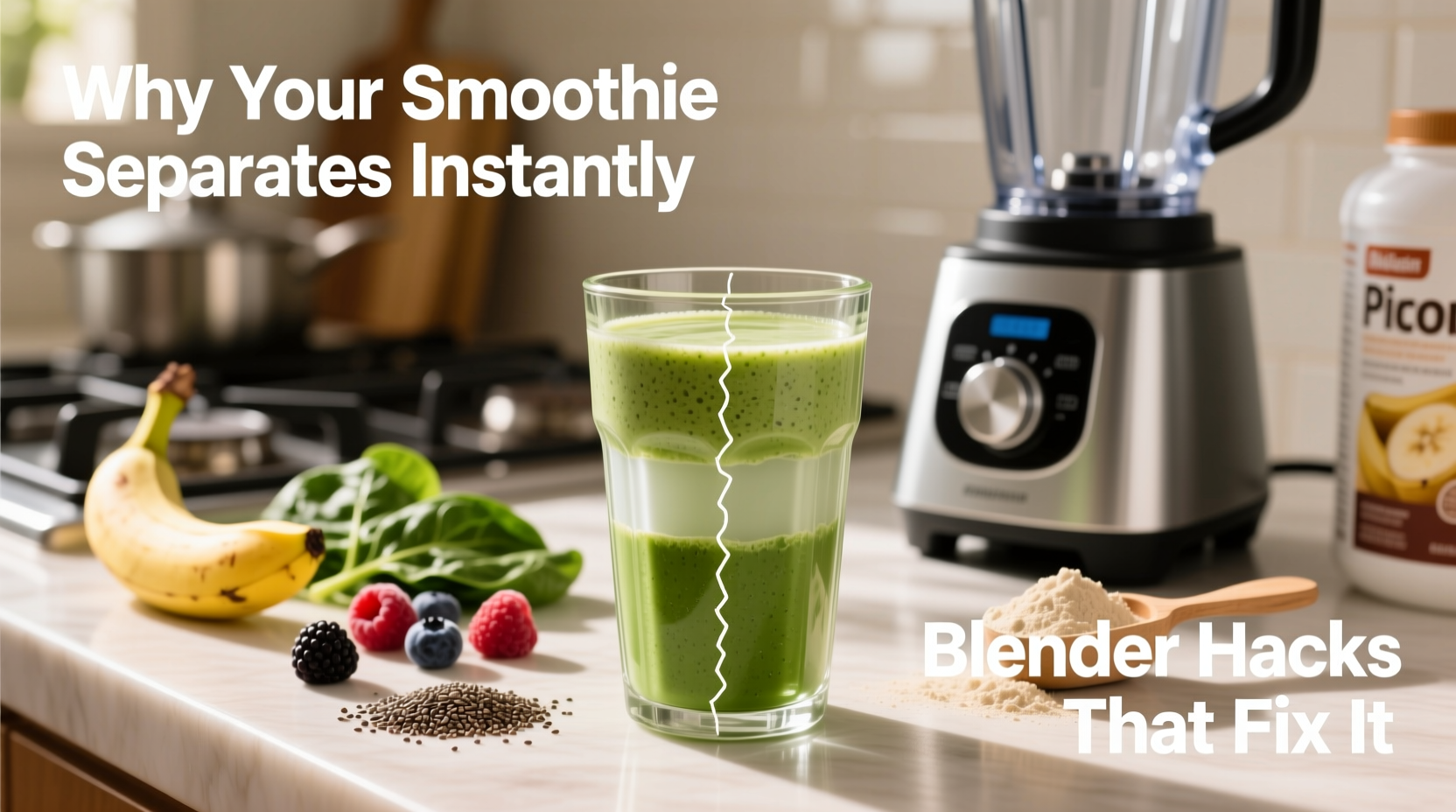
Smoothie separation occurs due to differences in density, viscosity, and emulsification between ingredients. When components don’t bind properly, gravity pulls heavier solids downward while lighter liquids rise. This process—known as sedimentation and creaming—is natural in heterogeneous mixtures. But in a well-blended smoothie, these forces should be minimized through proper emulsification and ingredient balance.
Fruits, vegetables, and liquids vary widely in water content and fiber structure. For example, spinach releases water when blended, while banana adds thickness. If not balanced correctly, the mixture lacks structural integrity. Additionally, oils from nut butters or seeds can float to the top if not fully incorporated, creating an oily layer. Temperature also plays a role: cold ingredients thicken the blend temporarily, but as the smoothie warms, separation accelerates.
“Emulsification is key. A high-powered blender creates enough shear force to suspend particles evenly, but ingredient order and ratios matter just as much.” — Dr. Lena Torres, Food Scientist & Nutritional Formulation Specialist
5 Blender Hacks That Prevent Instant Separation
Fixing separation starts with how you use your blender—not just which model you own. Even mid-range blenders can produce stable blends when used correctly. These five professional-tested hacks address the root causes of separation and deliver consistently smooth results.
1. Layer Ingredients in the Right Order
How you load your blender affects blending efficiency. Liquids at the bottom help the blades catch and circulate ingredients. If you toss in frozen fruit first, the blades may spin beneath them without making contact, leading to uneven blending and poor suspension.
Optimal layering order:
- Liquid base (water, milk, juice)
- Soft fruits or yogurt
- Leafy greens
- Frozen fruit, ice, or protein powder
- Dense add-ins (nuts, seeds, nut butter)
This sequence ensures the blades pull everything downward into the vortex, maximizing contact and minimizing air pockets that contribute to instability.
2. Use a Thickening Agent Strategically
Natural thickeners increase viscosity, helping to suspend particles and slow separation. Unlike artificial stabilizers, these ingredients add nutritional value while improving texture.
- Banana: High in pectin and starch, bananas act as a natural binder.
- Chia or flax seeds: When hydrated, they form a gel-like matrix that traps liquid.
- Oats: Add body and slow settling without altering flavor significantly.
- Avocado: Creamy fat content improves mouthfeel and emulsion stability.
Use one thickener per smoothie to avoid over-densifying. A quarter avocado or one tablespoon of chia seeds soaked in liquid for 10 minutes before blending makes a dramatic difference.
3. Blend in Stages for Maximum Emulsification
Instead of dumping everything in and hitting “blend,” use a staged approach. Start with liquids and soft ingredients, blend briefly, then gradually add denser components. This allows the blender to build momentum and incorporate each new layer smoothly.
Step-by-step blending method:
- Add liquid and soft fruits. Blend for 10–15 seconds until smooth.
- Add leafy greens. Blend another 10 seconds.
- Add frozen ingredients and powders. Blend on high for 30–45 seconds, using the tamper to push ingredients down.
- Pause and scrape sides if needed. Resume blending for final 10 seconds.
This technique prevents ingredient stratification during blending and ensures even particle size, which is critical for suspension.
4. Choose the Right Liquid Base
Not all liquids behave the same in a smoothie. Water-based options like coconut water or plain water offer little resistance to separation. Dairy and plant milks contain proteins and fats that support emulsion, while kefir and yogurt introduce lactic acid and live cultures that enhance stability.
| Liquid Type | Separation Risk | Stability Benefit |
|---|---|---|
| Water / Coconut Water | High | None |
| Almond Milk | Moderate | Low fat, some emulsifiers |
| Oat Milk | Low-Moderate | Natural beta-glucans thicken slightly |
| Dairy Milk | Low | Proteins and fats stabilize emulsion |
| Greek Yogurt (as partial liquid) | Very Low | High protein, acidic pH enhances binding |
For best results, combine a liquid base with a scoop of Greek yogurt or silken tofu. The protein content helps form a network that holds the mixture together.
5. Pulse and Pause to Eliminate Air Pockets
Over-blending introduces excess air, creating foam that destabilizes the smoothie. Air bubbles rise quickly, carrying fine particles with them and accelerating separation. Instead of running the blender continuously, use short pulses with pauses in between.
Pulsing also gives you better control over texture. Overly long blending can break down fiber too much, releasing trapped water and weakening structure.
Real Example: From Separated Mess to Perfect Blend
Sarah, a busy nurse working 12-hour shifts, relied on smoothies for breakfast but grew frustrated when her drink separated within minutes. Her typical recipe: 1 cup almond milk, 1 banana, handful of spinach, frozen berries, and a scoop of protein powder. She’d blend it all at once in a standard countertop blender and pour it into a travel bottle—only to find a pink liquid layer at the bottom by the time she reached work.
After applying the layered loading method and replacing half the almond milk with Greek yogurt, she noticed immediate improvement. She also started soaking chia seeds in the liquid for 10 minutes before blending. The result? A smoothie that stayed uniform for over two hours—even at room temperature. “I finally get the nutrition I need without the sludge at the bottom,” she said.
Checklist: How to Prevent Smoothie Separation
Follow this pre-blend checklist to ensure a stable, delicious smoothie every time:
- ✅ Use a liquid base with some fat or protein (e.g., milk, yogurt, kefir)
- ✅ Add ingredients in the correct order: liquids first, frozen last
- ✅ Include one natural thickener (banana, chia, oats, avocado)
- ✅ Soak chia or flax seeds for 10 minutes before blending
- ✅ Blend in stages: soft ingredients first, frozen later
- ✅ Use the tamper to push ingredients into the blade zone
- ✅ Avoid over-blending; pulse instead of continuous run
- ✅ Stir or shake gently before drinking if slight separation occurs
Frequently Asked Questions
Why does my smoothie separate even with a high-powered blender?
Even powerful blenders can’t compensate for poor ingredient balance or incorrect loading. Separation often stems from insufficient emulsifiers, excessive water content, or lack of viscosity-building ingredients. The blender can only work with what you give it—structure starts in the recipe, not the motor.
Can I fix a separated smoothie after it happens?
Yes. Simply stir or shake vigorously. If separation is severe, pour it back into the blender and pulse for 10 seconds. Adding a spoonful of yogurt or a few soaked chia seeds and re-blending can restore consistency.
Does freezing my smoothie prevent separation?
Freezing halts separation temporarily, but upon thawing, the smoothie may separate more dramatically due to ice crystal formation breaking down cell walls and releasing water. For best texture, consume immediately or store in a sealed container for up to 24 hours in the fridge, shaking before drinking.
Final Tips for Long-Lasting Smoothies
Consistency isn’t just about taste—it’s about trust in your routine. When your smoothie holds together, you’re more likely to stick with healthy habits. Beyond the technical fixes, consider these finishing touches:
- Use room-temperature liquids when possible. Cold ingredients reduce blending efficiency and can lead to chunky textures that settle faster.
- Avoid overloading the blender. Fill no more than ¾ full to allow proper circulation.
- Invest in a blender with a narrow, tapered jar. Wider jars create dead zones where ingredients don’t circulate, leading to incomplete blending.
- Drink within 30–60 minutes for optimal texture and nutrient retention, especially if greens are included.
“The perfect smoothie isn’t just nutritious—it’s engineered for stability. Small tweaks in prep can make a huge difference in performance.” — Marcus Reed, Culinary Nutritionist & Blender Technology Consultant
Conclusion: Blend Smart, Drink Confidently
Your smoothie shouldn’t fall apart before you do. Instant separation is a solvable problem, not an inevitable flaw. By understanding the physics of blending and applying these practical hacks—from ingredient layering to smart thickener use—you gain control over texture and longevity. Whether you’re rushing to work, packing a post-workout refuel, or simply enjoying a quiet morning moment, a well-made smoothie should stay smooth from start to finish.




 浙公网安备
33010002000092号
浙公网安备
33010002000092号 浙B2-20120091-4
Comments
No comments yet. Why don't you start the discussion?