
If you’ve ever poured a freshly blended smoothie into a glass only to return minutes later to a puddle of liquid with fruit pulp at the top, you’re not alone. Smoothie separation is one of the most common frustrations among health enthusiasts, meal preppers, and busy parents alike. While a little settling is normal, rapid layering—where liquid pools at the bottom and solids float or clump on top—can ruin texture, flavor distribution, and even nutritional balance. The good news: this isn’t random. It’s physics, chemistry, and ingredient ratios at play—and all of it can be controlled.
Understanding why smoothies separate—and how to prevent it—starts with knowing what happens inside your blender. When ingredients are blended, they form a temporary emulsion or suspension. But without the right structure, that mixture breaks down quickly. This article dives into the science behind separation, identifies key culprits, and delivers tested blending hacks to keep your smoothies unified from first sip to last.
The Science Behind Smoothie Separation
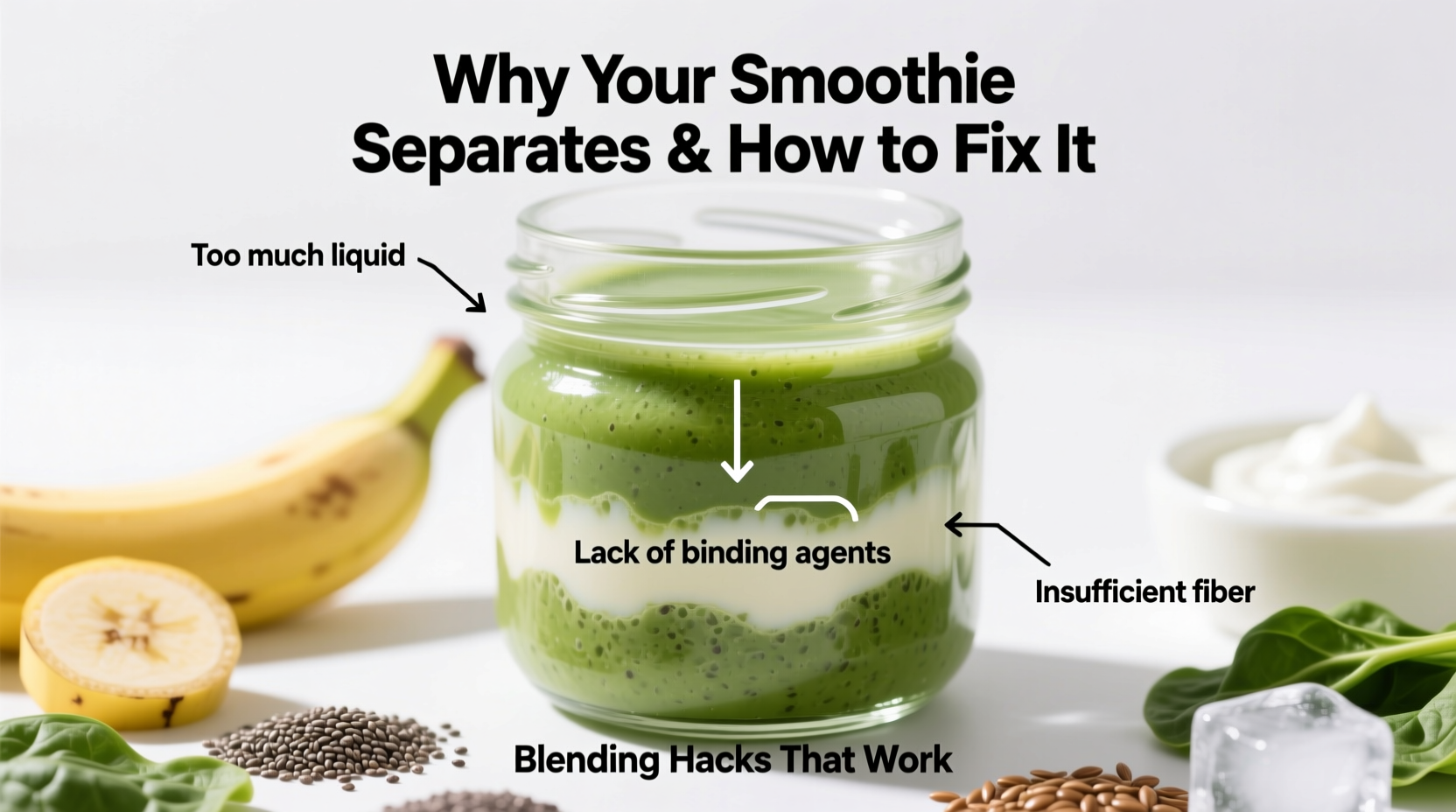
Smoothie separation occurs when components of different densities fail to stay uniformly mixed after blending. Liquids like water, juice, or milk settle at the bottom due to their low viscosity and high density, while lighter ingredients such as banana chunks, oats, or foam rise to the top. This process, known as sedimentation or phase separation, is accelerated by gravity and temperature changes.
In technical terms, a smoothie is a colloidal suspension—a mix where solid particles are dispersed in a liquid but not fully dissolved. Unlike true solutions (like salt in water), suspensions are unstable over time. Without stabilizers or proper blending mechanics, they naturally separate.
The rate of separation depends on several factors:
- Density differences between ingredients
- Particle size—finer blends resist separation better
- Viscosity of the base liquid
- Presence of emulsifiers or thickeners
- Blending duration and power
High-speed blenders reduce particle size more effectively, creating smoother textures and more stable suspensions. However, even powerful machines can’t compensate for poor ingredient combinations or incorrect layering techniques.
Common Causes of Fast Separation (And How to Fix Them)
Not all smoothies are created equal. Some separate within minutes, others hold together for hours. The difference lies in formulation and method. Below are the top reasons your smoothie might be splitting—and exactly how to correct them.
1. Too Much Liquid or Low-Viscosity Bases
Using large amounts of water, coconut water, or skim milk dilutes the smoothie’s body, reducing its ability to suspend solids. Thin liquids offer less resistance to gravity, allowing heavier particles to sink and lighter ones to float.
Solution: Replace up to half your liquid with thicker bases like Greek yogurt, kefir, silken tofu, or avocado. These add creaminess and natural emulsifying properties.
2. Skipping Natural Thickeners
Fiber-rich and gel-forming ingredients act as stabilizers. Oats, chia seeds, flaxseeds, and psyllium husk absorb liquid and form gels that trap particles, slowing separation.
Solution: Add 1 tablespoon of chia or flaxseed per serving. Let the smoothie sit for 5–10 minutes post-blend; the seeds will swell and create internal structure.
3. Improper Ingredient Layering
Putting heavy items like frozen fruit at the top of the blender jar prevents them from being pulled into the vortex. This leads to uneven blending and larger chunks that rise or sink rapidly.
Solution: Follow the correct layering order: liquids first, then soft ingredients, followed by powders, and finally frozen or dense items on top. This allows the blades to draw everything downward efficiently.
4. Under-Blending or Using a Weak Blender
Short blending cycles leave large particles intact. These don’t integrate well and accelerate separation. Blenders under 600 watts often struggle with fibrous greens or frozen ingredients.
Solution: Blend for at least 45 seconds on high. Use the “pulse and blend” method: pulse five times to break large pieces, then blend continuously.
5. Temperature Shock
Adding very cold ingredients (like ice or frozen fruit) to room-temperature liquids causes rapid contraction and expansion at the molecular level, destabilizing the emulsion.
Solution: Let frozen ingredients thaw slightly before blending, or use chilled (not icy) liquids to minimize thermal contrast.
“Emulsion stability in plant-based beverages relies on particle size reduction and the inclusion of hydrocolloids—ingredients like chia or oats that mimic gums.” — Dr. Lena Torres, Food Scientist, Institute of Functional Foods
Proven Blending Hacks to Prevent Separation
With the root causes identified, here are actionable techniques backed by kitchen testing and food science to keep your smoothies cohesive.
1. Use the Right Ratio of Solids to Liquids
A balanced ratio is essential. Too much liquid = fast separation. Too little = unblendable sludge. A general rule: use 1 cup of liquid for every 1.5 cups of solids (fruits, veggies, protein).
| Smoothie Type | Liquid Amount | Solids Amount | Stability Time |
|---|---|---|---|
| Fruit-Based | 1 cup | 1.5 cups fruit + 1/4 cup oats | Up to 2 hours |
| Green Detox | 3/4 cup | 1 cup greens + 1/2 cup fruit + 1 tbsp chia | 1.5 hours |
| Protein Power | 1 cup milk/yogurt | 1 scoop protein + 1 banana + 1 tbsp nut butter | 3+ hours |
2. Incorporate Emulsifiers and Binders
Natural emulsifiers help bind oil and water molecules, improving texture and stability. Common kitchen-friendly options include:
- Nut butters (peanut, almond, cashew): contain lecithin, a natural emulsifier
- Avocado: high in healthy fats and fiber, adds creaminess
- Yogurt or kefir: proteins and lactic acid help stabilize mixtures
- Tahini: sesame paste with strong binding properties
3. Pre-Soak Chia or Flaxseeds
Chia seeds can absorb up to 12 times their weight in water, forming a viscous gel. Adding dry seeds limits their effectiveness.
Step-by-step:
- Measure 1 tbsp chia or ground flaxseed.
- Mix with 3 tbsp of your smoothie liquid.
- Let sit for 10 minutes until gel forms.
- Add to blender with other ingredients.
4. Blend in Stages for Maximum Homogeneity
Instead of tossing everything in at once, use a staged approach:
- Blend liquids and soft ingredients (yogurt, banana, nut butter) for 20 seconds.
- Add powders (protein, greens, spices) and blend 10 seconds to avoid dust clouds.
- Add frozen fruit or ice last and blend 30–45 seconds until completely smooth.
5. Use Ice Strategically—or Skip It Altogether
Ice dilutes your smoothie as it melts and increases separation risk. For coldness without wateriness:
- Freeze banana slices, berries, or cauliflower florets instead of using ice.
- Use chilled coconut milk or refrigerated juice as your base.
- If using ice, limit to 1/4 cup and blend thoroughly.
Real-World Example: From Separating Disaster to Stable Success
Sarah, a fitness coach in Portland, struggled with her morning green smoothie separating before she finished her commute. Her original recipe:
- 1.5 cups almond milk
- 1 cup spinach
- 1 banana
- 1/2 cup frozen mango
- 1 scoop vanilla protein powder
Within 15 minutes, the almond milk pooled at the bottom, leaving a thick mat of spinach and banana on top. After consulting a nutritionist, she adjusted her formula:
- Reduced almond milk to 1 cup
- Added 1/4 cup plain Greek yogurt
- Pre-soaked 1 tbsp chia seeds in 3 tbsp almond milk
- Layered ingredients correctly and blended 60 seconds
Result: the smoothie stayed uniform for over two hours—even in her car cup holder. She now preps three days’ worth in mason jars, shaking lightly before drinking. “It’s not just about looks,” she says. “Now I get consistent nutrition in every sip.”
Essential Smoothie Stability Checklist
Before you hit blend, run through this checklist to maximize cohesion:
- ✅ Use a 1:1.5 ratio of liquid to solids
- ✅ Include at least one thickener (oats, chia, avocado, yogurt)
- ✅ Pre-soak chia or flaxseeds for 10 minutes
- ✅ Layer ingredients properly: liquids first, frozen last
- ✅ Blend on high for at least 45 seconds
- ✅ Avoid excess ice—use frozen fruit instead
- ✅ Store in a sealed container and shake before drinking
Frequently Asked Questions
Can I make smoothies the night before without separation?
Yes, but only if you include stabilizers like chia seeds, oats, or nut butter. Store in an airtight jar, leave minimal headspace, and refrigerate. Shake vigorously before drinking. Most well-balanced smoothies last 24 hours with minimal separation.
Why do protein smoothies separate less than fruit-only ones?
Protein powders, especially whey and casein, contain emulsifying agents that improve suspension. Combined with thicker bases like milk or yogurt, they create a denser, more stable matrix. Plant-based proteins (pea, hemp) also help but may require added thickeners for best results.
Does blending longer really make a difference?
Absolutely. Extended blending (45–60 seconds) breaks down fibers into smaller particles, increasing surface area and improving integration. High-powered blenders like Vitamix or Blendtec can homogenize mixtures to near-colloid levels, drastically slowing separation.
Final Tips for Long-Lasting, Creamy Smoothies
Smoothie separation isn’t inevitable—it’s a solvable problem rooted in ingredient choices and technique. By understanding the role of viscosity, emulsification, and blending dynamics, you gain control over texture and stability. The goal isn’t perfection, but consistency: a smoothie that stays drinkable, flavorful, and nutritious from start to finish.
Start small. Pick one hack—like pre-soaking chia seeds or adjusting your liquid ratio—and test it for three days. Track results. Then layer in another improvement. Over time, you’ll develop a personalized method that fits your taste, schedule, and equipment.
Remember: a great smoothie isn’t just about nutrition. It’s about experience—the first creamy sip should feel satisfying, not watery or chunky. With these blending hacks, you’re not just fixing separation; you’re upgrading your entire routine.




 浙公网安备
33010002000092号
浙公网安备
33010002000092号 浙B2-20120091-4
Comments
No comments yet. Why don't you start the discussion?