
Solar-powered Christmas lights are an eco-friendly, cost-effective way to decorate your home during the holiday season. They eliminate the need for electrical outlets, reduce energy bills, and often come with automatic sensors that turn them on at dusk. But many users notice a frustrating issue: their solar Christmas lights don’t seem to work—or barely glow—after several cloudy days. This isn't a defect. It’s physics.
The core of the problem lies in how solar panels convert sunlight into usable electricity. While modern solar technology has improved significantly, it still relies heavily on direct sunlight for optimal performance. Understanding this limitation is key to managing expectations and finding better solutions when weather conditions interfere.
How Solar Lights Work: The Science Behind the Glow
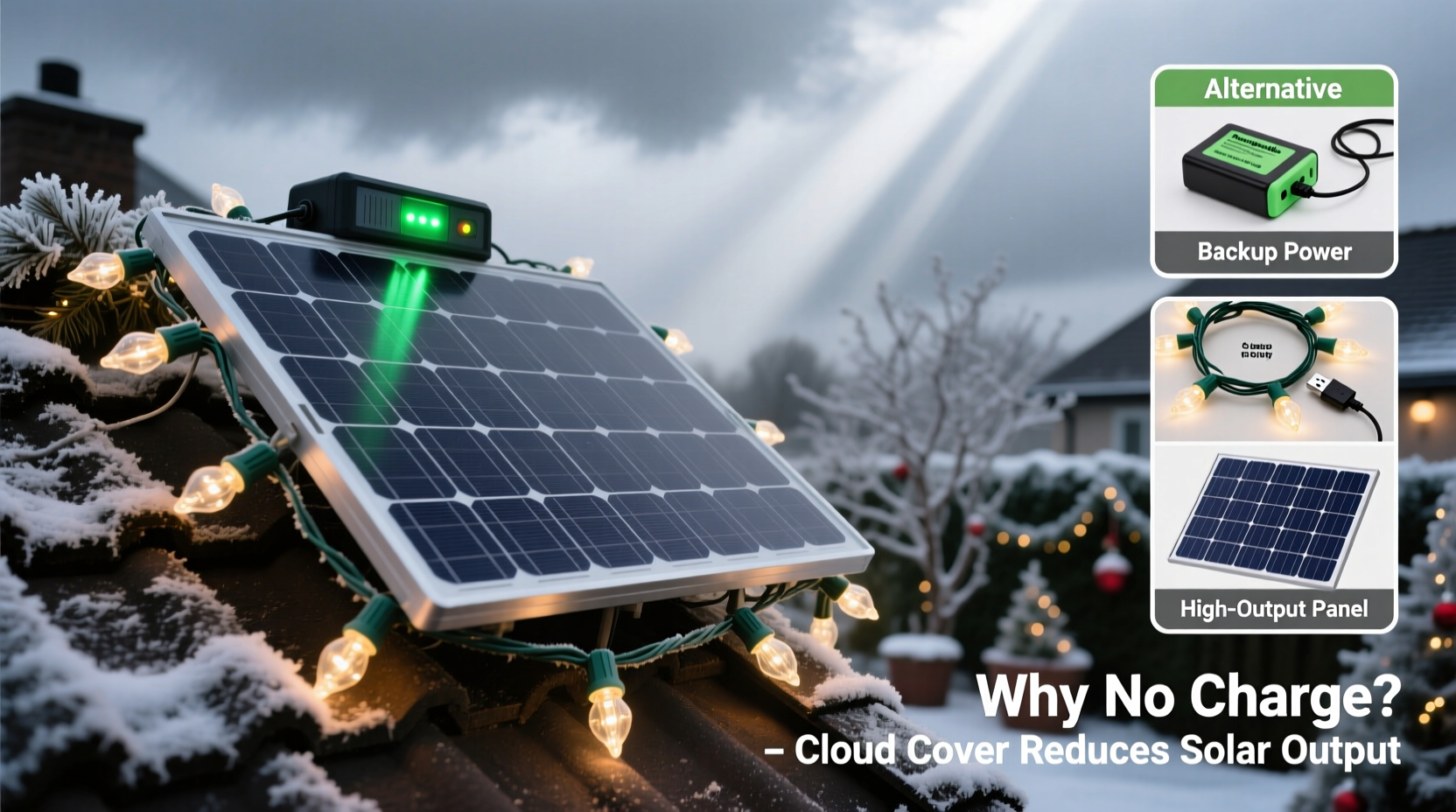
Solar Christmas lights operate using three main components: a photovoltaic (PV) solar panel, a rechargeable battery, and LED bulbs. During daylight hours, the solar panel absorbs sunlight and converts it into electrical energy. This energy charges the internal battery, which then powers the LEDs at night.
The efficiency of this process depends on the intensity and duration of sunlight exposure. Bright, direct sunlight provides the highest photon density, enabling rapid charging. On cloudy days, however, sunlight is diffused. Cloud cover can reduce solar irradiance by 50% to 90%, depending on thickness and cloud type. As a result, the solar panel receives far less energy, leading to incomplete or failed charging cycles.
Additionally, most solar Christmas lights use small, low-capacity batteries—typically NiMH or lithium-ion—designed to last only one night on a full charge. If the battery doesn’t receive sufficient charge due to overcast conditions, the lights will either flicker weakly or fail to turn on entirely.
“Solar lighting systems are inherently weather-dependent. Even partial cloud cover can drastically reduce energy harvest, especially in winter months when daylight hours are already short.” — Dr. Alan Reeves, Renewable Energy Systems Engineer
Why Cloudy Days Disrupt Charging: Key Factors
Several interrelated factors explain why solar Christmas lights underperform during prolonged cloudy periods:
- Reduced Light Intensity: Clouds scatter and absorb sunlight, reducing the amount of usable light that reaches the solar panel.
- Shorter Daylight Hours: In winter, daylight lasts fewer hours, giving the panel less time to collect energy—even on clear days.
- Poor Panel Orientation: Many users mount solar lights on north-facing walls or shaded areas, further limiting exposure.
- Dirt and Snow Cover: Accumulated debris on the panel surface blocks light absorption, compounding the issue.
- Battery Degradation: Rechargeable batteries lose capacity over time, especially after multiple seasonal uses.
Together, these elements create a perfect storm where insufficient charging leads to disappointing nighttime performance.
Alternatives to Pure Solar Lighting
If you live in a region with frequent winter cloud cover or simply want more reliable holiday lighting, consider these proven alternatives:
1. Hybrid Solar-Electric Lights
These lights combine solar charging with a backup power option—usually a USB port or standard plug-in adapter. When sunlight is inadequate, you can switch to grid power without removing the lights. This flexibility ensures consistent brightness regardless of weather.
2. Battery-Powered LED Lights (Non-Rechargeable)
High-quality alkaline or lithium battery-powered lights offer long runtimes and stable output. While they require periodic battery replacement, they provide predictable performance. Opt for models with timers and remote controls for convenience.
3. Plug-In LED String Lights
Traditional electric string lights remain the most reliable option. Modern LED versions consume minimal electricity, are durable, and come in a wide range of styles. Use outdoor-rated extension cords and GFCI-protected outlets for safety.
4. Smart Holiday Lights
Wi-Fi-enabled smart lights connect to your home network and can be controlled via smartphone apps or voice assistants. Some models include scheduling, color customization, and music synchronization. While they require a power source, their advanced features justify the trade-off for many users.
5. Indoor Solar Simulation Chargers
A lesser-known workaround is to remove the solar panel from the light set and place it near a bright indoor window or under a grow light during overcast days. While less efficient than direct sun, this method can maintain partial charge when outdoor conditions are poor.
| Light Type | Weather Resilience | Energy Source | Lifespan | Best For |
|---|---|---|---|---|
| Solar-Only | Low | Sunlight | 2–3 seasons | Sunny climates, temporary displays |
| Hybrid Solar-Electric | High | Solar + USB/Plug-in | 3–5 seasons | Variable weather regions |
| Battery-Powered | Medium | Disposable batteries | 1 season (battery life) | Remote locations, renters |
| Plug-In LED | Very High | Electrical outlet | 5+ seasons | Permanent or elaborate displays |
| Smart Lights | Very High | Plug-in + Wi-Fi | 4+ seasons | Tech-savvy decorators |
Step-by-Step Guide: Maximizing Solar Light Performance
Before abandoning solar lights altogether, try optimizing their setup. Follow this timeline to improve charging efficiency even in suboptimal conditions:
- Week 1 – Assess Placement: Position the solar panel where it receives maximum sunlight between 10 a.m. and 3 p.m., avoiding shadows from trees, roofs, or walls.
- Day 7 – Clean the Panel: Wipe the surface gently with a microfiber cloth and water. Remove any frost, leaves, or bird droppings.
- Day 10 – Test Charge Manually: On a sunny day, let the lights charge fully, then cover the sensor to simulate darkness. Verify the LEDs reach full brightness and last through the night.
- During Cloudy Periods – Rotate Panels (if possible): If your model allows panel detachment, move it temporarily to a sunnier spot like a south-facing windowsill.
- End of Season – Store Properly: Remove batteries, clean all components, and store in a dry, temperature-stable location. This extends lifespan and preserves next-year performance.
Mini Case Study: A Seattle Homeowner’s Solution
Jamie L., a homeowner in Seattle—a city known for its overcast winters—installed solar Christmas lights around her porch railing each December. For two years, she was disappointed: lights dimmed by mid-evening or didn’t turn on after two consecutive gray days.
In her third year, she switched to hybrid solar-electric string lights. She kept the solar panel mounted outside but added a micro-USB cable that ran discreetly into her living room. On days with heavy cloud cover, she connected the lights to a wall charger for 4–6 hours. The result? Consistent, bright illumination every night, whether sunny or stormy.
“It’s a small effort,” Jamie said, “but it means I don’t have to take down the lights just because of bad weather. I get the eco-benefit when it works, and a reliable backup when it doesn’t.”
Checklist: Choosing the Right Holiday Lights for Your Climate
- ✅ Evaluate your local winter weather patterns (average sunshine hours, cloud frequency)
- ✅ Check if lights have a dual-power option (solar + USB/plug-in)
- ✅ Ensure the solar panel is detachable and can be repositioned
- ✅ Look for high-lumen LED output (80+ lumens per string)
- ✅ Confirm waterproof rating (IP44 or higher for outdoor use)
- ✅ Consider timer functions to extend runtime
- ✅ Read customer reviews focusing on performance in cloudy conditions
Frequently Asked Questions
Can solar Christmas lights charge through glass?
No, not effectively. Standard window glass blocks up to 30% of UV and infrared light needed for optimal solar charging. Tinted or double-paned glass reduces it further. Placing the panel indoors behind glass will result in very slow or no charging.
Do solar lights work in winter at all?
Yes—but with limitations. They work best on clear, cold days when sunlight is strong and reflection off snow can boost panel input. However, short days and frequent clouds in many regions make consistent operation unlikely without supplemental charging.
How long do solar Christmas light batteries last?
Most built-in batteries last 2–3 holiday seasons before degrading significantly. Exposure to extreme temperatures and repeated deep discharges accelerate wear. Replacing the battery (if accessible) can restore performance.
Conclusion: Balance Sustainability with Reliability
Solar Christmas lights are a step toward greener holiday traditions, but they’re not foolproof—especially in cloudy climates. Their dependence on sunlight makes them vulnerable to winter weather, and expecting flawless performance during overcast stretches sets you up for disappointment.
The solution isn’t to abandon solar technology, but to use it wisely. Combine it with flexible alternatives like hybrid systems or keep traditional lights as a backup. By understanding the limitations and planning accordingly, you can enjoy beautiful, sustainable decorations without sacrificing reliability.




 浙公网安备
33010002000092号
浙公网安备
33010002000092号 浙B2-20120091-4
Comments
No comments yet. Why don't you start the discussion?