
Sourdough bread is a triumph of patience, precision, and fermentation. When it rises beautifully in the oven—crackling open with an artisanal ear and golden crust—it feels like culinary alchemy. But when it collapses after scoring, deflating like a punctured balloon, the disappointment is real. This issue isn’t rare, even among experienced bakers. The good news? Most causes are preventable with proper technique, attention to detail, and understanding of dough behavior. This guide breaks down the science behind oven collapse, focusing on scoring and proofing errors, and delivers actionable fixes to help you achieve consistent, lofty loaves.
The Science Behind Oven Spring and Collapse
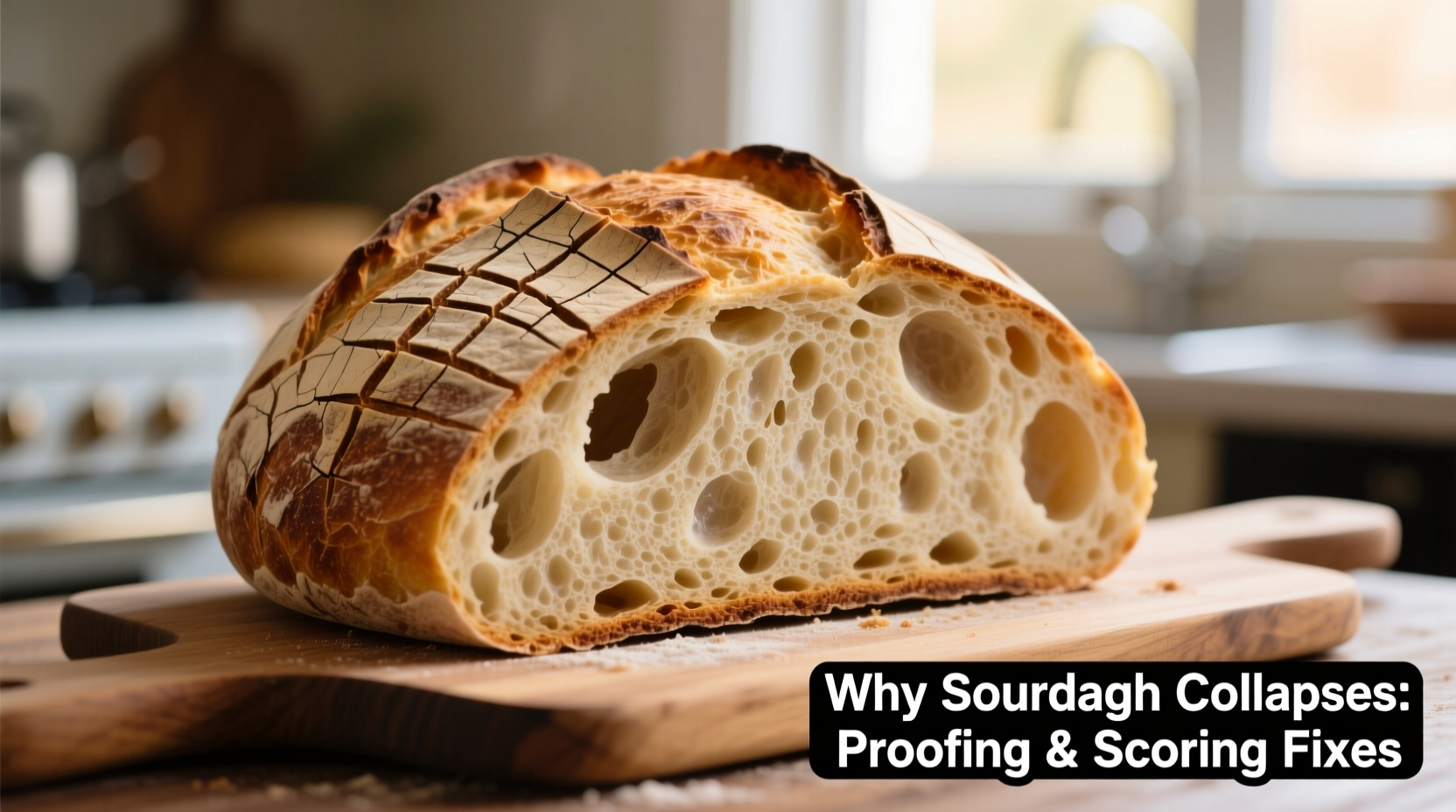
Oven spring—the rapid rise of dough in the first 15–20 minutes of baking—is what gives sourdough its open crumb and dramatic shape. It occurs as trapped carbon dioxide expands from heat and steam softens the dough surface, allowing it to stretch. However, if the gluten structure is weak, overproofed, or improperly scored, the dough can’t contain this expansion and collapses.
Collapse typically happens either immediately after scoring or within the first few minutes in the oven. While many assume scoring is just decorative, it plays a critical role in directing expansion. A poorly executed score can rupture the surface tension that holds gas inside, causing immediate deflation. Similarly, incorrect proofing—either under or over—compromises the dough’s ability to support itself during this volatile phase.
“Scoring isn’t just about looks—it’s structural engineering for your loaf.” — Daniel Leader, author of *Local Breads*
Common Causes of Sourdough Collapse After Scoring
When your dough sags or flattens right after slashing, the problem usually lies in one or more of these areas:
- Overproofing: Dough left to rise too long loses elasticity and gas retention. The gluten network weakens, making it unable to rebound after being cut.
- Underdeveloped Gluten: Insufficient kneading or folding results in poor structure. Even if the dough looks puffy, it lacks the internal strength to hold gas.
- Dull Scoring Blade: A blunt lame or knife drags through the dough instead of slicing cleanly, tearing gluten strands and causing uneven pressure release.
- Incorrect Scoring Angle or Depth: Too shallow or too deep cuts fail to control expansion, leading to blowouts or collapse.
- Handling Damage: Rough transfer from banneton to peel or aggressive scoring can deflate delicate, fully proofed dough.
Fixing Proofing Issues: The Foundation of Structure
Proofing is arguably the most crucial phase in preventing collapse. Many bakers focus on scoring technique but overlook how proofing affects dough integrity.
How to Tell If Your Dough Is Properly Proofed
Use the “fingerprint test” with care: gently press your fingertip about half an inch into the dough. If it springs back slowly and leaves a slight indentation, it’s ready. If it doesn’t spring back at all, it’s overproofed. If it springs back immediately, it needs more time.
Other signs of overproofing include:
- Dough that jiggles like jelly when nudged
- A strong alcoholic or fermented smell
- Surface cracks or sagging in the banneton
To avoid overproofing, consider these adjustments:
- Reduce bulk fermentation time: Especially in warm environments. Cooler temperatures slow fermentation and strengthen gluten.
- Refrigerate the final proof: Cold retardation in the fridge (8–16 hours) controls yeast activity and enhances flavor while preserving structure.
- Monitor ambient temperature: Ideal room temp for proofing is 74–78°F (23–26°C). Above that, fermentation accelerates rapidly.
Case Study: From Flat Loaf to Flawless Rise
Sarah, a home baker in Portland, struggled for months with collapsed boules. Her dough looked perfect at bedtime, but by morning—after an 18-hour room-temperature proof—it was soupy and collapsed when scored. She switched to retarding her shaped loaves in the refrigerator overnight. The cold slowed fermentation, preserved gas bubbles, and strengthened the gluten. On her next bake, she achieved a 2-inch oven spring and a clean, controlled bloom along her score line. The change wasn’t in her recipe—it was in her timing and temperature control.
Mastering the Score: Technique and Timing
Scoring serves two purposes: controlling expansion and creating aesthetic patterns. But if done incorrectly, it becomes the weakest point in your loaf’s structure.
Best Practices for Effective Scoring
| Factor | Do | Avoid |
|---|---|---|
| Blade Sharpness | Use a fresh razor or dedicated lame | Dull knives or serrated blades |
| Angle | 30–45° angle for optimal lift | Vertical cuts that dig too deep |
| Depth | 1/4 to 1/2 inch, depending on hydration | Too shallow (no expansion) or too deep (deflation) |
| Speed | One fast, fluid motion | Hesitant or repeated passes |
| Pattern | Single slash for batards, spiral or cross for boules | Overly complex designs that weaken structure |
The angle of the cut is especially important. A diagonal slash allows the top layer of dough to peel back like a lid, creating the classic “ear” while protecting the sides from bursting. Vertical cuts go straight into the gas pockets, increasing the risk of collapse.
Step-by-Step: How to Score Without Deflating
- Chill the dough: Remove the banneton from the fridge 10 minutes before baking to firm up the surface.
- Prepare your tool: Load a fresh blade onto your lame or hold a single-edge razor securely.
- Position the dough: Turn it out onto a well-floured peel or parchment with the seam side up (the smooth side down).
- Hold the blade at a 30–45° angle: Tilt it so the edge faces the direction you want the dough to open.
- Make one continuous cut: Use a swift, confident motion. Don’t press down—let the sharpness do the work.
- Transfer immediately: Slide the loaf into the preheated oven to minimize handling after scoring.
Hydration, Strength, and Dough Development
While scoring and proofing are critical, they can’t compensate for weak dough structure. A high hydration level (above 75%) increases stickiness and makes the dough harder to handle, but it also creates a more open crumb—when managed correctly.
To build strength:
- Perform 3–4 sets of coil folds during bulk fermentation, spaced 30 minutes apart.
- Allow adequate autolyse (resting flour and water for 30–60 minutes before adding starter and salt).
- Use a mix of strong bread flour and a small percentage of whole grain for better fermentation and flavor.
Dough that rips easily or can’t hold its shape in the banneton likely needs more development. Strengthening the gluten matrix ensures the dough can withstand scoring and expand evenly in the oven.
“The best sourdough isn’t the one with the fanciest score—it’s the one with the strongest fermentation and structure.” — Ken Forkish, *Flour Water Salt Yeast*
Frequently Asked Questions
Why does my sourdough deflate when I score it?
This usually indicates overproofing or a dull blade. Overproofed dough has weakened gluten and can’t retain gas when cut. A blunt tool tears rather than slices, damaging the structure. Ensure your dough passes the poke test and always use a sharp lame.
Can I rescue a collapsed loaf?
If the dough deflates slightly but still holds some shape, bake it anyway. It may not have great oven spring, but it will still taste good. For future batches, reduce proofing time or try cold fermentation. Avoid reshaping once deflated—it damages the remaining gas pockets.
Should I score my sourdough before or after baking?
Always score just before baking. Once baked, the crust forms instantly, and cutting then would damage the loaf without achieving the desired expansion. Scoring right before oven entry ensures the cut opens properly during oven spring.
Essential Checklist for Preventing Collapse
Follow this checklist before every bake to minimize the risk of collapse:
- ✅ Perform the fingerprint test to confirm proper proofing
- ✅ Use a razor-sharp scoring tool (replace blades regularly)
- ✅ Score at a 30–45° angle with one swift motion
- ✅ Retard dough in the fridge if ambient temperature is high
- ✅ Bake in a preheated Dutch oven or steam-injected oven
- ✅ Minimize handling after scoring—transfer directly to oven
- ✅ Ensure dough has undergone sufficient bulk fermentation with folds
Conclusion: From Collapse to Confidence
A collapsing sourdough loaf doesn’t mean failure—it means feedback. Each deflated batch teaches you more about your starter, environment, and technique. By refining your proofing times, mastering the art of the score, and building stronger dough, you’ll transform unpredictable results into consistent success. Remember, great sourdough isn’t about perfection on the first try; it’s about learning from each rise and fall.




 浙公网安备
33010002000092号
浙公网安备
33010002000092号 浙B2-20120091-4
Comments
No comments yet. Why don't you start the discussion?