
Sourdough bread is prized for its complex flavor, chewy texture, and natural fermentation process. But when that tang turns into an overpowering sourness—almost vinegary or sharp—it can ruin the experience. If you’ve ever taken a bite of your homemade loaf and thought, “This tastes like pickle juice,” you’re not alone. The culprit is often your sourdough starter, but the good news is that nearly every cause of excessive sourness can be corrected with a few adjustments.
Sourness in sourdough comes from lactic and acetic acids produced by wild yeast and bacteria during fermentation. While some acidity is desirable, imbalance leads to off-putting flavors. Understanding the science behind fermentation, feeding routines, temperature control, and baking timing gives you full control over your bread’s taste profile.
The Science Behind Sourdough Sourness
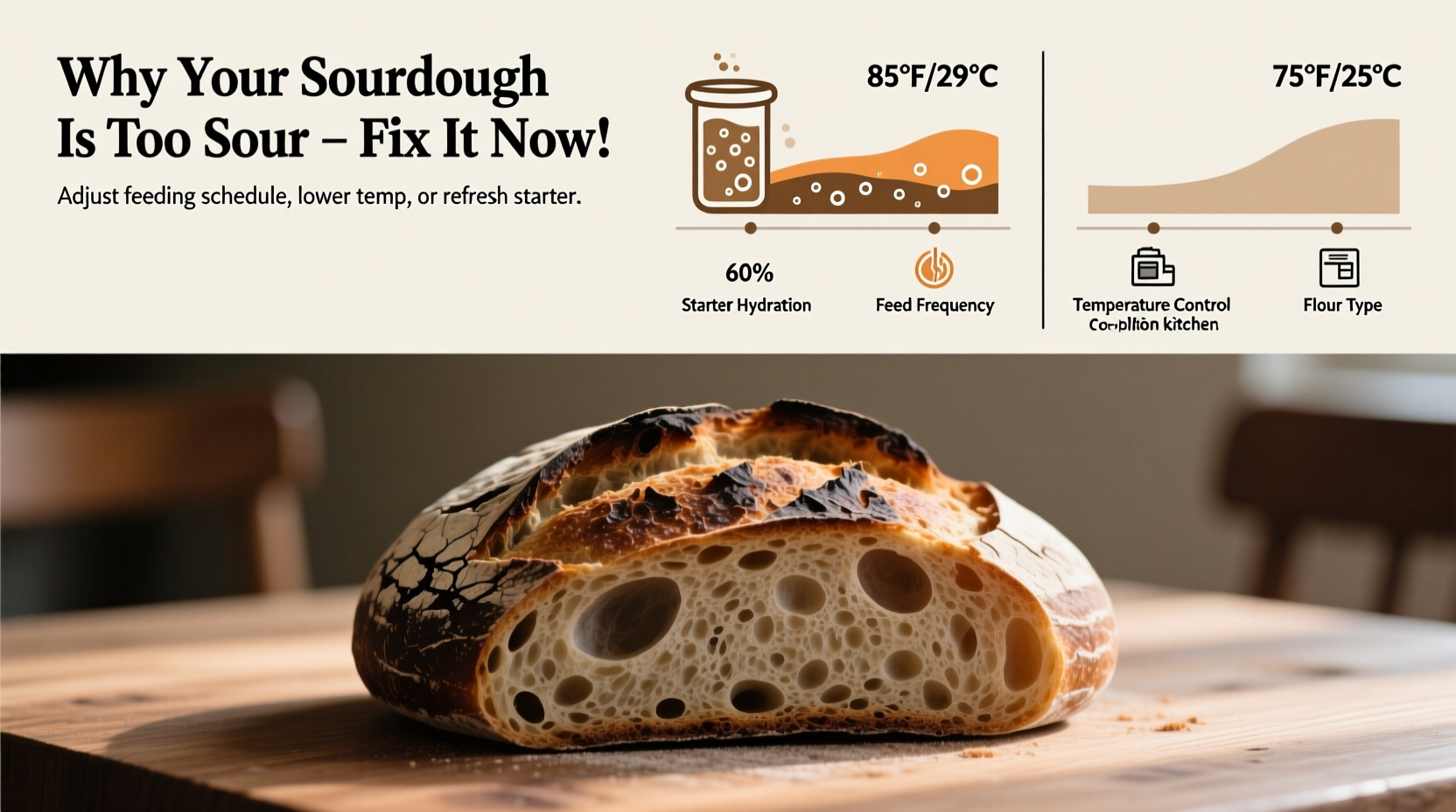
Sourdough starters are living ecosystems composed primarily of wild yeast (like Saccharomyces exiguus) and lactic acid bacteria (LAB), including Lactobacillus sanfranciscensis. These microbes feed on flour’s starches and sugars, producing carbon dioxide (which leavens the bread) and organic acids (which create flavor).
Two main acids influence taste:
- Lactic acid – produces a mild, yogurt-like tang. Dominates in warm, shorter fermentations.
- Acetic acid – creates a sharper, vinegar-like sourness. Thrives in cooler, longer, oxygen-exposed environments.
The balance between these acids depends on several factors: temperature, hydration, feeding frequency, and fermentation time. When acetic acid dominates, the result is an overly sour loaf. The key isn’t eliminating sourness—it’s managing it.
“Sourdough should sing with complexity, not scream with sourness. Flavor balance starts long before the oven.” — Dr. Karl DeSaulniers, Fermentation Scientist and Artisan Baker
Common Causes of Excessive Sourness and How to Fix Them
1. Over-Fermented Starter
Letting your starter go too long between feedings allows bacteria to produce excess acid. A hungry, collapsed starter with a layer of hooch (dark liquid) on top is a telltale sign.
2. Cool Fermentation Temperatures
Colder environments favor acetic acid production. Refrigerating your starter between uses or doing cold bulk ferments extends fermentation and increases sourness.
If you're aiming for milder flavor, keep your starter and dough at room temperature (75–78°F / 24–26°C). For more control, use a proofing box or warm corner of your kitchen.
3. Infrequent Feeding Schedule
Starter that's fed only once a day—or less—accumulates acidity. Regular feeding dilutes acids and renews food for yeast and bacteria.
For a milder starter, try feeding twice daily at 12-hour intervals, especially if your kitchen is warm. Use equal parts starter, water, and flour (a 1:1:1 ratio) to stabilize pH.
4. High Hydration Starter
Wetter starters (above 100% hydration) tend to promote lactic acid, but if underfed, they can still become sour due to prolonged fermentation. However, wetter environments also allow more bacterial mobility, which may accelerate acid development.
Consider switching to a stiffer starter (e.g., 75–80% hydration) if you consistently struggle with sourness. Stiffer doughs favor yeast over bacteria and slow acid production.
5. Long Bulk Fermentation or Cold Retardation
Even with a well-balanced starter, letting your dough ferment too long—especially in the fridge—can deepen sourness. Cold slows yeast activity but allows bacteria to continue producing acid gradually.
If you love the convenience of overnight proofing but dislike intense sourness, shorten the cold ferment to 8–10 hours instead of 12–16.
Troubleshooting Checklist: Taming Your Sour Starter
Use this checklist to systematically address and correct an overly sour starter:
- ✅ Check feeding frequency – Are you feeding at least once daily? Increase to twice daily if needed.
- ✅ Observe peak rise – Feed your starter when it reaches its highest volume, not after it collapses.
- ✅ Discard and refresh – Perform three consecutive 1:2:2 feedings (1 part starter, 2 parts water, 2 parts flour) over 36 hours to reset pH.
- ✅ Adjust temperature – Keep starter in a warmer spot (75–78°F) to encourage yeast dominance.
- ✅ Switch flour type – Try whole wheat or rye for one feeding; their nutrients can rebalance microbial populations.
- ✅ Reduce fermentation times – Shorten bulk fermentation and avoid extended cold proofs.
- ✅ Monitor hydration – Use a stiffer starter (e.g., 75% hydration) for better acid control.
Step-by-Step Reset Plan for an Overly Sour Starter
If your starter has become chronically sour, follow this 2-day reset protocol to restore balance:
- Day 1, Morning: Discard all but 25g of starter. Feed with 50g water and 50g all-purpose flour (1:2:2 ratio). Stir well, cover loosely.
- Day 1, Evening (12 hours later): Repeat the same feeding—discard down to 25g, feed 50g water, 50g flour.
- Day 2, Morning: Repeat again. By now, the starter should rise predictably within 6–8 hours and smell mildly sweet and fruity, not sharp or vinegary.
- Test readiness: Drop a small spoonful into a glass of water. If it floats, it’s ready to bake with.
- Proceed to bake: Use immediately after the third feeding for best results.
This reset dilutes accumulated acids and gives fresh yeast a competitive advantage. You’ll notice a dramatic improvement in flavor within 48 hours.
Flour Type and Its Impact on Sourness
The flour you feed your starter significantly affects microbial behavior. Different flours offer varying nutrient profiles, which influence yeast and bacteria ratios.
| Flour Type | Effect on Sourness | Best Use Case |
|---|---|---|
| All-Purpose Flour | Neutral, balanced acidity | Daily maintenance and general baking |
| Whole Wheat Flour | Increases microbial activity; may boost sourness initially | Reviving sluggish starters; adds nutrition |
| Rye Flour | Promotes lactic acid; can add depth without harsh sourness | Weekly boosts; excellent for stability |
| Bread Flour | Slower fermentation; milder flavor development | Longer storage or cooler kitchens |
While rye and whole wheat can invigorate a weak starter, they may temporarily increase sourness due to higher mineral and enzyme content. Rotate flours mindfully—using rye once a week can strengthen your starter without overwhelming acidity.
Real Example: Sarah’s Sourdough Turnaround
Sarah, a home baker in Portland, Oregon, loved sourdough but grew frustrated when her loaves tasted like sour cream mixed with lemon juice. She kept her starter in the fridge and fed it weekly, pulling it out Friday night to prepare for Saturday baking.
After researching, she realized her cold, infrequent feeding schedule was creating a highly acidic environment. She began storing her starter on the counter, feeding it twice daily. She switched to a 75% hydration starter using half bread flour, half rye, and limited her final proof to 10 hours in the fridge.
Within two weeks, her bread transformed—nutty, slightly tangy, with a balanced crust and open crumb. “I finally got the bakery-style loaf I wanted,” she said. “It wasn’t broken equipment or bad technique. It was my starter routine.”
Do’s and Don’ts of Managing Sourdough Flavor
| Do’s | Don’ts |
|---|---|
| Feed your starter regularly—at least once daily if kept at room temperature. | Leave your starter unfed for days, especially at warm temperatures. |
| Use filtered or non-chlorinated water to avoid killing microbes. | Use chlorinated tap water straight from the faucet. |
| Store starter in a breathable container with a loose lid. | Seal it tightly, trapping CO2 and increasing acidity. |
| Adjust feeding ratios to 1:2:2 for faster growth and lower acidity. | Maintain a 1:1:1 ratio if your starter is already too sour. |
| Keep records of feeding times, rise times, and baking results. | Bake without observing your starter’s behavior patterns. |
Frequently Asked Questions
Can I still bake with an overly sour starter?
Yes, but expect strong flavor. To reduce sourness in the final loaf, shorten fermentation times, use cooler water, or add a small amount of baking soda (¼ tsp per loaf) to neutralize some acid. Note: this may affect rise and crust color.
How long does it take to fix a sour starter?
With consistent twice-daily feedings at room temperature, most starters rebalance within 2–3 days. Signs of improvement include a sweeter aroma, predictable rise within 6–8 hours, and reduced hooch formation.
Does discarding starter waste too much flour?
It can feel wasteful, but discarding ensures microbial balance. Alternatively, use discard in recipes like pancakes, crackers, or muffins. This way, nothing goes to waste, and your active starter stays healthy.
Conclusion: Take Control of Your Sourdough Flavor
An overly sour loaf doesn’t mean failure—it means feedback. Your starter is communicating its environment, diet, and rhythm. With small, intentional changes, you can shift the balance from aggressively sour to richly nuanced.
Start by evaluating your feeding schedule, temperature, and fermentation times. Reset your starter if needed, and track your changes. Baking sourdough isn’t just about following a recipe; it’s about building a relationship with a living culture. When you understand what influences flavor, you gain the power to shape every loaf exactly how you like it.




 浙公网安备
33010002000092号
浙公网安备
33010002000092号 浙B2-20120091-4
Comments
No comments yet. Why don't you start the discussion?