
Afternoon bloating is a surprisingly common complaint. You start the day feeling fine—light, energized, and in control of your digestion—only to find by mid-afternoon that your abdomen feels tight, swollen, and uncomfortable. Clothes fit tighter, sitting becomes awkward, and focus wanes. While occasional bloating is normal, consistent daily bloating after lunch suggests an underlying pattern worth investigating.
The good news? Most causes are manageable with small, sustainable changes. From eating habits to gut health and hormonal shifts, several factors contribute to this midday discomfort. Understanding the root causes allows you to make targeted adjustments—without drastic diets or expensive supplements.
Common Causes of Afternoon Bloating
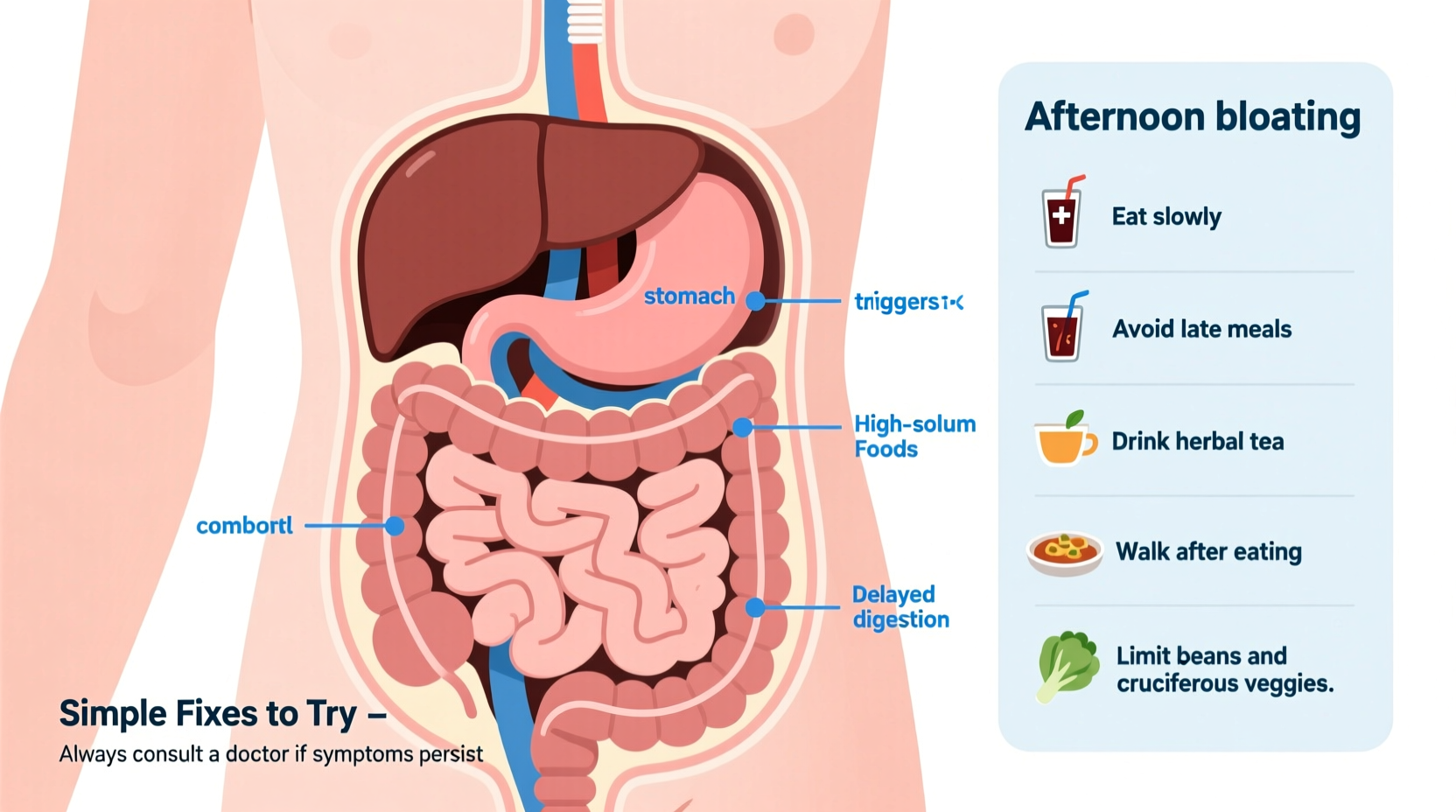
Bloating isn’t just about eating too much. It’s often the result of how, when, and what you eat—combined with lifestyle and physiological factors. Here are the most frequent culprits behind daily afternoon bloating:
- Overeating at lunch: Large meals stretch the stomach and increase gas production during digestion.
- Eating too quickly: Gulping food leads to swallowed air (aerophagia), which accumulates as bloating.
- Consuming gas-producing foods: Beans, cruciferous vegetables, carbonated drinks, and artificial sweeteners ferment in the gut, producing gas.
- Food intolerances: Lactose, fructose, or gluten sensitivity can cause delayed bloating, often peaking in the afternoon.
- Slowed digestion (gastroparesis): A sluggish digestive tract delays stomach emptying, leading to fullness and pressure.
- Hormonal fluctuations: Especially in women, progesterone levels rise after ovulation, relaxing intestinal muscles and slowing motility.
- Sedentary behavior: Sitting for long periods reduces intestinal movement, allowing gas and contents to pool.
- Dehydration: When the body lacks water, it holds onto fluids, contributing to abdominal distension.
How Digestion Changes Throughout the Day
Your digestive system doesn’t operate at a constant pace. Gastrointestinal motility—the movement of food through the gut—varies by time of day due to circadian rhythms. Research shows that gastric emptying is typically slower in the afternoon compared to the morning.
This means food eaten at lunch may sit longer in your stomach, increasing fermentation and gas production. Add to that a post-lunch slump in physical activity—common in office environments—and you’ve created the perfect storm for bloating.
Additionally, cortisol levels naturally dip in the mid-afternoon, which can affect fluid balance and gut function. Meanwhile, insulin response to carbohydrates may be less efficient later in the day, promoting fermentation by gut bacteria if undigested sugars reach the colon.
“Digestive efficiency peaks in the morning and gradually declines through the day. Timing and composition of meals matter more than we think.” — Dr. Lena Patel, Gastroenterology Research Fellow, Johns Hopkins Medicine
Simple Fixes to Reduce Afternoon Bloating
You don’t need a medical intervention to address routine bloating. Often, small tweaks to daily habits bring noticeable relief within days. Try these practical, evidence-based strategies:
1. Redesign Your Lunch
Instead of heavy, fiber-rich, or gas-producing meals, aim for balanced, easily digestible lunches. Prioritize lean protein, cooked vegetables, and moderate complex carbs.
- Avoid raw salads, broccoli, cauliflower, onions, and beans at lunch.
- Choose steamed carrots, zucchini, or spinach instead.
- Opt for grilled chicken, fish, or tofu over processed meats.
2. Eat Slowly and Chew Thoroughly
Chewing breaks down food mechanically and signals the stomach to prepare for digestion. Eating too fast increases air intake and overwhelms the digestive system.
3. Stay Hydrated—But Time It Right
Drink water consistently throughout the morning, but avoid large amounts during or immediately after meals. Excess liquid dilutes stomach acid, impairing digestion.
Instead, sip 4–6 ounces during meals and resume hydration 30–60 minutes after eating.
4. Move After Eating
Gentle movement stimulates peristalsis—the wave-like contractions that move food through the intestines. A 10-minute walk after lunch can significantly reduce bloating.
Even standing or light stretching at your desk helps. Avoid lying down immediately after eating, which slows digestion and promotes reflux.
5. Limit Carbonated Drinks and Chewing Gum
Both introduce excess air into the digestive tract. Carbonation releases CO₂ in the stomach, while chewing gum encourages unconscious swallowing of air.
Swap soda for still herbal tea or infused water. If you need breath freshness, try fennel seeds or a non-gum mint.
Do’s and Don’ts: Afternoon Bloating Edition
| Do | Don’t |
|---|---|
| Eat smaller, balanced lunches | Eat large portions of raw veggies or beans at noon |
| Take a short walk after eating | Sit or lie down immediately after lunch |
| Sip peppermint or ginger tea | Drink carbonated beverages |
| Chew food slowly and thoroughly | Eat while distracted (e.g., working or scrolling) |
| Stay hydrated earlier in the day | Drink large amounts of water during meals |
Step-by-Step Plan to Beat Daily Bloating
If you're ready to take action, follow this five-day reset plan to identify triggers and improve digestive comfort:
- Day 1–2: Track Everything
Record all meals, drinks, bowel movements, stress levels, and bloating (rate 1–10). Note timing and severity. - Day 3: Simplify Lunch
Replace your usual lunch with a bland, low-FODMAP meal: e.g., grilled salmon, quinoa, steamed carrots. No carbonation, no gum. - Day 4: Add Movement
Take a 10-minute walk after lunch. Observe changes in bloating and energy. - Day 5: Adjust Meal Timing
Eat lunch 30 minutes earlier or later than usual. See if timing affects symptoms.
After five days, review your notes. Did bloating decrease? Which change had the biggest impact? Use this insight to build a personalized anti-bloating routine.
When to Suspect a Food Intolerance
If bloating persists despite lifestyle changes, consider common food intolerances. Unlike allergies, intolerances cause delayed digestive symptoms—often 2–6 hours after eating.
Lactose intolerance affects up to 65% of adults globally. Symptoms include bloating, gas, cramps, and diarrhea after consuming dairy. Fructose malabsorption and gluten sensitivity (non-celiac) are also common.
To test for intolerance:
- Eliminate the suspected food (e.g., milk, apples, wheat) for 2 weeks.
- Reintroduce it in a controlled way: consume a portion and monitor symptoms over 48 hours.
- If bloating returns, you may have a sensitivity.
“Many patients come in convinced they have IBS, only to discover lactose or fructose is the real trigger. Elimination diets are powerful diagnostic tools.” — Dr. Marcus Tran, Clinical Nutritionist and Digestive Health Specialist
Mini Case Study: Sarah’s Afternoon Relief
Sarah, a 34-year-old graphic designer, experienced severe bloating every day around 2:30 PM. Her lunch was usually a large kale salad with chickpeas, almonds, and lemon dressing, paired with iced green tea and a diet soda.
She tracked her symptoms for three days and noticed bloating began 45 minutes after lunch. She then tried a new routine: a warm bowl of lentil soup with carrots and rice, followed by a 10-minute walk outside. She switched to still water and skipped the soda.
Within two days, her bloating dropped from an 8/10 to a 3/10. The combination of reducing raw fiber, eliminating carbonation, and adding movement made a dramatic difference. She later discovered she was mildly lactose intolerant—her morning latte was a hidden contributor.
Checklist: Your Anti-Bloating Action Plan
Use this checklist daily for one week to reset your digestion:
- ☑ Eat a smaller, balanced lunch with cooked vegetables
- ☑ Chew each bite at least 20 times
- ☑ Take a 10-minute walk after eating
- ☑ Avoid carbonated drinks and chewing gum
- ☑ Drink water consistently—but not during meals
- ☑ Keep a symptom log (bloating level, food, activity)
- ☑ Try herbal tea (peppermint or ginger) after lunch
Frequently Asked Questions
Can drinking water cause bloating?
Drinking water itself doesn’t cause bloating, but gulping large amounts quickly—especially during meals—can stretch the stomach and dilute digestive juices. Sipping steadily throughout the day is best.
Is afternoon bloating a sign of IBS?
It can be, but not always. Irritable Bowel Syndrome often includes bloating along with abdominal pain, altered bowel habits, and symptom relief after bowel movements. If bloating is your only symptom, it’s more likely related to diet or habits. Consult a doctor if symptoms persist or worsen.
Why do I bloat even when I eat healthy foods?
Many healthy foods—like broccoli, apples, and whole grains—are high in FODMAPs (fermentable carbohydrates). These feed gut bacteria and produce gas. Cooking, peeling, or choosing low-FODMAP alternatives (e.g., zucchini instead of cauliflower) can help.
Conclusion: Take Control of Your Digestive Comfort
Afternoon bloating doesn’t have to be a daily inevitability. By understanding the interplay of diet, timing, movement, and gut function, you can make informed choices that support comfortable digestion. Most fixes are simple: eat mindfully, move gently, and choose foods that work with—not against—your body.
Start with one change. Swap carbonated drinks for still water. Take a walk after lunch. Notice how your body responds. Small steps lead to lasting results. Your digestive system thrives on consistency, not perfection.




 浙公网安备
33010002000092号
浙公网安备
33010002000092号 浙B2-20120091-4
Comments
No comments yet. Why don't you start the discussion?