
Afternoon bloating is more than just a minor discomfort—it’s a signal from your body that something in your daily routine may be off. You’re not alone if you’ve noticed your waistband tightening around 2 or 3 p.m., even after eating what seems like a normal lunch. This recurring pattern affects millions, particularly women, and while occasional bloating is normal, consistent daily swelling suggests underlying dietary, digestive, or lifestyle imbalances.
The good news: most causes of afternoon bloating are manageable with simple, sustainable changes. Understanding the root triggers—ranging from meal timing to gut bacteria—is the first step toward lasting relief. This guide breaks down the most common reasons your stomach swells each afternoon and offers actionable, evidence-based solutions you can start today.
Common Causes of Afternoon Bloating
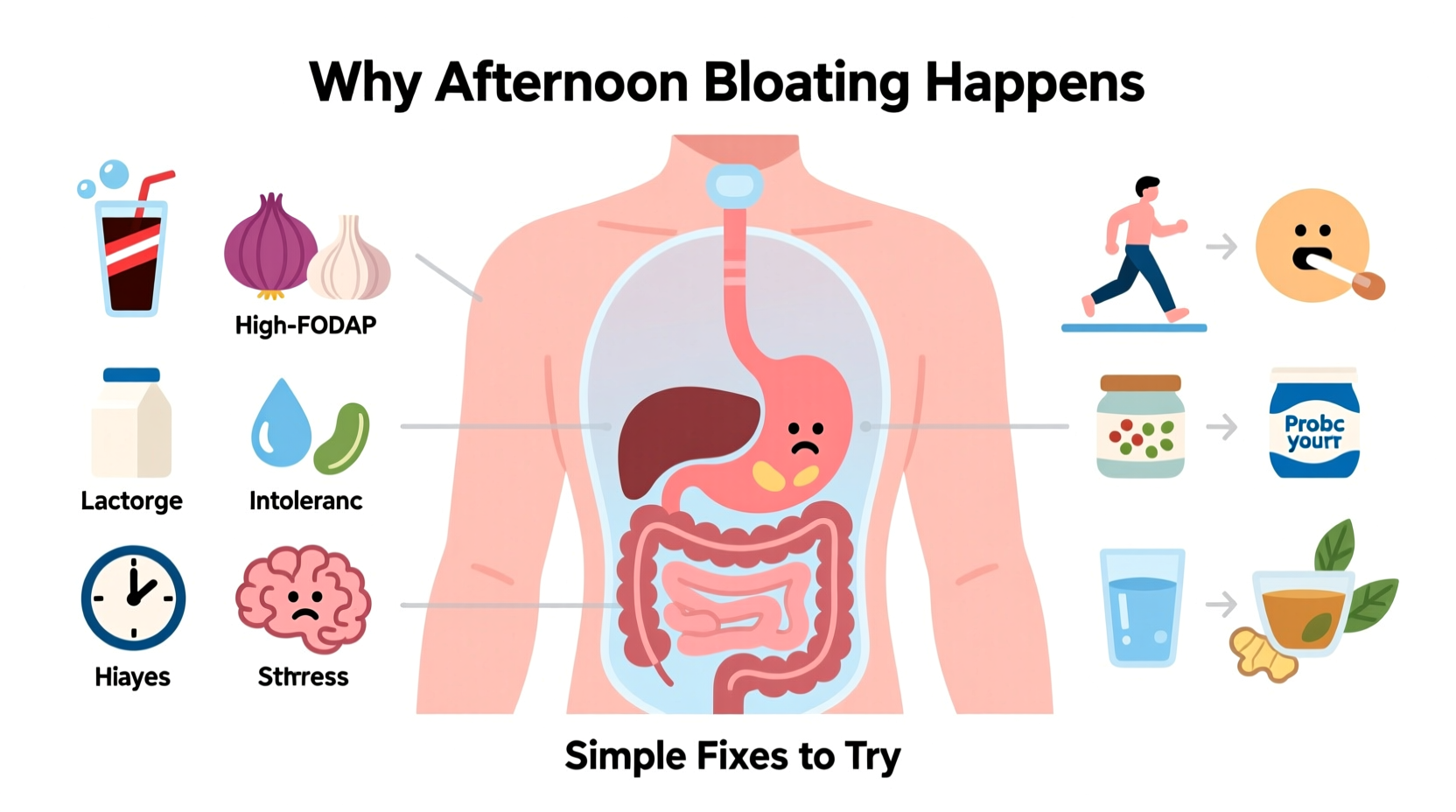
Bloating occurs when gas, fluid, or undigested food accumulates in the digestive tract, causing pressure and visible distension. The afternoon surge often results from cumulative effects of morning habits, food choices, and digestive rhythms. Here are the top contributors:
- Eating too quickly or swallowing air: Rushing meals leads to aerophagia (air swallowing), which builds up in the stomach and intestines.
- High-FODMAP foods at lunch: Onions, garlic, beans, certain breads, and artificial sweeteners feed gut bacteria that produce gas.
- Lactose intolerance: Many people lose lactase enzyme efficiency with age, leading to dairy-induced bloating hours after consumption.
- Carbonated drinks and chewing gum: Both introduce excess air and sugar alcohols (like sorbitol) that ferment in the colon.
- Sedentary behavior post-meal: Sitting still slows digestion, allowing gas to pool and pressure to build.
- Hormonal fluctuations: Especially in women, progesterone levels rise mid-luteal phase, slowing gut motility.
- Dehydration: When the body lacks water, it holds onto fluids, increasing abdominal puffiness.
- Small Intestinal Bacterial Overgrowth (SIBO): An overgrowth of bacteria in the small intestine ferments food prematurely, producing gas.
Dietary Triggers and What to Replace Them With
Your lunch might be the primary culprit. Even \"healthy\" meals can contain hidden bloating agents. The key is identifying problematic ingredients and swapping them wisely.
| Common Trigger | Why It Causes Bloating | Better Alternatives |
|---|---|---|
| Wheat-based bread/pasta | High in fructans (a FODMAP); fermented by gut bacteria into gas | Gluten-free oats, quinoa, rice noodles, sourdough spelt (in moderation) |
| Canned soups with onion/garlic | Rich in fructo-oligosaccharides; hard to digest for many | Homemade soups using garlic-infused oil (removes FODMAPs), leeks (green part only) |
| Yogurt or milk in coffee/lunch smoothies | Lactose intolerance affects ~65% of adults globally | Almond, oat, or lactose-free dairy; add protein via nut butter or collagen |
| Artificial sweeteners (sucralose, xylitol) | Not absorbed; fermented in colon → gas and bloating | Small amounts of honey, maple syrup, or stevia (well-tolerated by most) |
| Raw cruciferous vegetables (raw broccoli, kale) | Contain raffinose, a complex sugar that produces gas during breakdown | Cooked versions; roasting or steaming reduces fiber density |
“Many patients come to me with chronic bloating thinking they have a serious condition, but 70% of cases resolve with dietary adjustments and mindful eating.” — Dr. Lena Torres, Gastroenterologist & Digestive Health Specialist
Step-by-Step Plan to Reduce Afternoon Bloating
Fixing bloating isn’t about extreme diets—it’s about precision and consistency. Follow this five-day reset to identify and eliminate triggers.
- Day 1: Eliminate major bloating foods
Remove dairy, wheat, carbonation, artificial sweeteners, onions, garlic, and beans. Stick to plain proteins (chicken, fish, eggs), cooked vegetables (zucchini, carrots, spinach), rice, and bananas. - Day 2–3: Hydrate strategically
Drink 2 cups of water upon waking. Sip 8 oz every hour until 3 p.m. Avoid drinking large amounts with meals, which dilutes stomach acid. - Day 4: Introduce movement after eating
Take a 10-minute walk after breakfast and lunch. Gentle motion stimulates peristalsis—the wave-like contractions that move food through the gut. - Day 5: Reintroduce one food group
Add back one eliminated item (e.g., a slice of whole grain toast). Monitor symptoms for 3 hours. If bloating returns, log it as a potential trigger. - Ongoing: Adopt low-FODMAP principles selectively
You don’t need to go fully low-FODMAP forever. Use it as a diagnostic tool, then personalize your diet based on tolerance.
Real-Life Example: How Sarah Reduced Her Daily Bloating
Sarah, a 34-year-old project manager, experienced severe bloating every day by 2:30 p.m. She wore loose clothing to work and avoided social lunches out of embarrassment. Her typical day included a rushed breakfast of yogurt with granola, iced coffee with almond milk and sugar-free syrup, a salad with chickpeas and vinaigrette for lunch, and constant sipping of diet soda.
After tracking her symptoms and working with a nutritionist, she made these changes:
- Switched yogurt to lactose-free cottage cheese with berries
- Replaced sugar-free syrup with a dash of pure maple syrup
- Swapped chickpea salad for grilled chicken with roasted sweet potatoes and greens
- Stopped drinking diet soda entirely
- Started walking for 12 minutes after lunch
Within four days, her afternoon bloating decreased by 80%. By week two, she no longer felt the need to unbutton her pants at her desk. Blood tests later confirmed mild lactose intolerance and sensitivity to polyols (found in sugar-free products)—both now managed through diet.
When to Suspect a Medical Condition
While most afternoon bloating stems from lifestyle factors, persistent or worsening symptoms may indicate an underlying condition. Be alert to these red flags:
- Bloating that lasts beyond 24 hours
- Severe pain, nausea, or vomiting
- Unintentional weight loss
- Changes in bowel habits (diarrhea, constipation, or both)
- Family history of celiac disease, IBS, or colorectal cancer
Conditions such as irritable bowel syndrome (IBS), celiac disease, SIBO, or ovarian cysts can mimic everyday bloating. A hydrogen breath test can diagnose SIBO or lactose intolerance. Blood tests for celiac (tTG-IgA) are highly accurate when conducted before eliminating gluten.
“If bloating interferes with your quality of life more than twice a week for over a month, it’s time to consult a gastroenterologist—not just adjust your diet.” — Dr. Rajiv Mehta, Digestive Disorders Clinic
Checklist: 7 Daily Habits to Prevent Afternoon Bloating
Use this checklist each day to stay on track:
- ✅ Eat slowly: Aim for 20 minutes per meal. Put your fork down between bites.
- ✅ Limit carbonated drinks and chewing gum.
- ✅ Include a post-meal walk (even 5–10 minutes helps).
- ✅ Drink water consistently—start with 16 oz in the morning.
- ✅ Choose low-FODMAP lunch options when possible (e.g., rice bowl with grilled meat and veggies).
- ✅ Avoid large meals; opt for smaller, balanced portions every 3–4 hours.
- ✅ Manage stress: High cortisol slows digestion. Practice deep breathing or brief meditation after lunch.
Frequently Asked Questions
Can drinking water make bloating worse?
No—dehydration actually worsens bloating. When the body senses low water intake, it retains fluid, especially in the abdomen. Drinking enough water supports kidney function and reduces sodium-related puffiness. However, gulping large amounts during meals may cause temporary fullness. Sip steadily throughout the day instead.
Is bloating linked to hormonal birth control?
Yes, some women report increased bloating on estrogen-containing contraceptives. Estrogen can cause fluid retention, particularly in the first few months of use. Progesterone-only methods tend to have fewer bloating side effects. If bloating persists beyond three cycles, discuss alternatives with your healthcare provider.
Why do I bloat only in the afternoon, not in the morning?
Morning digestion is typically efficient due to higher motilin (a gut hormone) levels. As the day progresses, repeated meals, stress, and inactivity slow transit time. Fermentation of undigested carbohydrates peaks 4–6 hours after eating—often aligning with late lunch or early afternoon. Cumulative gas production explains the timing.
Final Thoughts: Take Control of Your Digestive Comfort
Afternoon bloating doesn’t have to be a daily inevitability. By understanding the interplay between food, movement, hydration, and gut health, you can reclaim comfort and confidence. Start with one change—perhaps replacing your afternoon soda or taking a short walk after lunch—and build from there. Small shifts compound into significant improvements.
Your digestive system responds best to consistency, not perfection. Occasional indulgences are fine. The goal is awareness, not restriction. Track what works, listen to your body, and don’t hesitate to seek professional guidance if symptoms persist.




 浙公网安备
33010002000092号
浙公网安备
33010002000092号 浙B2-20120091-4
Comments
No comments yet. Why don't you start the discussion?