
Tablets have become essential tools for work, education, entertainment, and communication. But nothing disrupts productivity or enjoyment faster than a frozen screen. Whether you're in the middle of an important video call or streaming your favorite show, a sudden freeze can be frustrating. The good news is that most freezes are fixable—often within seconds—and understanding the root causes can help prevent them from recurring.
This guide breaks down the common reasons tablets freeze, provides immediate solutions to regain control, and outlines preventive strategies backed by device performance experts. By the end, you'll know exactly what to do when your tablet locks up—and how to keep it running smoothly.
What Causes a Tablet to Freeze?
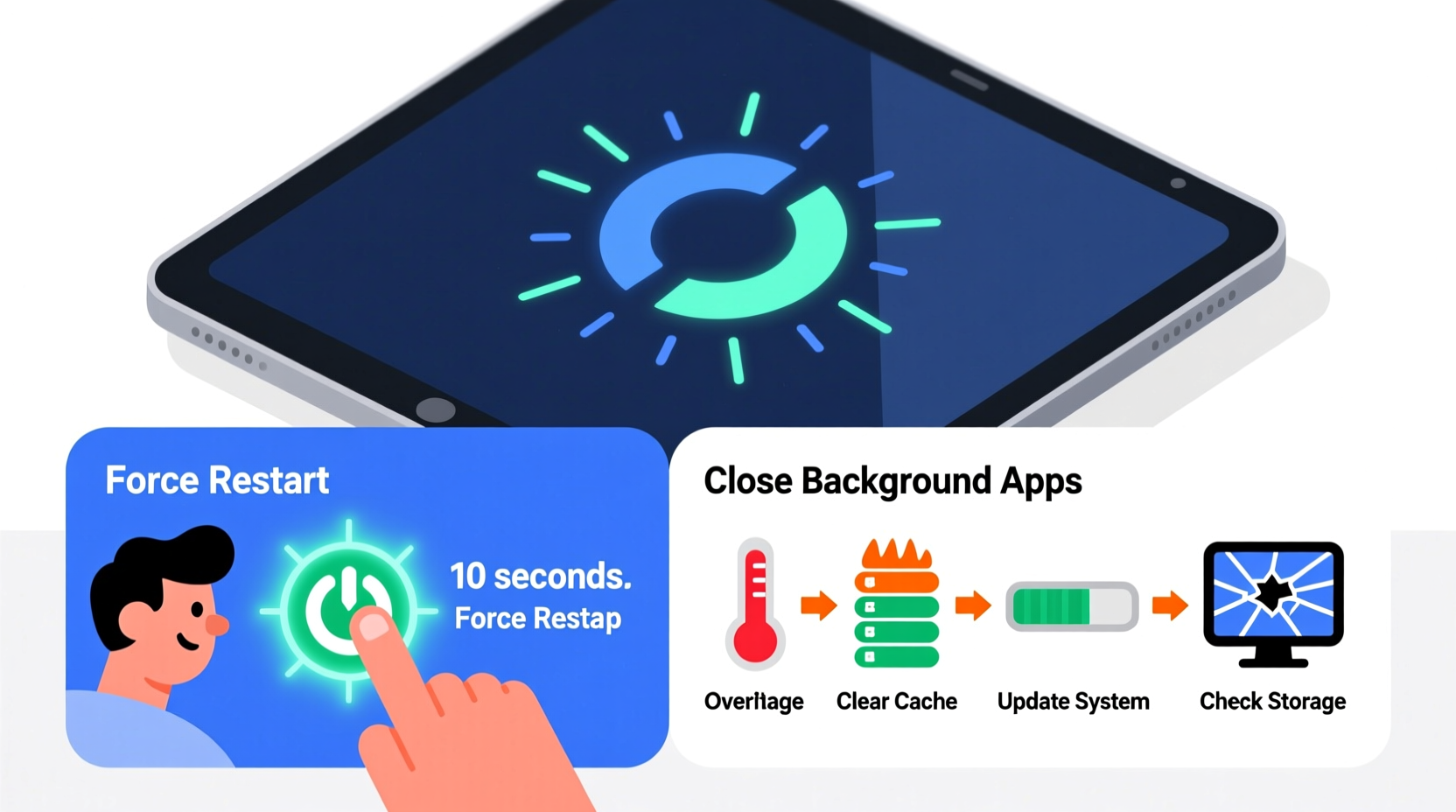
A tablet freeze occurs when the operating system stops responding to input. The screen may remain visible but unresponsive, or it might display a static image with no reaction to taps or button presses. While the symptoms are similar across devices, the underlying causes vary.
- Insufficient RAM: Running too many apps simultaneously overwhelms available memory, especially on older or budget models.
- Software Glitches: Bugs in the operating system or individual apps can cause crashes that lock up the interface.
- Overheating: Prolonged use, direct sunlight, or poor ventilation can cause thermal throttling or shutdowns.
- Outdated Software: Older firmware versions often contain unresolved bugs that lead to instability.
- Storage Full: When internal storage drops below 10%, system performance degrades significantly.
- Corrupted Cache or App Data: Temporary files can become damaged, interfering with normal operations.
- Faulty Hardware: In rare cases, failing batteries or damaged internal components trigger freezes.
“Most tablet freezes stem from software overload rather than hardware failure. A simple restart resolves over 70% of cases.” — Dr. Lin Zhao, Mobile Systems Engineer at TechReliability Labs
How to Unfreeze Your Tablet Instantly (Step-by-Step)
When your tablet freezes, act quickly but calmly. Follow this sequence to restore functionality without risking data loss.
- Wait 30 Seconds: Sometimes the system is processing a heavy task. Give it a brief moment before taking action.
- Tap the Screen Gently: Try interacting with different areas. If the home button or power icon responds, you may not be fully frozen.
- Force Restart (Hard Reset): This is the most reliable method to unfreeze any tablet.
Force Restart Instructions by Device Type
| Device Type | Button Combination | Hold Duration | Indicator of Success |
|---|---|---|---|
| iPad (All Models) | Press and release Volume Up, then Volume Down, then hold Power button | Until Apple logo appears (~10–15 sec) | Screen goes black, then Apple logo shows |
| Samsung Galaxy Tab | Power + Volume Down | 10–15 seconds | Logo appears, vibration (if enabled) |
| Amazon Fire Tablet | Power button only | Hold for 20 seconds | Screen turns off, then red light briefly flashes |
| Lenovo, Acer, Other Android Tablets | Power + Volume Up (sometimes Volume Down) | 10–15 seconds | Vibration or brand logo appears |
After the forced restart, allow the tablet to boot completely. Do not press any buttons during startup unless prompted.
Prevent Future Freezes: Long-Term Solutions
Once your tablet is responsive again, take proactive steps to reduce the likelihood of future freezes. These practices improve stability and extend device lifespan.
1. Manage Background Apps
Many users unknowingly run multiple apps in the background, consuming memory and CPU resources. Close unused apps regularly.
- iPad: Swipe up from the bottom (or double-click Home button on older models), then swipe apps away.
- Android: Tap the square or recent apps button, then swipe each app off the screen.
2. Update Your Operating System and Apps
Manufacturers release updates to patch security flaws and improve performance. Delaying updates increases vulnerability to bugs.
- Go to Settings > General > Software Update (iOS)
- Check Settings > System > System Update (Android)
- Enable automatic app updates in the App Store or Google Play
3. Clear Cache Regularly
Cache files speed up app loading but can become corrupted over time.
- Android: Settings > Storage > Cached Data > Clear Cache
- iPad: Offload apps or delete and reinstall problematic ones to clear cache
4. Monitor Storage Space
Keep at least 1 GB of free space for optimal performance. Use built-in tools to analyze storage usage.
- Delete unused apps, old photos, and downloaded files.
- Move media to cloud storage (iCloud, Google Drive, Dropbox).
5. Avoid Overheating
High temperatures degrade battery life and throttle processor speed.
- Remove thick cases during extended use.
- Avoid direct sunlight or hot cars.
- Stop intensive tasks (gaming, video editing) if the device becomes warm.
“Thermal management is critical in mobile devices. Even a 10°C increase above normal can reduce performance by up to 30%.” — Dr. Rajiv Mehta, Thermal Systems Researcher at MobileTech Institute
Troubleshooting Persistent Freezing Issues
If your tablet continues to freeze despite regular maintenance, deeper issues may be at play. Consider these advanced troubleshooting steps.
Safe Mode (Android Only)
Boot into Safe Mode to disable third-party apps temporarily. If the tablet runs smoothly, a recently installed app is likely the culprit.
- Press and hold the Power button until the power menu appears.
- Long-press the “Power Off” option.
- Select “Reboot to Safe Mode” or tap OK.
- Test performance. To exit, restart normally.
Reset All Settings
This resets network settings, keyboard preferences, and privacy options—but keeps your data intact.
- iPad: Settings > General > Transfer or Reset iPad > Reset > Reset All Settings
- Android: Settings > System > Reset Options > Reset Wi-Fi, Mobile & Bluetooth
Factory Reset (Last Resort)
If all else fails, erase the device and set it up as new. Always back up first.
- Backup First: Use iCloud or Google Account sync.
- iPad: Settings > General > Transfer or Reset iPad > Erase All Content and Settings
- Android: Settings > System > Reset Options > Erase All Data (Factory Reset)
Mini Case Study: Recovering a Constantly Freezing Samsung Galaxy Tab S6
Sarah, a freelance graphic designer, relied on her Galaxy Tab S6 for client sketches. After six months, it began freezing during drawing sessions. She tried restarting it daily, but the issue worsened. Following a technician’s advice, she booted into Safe Mode and discovered the freeze disappeared. She then uninstalled a recently added sketch plugin known for high memory usage. Post-removal, the tablet ran smoothly for over a year with regular updates and cache clearing. The root cause? A poorly optimized third-party app exploiting system resources.
Do’s and Don’ts: Tablet Freeze Prevention Checklist
| Do’s | Don’ts |
|---|---|
| ✅ Restart your tablet weekly to clear memory | ❌ Leave 20+ apps open in the background |
| ✅ Install OS updates promptly | ❌ Ignore low storage warnings |
| ✅ Use original chargers to avoid power surges | ❌ Expose the tablet to extreme heat or cold |
| ✅ Clear cache monthly on Android devices | ❌ Download apps from unknown sources |
| ✅ Back up data regularly | ❌ Perform factory resets without backup |
Frequently Asked Questions
Can a virus make my tablet freeze?
While true viruses are rare on tablets due to sandboxed app environments, malicious apps or adware can consume excessive resources and cause freezes. Only download apps from official stores and check reviews before installing.
Why does my tablet freeze only when charging?
This often indicates overheating or a faulty charger. Try using a different cable or power adapter. Also, avoid heavy usage while charging. If the problem persists, have the battery checked—swelling or degradation can interfere with performance.
Is it safe to force restart my tablet frequently?
Occasional force restarts are safe and do not harm hardware. However, frequent need for hard resets suggests an underlying issue like insufficient storage, outdated software, or app conflicts. Address the root cause instead of relying on repeated reboots.
Conclusion: Take Control of Your Tablet’s Performance
A frozen tablet doesn’t have to mean lost work or a trip to the repair shop. With the right knowledge, you can resolve most freezes in under a minute and dramatically reduce their recurrence. From mastering the force restart to managing app usage and keeping software updated, small habits lead to major improvements in reliability.
Your tablet is designed to support your daily life—not hinder it. By applying these practical fixes and preventive measures, you ensure it remains a responsive, dependable tool for years to come.




 浙公网安备
33010002000092号
浙公网安备
33010002000092号 浙B2-20120091-4
Comments
No comments yet. Why don't you start the discussion?