
Planting a new tree is an investment in the future—of your landscape, your property value, and the environment. But when you notice that your newly planted tree is still leaning despite having been staked for two weeks, it’s natural to feel concerned. A persistent lean suggests that the current support system isn’t working as intended, or underlying issues are preventing proper root establishment. Understanding the causes and knowing how to respond can mean the difference between a thriving tree and one that fails to take hold.
This guide explores the science behind post-planting tree movement, identifies common mistakes in stabilization, and provides actionable solutions to correct and prevent leaning. Whether you're a homeowner, gardener, or landscaping professional, this information will help you secure your tree properly and promote strong, balanced growth from the start.
Why Trees Lean After Staking: The Hidden Factors
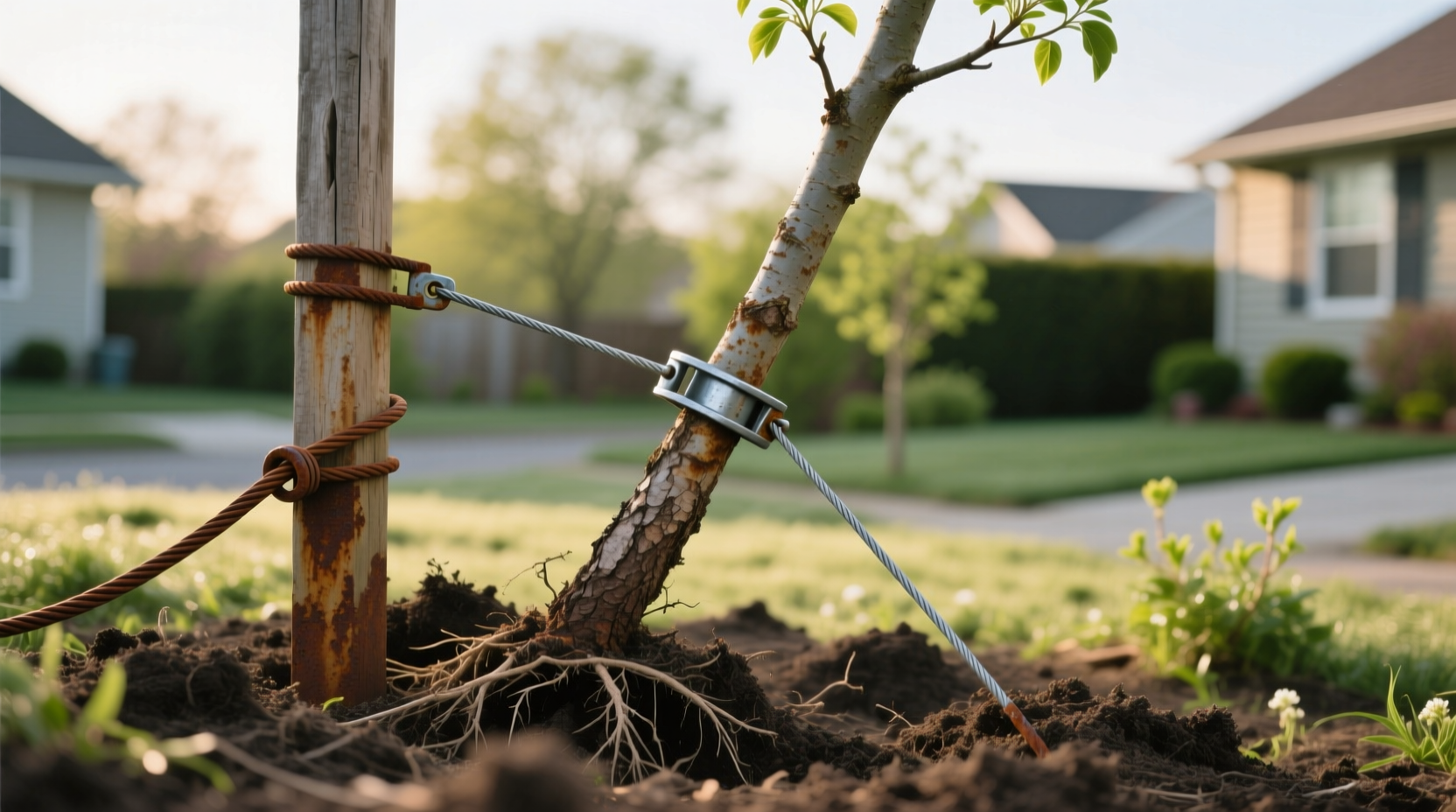
A tree should begin to stabilize within the first few weeks after planting, especially if staked correctly. If it's still leaning after 14 days, several factors may be at play. The most common causes include improper staking technique, inadequate root anchoring, soil conditions, environmental stressors, or even the planting method itself.
When a tree is transplanted, its root system is significantly reduced. It relies on temporary support while new roots grow into the surrounding soil. During this critical period, any imbalance in forces—such as wind pressure, uneven backfill, or weak root-soil contact—can cause shifting. Even minor movement at the base can lead to visible tilting above ground.
It's important to distinguish between slight settling (normal in the first week) and progressive leaning (a sign of failure). A tree that leans more over time indicates instability rather than adjustment.
Common Staking Mistakes That Cause Persistent Leaning
Staking is meant to support, not immobilize. Ironically, many cases of continued leaning stem from incorrect staking practices. Here are the most frequent errors:
- Over-staking: Rigidly binding the trunk restricts natural movement, which trees need to trigger lignin production—the compound that strengthens wood and roots.
- Incorrect stake placement: Stakes installed too close to the trunk or only on one side fail to provide balanced resistance.
- Poor strap positioning: Ties placed too high or too low reduce leverage and allow excessive swaying at the root zone.
- Using non-elastic materials: Wire, rope, or zip ties can girdle the trunk or stretch unevenly, leading to instability and injury.
- Leaving stakes too long: Extended staking (beyond 6–12 months) weakens trunk development by discouraging self-support.
According to Dr. Linda Chalker-Scott, urban horticulturist and author of *The Informed Gardener*, “Over 70% of staked trees show no benefit from the practice—and many are harmed by it.” She emphasizes that staking should be the exception, not the rule, and only used when necessary due to exposure or top-heaviness.
“Staking interferes with a tree’s ability to develop strong structural wood. Unless the tree cannot stand on its own, avoid staking altogether.” — Dr. Linda Chalker-Scott, Horticulture Extension Specialist, Washington State University
Effective Stabilization Solutions: A Step-by-Step Approach
If your tree is still leaning after two weeks, don’t assume it’s too late to correct. Follow this timeline-based intervention strategy to re-establish stability and encourage healthy root development.
Week 3: Assess and Reset
- Remove existing stakes and ties carefully to inspect for damage or girdling.
- Check trunk alignment using a level. Determine whether the lean is fixable or if the root ball has shifted severely.
- Reposition the tree if necessary. Gently lift and realign, ensuring the root flare is at or slightly above soil grade.
- Repack soil around the root ball using native soil, tamping lightly to eliminate air pockets without compacting.
Week 4: Re-Stake Correctly
- Use two or three flexible stakes placed outside the root ball, 12–18 inches from the trunk.
- Install stakes at 120-degree intervals (for three stakes) or opposite each other (for two) to distribute force evenly.
- Attach wide, elastic tree ties (e.g., rubberized fabric straps) at approximately one-third the height of the tree.
- Allow slight movement—the trunk should sway gently in the wind to stimulate root and trunk strength.
Weeks 5–8: Monitor and Adjust
- Inspect ties weekly for tightness, wear, or signs of trunk constriction.
- Loosen or reposition straps as the trunk thickens.
- Water deeply but infrequently (once per week, depending on climate) to encourage deep rooting.
- Add mulch (not against the trunk) in a 3-foot diameter ring to retain moisture and regulate temperature.
Month 3–6: Begin Weaning Off Support
- Gradually reduce tension on ties every four weeks.
- Test stability monthly by gently pushing the trunk; resistance should increase over time.
- Remove stakes entirely by six months, unless the tree is in an extremely windy location or is top-heavy.
Soil and Planting Factors That Influence Stability
The success of tree stabilization begins before the first stake is driven. Soil composition, planting depth, and hole preparation all affect how well a tree anchors itself.
A hole that’s too deep is a common culprit in leaning trees. When the root ball sinks or settles below grade, the trunk becomes buried, reducing oxygen availability and weakening root development. Conversely, a hole that’s too narrow restricts lateral root expansion, limiting anchorage.
Soil texture also plays a role. Clay soils retain water and can become unstable when saturated, allowing the root ball to shift. Sandy soils drain quickly but offer less friction, making it harder for roots to grip. The ideal backfill combines native soil with organic matter to improve structure without creating a “pot effect” where roots circle instead of outward.
| Factor | Best Practice | Avoid |
|---|---|---|
| Hole Width | 2–3 times wider than root ball | Narrow holes that restrict root spread |
| Hole Depth | Slightly shallower than root ball | Planting too deep, burying flare |
| Backfill Soil | Native soil + compost (max 20%) | Pure potting mix or amendments |
| Mulch Application | 2–4 inches, 3-inch gap from trunk | Volcano mulching (piling against trunk) |
| Stake Duration | 6–12 months max | Permanent staking |
Additionally, consider the species-specific needs. Fast-growing trees like willows or poplars establish roots quickly but are more prone to wind throw if not supported early. Slower growers like oaks require longer support but benefit more from gradual mechanical stress.
Real-World Example: Correcting a Leaning Red Maple
In suburban Maryland, a homeowner planted a red maple (*Acer rubrum*) in early spring. Despite installing two wooden stakes and nylon ties, the tree began leaning northeast within ten days. By day 14, the angle had increased to 15 degrees.
A certified arborist was consulted. Upon inspection, it was found that:
- The planting hole was 6 inches too deep.
- The root flare was buried under soil and mulch.
- The stakes were placed only on the south side, offering unbalanced support.
- The nylon ties were wrapped tightly around the trunk with no padding.
The solution involved:
- Lifting the tree slightly and adding a soil mound beneath the root ball to raise the flare to grade level.
- Installing two new stakes on the north and south sides, 16 inches from the trunk.
- Replacing nylon ties with wide, flexible tree belts attached at 2 feet high.
- Applying a 3-inch layer of mulch in a donut shape, keeping it away from the trunk.
Within three weeks, the lean corrected naturally as new roots began to anchor. By month four, the tree stood upright with firm resistance to hand pressure. The stakes were removed at month six, and the tree showed robust growth the following season.
FAQ: Common Questions About Leaning Trees and Staking
Is it normal for a newly planted tree to lean slightly?
Minor settling during the first week can occur, especially after watering. However, any lean beyond 5–10 degrees or worsening over time is not normal and requires intervention. Persistent leaning usually indicates poor root-to-soil contact or incorrect staking.
Can a leaning tree straighten itself over time?
Young trees have some ability to correct mild leans through gravitropism—the biological process that directs growth against gravity. However, this only works if the root ball is stable. If the base is shifting, the tree cannot self-correct and will continue to lean or fall.
Should I stake every newly planted tree?
No. Most bare-root or container-grown trees in sheltered locations do not need staking. Only stake trees that are top-heavy, in windy areas, or planted on slopes. Over-staking does more harm than good by inhibiting natural strengthening processes.
Conclusion: Act Now to Secure Long-Term Tree Health
A leaning tree after two weeks of staking is a warning sign—not a lost cause. With prompt assessment and corrective action, most trees can be realigned and stabilized for healthy growth. The key is understanding that support structures are temporary aids, not permanent crutches. Proper planting, appropriate staking, and timely removal are essential to developing a strong, self-sustaining tree.
Don’t wait until the lean worsens. Evaluate your tree’s condition today, apply the solutions outlined here, and give your tree the foundation it needs to thrive for decades. Healthy trees start with smart decisions in the first few weeks—make yours count.




 浙公网安备
33010002000092号
浙公网安备
33010002000092号 浙B2-20120091-4
Comments
No comments yet. Why don't you start the discussion?