
Suddenly standing from a seated or lying position and experiencing blurred vision is a surprisingly common experience—especially among young adults, older individuals, and those recovering from illness. While often fleeting and harmless, this symptom can sometimes signal underlying health issues that require attention. Understanding the science behind this phenomenon, its triggers, and when it crosses the line into a medical concern empowers you to respond appropriately and protect your long-term well-being.
The Science Behind Blurred Vision Upon Standing
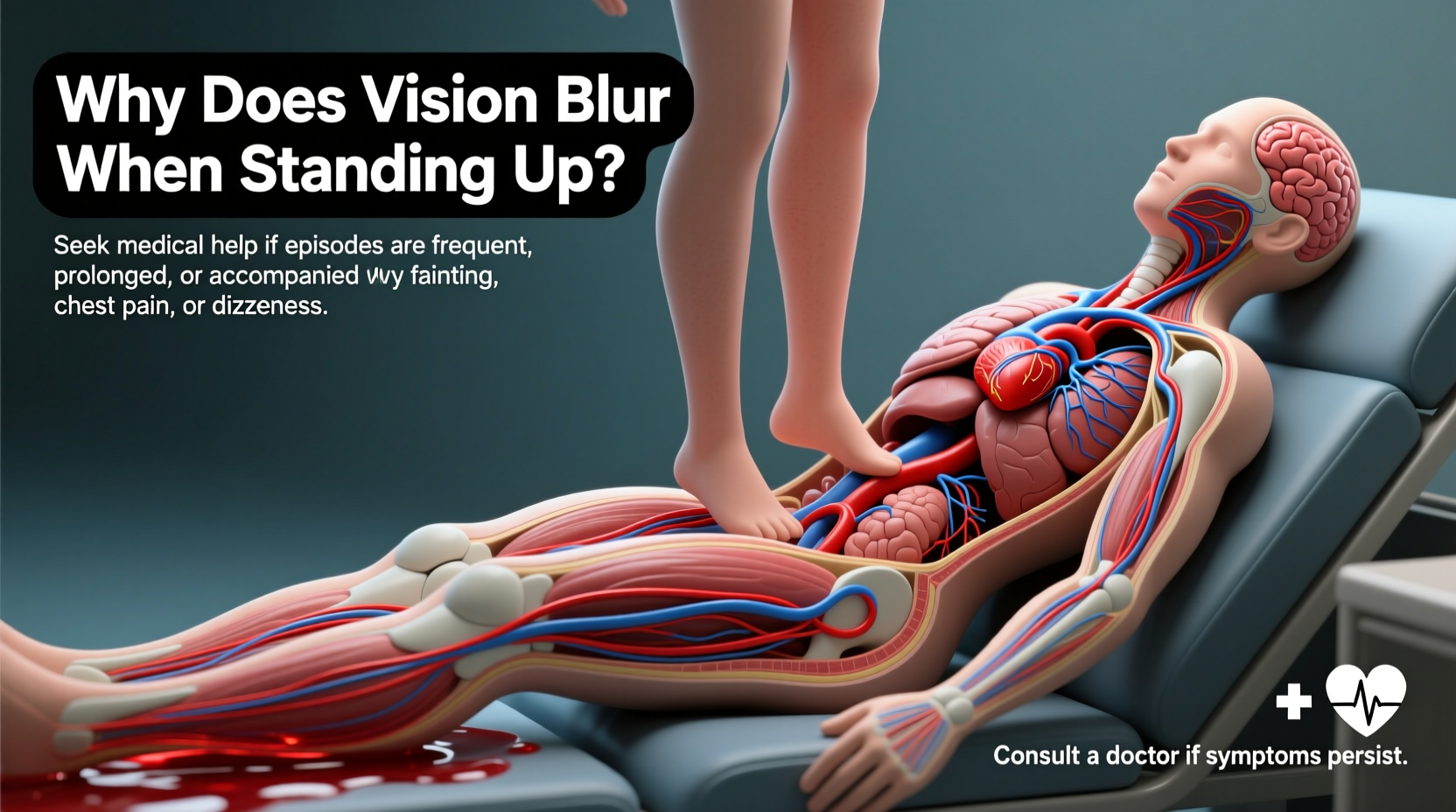
When you transition rapidly from sitting or lying down to standing, gravity pulls blood downward into your legs and abdomen. This temporary pooling reduces the volume of blood returning to your heart, which in turn lowers cardiac output and blood pressure. As a result, less oxygen-rich blood reaches the brain—including the visual cortex responsible for processing sight.
This brief drop in cerebral perfusion (blood flow to the brain) leads to transient visual disturbances such as blurring, darkening, \"seeing stars,\" or even momentary tunnel vision. The technical term for this condition is **orthostatic hypotension**, also known as postural hypotension. It occurs when systolic blood pressure drops by at least 20 mm Hg or diastolic pressure by 10 mm Hg within three minutes of standing.
The autonomic nervous system normally compensates almost instantly: blood vessels constrict, heart rate increases, and blood flow stabilizes. But if this reflex is delayed or impaired—due to dehydration, medications, aging, or neurological conditions—the brain experiences a brief \"power shortage,\" manifesting as visual blurring.
Common Causes of Postural Vision Blurring
Not all cases of blurry vision upon standing are equal. Some stem from easily correctable lifestyle factors; others may point to chronic medical conditions. Below are the most frequent contributors:
- Dehydration: Inadequate fluid intake reduces blood volume, making it harder for the body to maintain pressure during positional changes.
- Low blood sugar (hypoglycemia): Especially in people with diabetes, low glucose levels impair brain function and vascular response.
- Medications: Diuretics, antihypertensives, antidepressants, and Parkinson’s drugs can interfere with blood pressure regulation.
- Prolonged bed rest: Immobility weakens circulatory adaptation, increasing susceptibility to orthostatic drops.
- Aging: With age, baroreceptor sensitivity declines, slowing the body's ability to adjust blood pressure.
- Pregnancy: Circulatory demands increase while vascular tone decreases, raising the risk of dizziness and visual disturbances.
- Neurological disorders: Conditions like Parkinson’s disease, multiple system atrophy, or diabetic neuropathy damage autonomic nerves involved in blood pressure control.
“Even healthy individuals can experience transient blurring when standing too fast, but recurrent episodes should never be dismissed as 'just part of getting older.'” — Dr. Lena Patel, Neurologist and Autonomic Specialist
When Blurred Vision Signals a More Serious Problem
Occasional, brief visual blurring that resolves within seconds is typically benign. However, certain patterns and accompanying symptoms suggest an underlying pathology requiring evaluation.
Seek prompt medical attention if you experience any of the following:
- Blurred vision lasting more than 30 seconds after standing
- Frequent episodes occurring multiple times per week
- Syncope (fainting) or near-fainting spells
- Chest pain, palpitations, or irregular heartbeat
- Nausea, sweating, or confusion alongside visual changes
- Double vision, slurred speech, or limb weakness—especially if not clearly tied to posture
- Symptoms worsening over time despite hydration and slow rising
These red flags could indicate cardiovascular disease, autonomic dysfunction, inner ear disorders, or cerebrovascular issues such as transient ischemic attacks (TIAs). In rare cases, persistent orthostatic intolerance may be linked to conditions like POTS (Postural Orthostatic Tachycardia Syndrome), where heart rate spikes abnormally upon standing without adequate blood pressure support.
Step-by-Step Guide to Managing and Preventing Episodes
For most people, simple behavioral adjustments significantly reduce or eliminate postural vision blurring. Follow this practical timeline to regain stability:
- Upon waking or after prolonged sitting: Sit on the edge of the bed or chair for 15–30 seconds before standing. Allow your circulation to adjust gradually.
- Increase daily fluid intake: Aim for 6–8 glasses of water per day unless contraindicated by kidney or heart conditions.
- Maintain balanced meals: Avoid skipping meals to prevent hypoglycemia. Include moderate salt intake if advised by your doctor (salt helps retain fluid and raise blood pressure).
- Review medications: Consult your physician about any drugs that might contribute to low blood pressure. Do not stop prescriptions without guidance.
- Engage in regular physical activity: Exercise strengthens vascular tone and improves autonomic responsiveness. Focus on leg muscle conditioning (e.g., walking, cycling) to enhance venous return.
- Use compression stockings: These apply gentle pressure to the lower limbs, reducing blood pooling and supporting circulation.
- Monitor symptoms: Keep a log noting frequency, duration, triggers, and associated symptoms. Bring this to your healthcare provider for accurate diagnosis.
Do’s and Don’ts: Quick Reference Table
| Do’s | Don’ts |
|---|---|
| Rise slowly from lying or seated positions | Stand up abruptly after resting |
| Stay hydrated throughout the day | Consume excessive alcohol or caffeine (both can dehydrate) |
| Eat small, frequent meals to stabilize blood sugar | Skip meals or fast for extended periods |
| Wear compression garments if recommended | Ignore recurring symptoms thinking they’ll resolve on their own |
| Track symptoms and discuss them with your doctor | Self-diagnose or assume it’s “just aging” without evaluation |
Real-Life Example: Recognizing a Hidden Condition
Mark, a 52-year-old office worker, began noticing he’d frequently see “gray fog” when standing from his desk chair. At first, he brushed it off as fatigue. Over several months, the episodes became more frequent—even happening after short sits. He also started feeling lightheaded and occasionally nauseated.
After nearly fainting in a meeting, Mark visited his primary care physician. Initial tests revealed normal EKG and basic labs, but a tilt-table test confirmed significant orthostatic hypotension. Further investigation uncovered early-stage autonomic neuropathy related to undiagnosed type 2 diabetes. With better glucose control, increased fluid intake, and adjusted medication, Mark’s symptoms improved dramatically within six weeks.
His case illustrates how seemingly minor visual disturbances can serve as early warnings for systemic disease—emphasizing the importance of timely assessment.
FAQ: Common Questions About Blurry Vision When Standing
Is it normal to see black spots or stars when standing up?
Yes, seeing brief flashes, stars, or darkening is common with rapid standing and usually lasts only 1–5 seconds. It reflects a momentary dip in brain blood flow. If these episodes are prolonged, painful, or accompanied by other neurological symptoms, consult a healthcare provider.
Can anxiety cause blurred vision when standing?
Anxiety doesn’t directly cause orthostatic hypotension, but it can amplify symptoms. Hyperventilation during anxious episodes alters blood chemistry, potentially lowering carbon dioxide levels and constricting cerebral blood vessels. This may worsen dizziness or visual blurring upon standing. However, true orthostatic symptoms persist regardless of emotional state and should be evaluated independently.
Why do I feel fine lying down but dizzy and blurry when upright?
This pattern strongly suggests a postural component to your symptoms. When horizontal, blood distributes evenly. Upon standing, gravitational stress exposes weaknesses in your body’s ability to regulate blood pressure. Conditions like POTS, adrenal insufficiency, or volume depletion often present this way and require specialized testing.
Expert Insight: The Role of Early Detection
Many patients minimize episodic vision changes, assuming they’re trivial or inevitable with age. Yet clinicians emphasize that consistent monitoring and early intervention can prevent falls, injuries, and progression of underlying diseases.
“Patients often wait years before reporting these symptoms. By then, they’ve adapted their lives around fear of falling. Early recognition allows us to intervene before quality of life erodes.” — Dr. Carlos Mendez, Cardiologist and Hypertension Specialist
Diagnostic tools such as ambulatory blood pressure monitoring, echocardiograms, and autonomic function tests help pinpoint whether the issue lies in the heart, blood volume, nervous system, or medication effects. Treatment is highly individualized—from adjusting fluids and salt intake to prescribing fludrocortisone or midodrine in severe cases.
Conclusion: Listen to Your Body and Act Proactively
Blurred vision when standing up too quickly is more than just a minor inconvenience—it’s a physiological signal worth interpreting. While often temporary and manageable through lifestyle changes, recurrent or worsening symptoms demand medical scrutiny. Ignoring them risks missing treatable conditions ranging from dehydration to neurodegenerative disorders.
You don’t need to live with constant dizziness or visual instability. Small daily habits—like rising slowly, staying hydrated, and tracking your symptoms—can make a profound difference. If uncertainty persists, schedule a visit with your healthcare provider. Clarity starts not just with your vision, but with informed action.




 浙公网安备
33010002000092号
浙公网安备
33010002000092号 浙B2-20120091-4
Comments
No comments yet. Why don't you start the discussion?