
It happens in the most unexpected moments: you're sharing exciting news, giving a passionate presentation, or reuniting with a close friend—and suddenly, your voice breaks mid-sentence. The pitch shifts, the tone wavers, and for a split second, you feel self-conscious. While occasional voice cracking is completely normal, frequent disruptions during emotional highs can be frustrating, especially if they undermine your confidence in social or professional settings.
The truth is, voice cracking when excited isn't a flaw—it's a physiological response rooted in your nervous system, breathing patterns, and vocal anatomy. Understanding the science behind it empowers you to manage it effectively. More importantly, learning targeted strategies allows you to maintain vocal control without suppressing your enthusiasm. This article explores the causes of voice cracking under excitement and provides actionable, evidence-based methods to stabilize your voice and speak with clarity and confidence.
The Physiology Behind Voice Cracking
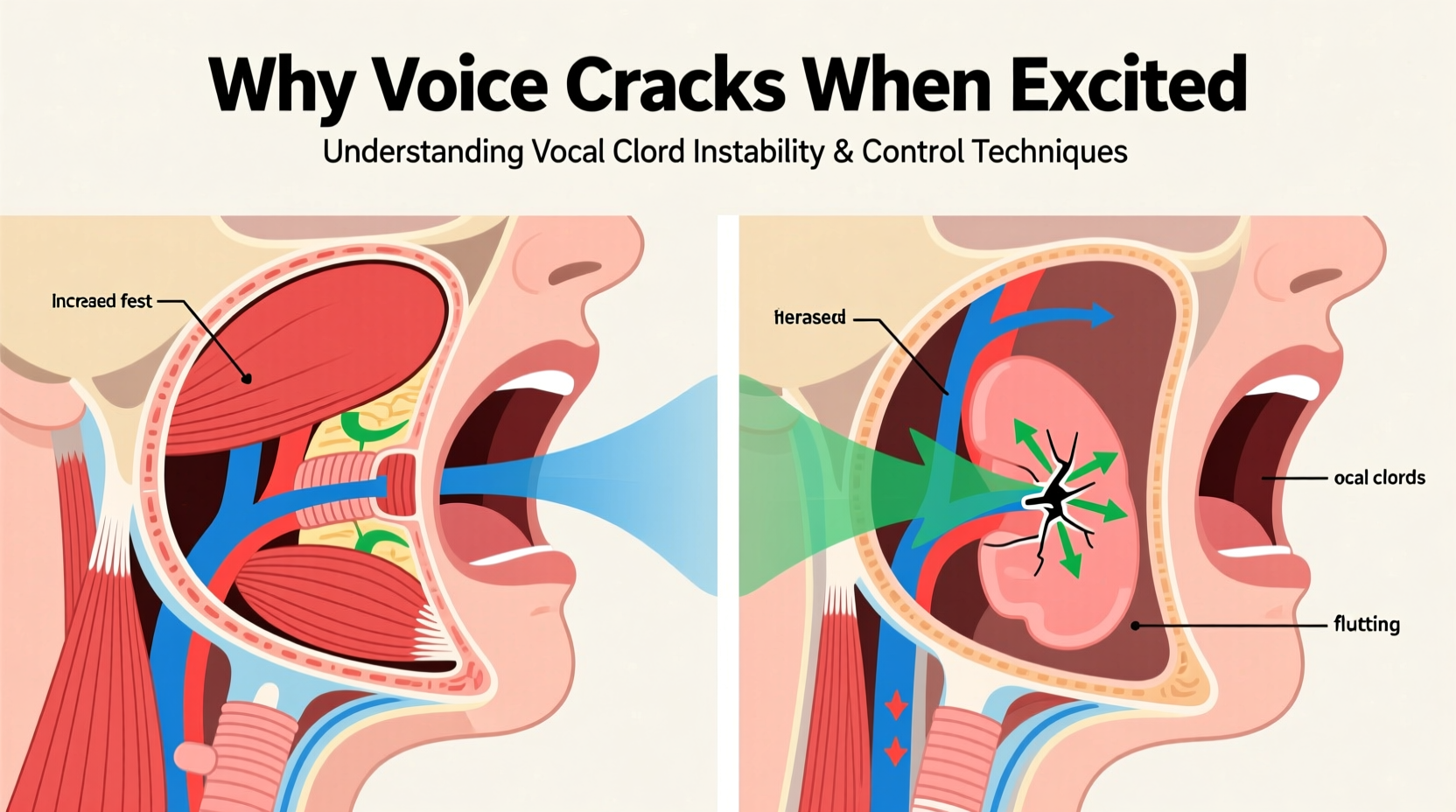
Your voice is produced by coordinated activity between your lungs, larynx (voice box), and vocal folds. When you speak, air from your lungs passes through the vocal folds, causing them to vibrate and produce sound. The pitch and quality of your voice depend on the tension, length, and position of these folds, all controlled by small muscles in the larynx.
Excitement triggers your sympathetic nervous system—the same system responsible for the \"fight-or-flight\" response. This leads to increased heart rate, rapid breathing, and muscle tension throughout the body, including the laryngeal muscles. When these delicate muscles become tense or uncoordinated due to adrenaline, the vocal folds may not close or vibrate evenly, resulting in a crack or sudden shift in pitch.
This phenomenon is especially common during adolescence, when hormonal changes cause the larynx to grow rapidly. But adults are not immune. Emotional arousal—even positive excitement—can destabilize vocal control, particularly if you're already prone to shallow breathing or vocal strain.
Why Excitement Triggers Vocal Instability
Excitement doesn’t just affect your mood—it directly impacts your physical state in ways that challenge vocal consistency. Several interrelated factors contribute to voice cracking when emotions run high:
- Rapid, shallow breathing: Excitement often leads to hyperventilation or chest-dominant breathing, reducing airflow control needed for steady phonation.
- Laryngeal muscle tension: Adrenaline tightens the muscles around the voice box, interfering with smooth vibration of the vocal folds.
- Vocal overuse or fatigue: If you've been talking extensively before the moment of excitement, your vocal cords may already be strained.
- Pitch elevation: People naturally raise their pitch when excited. Sudden jumps in pitch can exceed the current coordination capacity of the larynx, causing cracks.
- Dehydration: Dry vocal folds are more prone to irregular vibrations. Stress and rapid breathing exacerbate dehydration.
These elements combine to create what voice coaches call \"vocal breaks\"—not a sign of weakness, but a mismatch between emotional intensity and neuromuscular control.
“Emotional excitement bypasses conscious control and activates automatic physiological responses. Training your voice under simulated emotional conditions builds resilience.” — Dr. Lena Torres, Speech-Language Pathologist and Voice Specialist
Techniques to Control Your Voice When Excited
While you can't eliminate excitement, you can train your body to respond with greater vocal stability. The key lies in building awareness, improving breath support, and conditioning your vocal mechanism for emotional variability.
1. Master Diaphragmatic Breathing
Controlled breathing is the foundation of vocal stability. During excitement, most people default to rapid, shallow breaths from the chest, which destabilizes voice production.
To counteract this, practice diaphragmatic breathing daily:
- Sit or lie down comfortably, placing one hand on your chest and the other on your abdomen.
- Inhale slowly through your nose, letting your belly rise while keeping your chest still.
- Exhale slowly through pursed lips, feeling your abdomen fall.
- Repeat for 5–10 minutes, aiming for 6–8 breaths per minute.
When you feel excitement rising, take one deliberate diaphragmatic breath before speaking. This grounds your nervous system and provides steady airflow to support your voice.
2. Use the “Pause-and-Anchor” Technique
Before delivering emotionally charged statements—like announcing good news or expressing passion—insert a brief pause. Use that moment to:
- Take a full breath from the diaphragm.
- Relax your jaw and shoulders.
- Set your intended pitch slightly lower than your natural excited tone.
This anchors your voice in a stable register before emotion takes over.
3. Practice Pitch Glides (Sirens)
Vocal slides help increase flexibility and coordination between your vocal registers. Practice them daily to reduce cracking between low and high pitches.
How to do it:
- Start at your lowest comfortable note.
- Slowly glide up to your highest note like a siren, then back down.
- Keep the transition smooth—no jumps or breaks.
- Repeat 5 times, staying within your comfortable range.
This exercise trains your vocal folds to transition seamlessly across pitches, minimizing the chance of cracking when your voice naturally rises with excitement.
Vocal Care Checklist for Long-Term Stability
Maintaining vocal health reduces susceptibility to cracking under stress. Follow this daily checklist to keep your voice resilient:
- ✅ Drink at least 6–8 glasses of water daily to keep vocal folds lubricated.
- ✅ Avoid caffeine and alcohol before important speaking moments—they dehydrate the vocal cords.
- ✅ Warm up your voice for 5 minutes before long conversations or presentations.
- ✅ Limit throat clearing; sip water instead to clear irritation.
- ✅ Get adequate sleep—fatigue weakens neuromuscular coordination.
- ✅ Practice mindfulness or meditation to improve emotional regulation.
Do’s and Don’ts of Managing an Excitable Voice
| Do | Don’t |
|---|---|
| Use a grounding breath before speaking passionately. | Hold your breath or speak while inhaling. |
| Speak at a slightly lower pitch than usual when excited. | Force a deep voice; aim for relaxed, natural resonance. |
| Stay hydrated throughout the day. | Shout or whisper excessively when fatigued. |
| Practice vocal exercises regularly, not just before events. | Ignore persistent hoarseness or pain—consult a specialist. |
Real-Life Example: Overcoming Stage Excitement
James, a 28-year-old marketing executive, loved presenting new campaigns—but every time he shared ideas he was passionate about, his voice would crack, especially on high-energy phrases. Colleagues didn’t mind, but James felt it made him seem less confident.
He began working with a voice coach who diagnosed shallow breathing and laryngeal tension as primary culprits. For four weeks, James practiced diaphragmatic breathing twice daily, did pitch glides every morning, and recorded himself speaking enthusiastically about topics he cared about.
The breakthrough came when he applied the “pause-and-anchor” technique during a team meeting. Before announcing a successful campaign result, he paused, took a deep abdominal breath, and started at a slightly lower pitch. His voice remained steady throughout—even as his excitement showed in his tone and expression.
Within two months, voice cracks became rare. More importantly, James learned that emotional expression and vocal control could coexist.
Step-by-Step Guide to Immediate Voice Control
When you feel excitement building and fear a vocal break, follow this real-time protocol:
- Pause: Stop speaking for 1–2 seconds. This interrupts the stress-response cycle.
- Breathe: Inhale deeply from your diaphragm—feel your lower ribs expand.
- Relax: Release tension in your jaw, neck, and shoulders. Let your tongue rest softly in your mouth.
- Anchor: Begin your next sentence at a slightly lower pitch than your current tone.
- Support: Maintain steady airflow as you speak, imagining your voice riding on a column of air from your core.
With repetition, this sequence becomes automatic, allowing you to express excitement without losing vocal control.
Frequently Asked Questions
Is voice cracking a sign of a medical problem?
Occasional voice cracking, especially during emotional moments, is normal. However, if cracking is accompanied by persistent hoarseness, pain, or voice loss lasting more than two weeks, consult an ENT specialist or speech-language pathologist to rule out nodules, polyps, or nerve issues.
Can adults still experience voice breaks like teenagers?
Yes. While adolescent voice changes are due to physical growth, adults can experience similar breaks under stress, fatigue, or emotional arousal. The mechanism differs—adults typically face neuromuscular coordination challenges rather than anatomical shifts.
Will vocal training make me sound less enthusiastic?
No. Proper vocal training enhances expressiveness. You’ll gain more dynamic control, allowing you to modulate volume, pitch, and tone intentionally—making your excitement more impactful, not less genuine.
Conclusion: Speak with Passion and Precision
Your voice cracking when excited is not a flaw to suppress, but a signal to refine. It reflects the depth of your emotion and the sensitivity of your vocal instrument. With understanding and practice, you can transform those fleeting cracks into moments of powerful, controlled expression.
Vocal mastery isn’t about eliminating emotion—it’s about channeling it with clarity and strength. Whether you’re sharing joy with loved ones, advocating for an idea, or speaking in public, your voice should reflect both your passion and your presence.




 浙公网安备
33010002000092号
浙公网安备
33010002000092号 浙B2-20120091-4
Comments
No comments yet. Why don't you start the discussion?