
It’s December. The tree is up, the ornaments are hung, and you plug in your favorite string of Christmas lights—only to see half the strand remain stubbornly dark. You check the outlet, the fuse, even reseat the plugs, but nothing works. Then you notice: one tiny bulb is burnt out. Could that really be the reason the whole section failed?
The answer is yes—and it’s not magic or bad luck. It’s basic electrical engineering. Traditional incandescent Christmas light strands are wired in series, meaning each bulb depends on the next to complete the circuit. When one fails, especially if its filament breaks, the entire circuit breaks. Understanding why this happens—and how to fix it—is key to restoring holiday cheer without replacing the whole string.
How Series Circuits Work in Christmas Lights
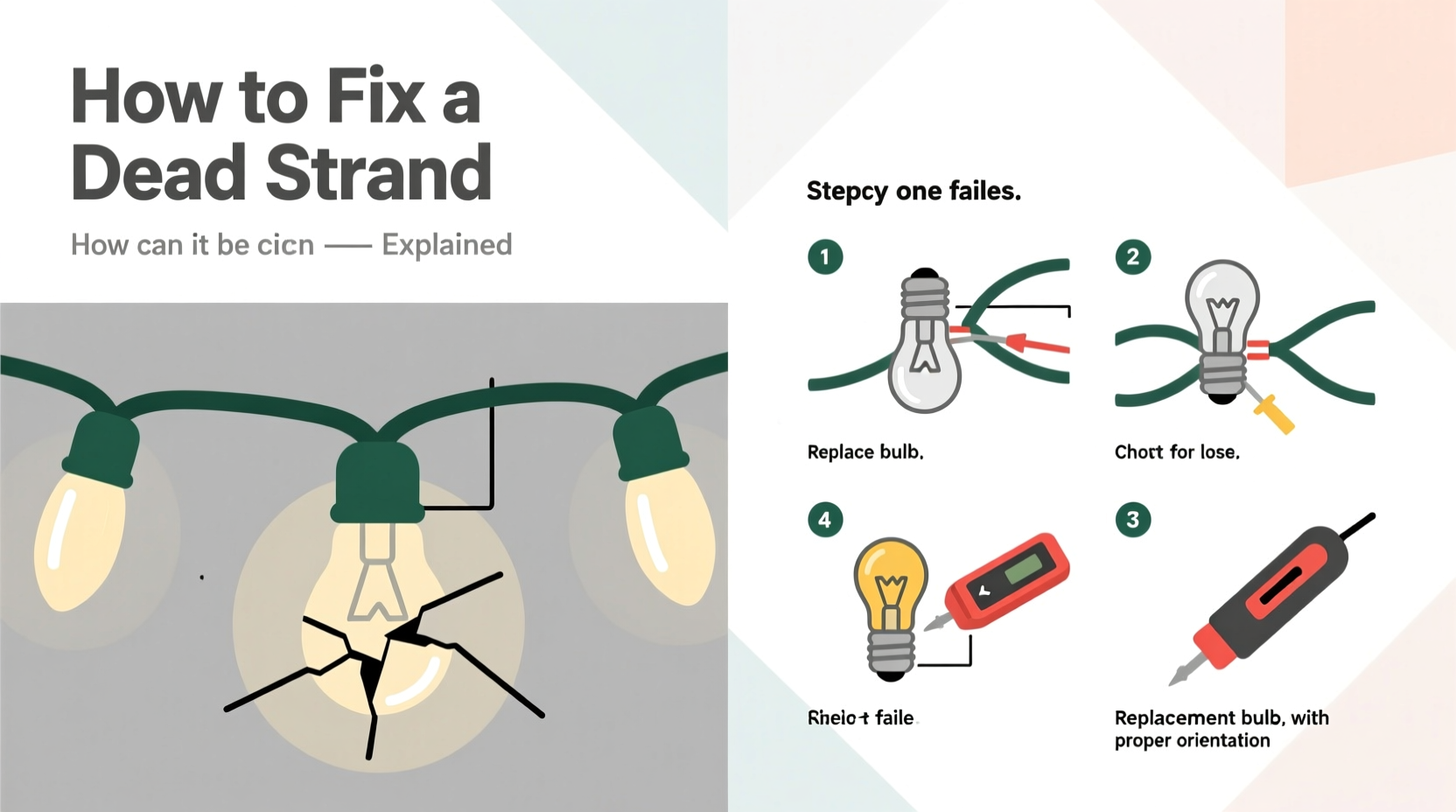
Most older or budget-friendly Christmas light sets use a series circuit design. In this configuration, electricity flows from the plug, through each bulb in sequence, and returns to complete the circuit. Each bulb acts like a small resistor, allowing just enough current to produce light without overheating.
Imagine a looped necklace where each bead must stay intact for the chain to remain whole. If one bead breaks, the entire chain splits. Similarly, if one bulb burns out—specifically if its internal filament snaps—the electrical path is severed. No current can flow beyond that point, so the rest of the bulbs downstream go dark.
This is why some strands go completely dark while others only lose half: many modern strings are divided into two or more parallel circuits. If one series segment fails, the others may still light up.
“Series-wired lights are cost-effective to manufacture but notoriously fragile in operation. One weak link brings down the whole chain.” — Dr. Alan Reeves, Electrical Engineer & Holiday Lighting Consultant
Why Only One Bulb Can Kill the Whole Strand
Not all bulb failures cause total darkness. The outcome depends on how the bulb failed and what type of bulb it is.
In traditional incandescent mini-lights, the filament inside the bulb heats up to produce light. Over time, thermal stress causes the filament to weaken and eventually break. When it does, the circuit opens, stopping the flow of electricity. This is the most common reason an entire section goes dark.
Some newer bulbs come with a \"shunt\" — a small wire coating designed to activate when the filament fails. The shunt melts slightly and creates a bypass, allowing current to continue flowing to the remaining bulbs. However, shunts don’t always work reliably, especially in older or low-quality strings.
LED strands behave differently. Many are wired in series too, but they often include built-in resistors and parallel pathways that allow partial lighting even if one LED fails. Still, cheaper LED strings may lack redundancy and fail entirely due to a single faulty unit.
Signs Your Strand Uses Series Wiring
- Half or all lights go out when one bulb is removed
- Bulbs appear dimmer than expected (voltage is shared)
- Common in older or inexpensive light sets
- Frequent need to hunt for “the one bad bulb”
Step-by-Step Guide to Fix a Dead Christmas Light Strand
Finding and fixing a dead bulb in a series-wired strand takes patience, but it’s entirely doable with the right approach. Follow this proven process to restore your lights efficiently.
- Unplug the strand immediately. Safety first. Never handle lights while powered.
- Inspect visually for obvious damage. Look for broken, discolored, or loose bulbs. Sometimes a blackened bulb indicates burnout.
- Check the fuses. Most plug ends have a small compartment holding two fuses. Use a spare fuse (often included) or test with a multimeter. Replace if blown.
- Plug in the strand temporarily. Observe which sections are lit. This helps isolate the problem area.
- Use the half-split method. Mentally divide the dark section in half. Remove the middle bulb and test it in a known-working socket. If it doesn’t light, replace it. If it does, the issue lies elsewhere.
- Walk the line. Continue testing bulbs in the affected zone, moving toward the power source or outward depending on results. Focus on sockets that feel loose or show corrosion.
- Try a light tester tool. Devices like the “LightKeeper Pro” send a pulse through the strand to clear shunt failures or confirm continuity without removing every bulb.
- Replace faulty bulbs. Use exact replacements—same voltage, base size, and wattage. Mismatched bulbs can overload the circuit.
- Re-test the full strand. Once repaired, plug it in to confirm full functionality.
Comparison: Series vs. Parallel vs. Modern Hybrid Strings
| Circuit Type | Failure Impact | Lifespan | Repair Difficulty | Best For |
|---|---|---|---|---|
| Series (Traditional Incandescent) | One bulb = whole section dark | Shorter (filament wear) | High (bulb hunting) | Budget displays, nostalgic look |
| Parallel (Rare in mini-lights) | Only one bulb dies | Longer | Low | Commercial installations |
| Hybrid LED (Modern) | Partial failure or blinking | Very long (25,000+ hours) | Medium (check connectors) | Outdoor use, long-term setups |
Note: True parallel wiring is rare in consumer-grade mini-lights due to higher manufacturing costs. Most “replacement-proof” strings are actually segmented series circuits or use advanced shunting.
Real Example: Sarah’s Pre-Christmas Panic
Sarah decorated her porch every Thanksgiving weekend. In 2023, she strung up her favorite icicle lights—three years old, copper wire, 150 bulbs. She plugged them in. Nothing.
She checked the outlet—fine. Fuses? Both good. She noticed one end flickered briefly. That told her the circuit was partially intact. Using the half-split method, she isolated the dark third of the strand. After removing six bulbs, she found one with a visibly broken filament. She replaced it with a spare from last year’s kit. The entire strand lit up.
But the next morning, it failed again. This time, she borrowed a neighbor’s LightKeeper Pro. A few trigger pulls later, the lights stayed on. The tool had cleared a stuck shunt in a different bulb—one that looked fine but wasn’t conducting.
Sarah learned two things: always keep spare bulbs labeled, and invest in a diagnostic tool for recurring issues.
Prevention Checklist: Keep Your Lights Working Year After Year
Instead of reacting to failures, take proactive steps to extend the life of your Christmas lights.
- ✅ Store lights on cardboard reels or foam tubes to prevent tangling and wire stress
- ✅ Use bulb protectors or covers in high-wind or snowy areas
- ✅ Inspect strands annually before installation
- ✅ Replace frayed wires or cracked plugs immediately
- ✅ Avoid connecting more than three strands end-to-end (overloads circuit)
- ✅ Use timers to limit daily runtime (reduces heat buildup)
- ✅ Choose LED strings for longer life and lower energy use
- ✅ Label containers by location (e.g., “Front Porch – Red Icicles”)
“Proper storage and early diagnostics save more lights than any repair kit.” — Maria Tran, Holiday Display Technician, 12+ years experience
Frequently Asked Questions
Can a loose bulb cause the whole strand to go out?
Yes. Even if the filament is intact, a loose bulb can break contact in a series circuit. The socket must make firm electrical connection. Wiggle each bulb gently while the strand is plugged in (carefully!) to see if lights flicker back on.
Why do my new LED lights blink or dim instead of going out?
This often indicates a failing driver (internal power converter) or moisture in the plug. Unlike incandescents, LEDs require stable DC voltage. A damaged component may cause erratic behavior rather than total failure. Check seals and connections first.
Is there a way to convert series lights to parallel?
Technically possible but impractical. Rewiring hundreds of bulbs individually would take hours and likely exceed the cost of buying new parallel-ready strands. Instead, upgrade to commercial-grade LED strings marketed as “single-bulb failure proof.”
Conclusion: Don’t Toss It—Fix It and Prevent Future Failures
A single failed bulb shouldn’t ruin your holiday display. With a clear understanding of series circuits, a systematic troubleshooting method, and a few smart habits, you can keep your Christmas lights glowing for years. The next time a strand goes dark, resist the urge to throw it away. Instead, grab your spare bulbs, inspect the fuses, and walk the circuit with confidence.
Upgrade where it counts—switch to quality LED strings for critical areas—and maintain what you have. Small efforts now prevent frustration later. Your future self, standing in the cold December wind trying to decorate at midnight, will thank you.




 浙公网安备
33010002000092号
浙公网安备
33010002000092号 浙B2-20120091-4
Comments
No comments yet. Why don't you start the discussion?