
For many players, jumping into a match of Overwatch 2 should feel like stepping onto a level playing field—where skill, coordination, and strategy determine the outcome. Yet, more often than not, players report lopsided games, frustrating streaks, and matches that feel predetermined by mismatched teams. Whether you're climbing the competitive ladder or enjoying quick play, the sensation of unfair matchmaking has become a persistent undercurrent in the community. The question isn’t just whether matchmaking is broken—it’s why it feels that way, and what can realistically be done to fix it.
The Perception vs. Reality of Matchmaking Imbalance
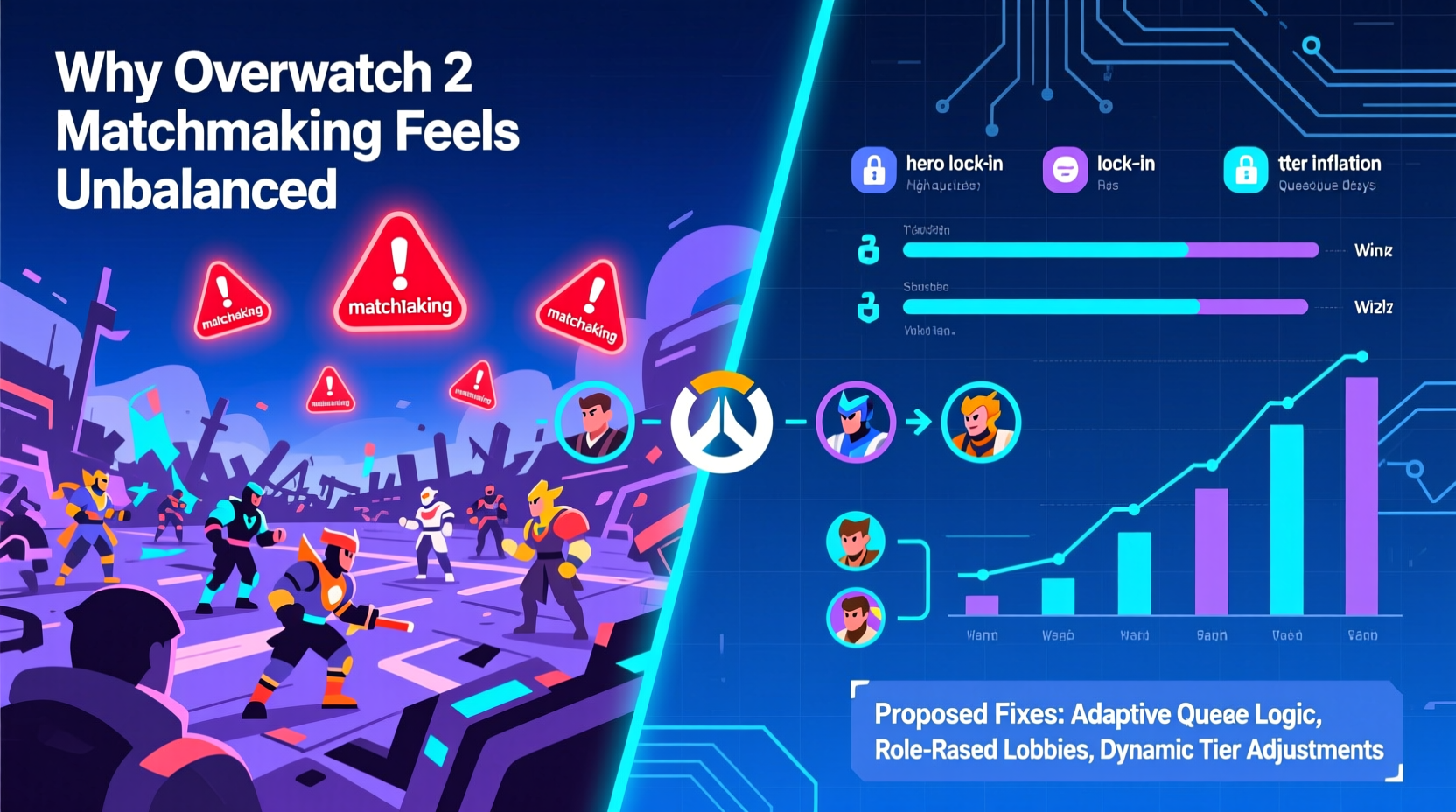
One of the first challenges in addressing Overwatch 2’s matchmaking issues is distinguishing between perception and actual system flaws. Players naturally notice losses more acutely than wins, especially when they involve one-sided scorelines or seemingly superior opponents. However, data from Blizzard indicates that the system aims for balanced win probability—typically targeting around a 50% expected win rate per team. So why do so many players still feel mismatched?
The answer lies in how skill is measured and distributed. Overwatch 2 uses a hidden Matchmaking Rating (MMR) to pair players, which evolves based on performance and outcomes. But this MMR doesn't always align with visible rank, leading to situations where a Grandmaster-ranked player might carry a team of low Diamond players, creating an internal imbalance even if the overall team strength appears matched.
Key Reasons Why Matchmaking Feels Unbalanced
1. Rank Inflation and Deflation Due to Role Queue
Overwatch 2’s shift to role queue—where players commit to Tank, Damage, or Support before queuing—was intended to create better team composition. However, it also disrupted the balance of player distribution across roles. Some roles, particularly Damage, are oversaturated, while Tanks and Supports remain in short supply. To fill slots quickly, the system often promotes players faster in underserved roles or delays queue times for others.
This leads to artificial rank inflation: a Support player might reach high ranks not purely due to individual skill, but because their role is in demand. When these players face highly skilled opponents in critical positions, the gap becomes apparent—and frustrating.
2. Hidden MMR Drift and Streaking
Blizzard’s MMR system adjusts behind the scenes based on wins, losses, and performance metrics. However, after extended breaks or inconsistent play, a player’s visible rank may no longer reflect their true skill level. This creates “smurf-like” experiences where players dominate early games until their MMR catches up—or suffer repeated losses as the system corrects itself.
Streaks of bad matches often occur during this recalibration phase, reinforcing the belief that matchmaking is broken, when in fact it’s adapting.
3. Team Synergy and Communication Gaps
No algorithm can fully account for human dynamics. Two teams with identical average MMR can perform drastically differently based on communication, synergy, and willingness to coordinate. A random group of solo queue players will rarely match the cohesion of a pre-made trio or six-stack—even if their ratings are equivalent.
Games decided by ultimate economy, coordinated dives, or objective control often come down to teamwork rather than individual talent, making losses feel unjust when your team lacks coordination.
4. Smurfs and Boosting
While difficult to quantify, smurf accounts and boosting services distort matchmaking integrity. Experienced players using alternate accounts at lower ranks can dominate games, warping win rates and frustrating legitimate players climbing the ranks. Similarly, boosting inflates ranks without corresponding MMR growth, introducing volatility into the system.
“Matchmaking systems are only as fair as the data they’re built on. When player behavior skews input—through smurfing, quitting, or boosting—the entire ecosystem suffers.” — Dr. Lena Torres, Game Systems Analyst
Potential Fixes to Improve Overwatch 2 Matchmaking
While no system is perfect, several actionable changes could reduce perceived imbalance and improve the overall player experience.
1. Transparent MMR Feedback
Currently, players have no access to their MMR. Introducing a semi-transparent system—such as showing a range or trend (e.g., “Your performance suggests you’re nearing Master”)—would help players understand why they’re being matched certain ways. This transparency reduces frustration and sets realistic expectations.
2. Dynamic Role-Based MMR Weighting
Instead of treating all roles equally, the system could weight MMR based on role scarcity and impact. For example, a high-MMR Support player might be prioritized more heavily in balancing teams, recognizing that healer performance often dictates game outcomes. This would prevent situations where a single weak link in healing collapses a well-matched team.
3. Pre-Match Win Probability Disclosure
Before loading into a game, displaying an estimated win chance (e.g., “Your team has a 48–52% chance to win”) could set expectations and validate perceived fairness. While not shown mid-match, this small detail could significantly reduce post-loss frustration.
4. Stricter Anti-Smurf and Anti-Boosting Measures
Implementing behavioral analytics to detect smurfing patterns—such as rapid rank progression with high K/D ratios—could allow Blizzard to apply temporary MMR adjustments or extended queue times for suspicious accounts. Additionally, harsher penalties for boosting (account suspension, rank rollback) would deter exploitation.
5. Post-Match Performance Calibration
Integrate more nuanced performance signals into MMR adjustments—not just win/loss, but metrics like healing per minute, tank survivability, objective uptime, and assist contribution. A Support player who consistently tops leaderboards but loses due to poor team play shouldn’t be penalized as heavily as one who underperforms.
Checklist: How Players Can Improve Their Matchmaking Experience
- Play consistently to stabilize your MMR and avoid recalibration swings.
- Stick to one or two main roles to build reliable performance data.
- Avoid queue dodging or leaving games—this negatively impacts MMR and future matchups.
- Use voice chat or pings to improve team coordination, even in solo queue.
- Review replays to identify personal mistakes rather than blaming matchmaking.
- Report obvious smurfs or boosters via in-game tools to support fair play.
Real Example: The Diamond Support Player’s Dilemma
Jess, a dedicated Support main, reached Diamond in Season 7 after months of grinding. She primarily played Lucio and Mercy, focusing on mobility and timing. Despite her dedication, she began noticing a pattern: her team often collapsed within 90 seconds of spawning, even when she landed every boop and kept uptime high.
Frustrated, she reviewed several match replays. What she found wasn’t poor enemy play—but inconsistent teammate decision-making. Her Damage partners frequently dove without vision, and her Tank often got caught out of position. Meanwhile, the opposing team coordinated flanks and ultimate combos.
Jess realized her MMR was likely higher than her teammates’, but because she queued solo, the system couldn’t detect the team-level imbalance. Her solution? She started joining a small Discord group of regular players. Even three coordinated members made a noticeable difference in game control and win consistency.
Her experience illustrates that while matchmaking algorithms strive for numerical balance, real gameplay depends on behavior and synergy—elements that current systems struggle to quantify.
Comparison Table: Healthy vs. Unbalanced Match Characteristics
| Aspect | Healthy Match | Unbalanced Match |
|---|---|---|
| Team Coordination | Basic comms, shared objectives, ult pooling | Solo play, random dives, no strategy |
| Player Contribution | All roles fulfilling core responsibilities | One or more players AFK or off-role |
| Game Length | Matches last full duration (6–10 mins) | Games end in under 3 minutes |
| Score Flow | Back-and-forth pushes, contested fights | One-way payload, uncontested defense |
| Post-Match Feeling | \"We could’ve won with better plays\" | \"There was nothing I could do\" |
FAQ: Common Questions About Overwatch 2 Matchmaking
Does playing with friends make matchmaking worse?
Not necessarily. The system attempts to calculate combined MMR when pre-made groups queue together. However, large pre-mades (especially 5- or 6-player stacks) can create imbalances if their internal skill varies widely. Small groups (duos or trios) generally integrate well into the pool.
Why do I keep getting matched with or against smurfs?
Smurfs exploit the system by starting at lower ranks despite high skill. Because they win rapidly, they temporarily distort the skill pool until their MMR catches up. Blizzard has limited tools to detect them automatically, though reporting frequent dominators can help flag accounts for review.
Will role queue ever be removed to fix matchmaking?
It’s unlikely. Role queue remains a core design choice to ensure balanced team compositions. Removing it would likely lead to chaotic queues with multiple Damage players and no healers. Instead, Blizzard is more likely to refine role-based incentives and queue times.
Step-by-Step Guide to Improving Your Matchmaking Long-Term
- Establish Consistency: Play at least 3–4 sessions per week to maintain stable MMR calibration.
- Specialize Roles: Focus on mastering one hero per role to generate reliable performance data.
- Track Personal Metrics: Use third-party tools or in-game stats to monitor healing, damage, and objective time.
- Join a Casual Group: Find 1–2 regular teammates to improve coordination and team stability.
- Provide Feedback: Use Blizzard’s feedback channels to report recurring matchmaking concerns.
- Take Breaks Wisely: After long absences, expect a few adjustment games before performance stabilizes.
Conclusion: Toward Fairer, More Enjoyable Matches
Overwatch 2’s matchmaking system operates under complex constraints—balancing roles, managing hidden ratings, and accommodating millions of players with varying skill levels and behaviors. While it’s not flawless, much of the perceived imbalance stems from factors beyond pure algorithmic error: communication gaps, role shortages, and the invisible hand of MMR recalibration.
True improvement requires both developer action and player adaptation. Blizzard can enhance transparency, refine role-based balancing, and crack down on exploitation. Players, meanwhile, can focus on consistency, cooperation, and constructive self-review.




 浙公网安备
33010002000092号
浙公网安备
33010002000092号 浙B2-20120091-4
Comments
No comments yet. Why don't you start the discussion?