
There’s nothing quite like the confidence boost of wearing a fragrance you love—until it vanishes within an hour. You spritz with intention, only to catch no trace of scent by midday. This common frustration affects even the most expensive perfumes. The truth is, fragrance longevity isn’t just about price or brand; it’s influenced by chemistry, application technique, and environmental factors. Understanding why perfume fades—and how to combat it—can transform your experience from fleeting to unforgettable.
The Science Behind Fragrance Longevity
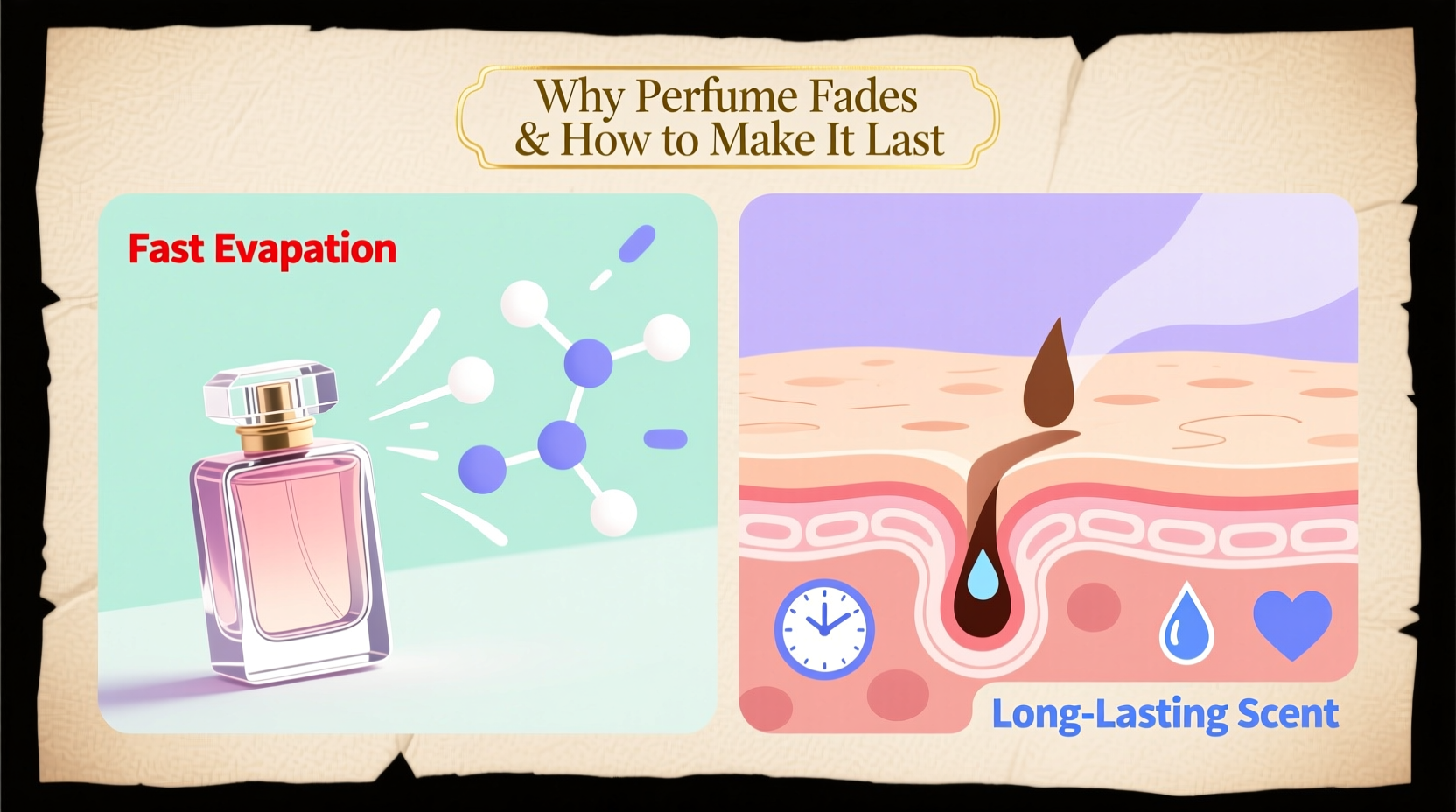
Perfume is composed of volatile aromatic compounds suspended in alcohol (and sometimes oil). These compounds evaporate at different rates, creating what’s known as the “scent pyramid”: top notes (initial impression), middle (heart) notes, and base notes (longest-lasting). The rate at which these notes dissipate depends on several scientific principles.
Fragrance molecules bind to skin proteins and lipids, but not all skin types retain them equally. Dry skin lacks the natural oils needed to hold onto scent molecules, causing faster evaporation. Conversely, oily skin tends to prolong fragrance life due to better molecular adhesion. Additionally, pH levels vary between individuals, affecting how certain ingredients react and degrade on contact.
Environmental conditions also play a role. High temperatures increase molecular motion, accelerating evaporation. Humidity can either dilute or amplify scents depending on concentration and composition. Even air pollution has been shown to break down certain fragrance compounds, particularly citrus and floral aldehydes.
“Fragrance is a dialogue between chemistry and biology. Two people wearing the same perfume may experience vastly different wear times based on their unique skin profiles.” — Dr. Lena Moretti, Cosmetic Chemist & Perfume Formulation Specialist
Why Your Perfume Fades Quickly: 5 Key Reasons
- Low Skin Moisture: Dry skin absorbs fragrance instead of holding it on the surface, reducing diffusion and longevity.
- Poor Application Technique: Spraying into the air and walking through it wastes up to 70% of the liquid and results in uneven distribution.
- Incompatible Skin pH: Acidic or alkaline skin can alter scent molecules, making them unstable or less perceptible.
- Fragrance Concentration: Eau de Toilette (EDT) typically contains 5–15% aromatic compounds, while Eau de Parfum (EDP) has 15–20%. Lower concentrations naturally fade faster.
- Storage Conditions: Heat, light, and oxygen degrade perfume over time, weakening its sillage and staying power—even before application.
How to Make Perfume Last Longer: A Step-by-Step Guide
Extending your fragrance’s lifespan doesn’t require expensive products—just smart habits. Follow this sequence for maximum effect:
- Exfoliate and Moisturize: Begin with clean, smooth skin. Use a gentle body scrub followed by an unscented or matching-scent moisturizer. Hydrated skin acts as a canvas that holds fragrance longer.
- Use a Scented Lotion or Vaseline Base: Apply a thin layer of petroleum jelly or a fragrance-free balm to pulse points. This creates a barrier that slows evaporation. <3> Layer with Matching Products: If available, use a complementary body wash, lotion, or roll-on oil from the same fragrance line. This builds a scent foundation.
- Spray Close to Pulse Points: Hold the bottle 3–5 inches from your skin and target warm areas: wrists, inner elbows, neck, behind ears, and décolletage. Avoid rubbing wrists together—it crushes delicate top notes.
- Reapply Strategically: Carry a travel-sized atomizer or rollerball. Reapply once after 3–4 hours, focusing on new pulse zones to refresh without overwhelming.
- Dress After Spraying: Let the mist settle on your skin before putting on clothes. Fabric absorbs scent well but can distort projection if sprayed directly.
Advanced Tip: Hair and Clothing Application
Lightly misting the ends of your hair or the inside hem of clothing allows scent to diffuse gradually throughout the day. Natural fibers like cotton and wool absorb fragrance better than synthetics. However, avoid spraying directly on silk or light-colored fabrics, as alcohol can cause staining.
Do’s and Don’ts of Perfume Longevity
| Do | Don't |
|---|---|
| Store perfume in a cool, dark place (e.g., drawer or cabinet) | Leave bottles in direct sunlight or humid bathrooms |
| Apply to moisturized skin | Spray on dry, flaky skin |
| Use matching fragrance family products for layering | Mix strong, clashing scents (e.g., vanilla + citrus + musk) |
| Keep original box to protect from light and temperature swings | Store multiple perfumes loosely together—fragrances can cross-contaminate |
| Rotate your collection seasonally | Use heavy oriental scents in high heat—they turn cloying |
Real-Life Example: From Frustration to All-Day Scent
Sophie, a marketing executive in London, loved her favorite floral-woody perfume but found it gone by lunchtime. She switched jobs and started commuting via crowded tube trains, where she noticed other people’s fragrances lingering far longer. Determined to solve the mystery, she consulted a beauty advisor who analyzed her routine.
The issue? Sophie applied EDT directly to dry wrists after washing her hands multiple times daily. Her frequent hand sanitizer use stripped natural oils, and the low-concentration formula had nothing to cling to. The advisor recommended switching to EDP, using a matching hand cream, and applying after moisturizing in the morning.
Within days, Sophie noticed her scent lasted past 6 PM. She now keeps a mini rollerball in her bag for a subtle reapplication before evening meetings. “It’s not just about smelling good,” she says. “It’s about feeling put-together all day.”
Expert-Backed Tips to Enhance Longevity
- Choose the Right Concentration: For long days or special events, opt for Eau de Parfum or Parfum (Extrait), which contain higher oil content and less alcohol.
- Avoid Over-Spraying: More isn’t better. Excess alcohol dries skin faster and dulls scent perception due to olfactory fatigue.
- Know Your Notes: Base notes like sandalwood, patchouli, vanilla, and amber last longest. If longevity matters, prioritize perfumes rich in these.
- Cool Down Before Applying: After exercise or sun exposure, wait until your body temperature normalizes. Hot skin accelerates evaporation.
Fragrance Longevity Checklist
Use this checklist daily to maximize your perfume’s staying power:
- ☑ Shower and pat skin dry, leaving it slightly damp
- ☑ Apply fragrance-free or matching-scent moisturizer
- ☑ Spray perfume 3–5 inches from pulse points (wrists, neck, elbows)
- ☑ Avoid rubbing wrists together
- ☑ Store bottle away from sunlight and heat
- ☑ Carry a travel refillable atomizer for touch-ups
- ☑ Refresh scent midday if needed, targeting new areas
Frequently Asked Questions
Does drinking water affect how long my perfume lasts?
Indirectly, yes. Hydration improves skin health and moisture retention, which helps hold fragrance molecules longer. Dehydrated skin is more porous and less effective at binding scent.
Can I mix perfumes to make them last longer?
Mixing can enhance complexity, but it won’t inherently extend longevity. However, layering a long-lasting base (like a musky oil) under a lighter top note spray can create a hybrid effect with improved endurance.
Why does my perfume smell different on me than on my friend?
This is due to individual skin chemistry—specifically pH, oil production, diet, medications, and even hormonal changes. What smells sweet and floral on one person might read warm and spicy on another.
Conclusion: Make Every Scent Last
Perfume fading quickly isn’t a flaw in the fragrance—it’s often a mismatch between product, application, and personal biology. By understanding the science of evaporation, optimizing your skincare prep, and refining your habits, you can enjoy richer, longer-lasting scent experiences without spending more.
Longevity isn’t magic; it’s method. Whether you’re wearing a signature scent for work or a bold new fragrance for a night out, these strategies ensure your presence lingers—subtly, elegantly, and unmistakably. Start tonight: check your storage, hydrate your skin, and plan tomorrow’s application with intention.




 浙公网安备
33010002000092号
浙公网安备
33010002000092号 浙B2-20120091-4
Comments
No comments yet. Why don't you start the discussion?