
Many people love the sweet, tangy flavor of fresh pineapple—but few expect the tingling, burning sensation that sometimes follows. If you’ve ever eaten a slice of pineapple only to feel like your tongue is being gently shredded, you’re not alone. This odd, slightly painful experience isn’t an allergy or a sign of spoiled fruit. It’s science. The culprit? An enzyme called bromelain, naturally present in pineapple. Understanding how this powerful compound works explains not just the burn, but also its surprising health benefits and how to minimize discomfort while enjoying one of nature’s most vibrant fruits.
The Science Behind the Sting: What Is Bromelain?
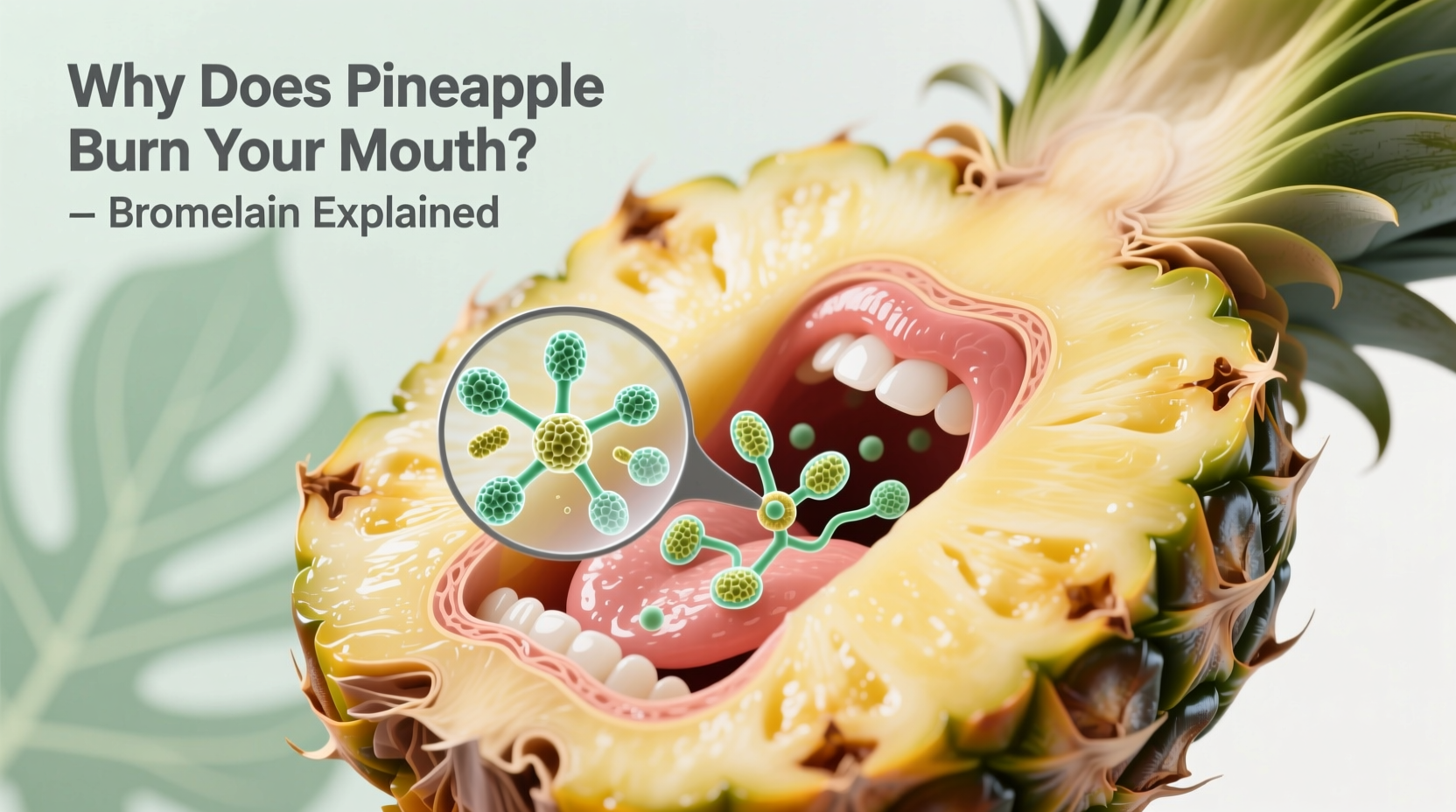
Bromelain is a group of proteolytic enzymes—proteins that break down other proteins—found primarily in the stem and fruit of the pineapple plant (*Ananas comosus*). These enzymes are so effective at dismantling protein structures that they’ve been used for centuries in traditional medicine and are now widely studied for their anti-inflammatory, digestive, and even wound-healing properties.
When you bite into fresh pineapple, bromelain goes to work immediately on the soft tissues in your mouth. Your tongue, cheeks, and lips are made up of proteins—just like meat. And much like how bromelain is used as a meat tenderizer in cooking, it starts breaking down the proteins in your oral mucosa. This enzymatic activity causes irritation, leading to that familiar stinging or prickling sensation.
The good news? This effect is temporary. Unlike actual chemical burns, the damage isn’t permanent. Once you stop eating pineapple and your saliva washes away the enzyme—or it gets deactivated by stomach acid—the process halts. Your mouth begins to heal within minutes to hours.
“Bromelain doesn’t harm you—it’s simply doing its job. The mouth irritation is a side effect of an otherwise beneficial enzyme.” — Dr. Lena Torres, Biochemist and Enzyme Researcher, University of California, Davis
Why Doesn’t Canned Pineapple Burn My Mouth?
If you’ve noticed that canned or cooked pineapple rarely causes discomfort, there’s a simple explanation: heat deactivates bromelain. During the canning process, pineapple is heated to high temperatures for preservation. This heat denatures the enzyme, rendering it inactive. As a result, the protein-digesting power is gone, along with the mouth-burning sensation.
Fresh pineapple, on the other hand, retains all its natural enzymes. That’s why the fresher the fruit, the more intense the reaction can be—especially if it's recently cut.
How Bromelain Works: A Step-by-Step Breakdown
To fully grasp why pineapple affects your mouth the way it does, it helps to understand the biological process step by step:
- Oral Contact: As soon as pineapple touches your tongue, bromelain begins interacting with epithelial cells.
- Protein Breakdown: The enzyme cleaves peptide bonds in structural proteins like keratin and collagen found in your mouth lining.
- Tissue Irritation: As these proteins degrade, minor micro-abrasions occur, exposing nerve endings.
- Sensory Response: Nerves signal discomfort, interpreted as tingling, burning, or sharpness.
- Natural Neutralization: Saliva dilutes the enzyme, and swallowing introduces it to stomach acid, which further deactivates it.
- Recovery: Within 30 minutes to a few hours, the oral tissue repairs itself with no lasting damage.
This sequence illustrates that the “burn” isn’t due to acidity alone—though pineapple is acidic (pH around 3.3–5.2)—but rather the combined action of low pH and enzymatic activity. The acidity may enhance the sensation by making tissues more vulnerable to enzymatic breakdown.
Do All People React the Same Way?
No. Sensitivity to bromelain varies significantly among individuals. Some people can eat entire pineapples with no discomfort, while others experience immediate stinging after just a few bites. Factors influencing sensitivity include:
- Oral Health: People with canker sores, gum disease, or micro-tears in the mouth may feel stronger effects.
- Saliva Production: Higher salivary flow helps neutralize and wash away bromelain faster.
- Genetic Variation: Differences in oral mucosa thickness and enzyme tolerance play a role.
- Dietary Habits: Regular consumers may develop mild desensitization over time.
In rare cases, a severe reaction could indicate oral allergy syndrome (OAS), especially in people allergic to latex or certain pollens (like birch), due to cross-reactivity. Symptoms such as swelling, itching beyond the mouth, or difficulty breathing require medical attention.
Practical Tips to Enjoy Pineapple Without the Burn
You don’t have to give up fresh pineapple to avoid discomfort. Several easy strategies can help reduce or eliminate the burning sensation:
Try These Methods:
- Eat it with cream or yogurt: The fat and protein in dairy form a protective barrier.
- Rinse after eating: Swishing water or milk reduces residual enzyme contact.
- Let it sit: Allowing cut pineapple to rest for 10–15 minutes lets some enzymes degrade naturally.
- Pair with other fruits: Mixing with banana or mango dilutes concentration and adds soothing texture.
- Avoid eating on an empty mouth: A coated oral cavity is less sensitive than dry tissue.
Bromelain Benefits Beyond the Bite
Despite its mouth-irritating reputation, bromelain is far from harmful. In fact, it’s one of the most researched plant enzymes for therapeutic use. Modern studies suggest it may help with:
| Benefit | How Bromelain Helps | Scientific Support |
|---|---|---|
| Reduced Inflammation | Modulates immune response and decreases pro-inflammatory compounds | Multiple clinical trials show efficacy in sinusitis and osteoarthritis |
| Digestive Aid | Breaks down dietary proteins, improving digestion | Used in enzyme supplements for indigestion |
| Wound Healing | Removes dead tissue in burns (debridement) | Approved in Europe as topical treatment for burns |
| Post-Surgery Recovery | Reduces swelling, bruising, and recovery time | Studies support use after dental and orthopedic procedures |
Because of these benefits, bromelain is available in supplement form, often marketed for joint health and immune support. However, the concentration in fresh pineapple is too low to deliver therapeutic doses—plus, digestive enzymes are broken down in the gut before full absorption. Still, regular consumption contributes to overall enzyme intake and digestive resilience.
Real-Life Example: A Smoothie Lover’s Wake-Up Call
Jamal, a 32-year-old fitness instructor, started adding fresh pineapple to his morning smoothies for its “natural energy boost.” After two weeks, he began experiencing persistent soreness on his tongue and inner cheeks. At first, he assumed it was a vitamin deficiency or dehydration. But when the pain intensified after a large pineapple-heavy smoothie, he consulted a nutritionist.
She asked about his diet and immediately pinpointed the issue: “You're consuming raw pineapple daily on an empty stomach. That’s like marinating your mouth in meat tenderizer.” She advised him to either cook the pineapple briefly, pair it with Greek yogurt, or rotate it with other tropical fruits. Within days, his symptoms resolved.
Today, Jamal still loves pineapple—but he blends it with coconut milk and limits it to three times a week. “I didn’t realize something so healthy could irritate me,” he says. “Now I respect the fruit a little more.”
Common Misconceptions About Pineapple and Mouth Burn
Several myths persist about why pineapple hurts the mouth. Let’s clarify the facts:
- Myth: The burn means I’m allergic.
Fact: True allergies involve immune responses (hives, swelling, anaphylaxis). Mild tingling is normal enzymatic activity. - Myth: Only unripe pineapple causes this.
Fact: Ripe pineapple contains just as much bromelain, sometimes more, depending on the part of the fruit. - Myth: Acid is the main cause.
Fact: While acidic, pineapple’s pH is comparable to oranges and tomatoes—which don’t typically cause the same stinging. Bromelain is the key differentiator.
FAQ: Your Pineapple Questions Answered
Can bromelain damage my teeth?
No direct evidence shows bromelain damages tooth enamel. However, pineapple’s acidity can contribute to enamel erosion over time if consumed excessively. To protect your teeth, rinse your mouth with water after eating acidic fruits, and avoid brushing immediately afterward to prevent scrubbing softened enamel.
Is it safe to eat pineapple every day?
Yes, for most people. Daily consumption of moderate amounts (1 cup diced) is safe and nutritious. Just be mindful of mouth sensitivity and balance it with other foods. Those with gastrointestinal conditions like acid reflux may need to limit intake due to acidity.
Does freezing pineapple deactivate bromelain?
Freezing slows enzyme activity but doesn’t destroy bromelain. Once thawed, the enzyme becomes active again. Only heat (above 160°F/71°C) reliably deactivates it.
Action Checklist: How to Eat Pineapple Comfortably
Follow this quick checklist to enjoy pineapple without the burn:
- ✔ Choose ripe, fragrant pineapple for optimal sweetness and lower perceived acidity.
- ✔ Cut and let it sit for 10 minutes before eating to allow natural enzyme degradation.
- ✔ Serve with dairy (yogurt, cottage cheese, or milk) to buffer enzyme contact.
- ✔ Rinse your mouth with water or milk after eating.
- ✔ Limit portion size if you're sensitive—start with small amounts.
- ✔ Consider grilling or roasting pineapple slices to preserve flavor and remove sting.
Conclusion: Respecting the Power of Nature’s Enzyme
Pineapple isn’t trying to hurt you—it’s simply packed with a potent, biologically active enzyme that serves a purpose in both the plant and human health. The burning sensation is a reminder that food is chemistry in motion. Rather than fear it, learn to work with it. By understanding bromelain, you gain control over your eating experience and appreciation for the complexity of natural foods.
So go ahead—slice that pineapple. Just do it wisely. Whether you pair it with cream, grill it lightly, or savor it in moderation, you can enjoy its bold flavor without paying the price in mouth soreness. And next time someone winces after a bite, you’ll know exactly why—and how to help them enjoy it too.




 浙公网安备
33010002000092号
浙公网安备
33010002000092号 浙B2-20120091-4
Comments
No comments yet. Why don't you start the discussion?