
It starts with a faint tingle on your skin—just a small irritation that seems easy to dismiss. But within seconds, you’re reaching for the spot, nails in hand, ready to scratch. The relief is immediate, almost euphoric. Yet moments later, the itch returns—stronger, more insistent than before. You scratch again, only to find the sensation intensifying. This is the itch-scratch cycle: a self-perpetuating loop where temporary relief gives way to deeper discomfort. Understanding why this happens isn’t just a matter of curiosity—it’s essential for managing chronic skin conditions, preventing infections, and restoring comfort.
The Biology of Itch and Scratch
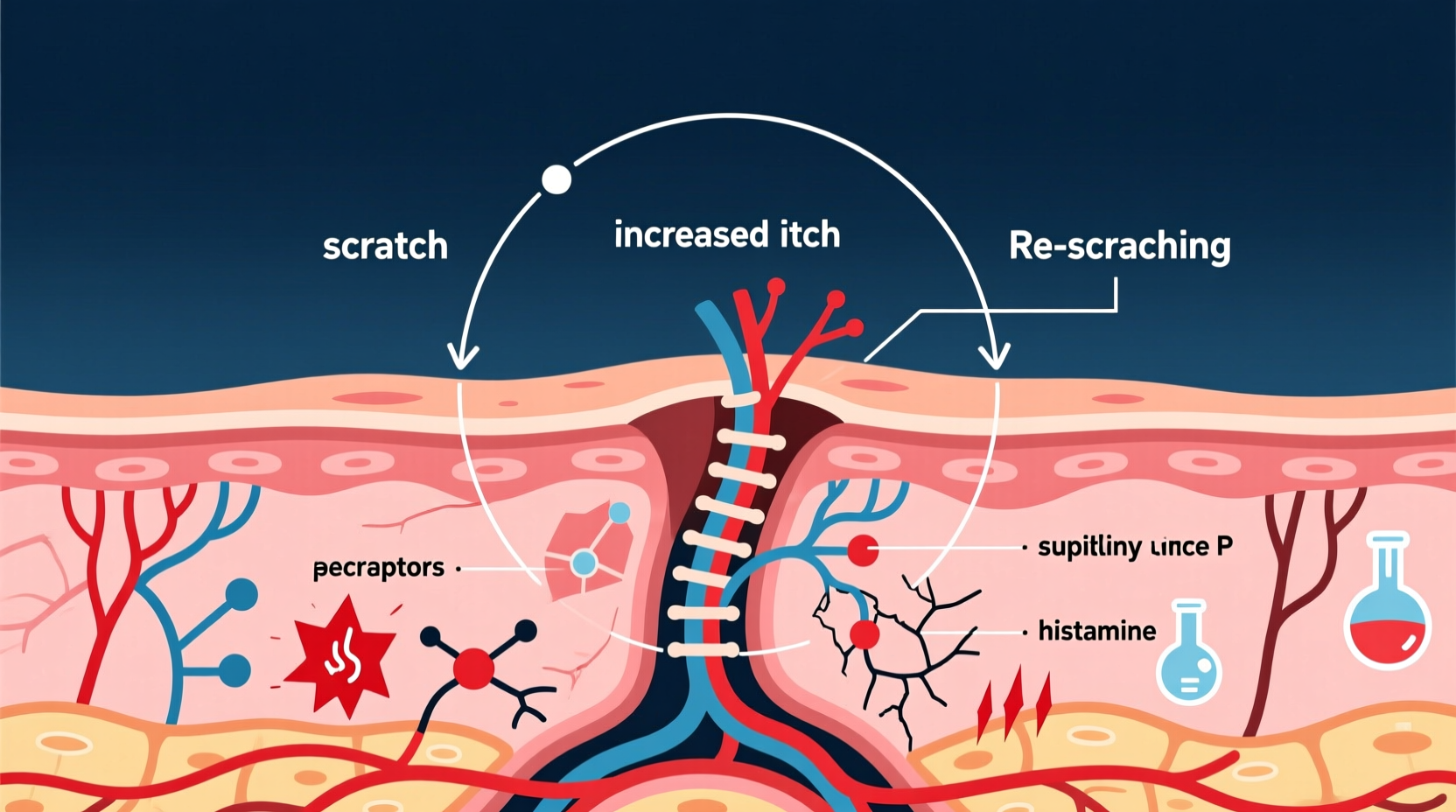
Itching, or pruritus, is not simply a minor annoyance. It’s a complex neurobiological signal processed by specialized nerve fibers in the skin. These C-fibers transmit itch signals through the spinal cord to the brain, where they are interpreted as an urge to scratch. Unlike pain—which uses similar pathways but triggers avoidance—itch prompts action. That action? Scratching.
When you scratch, you create micro-trauma on the skin. This mechanical stimulation temporarily overrides the itch signal with a mild pain signal, which is why scratching feels satisfying at first. However, this relief is deceptive. The trauma activates immune cells like mast cells, which release histamine and other inflammatory mediators. Histamine, in particular, directly stimulates nearby nerve endings, amplifying the original itch signal. In essence, scratching doesn’t silence the itch—it shouts back at it, and the itch responds louder.
“Scratching provides momentary relief but fuels inflammation, creating a feedback loop that can become pathological.” — Dr. Rebecca Lang, Neurodermatology Specialist, Johns Hopkins Medicine
How the Itch-Scratch Cycle Becomes Chronic
In healthy individuals, occasional itching resolves quickly. But when the itch-scratch cycle repeats over days or weeks, it can transition from acute to chronic. This shift often begins with a trigger—dry skin, an insect bite, eczema flare-up, or even stress—but escalates due to behavioral reinforcement.
The brain begins to associate scratching with reward. Functional MRI studies show that scratching activates regions of the brain linked to pleasure and impulse control, including the striatum and prefrontal cortex. Over time, this creates a habit loop: cue (itch), routine (scratch), reward (relief). Even after the initial cause fades, the behavior persists, much like compulsive habits.
Chronic scratching also damages the skin barrier. Repeated abrasion thins the epidermis, increases permeability, and allows allergens and microbes to penetrate. This leads to secondary inflammation, further activating itch nerves. Conditions like atopic dermatitis, psoriasis, and lichen simplex chronicus thrive in this environment. The skin thickens (lichenification), darkens, and becomes leathery—a visible hallmark of long-term scratching.
Breaking the Cycle: Science-Backed Strategies
Escaping the itch-scratch cycle requires interrupting both the physical and psychological components. Success lies not in willpower alone, but in strategic replacement of behaviors and targeted symptom management.
Step 1: Identify and Treat the Underlying Cause
Not all itching is the same. Dry skin (xerosis) responds well to moisturizers, while allergic reactions may require antihistamines. Fungal infections need topical antifungals, and autoimmune conditions like psoriasis benefit from prescription treatments. A dermatologist can help diagnose the root issue through physical exam, history, and sometimes biopsy.
Step 2: Cool Instead of Scratch
Cold reduces nerve activity and inflammation. Applying a cool compress, chilled lotion, or even a bag of frozen peas (wrapped in cloth) can soothe irritated skin without causing injury. The temperature change disrupts the itch signal and offers a safe alternative to scratching.
Step 3: Use Topical Anti-Itch Agents
Over-the-counter options like hydrocortisone cream, calamine lotion, or products containing pramoxine or menthol provide localized relief. For severe cases, prescription-strength steroids or calcineurin inhibitors (e.g., tacrolimus) can calm overactive immune responses in the skin.
Step 4: Moisturize Aggressively
A compromised skin barrier worsens itching. Daily use of fragrance-free, ceramide-rich moisturizers helps restore lipid balance. Apply immediately after bathing while skin is still damp to lock in hydration.
Step 5: Address the Behavioral Component
Habit reversal training (HRT), a cognitive-behavioral technique, has proven effective for chronic scratching. It involves awareness training, competing response development (e.g., clenching fists when the urge strikes), and social support. Studies show up to 70% improvement in patients with neurodermatitis after six weeks of HRT.
Do’s and Don’ts of Managing Itchy Skin
| Action | Recommendation | Rationale |
|---|---|---|
| Use hot water on itchy skin | ❌ Don’t | Hot water strips natural oils and worsens dryness and irritation. |
| Apply fragrance-free moisturizer twice daily | ✅ Do | Maintains skin barrier and prevents flare-ups. |
| Wear soft, breathable fabrics | ✅ Do | Cotton and bamboo reduce friction and heat buildup. |
| Use scented soaps or body washes | ❌ Don’t | Fragrances are common allergens that trigger itching. |
| Keep a symptom journal | ✅ Do | Helps identify patterns and potential triggers like foods, stress, or environments. |
Real Example: Maria’s Journey with Eczema
Maria, a 34-year-old teacher from Portland, struggled with eczema since childhood. Each winter, her arms and legs erupted in red, itchy patches. She scratched unconsciously during meetings, often drawing blood. Over time, her skin became thick and discolored. “I felt trapped,” she says. “I knew scratching made it worse, but stopping felt impossible.”
After a severe flare-up led to a skin infection, Maria consulted a dermatologist. She was prescribed a mid-potency steroid ointment, advised to switch to a gentle cleanser, and referred to a behavioral therapist for habit reversal training. She began applying moisturizer every morning and night, kept a cold gel pack at her desk, and practiced fist-clenching whenever the urge to scratch arose.
Within eight weeks, her skin improved dramatically. “The biggest change wasn’t the creams—it was learning to pause before reacting. I now tap my arm instead of scratching. It sounds small, but it broke the cycle.”
Expert Insight: The Role of the Nervous System
Recent research reveals that chronic itch isn’t just a skin condition—it’s a neurological one. Scientists have identified specific neurons, such as those expressing natriuretic polypeptide b (Nppb) and gastrin-releasing peptide (GRP), that act as dedicated itch transmitters. These pathways operate independently from pain circuits, explaining why blocking pain doesn’t always stop itching.
Emerging drugs target these neural pathways. For example, difelikefalin, approved for kidney disease-related itch, blocks kappa opioid receptors in the peripheral nervous system. Others, like nemolizumab, inhibit IL-31—a cytokine directly linked to itch signaling. Such therapies represent a shift from symptom suppression to mechanism interruption.
“We’re moving beyond ‘just don’t scratch’ to understanding the molecular language of itch. The future is precision medicine for pruritus.” — Dr. Andrew Simpson, Lead Researcher, Itch Mechanisms Lab, University of Pittsburgh
FAQ: Common Questions About the Itch-Scratch Cycle
Can scratching cause permanent skin damage?
Yes. Chronic scratching can lead to lichenification (skin thickening), post-inflammatory hyperpigmentation, scarring, and increased risk of bacterial infections like impetigo. In rare cases, persistent scratching can result in prurigo nodularis—hard, itchy nodules that are difficult to treat.
Why do some people itch more at night?
Nighttime itching is common due to several factors: body temperature rises in the evening, increasing blood flow to the skin; cortisol levels (which suppress inflammation) drop at night; and distractions fade, making sensations more noticeable. Additionally, bedding materials and dust mites can act as allergens.
Are there psychological causes of itching?
Absolutely. Stress, anxiety, and depression can amplify itch perception through the brain-skin axis. Conditions like psychogenic pruritus have no primary skin lesion but are driven by emotional states. Cognitive-behavioral therapy (CBT) is often effective in these cases.
Checklist: How to Break the Itch-Scratch Cycle
- ✔️ Identify and treat any underlying skin condition with medical guidance.
- ✔️ Replace scratching with safer alternatives: tapping, pressing, or cooling.
- ✔️ Apply fragrance-free moisturizer at least twice daily.
- ✔️ Use OTC or prescription anti-itch creams as directed.
- ✔️ Wear loose, non-irritating clothing (preferably cotton).
- ✔️ Keep nails short and clean to minimize skin damage.
- ✔️ Practice mindfulness or habit reversal techniques to build awareness.
- ✔️ Track symptoms to identify personal triggers (detergents, foods, stress).
- ✔️ Consult a dermatologist if itching persists beyond two weeks.
- ✔️ Seek mental health support if scratching feels compulsive or uncontrollable.
Conclusion: Reclaim Control Over Your Skin
The itch-scratch cycle is more than a physical reflex—it’s a complex interplay of biology, behavior, and environment. While scratching offers fleeting comfort, it ultimately deepens discomfort and prolongs suffering. The solution lies not in suppression, but in substitution: replacing harmful habits with informed, compassionate care.
Whether your itching stems from dry skin, eczema, or stress, breaking free is possible. Start with small, consistent changes—moisturizing daily, cooling instead of scratching, tracking triggers. Seek professional help when needed. Most importantly, be patient with yourself. Healing takes time, but each conscious choice moves you closer to lasting relief.




 浙公网安备
33010002000092号
浙公网安备
33010002000092号 浙B2-20120091-4
Comments
No comments yet. Why don't you start the discussion?