
Nothing disrupts the holiday ambiance quite like a darkened base on an otherwise glowing Christmas tree. When the bottom section fails to illuminate, it’s more than just a cosmetic flaw—it can signal deeper issues with wiring, power distribution, or setup errors. Whether you're dealing with a pre-lit artificial tree or a custom string-light arrangement, understanding the root causes and applying targeted solutions ensures your tree shines from trunk to treetop.
The problem is common, especially as trees age or are stored improperly between seasons. But the good news is that most causes are diagnosable at home without requiring professional help. With a methodical approach, basic tools, and a little patience, you can identify and resolve the issue—often in under an hour.
Understanding How Pre-Lit Trees Distribute Power
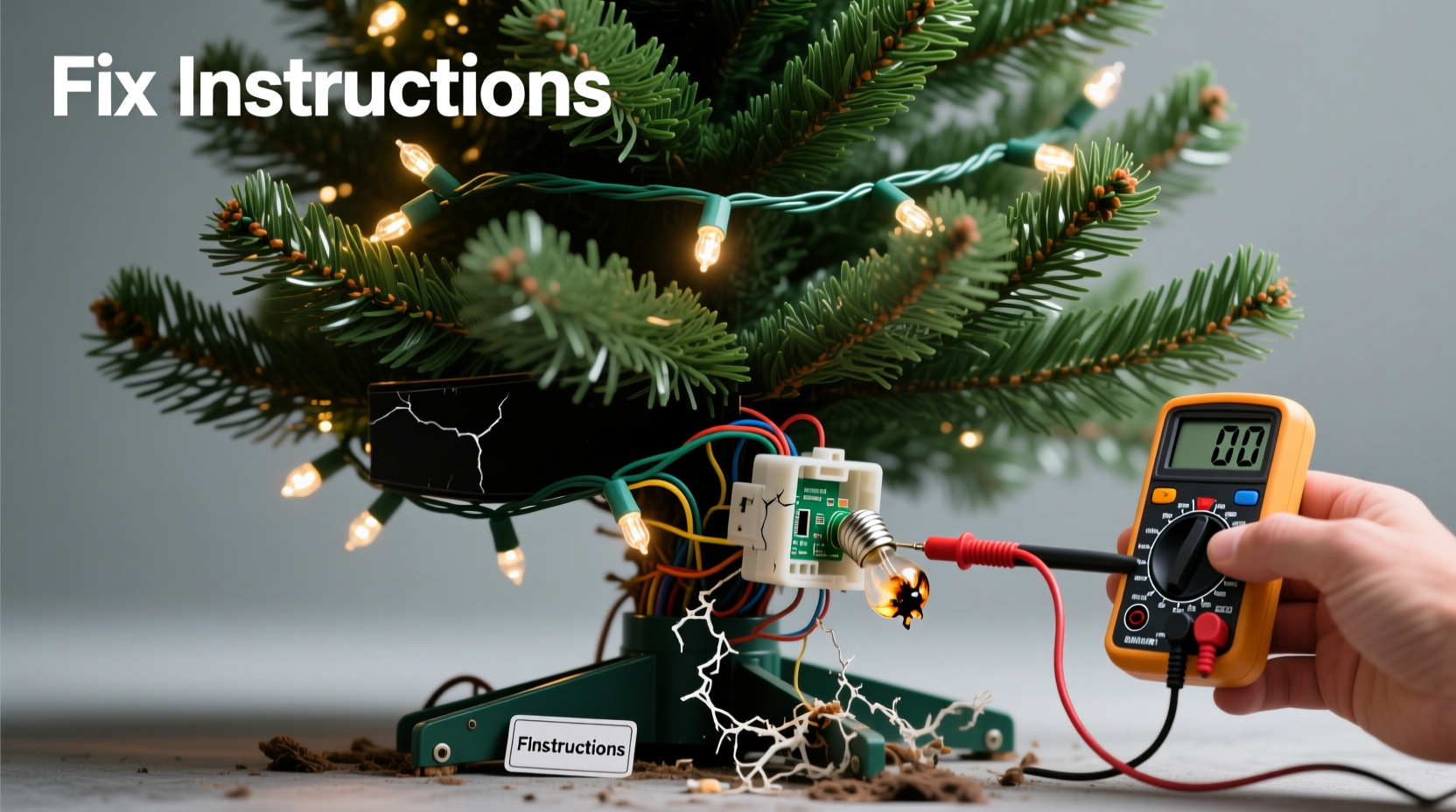
Most modern artificial Christmas trees come with built-in lights wired in a series circuit configuration. In this design, electricity flows through each bulb sequentially. If one bulb burns out, becomes loose, or suffers a filament break, it interrupts the entire circuit downstream. This means a single faulty bulb near the top can cause an entire lower section—including the bottom—to go dark.
Some higher-end models use parallel circuits or segmented power zones, allowing sections to function independently. However, budget-friendly or older models typically rely on daisy-chained wiring. Knowing your tree’s electrical layout is crucial before troubleshooting.
Manufacturers often group lights into “sections” connected by plug-in harnesses. The bottom tier may have its own dedicated wire bundle that connects to a central power stem. If that connection fails—or if the branch wire is damaged—the entire lower portion remains unlit despite other sections working perfectly.
Common Causes of Bottom Section Failure
Several mechanical and electrical factors can prevent the bottom section from lighting. Identifying the most likely culprit saves time and avoids unnecessary disassembly.
- Loose or burned-out bulb: Even one compromised bulb in a series circuit breaks continuity.
- Damaged wiring at the base: Frequent assembly/disassembly can fray wires where branches meet the trunk.
- Improperly seated plug connections: Sectional trees require precise alignment of internal connectors.
- Tripped fuse in the plug: Overloading or power surges can blow fuses located in the male plug.
- Power overload: Connecting too many light strings beyond rated capacity cuts off current flow.
- Moisture or corrosion: Storing the tree in damp areas leads to internal corrosion over time.
A telltale sign of a series-circuit failure is when the upper sections work but the lower ones don’t—especially if the transition happens abruptly at a specific branch level. This usually indicates a fault in the feed line leading to the bottom section.
Step-by-Step Troubleshooting Guide
Follow this logical sequence to isolate and fix the issue efficiently.
- Unplug the tree completely. Safety first. Never inspect live wiring.
- Inspect visible bulbs in the bottom section. Look for darkened glass, broken filaments, or loose fittings. Gently press each bulb to ensure it's fully seated.
- Check connector points between trunk segments. Align each pole section carefully and listen for a click. Misaligned poles often fail to complete internal circuits.
- Test continuity with a known-good bulb. Replace one suspect bulb at a time with a fresh one from a working section.
- Examine the power cord and plug. Look for kinks, fraying, or melted insulation near the base. Inspect the plug for blown fuses (usually under a sliding panel).
- Use a non-contact voltage tester. Plug the tree back in briefly and test whether power reaches the base connector. No signal means a break upstream.
- Trace the wire path manually. Follow the wire from the last lit section down to the first unlit bulb. Small pinches or staples from prior storage may have severed the conductor.
If all bulbs appear intact and connections are secure, the issue may lie in a hidden junction box inside the central pole. Some trees route wires through hollow trunks with soldered splices. These can degrade over time due to thermal expansion and vibration.
“Over 70% of pre-lit tree failures we see in repair shops stem from poor storage habits—crushed branches, tangled wires, and moisture exposure.” — Derek Langston, Holiday Lighting Technician with 18 years of experience
Tips for Testing and Replacing Fuses
Many pre-lit trees include dual fuses embedded in the male plug. These protect against current spikes and are often the simplest fix.
To access them:
- Flip the plug and locate the small sliding door on the side.
- Remove the fuse holder (may require gentle prying).
- Inspect the thin metal strip inside. A visible gap or dark spot indicates a blown fuse.
- Replace only with identical-rated fuses (typically 3A or 5A, 125V).
Never substitute with higher-rated fuses or makeshift conductors like foil. This creates a fire hazard.
After replacement, plug the tree in temporarily. If the lights still don’t work, check both fuses—even if one appears intact. They often fail together.
When to Bypass vs. Repair Wiring
In cases of severe wire damage—especially internal breaks that aren’t accessible—consider bypassing the faulty segment rather than attempting micro-repairs.
Bypassing involves installing a new light string along the affected branches and plugging it directly into a separate outlet or power strip. While this modifies the original design, it restores functionality reliably and safely.
Alternatively, you can retrofit the tree with LED strip lights adhered to branch tips. These draw less power, generate minimal heat, and are available in warm white tones that blend naturally with traditional bulbs.
However, if you prefer preserving the factory look, invest in a bulb tester or shunt-finder tool designed for Christmas lights. These devices detect open circuits and failed shunts (backup pathways inside bulbs) without removing each one manually.
Prevention Checklist for Future Seasons
Avoid recurrence next year with these proactive steps:
| Action | Why It Matters | How to Implement |
|---|---|---|
| Disassemble carefully | Prevents wire strain | Remove sections in reverse order; never yank cords |
| Use proper storage bins | Protects bulbs and wiring | Choose compartmentalized containers with branch supports |
| Label connectors | Ensures correct reassembly | Tag each plug with tape indicating section (e.g., “Bottom Tier”) |
| Store in dry, climate-controlled space | Prevents corrosion | Avoid basements, attics, or garages prone to humidity |
| Test before decorating | Catches issues early | Plug in each section individually before adding ornaments |
Real Example: Resolving a Persistent Bottom-Section Failure
Sarah from Minneapolis purchased a 7.5-foot pre-lit tree in 2019. Each year, the bottom third worked fine—until 2023, when it remained dark despite checking all bulbs. She replaced fuses twice, verified plug alignment, and even rewired one branch—but nothing helped.
Upon closer inspection, she noticed a slight resistance when inserting the lowest pole segment. After removing it, she found a bent metal contact inside the female socket. Using needle-nose pliers, she gently bent it back into position. Once reassembled, the entire tree lit up instantly.
The root cause wasn’t a dead bulb or broken wire—it was a physical misalignment preventing electrical contact. Her solution took less than ten minutes and cost nothing.
Frequently Asked Questions
Can I replace just the bottom section wiring?
Yes, though it requires technical skill. You can purchase compatible replacement light strings from specialty retailers like Christmas Lights, Etc. or Lightology. Match voltage, bulb count, and wire gauge exactly. Installation involves threading new wire through existing branches—a tedious but doable process.
Why do only some bulbs in the bottom row flicker?
Flickering suggests intermittent contact, often due to a loose bulb or corroded socket. Clean the base of the bulb with rubbing alcohol and reseat firmly. If flickering persists, replace the bulb immediately, as partial connections generate heat and increase fire risk.
Is it safe to cut and splice new wires into my tree?
Only if you use proper electrical practices. Splicing should be done with waterproof wire nuts or heat-shrink connectors, not tape. Ensure the splice is inaccessible to children or pets and avoid placing it near flammable materials. For long-term safety, consult an electrician if unsure.
Final Tips for Long-Term Tree Health
Maintaining consistent lighting performance starts long after the holidays end. Treat your Christmas tree like any valuable electronic device—store it properly, handle it gently, and inspect it annually.
Before storing, wipe down each branch with a dry microfiber cloth to remove dust. Dust buildup attracts moisture and accelerates oxidation of metal contacts. Avoid folding wires tightly; instead, loosely coil them around cardboard forms or use twist ties to maintain shape.
Consider upgrading to LED lights if your tree uses incandescent bulbs. LEDs consume up to 90% less energy, stay cool to the touch, and last significantly longer—some rated for 50,000 hours or more. Many retrofits are plug-and-play compatible with existing pre-lit systems.
“The best way to extend your tree’s life? Test it the week after Christmas, fix issues while they’re fresh, and store it ready-to-use.” — Rebecca Tran, Home Decor Editor at *Seasonal Living Magazine*
Conclusion: Restore Your Tree’s Full Glow This Season
A darkened bottom section doesn’t mean your Christmas tree is beyond saving. From simple bulb replacements to correcting hidden connection faults, most problems are solvable with attention to detail and basic troubleshooting. By understanding how your tree’s lighting system works—and taking preventive steps—you ensure reliable performance year after year.
This holiday season, don’t settle for a half-lit display. Take action now: unplug, inspect, test, and repair. With the right approach, your tree can shine brightly from base to peak, creating the festive centerpiece your home deserves.




 浙公网安备
33010002000092号
浙公网安备
33010002000092号 浙B2-20120091-4
Comments
No comments yet. Why don't you start the discussion?