
The United States' unwavering support for Israel has long been a cornerstone of American foreign policy in the Middle East. This alliance, spanning decades, is often cited as one of the most enduring bilateral relationships in modern geopolitics. Yet, it remains deeply controversial, drawing both staunch defense and intense criticism. To understand why the U.S. supports Israel so consistently—despite shifting global dynamics and regional conflicts—it’s essential to examine the historical roots, strategic interests, domestic political influences, and moral considerations that shape this complex bond.
Historical Foundations of the U.S.-Israel Alliance
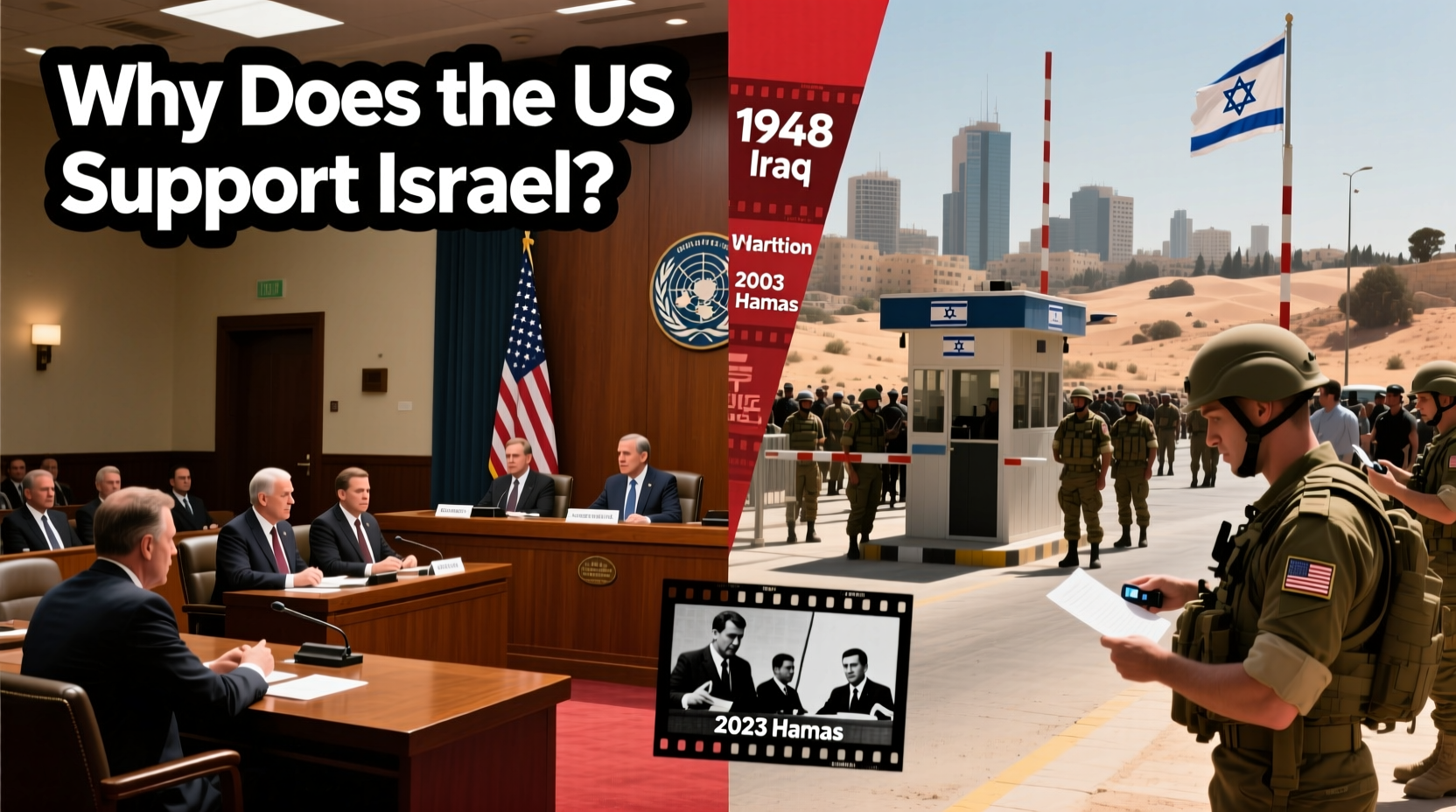
The U.S.-Israel relationship began in earnest after Israel’s founding in 1948, when President Harry S. Truman extended immediate diplomatic recognition. At the time, this decision was driven by humanitarian concerns for Jewish populations following the Holocaust and a belief in self-determination. However, full strategic alignment did not solidify until later decades.
During the Cold War, Israel emerged as a reliable ally in a region where many nations leaned toward the Soviet Union. As Arab states like Egypt and Syria received military and economic aid from Moscow, the U.S. saw Israel as a democratic bulwark against communist influence. This geopolitical calculus intensified after the 1967 Six-Day War, which demonstrated Israel’s military effectiveness and deepened American interest in its security.
By the 1970s, following the Yom Kippur War, the U.S. became Israel’s primary arms supplier and diplomatic defender. The Camp David Accords in 1978, brokered by President Jimmy Carter, further cemented America’s role as a key mediator and supporter of Israeli security agreements.
Strategic and Military Interests
From a national security standpoint, Israel serves as a stable, technologically advanced partner in a volatile region. Despite not being a formal treaty ally, Israel receives more military aid from the U.S. than any other country—over $3.8 billion annually under the current Memorandum of Understanding (MOU) that runs through 2028.
This support isn't just symbolic. Israel contributes directly to U.S. strategic objectives:
- Intelligence sharing: Israel possesses sophisticated surveillance and cyber capabilities, particularly regarding Iran, Hezbollah, and regional terrorist networks.
- Military innovation: Joint development programs have led to breakthroughs in missile defense (e.g., Iron Dome), drone technology, and cybersecurity.
- Regional stability: A strong Israel acts as a counterbalance to adversarial powers like Iran and non-state actors such as Hamas and Islamic Jihad.
Moreover, U.S. military installations in Europe and the Persian Gulf benefit indirectly from Israel’s ability to monitor and respond to emerging threats without requiring direct American troop deployment.
Domestic Political Influence
One of the most debated aspects of U.S. support for Israel is the role of domestic politics. Pro-Israel sentiment spans both major political parties, though with varying intensity and rationale.
Congress regularly passes resolutions affirming support for Israel, and presidential candidates across the spectrum emphasize their commitment to the alliance. This bipartisan consensus is reinforced by several influential factors:
- Lobbying organizations: Groups like AIPAC (American Israel Public Affairs Committee) have historically played a significant role in shaping legislative priorities and campaign funding.
- Religious constituencies: Many evangelical Christians view Israel’s existence as fulfilling biblical prophecy, making support for the nation a matter of faith.
- Jewish-American community: Though diverse in opinion, a substantial portion of this community advocates for strong U.S.-Israel ties, influencing donors and policymakers.
“Support for Israel is not just about foreign policy; it's woven into the fabric of American political identity.” — Dr. Alan Makovsky, Middle East Institute Senior Fellow
However, this consensus is evolving. Younger voters and progressive lawmakers increasingly question unconditional aid, especially in light of civilian casualties during conflicts in Gaza. Movements like “Jewish Voice for Peace” and congressional figures such as Rep. Rashida Tlaib reflect a growing internal debate about the nature and limits of U.S. backing.
Economic and Technological Partnership
Beyond diplomacy and defense, the U.S. and Israel maintain a robust economic relationship. Israel ranks among the top countries for venture capital investment per capita and leads in fields like agritech, medical devices, and artificial intelligence.
American tech giants—including Intel, Apple, and Google—operate research centers in Israel. The U.S.-Israel Binational Industrial Research and Development (BIRD) Foundation has funded over 1,000 joint ventures since 1977, fostering innovation with global applications.
| Area | U.S.-Israel Collaboration Example | Impact |
|---|---|---|
| Defense Tech | Iron Dome co-funded by U.S. | Intercepts 90%+ of short-range rockets |
| Cybersecurity | Joint task forces on ransomware | Enhanced protection of critical infrastructure |
| Water Technology | Drip irrigation systems adapted in California | Reduced agricultural water use by up to 60% |
This synergy strengthens mutual economic resilience and positions both nations at the forefront of technological advancement.
Moral and Humanitarian Considerations
For many Americans, support for Israel is rooted in shared democratic values and a sense of historical justice. As the only democracy in the Middle East with free elections, independent courts, and a vibrant civil society, Israel resonates with U.S. ideals.
Additionally, memories of the Holocaust continue to inform public sentiment. The idea that Jews deserve a safe homeland where they can defend themselves carries emotional weight across generations.
Yet, these moral arguments are increasingly balanced against concerns for Palestinian human rights. Critics argue that prolonged occupation, settlement expansion, and military operations in densely populated areas contradict American principles of equality and due process.
Mini Case Study: The 2023 Israel-Hamas War Response
In October 2023, following a surprise attack by Hamas that killed approximately 1,200 Israelis, the U.S. swiftly reaffirmed its support. Within days, President Biden authorized emergency military aid shipments and deployed additional naval assets to the Eastern Mediterranean.
The administration emphasized Israel’s right to self-defense while privately urging restraint to minimize civilian harm in Gaza. This dual stance highlighted the delicate balance between strategic loyalty and humanitarian concern.
Domestically, protests erupted on college campuses and in major cities, revealing generational and ideological divides. While mainstream political leaders maintained solidarity with Israel, grassroots movements called for an arms embargo and greater accountability.
This moment underscored how U.S. policy must navigate international law, domestic pressure, and long-term regional consequences—even while supporting a close ally.
Frequently Asked Questions
Does U.S. aid to Israel come with conditions?
Most military aid is provided as grants with few enforceable conditions. However, recent administrations have expressed concern over settlement expansion and actions affecting peace prospects. In practice, aid has rarely been withheld, even amid controversy.
Why doesn’t the U.S. treat Israel and Palestine equally?
The U.S. officially supports a two-state solution. However, Israel’s status as a recognized state with established institutions contrasts with the Palestinian Authority’s limited sovereignty. Additionally, security partnerships and historical ties make the relationship structurally unequal, though diplomats continue advocating for Palestinian statehood.
Has U.S. support changed under different presidents?
While all modern presidents have supported Israel’s security, approaches vary. Obama pressured Netanyahu on settlements and pursued the Iran nuclear deal. Trump moved the embassy to Jerusalem and cut aid to Palestinians. Biden maintains strong military backing but emphasizes diplomacy and humanitarian access in Gaza.
Conclusion: Toward a More Nuanced Engagement
The U.S. support for Israel is neither monolithic nor static. It is shaped by decades of shared security challenges, deep cultural connections, and evolving democratic discourse. While strategic interests remain central, increasing scrutiny demands greater transparency and ethical reflection.
As new generations engage with this issue, the conversation is shifting from blanket support to thoughtful partnership—one that upholds both Israeli security and Palestinian dignity. The future of this alliance may depend not on unwavering allegiance, but on the willingness to ask hard questions and pursue lasting peace.




 浙公网安备
33010002000092号
浙公网安备
33010002000092号 浙B2-20120091-4
Comments
No comments yet. Why don't you start the discussion?