
For decades, one of the most recognizable sights in professional golf has been Tiger Woods stepping onto the course on Sunday afternoons wearing a bold red shirt. It’s become so synonymous with his identity that fans now anticipate it as part of his championship ritual. But beyond superstition or branding, there’s a deeper story behind this tradition—one rooted in family influence, psychological strategy, and symbolic power.
The truth is, Tiger Woods doesn’t just wear red for visibility or fashion. His choice is deliberate, emotional, and steeped in personal history. Understanding why he wears red on Sundays reveals much about his mindset, upbringing, and approach to competition at the highest level.
The Origin: A Mother’s Influence
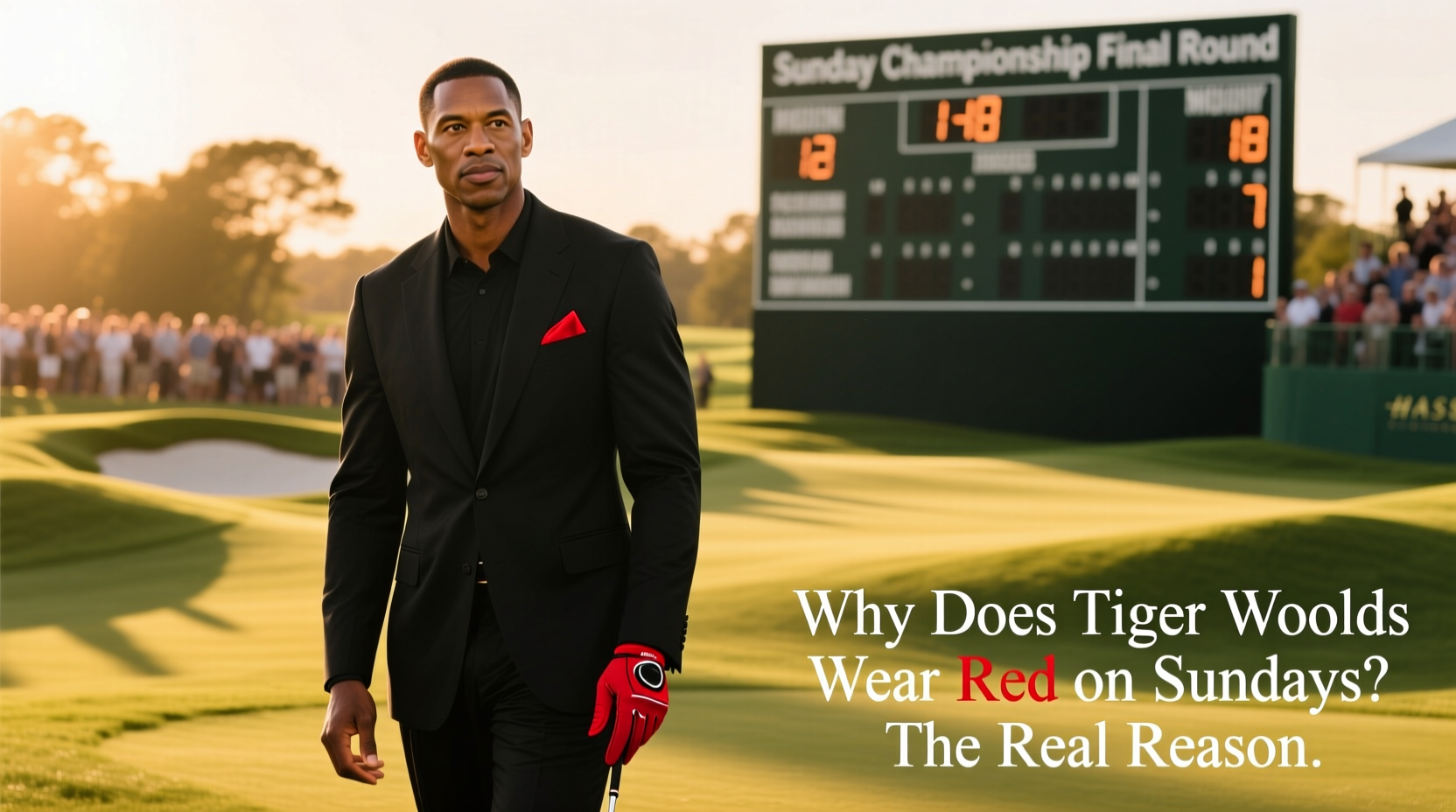
The tradition began long before Tiger became a household name. As a young golfer growing up in Southern California, Tiger was often dressed by his mother, Kultida Woods, in red polos for Sunday tournaments. She believed red conveyed strength, confidence, and dominance—qualities she wanted her son to embody on the course.
In interviews, Tiger has acknowledged this early influence. “My mom always had me wear red on Sundays,” he once said. “It started when I was a kid, and it just stuck.” What began as maternal guidance evolved into a powerful psychological anchor—one that connected him to his roots and prepared him mentally for battle.
“Red was never random. It was my mom’s way of telling me: today, you fight. Today, you win.” — Tiger Woods, 2019 interview with Golf Digest
This simple act of dressing became a pre-round ritual, signaling a shift from practice mode to performance mode. Over time, the red shirt transformed from a wardrobe choice into a symbol of focus, intensity, and readiness.
The Psychology of Color in Sports
Color plays a well-documented role in athletic performance and perception. Studies in sports psychology suggest that athletes wearing red are often perceived as more dominant and aggressive. In fact, research analyzing Olympic combat sports found that competitors in red uniforms won significantly more bouts than those in blue, even when skill levels were equal.
While golf isn’t a contact sport, the mental edge still matters. On the PGA Tour, where margins between victory and second place can come down to a single putt, any advantage—real or perceived—is valuable. Wearing red allows Woods to project authority and control, subtly influencing how opponents view him under pressure.
Tradition Meets Brand Identity
As Tiger’s fame grew, so did the visibility of his Sunday red. Nike, his longtime sponsor, capitalized on the tradition by designing high-performance red apparel specifically for tournament Sundays. The result? One of the most iconic brand-athlete synergies in sports history.
The \"Sunday Red\" became more than personal—it turned into a global signal. Fans knew that when they saw red on the leaderboard, Tiger was in contention. Media outlets highlighted it. Opponents noticed it. The golf world came to associate red with imminent excellence.
Even during his years away from full-time play due to injury, the return of the red shirt signaled a comeback. At the 2018 Hero World Challenge, after spinal fusion surgery, Tiger wore red on Sunday and finished second—a moment many interpreted as the rebirth of a champion.
A Timeline of Iconic Red Sundays
- 1997 Masters Tournament: Wins first major in red, launching the tradition into the mainstream.
- 2000 U.S. Open (Pebble Beach): Dominates with 15-shot victory; red becomes linked with invincibility.
- 2008 U.S. Open: Plays through double stress fractures and torn ACL, wins in sudden death—red shirt soaked in sweat and legend.
- 2019 Masters: Returns from back surgeries and personal struggles; red shirt marks historic fifth green jacket.
- 2022 Masters: Walks the course post-vehicular accident, wearing red despite not competing—symbolizing resilience.
Is It Superstition or Strategy?
Some assume Tiger wears red simply because it brings him luck. But in elite sports, few things are left to chance. For an athlete known for meticulous preparation—from swing mechanics to nutrition to sleep tracking—wardrobe choices are equally calculated.
Tiger has admitted that breaking routine unsettles him. If he wins in a particular hat or shoe, he’ll often keep using it. The red shirt fits this pattern: it’s not magical, but it’s reliable. It’s part of a larger mental framework designed to minimize variables and maximize focus.
Moreover, consistency breeds confidence. When everything feels familiar—the ball flight, the caddie’s voice, the feel of the red fabric—he enters what psychologists call a “flow state.” The outside world fades, and execution takes over.
Do’s and Don’ts: Building Your Own Performance Ritual
| Do | Don't |
|---|---|
| Anchor rituals in meaningful actions (e.g., music, clothing, breathing) | Rely solely on luck-based habits (e.g., “I won when I wore mismatched socks”) |
| Keep the ritual consistent but flexible enough for real-world changes | Let a broken ritual derail your mindset |
| Use sensory cues (color, texture, sound) to trigger focus | Overcomplicate with too many steps |
| Review and refine rituals based on performance outcomes | Stick to a ritual that causes anxiety or distraction |
Real Example: The 2019 Masters Comeback
No moment better illustrates the power of Tiger’s red tradition than his 2019 Masters victory. After years of personal turmoil, multiple back surgeries, and doubts about whether he’d ever compete again, Tiger entered Augusta National ranked 12th in the world—not a favorite.
Yet, as Sunday arrived, he donned his signature red Nike polo. Cameras lingered on the color as he walked the fairways. Fans roared every time he stepped onto a tee box. Even his rivals later admitted feeling the weight of the moment.
Francesco Molinari, leading late into the final round, made uncharacteristic mistakes on key holes. Brooks Koepka, known for his mental toughness, later said, “When I saw Tiger in red, moving up the leaderboard, I knew we weren’t just fighting shots—we were fighting history.”
Tiger didn’t shoot the lowest round of the day, but he played smart, stayed patient, and closed with a 2-under 70 to claim his fifth green jacket. The image of him hugging his son Charlie in front of Butler Cabin, both wearing red, became an instant classic—proof that the color carries emotional resonance far beyond aesthetics.
Frequently Asked Questions
Does Tiger Woods wear red every Sunday without exception?
Almost always—but not absolutely. There have been rare exceptions due to sponsorship conflicts (early in his career), weather conditions (layering over red), or health issues limiting play. However, whenever possible, he maintains the tradition.
Has Tiger ever explained the meaning of red beyond his mom’s influence?
Yes. In addition to honoring his mother, Tiger has said red helps him “get in the zone.” He associates it with competitiveness and clarity. In his 2021 memoir, he wrote, “Red is the color of execution. No distractions. Just work.”
Do other golfers wear red on Sundays because of Tiger?
Some do, either as tribute or in hopes of borrowing some of the psychological momentum. Players like Rory McIlroy and Justin Thomas have worn red on final rounds, though none have made it a consistent signature. Tiger remains the only golfer whose Sunday color is instantly recognized worldwide.
How to Apply This Insight: Building Personal Traditions
You don’t need to be a professional athlete to benefit from intentional routines. Whether you're preparing for a presentation, a competition, or a high-stakes conversation, creating a consistent pre-event ritual can improve focus and reduce anxiety.
Here’s a simple step-by-step guide to developing your own performance tradition:
- Identify a meaningful symbol: Choose an object, color, or action that represents confidence to you.
- Link it to success: Use it during moments when you perform well, reinforcing the connection.
- Repeat consistently: Incorporate it into your routine, especially under pressure.
- Evaluate effectiveness: After key events, reflect: Did it help you stay focused? Adjust as needed.
- Stay authentic: Avoid copying others. Your ritual should feel natural, not forced.
Conclusion: More Than a Shirt, It’s a Statement
Tiger Woods wears red on Sundays not because it’s trendy, lucky, or mandated by sponsors—but because it represents discipline, legacy, and the relentless pursuit of excellence. It’s a thread connecting the boy his mother dressed for junior tournaments to the man who defied odds to win majors two decades apart.
The real reason goes beyond color. It’s about identity. It’s about preparation. It’s about showing up ready to compete, no matter the circumstances. And for millions of fans, seeing that red shirt on Sunday still means the same thing it did in 1997: something historic might happen today.




 浙公网安备
33010002000092号
浙公网安备
33010002000092号 浙B2-20120091-4
Comments
No comments yet. Why don't you start the discussion?