
Tinsel, once a symbol of holiday glamour, has become as notorious for its festive sparkle as it is for its stubborn tendency to latch onto clothing, furniture, pets, and even unsuspecting guests. If you’ve ever draped shimmering strands across your tree only to find them mysteriously clinging to your sweater hours later—without direct contact—you’ve experienced static cling in action. This phenomenon isn’t magic or mischief; it’s physics. Understanding the science behind why tinsel sticks so persistently—and how to manage it—can transform your decorating experience from frustrating to fluid.
Static electricity is at the heart of this seasonal annoyance. Tinsel, typically made from thin plastic films coated with metallic finishes like aluminum, becomes easily charged when handled or moved. As electrons transfer between surfaces, an imbalance of electrical charge builds up, causing lightweight materials like tinsel to leap toward neutral or oppositely charged objects—including your arms, curtains, or cat. While charming in theory, this behavior can make decoration cleanup time-consuming and irritating.
The good news: static cling is both predictable and manageable. With targeted strategies grounded in material science and environmental control, you can enjoy the glimmer without the grip. From humidity adjustments to anti-static treatments, here’s how to keep your tinsel where you want it—and off everything else.
The Science Behind Static Cling in Tinsel
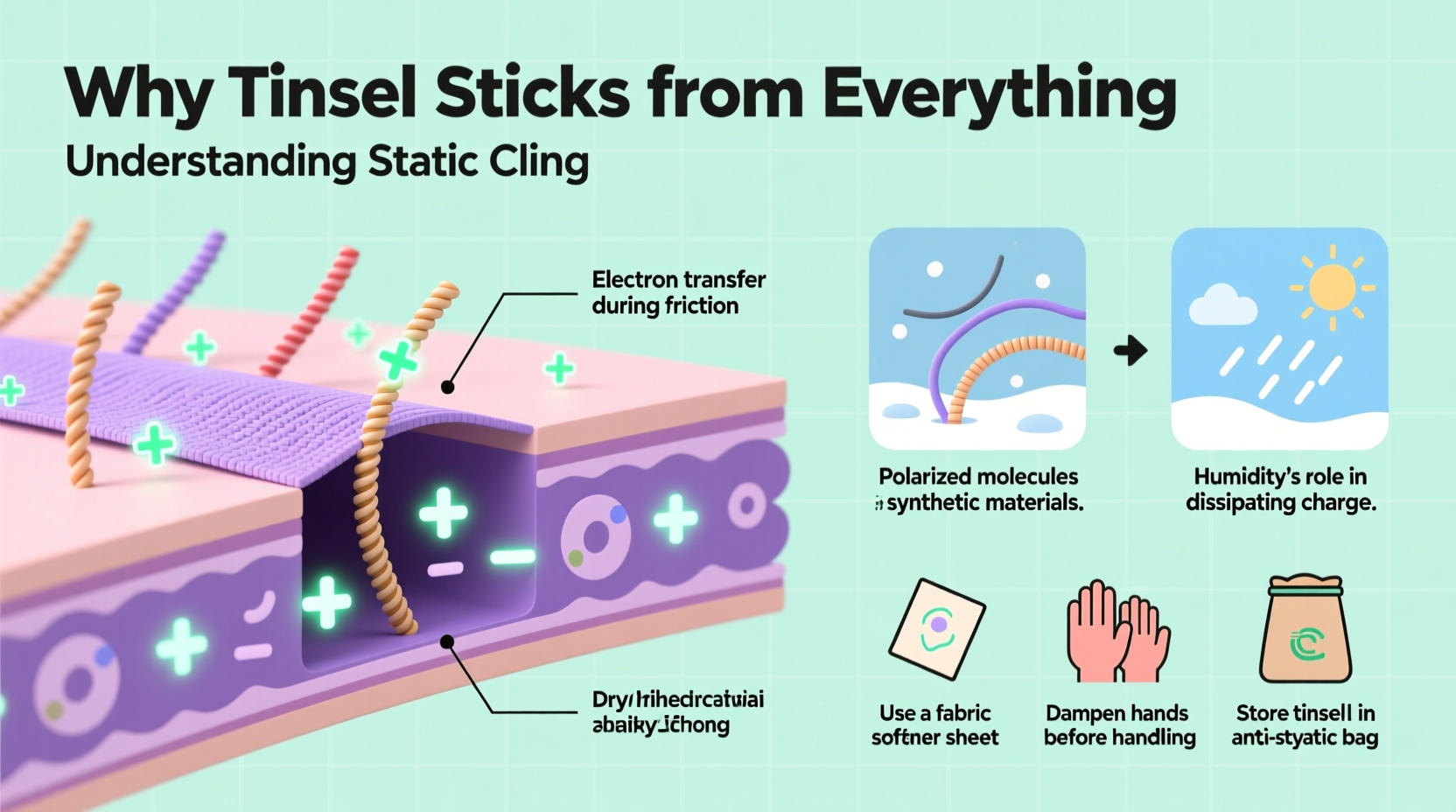
At its core, static cling occurs due to an imbalance of electric charges on the surface of materials. When two different substances come into contact and then separate—such as your hand brushing against a strand of tinsel—electrons may transfer from one surface to the other. The object that gains electrons becomes negatively charged; the one losing them becomes positively charged. Opposite charges attract, which explains why a negatively charged piece of tinsel might suddenly adhere to a positively charged wool sweater.
Tinsel is especially prone to this effect because of its composition and structure. Most modern tinsel is made from polyvinyl chloride (PVC) or polyester film, both synthetic plastics known for their high resistance to electrical conductivity. These non-conductive materials trap charges instead of dissipating them, allowing static buildup to persist. Additionally, tinsel’s ultra-thin, elongated shape maximizes surface area relative to mass, making it extremely lightweight and therefore more susceptible to electrostatic forces than heavier decorations.
“Materials like PVC used in tinsel are excellent at holding static charges because they don’t allow electrons to move freely. That’s why they react so strongly—even to small changes in their environment.” — Dr. Lena Torres, Materials Physicist, University of Colorado Boulder
This effect intensifies in dry environments. Cold winter air holds less moisture, and indoor heating further reduces relative humidity. Dry air is a poor conductor of electricity, meaning any accumulated charge remains trapped on surfaces rather than leaking away into the atmosphere. As a result, homes during the winter months become ideal breeding grounds for static cling—especially around synthetic decor like tinsel.
Environmental Factors That Increase Static Buildup
Several environmental conditions amplify the likelihood and intensity of static cling with tinsel. Recognizing these factors allows for proactive mitigation before decoration even begins.
- Low Humidity: Indoor humidity levels below 40% significantly increase static accumulation. Moisture in the air helps conduct charges away from surfaces, but dry winter interiors prevent this natural discharge.
- Synthetic Fabrics: Wearing clothes made from polyester, nylon, or acrylic increases personal static charge. Walking across carpet in such attire generates additional charge, creating a “magnet” effect for loose tinsel.
- Carpets and Rugs: Synthetic floor coverings, particularly nylon or olefin-based carpets, generate triboelectric charging when walked upon. This contributes to overall room charge imbalances.
- Plastic Decorations: Other plastic ornaments, garlands, or wrapping materials compound the problem by adding more charge-prone surfaces to the environment.
Effective Ways to Reduce Tinsel Static Cling
Reducing static cling doesn’t require abandoning tradition—it requires smarter handling and environmental tuning. Below are proven methods to minimize unwanted adhesion while preserving the aesthetic appeal of tinsel.
1. Pre-Treat Tinsel with Anti-Static Spray
A light application of commercial anti-static spray (designed for clothing or electronics) can neutralize surface charges on tinsel. Hold the can 10–12 inches away and mist briefly—do not soak. Allow to dry completely before handling or hanging. Alternatively, a diluted mix of water and fabric softener (1 part softener to 5 parts water) applied with a fine mister works similarly.
2. Use Metal Hangers or Conductive Threads
Attaching tinsel strands to metal ornament hooks or threading them through thin copper wire helps dissipate static charges. Metal acts as a conductor, grounding excess electrons and preventing prolonged charge retention.
3. Ground Yourself Before Handling
Touch a grounded metal object—like a faucet, appliance frame, or radiator—before touching tinsel. This equalizes your body’s charge with the environment, minimizing sparking or unintended attraction.
4. Store Tinsel Properly Between Uses
Keep tinsel wrapped in aluminum foil or stored inside a metal container when not in use. Both materials shield against ambient static fields and reduce charge buildup during storage. Avoid plastic bags, which exacerbate static issues.
5. Condition the Air with Humidity Control
Maintain indoor relative humidity above 40% using a humidifier. Whole-house models integrated with HVAC systems offer the most consistent results, but portable units in high-traffic rooms also help. Monitor levels with a hygrometer for accuracy.
| Method | Effectiveness | Cost | Effort Level |
|---|---|---|---|
| Humidifier Use | ★★★★★ | $$ | Low (after setup) |
| Anti-Static Spray | ★★★★☆ | $ | Medium |
| Grounding Techniques | ★★★☆☆ | Free | Low |
| Foil Storage | ★★★☆☆ | $ | Low |
| Fabric Softener Mist | ★★★☆☆ | $ | Medium |
Real-Life Example: A Holiday Decorator’s Dilemma
Sarah M., a professional holiday decorator based in Denver, Colorado, faced recurring complaints from clients about tinsel sticking to furniture and pet fur. Her work involved installing elaborate tinsel drapes on stair railings and mantels, but within hours, strands would detach and cling to nearby sofas and rugs. After tracking environmental data across multiple homes, she discovered a pattern: all incidents occurred in houses with central heating and humidity levels below 35%.
She began incorporating battery-powered hygrometers and recommending plug-in humidifiers in key areas prior to installation. She also started pre-treating tinsel with a homemade anti-static solution and advising clients to wear cotton clothing during gatherings. Within one season, client satisfaction rose by over 70%, with no reported static-related issues. “It wasn’t the tinsel,” she noted. “It was the invisible environment around it.”
Step-by-Step Guide to Static-Free Tinsel Display
Follow this sequence to install tinsel with minimal static interference:
- Measure Room Humidity: Use a hygrometer to check current levels. If below 40%, activate a humidifier 12–24 hours before decorating.
- Prepare Anti-Static Solution: Mix 1 part liquid fabric softener with 5 parts water in a spray bottle.
- Mist Tinsel Lightly: Unroll tinsel and lightly mist each section. Do not saturate. Let dry for 15 minutes on a non-metallic surface.
- Ground Yourself: Touch a metal faucet or appliance before handling treated tinsel.
- Use Conductive Supports: Hang tinsel using metal hooks, wires, or clips where possible.
- Limit Friction During Installation: Avoid rubbing strands together or dragging them across carpets.
- Monitor Post-Installation: Check for stray pieces after 1–2 hours. Reapply mist if necessary.
Checklist: Prevent Tinsel Static Cling This Holiday Season
- ✅ Measure indoor humidity before decorating
- ✅ Set up humidifier if needed
- ✅ Prepare anti-static spray or fabric softener solution
- ✅ Pre-treat tinsel before hanging
- ✅ Use metal hangers or conductive supports
- ✅ Ground yourself before handling tinsel
- ✅ Store unused tinsel in foil or metal container
- ✅ Keep dryer sheets on hand for quick fixes
Frequently Asked Questions
Can I use hairspray to stop tinsel from sticking?
No—hairspray is not recommended. While it may temporarily weigh down tinsel, it often leaves a sticky residue that attracts dust and can degrade plastic over time. It does not address the root cause (static charge) and may damage delicate finishes.
Is there a type of tinsel that doesn’t cause static?
Traditional plastic tinsel will always be prone to static due to its material properties. However, some newer eco-friendly alternatives made from cellulose-based films or metallized paper show reduced static tendencies, though they are less durable and harder to find. Another option is to switch to heavier, non-plastic garlands like popcorn strings or felt chains, which eliminate static entirely.
Why does tinsel stick to my TV screen or monitor?
TVs and computer screens often carry a slight electrostatic charge, especially older CRT or plasma models. Even modern LED screens can develop surface charges in dry conditions. This creates an attractive force for lightweight, charged objects like tinsel. To avoid this, keep tinsel at least 2–3 feet away from electronic displays, or use anti-static wipes on screen bezels (never directly on the screen).
Final Thoughts: Embrace the Sparkle Without the Stick
Tinsel doesn’t have to be a holiday hazard. By understanding the science of static electricity and applying simple, effective countermeasures, you can enjoy its nostalgic shimmer without the frustration of constant cleanup. The key lies not in fighting the physics, but in working with it—balancing charge, controlling the environment, and choosing smarter handling techniques.
Whether you're decorating a family tree, dressing up a mantle, or staging a photo-worthy display, taking a few preventive steps ensures that attention stays on beauty—not on stray strands stuck to your grandmother’s sweater. With proper care and awareness, tinsel can reclaim its place as a joyful accent rather than a clingy nuisance.




 浙公网安备
33010002000092号
浙公网安备
33010002000092号 浙B2-20120091-4
Comments
No comments yet. Why don't you start the discussion?