
Tinsel, with its shimmering strands and festive appeal, has long been a holiday decoration staple. But anyone who’s ever hung it on a tree or draped it over a mantle knows the aftermath: tiny, stubborn pieces clinging to sweaters, pet fur, upholstery, and even walls. The question isn’t just whether tinsel is messy—it’s why it behaves like static cling incarnate, and more importantly, how to get rid of it for good.
The answer lies in both physics and material science. Tinsel’s notorious ability to stick to nearly everything stems from electrostatic properties, lightweight construction, and surface texture. Fortunately, understanding the cause unlocks smarter, more effective removal strategies. This guide dives into the science behind tinsel’s clinginess and delivers practical, tested solutions to reclaim your space—without frustration.
The Science Behind Tinsel’s Sticky Behavior
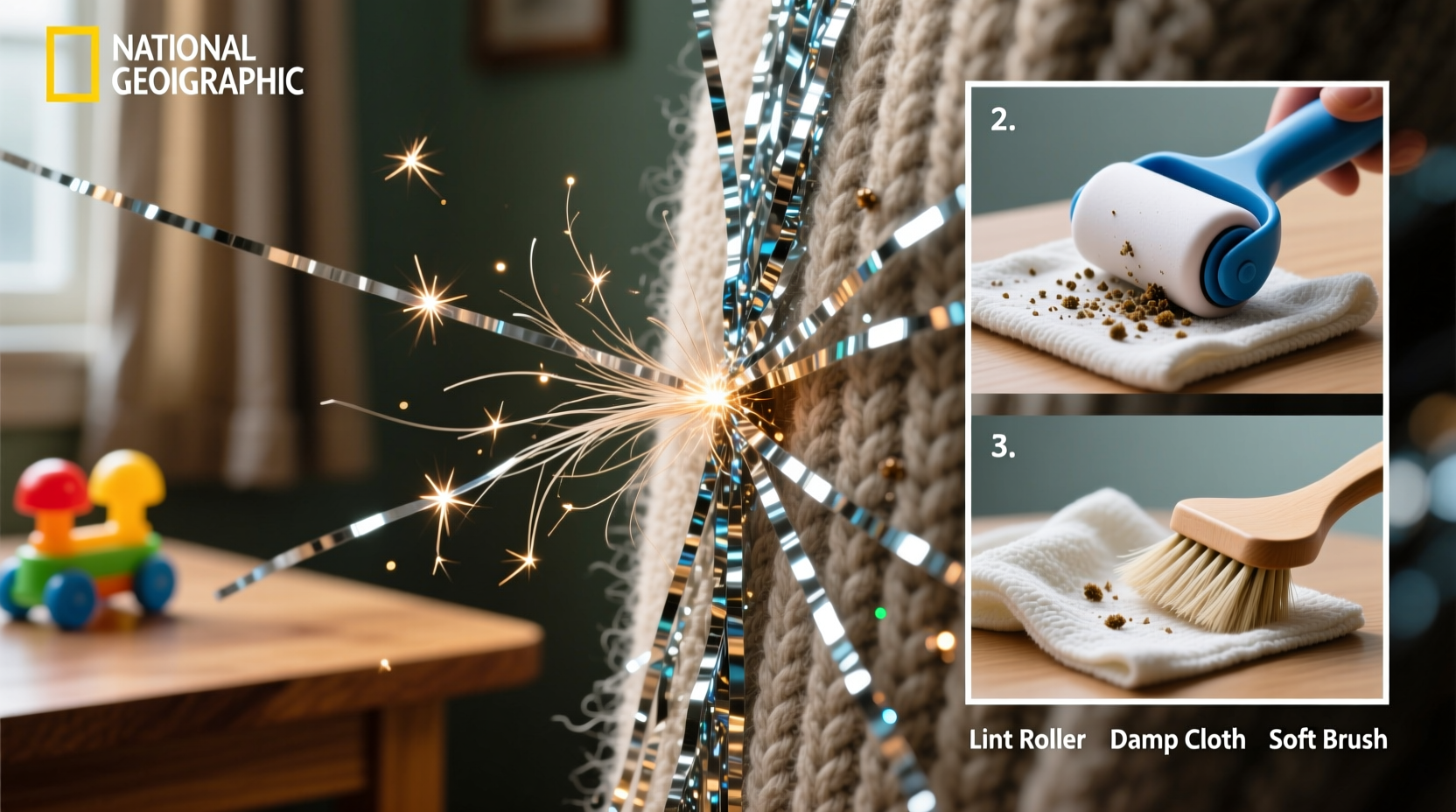
Tinsel doesn’t “stick” in the traditional sense—there’s no adhesive. Instead, its persistence comes from static electricity. Most modern tinsel is made from thin strips of metallized plastic, often polyethylene terephthalate (PET) coated with aluminum. These materials are excellent at generating and holding a static charge, especially in dry indoor environments typical during winter months.
When tinsel rubs against itself, clothing, or ornaments, electrons transfer between surfaces. One becomes positively charged, the other negatively charged. Because opposite charges attract, the tinsel clings to nearby neutral or oppositely charged objects—like your wool sweater or a cotton curtain.
Additionally, tinsel’s ultra-lightweight design means even weak electrostatic forces are enough to suspend it mid-air or fix it to vertical surfaces. Its jagged edges also increase surface contact, making it more likely to snag on fabric fibers.
“Static cling in holiday decor like tinsel is a perfect storm of low humidity, synthetic materials, and mechanical friction. It’s not magic—it’s basic physics.” — Dr. Lena Pruitt, Materials Scientist, University of Colorado Boulder
Effective Methods to Remove Tinsel Completely
Removing tinsel requires more than just picking at it. Pulling individual strands often breaks them, leaving micro-fragments embedded in fabrics or crevices. A systematic approach yields better results. Below are the most reliable techniques, ranked by effectiveness and safety across different surfaces.
1. Use Adhesive Tape for Precision Removal
Duct tape, packing tape, or masking tape work exceptionally well for lifting tinsel from hard-to-reach areas or delicate fabrics. The sticky surface grabs onto tinsel strands without damaging the underlying material.
2. Lint Rollers and Velcro Strips
Lint rollers aren’t just for pet hair. Their slightly tacky surface easily collects small tinsel fragments from clothing, upholstery, and drapes. For larger jobs, reusable Velcro hook-and-loop strips (the rough side) can be dragged across carpets to catch embedded pieces.
3. Vacuum with Proper Attachments
A vacuum cleaner is essential for large-scale tinsel removal, but technique matters. Use the upholstery attachment to avoid sucking up loose strands too forcefully, which can scatter them further. Always turn off the brush roll when cleaning hardwood or tile to prevent scratching.
For carpets, go slow and make multiple passes in different directions. Tinsel often hides beneath the top layer of fibers.
4. Damp Microfiber Cloth for Hard Surfaces
On countertops, baseboards, or windowsills, a lightly dampened microfiber cloth attracts and traps tinsel via moisture-assisted adhesion. Avoid soaking the cloth—excess water can damage electronics or wood finishes.
5. Anti-Static Sprays to Prevent Re-Attraction
After removal, treat surfaces with an anti-static spray. These products neutralize residual charges that might pull stray tinsel back. Lightly mist curtains, sofas, or tree skirts—but test on a hidden area first to ensure no discoloration.
Step-by-Step Guide: Complete Tinsel Cleanup Timeline
Follow this structured 30-minute process to remove tinsel thoroughly from any room:
- Prepare (2 min): Gather supplies—tape, lint roller, vacuum, microfiber cloth, anti-static spray.
- Isolate the Area (3 min): Close doors and turn off fans or HVAC to prevent airborne spread.
- Dry Pickup (10 min): Use tape-wrapped hands or a lint roller to collect visible strands from fabrics and surfaces.
- Vacuum Thoroughly (10 min): Focus on carpet edges, under furniture, and near baseboards. Use crevice tools for tight spaces.
- Wipe Hard Surfaces (3 min): Go over shelves, tables, and trim with a damp microfiber cloth.
- Neutralize Static (2 min): Lightly apply anti-static spray to upholstery and drapes.
This sequence minimizes recontamination and ensures no fragment is left behind. Repeat steps 3–5 if you spot lingering pieces after initial cleanup.
Do’s and Don’ts: Tinsel Removal Best Practices
| Do | Don’t |
|---|---|
| Use tape or lint rollers for precise pickup | Pull tinsel sharply from fabric—this causes breakage |
| Vacuum slowly with appropriate attachments | Use a broom on carpet—it pushes tinsel deeper |
| Dampen cloths slightly for smooth surfaces | Spray water directly onto electronics or outlets |
| Apply anti-static spray post-cleanup | Leave remnants thinking they’ll “disappear” over time |
| Check pet bedding and children’s toys | Ignore vents or ceiling fans where tinsel may have floated |
Real-World Example: The Holiday Living Room Recovery
Sarah, a homeowner in Minneapolis, decorated her living room with vintage-style PVC tinsel garlands for Christmas. After taking them down, she noticed silver strands stuck to her beige sofa, wool rug, and even her cat’s fur. Despite vacuuming, new pieces appeared daily.
She followed the step-by-step guide above: using tape rollers first, then vacuuming with a shut-off brush roll, and finally wiping baseboards with a damp cloth. She discovered tinsel had lodged in the seams of her couch and behind radiator covers—places she’d initially missed. After two rounds of treatment and an anti-static spray application, the problem vanished completely within 48 hours.
Her key insight? “I thought I was done after vacuuming. But tinsel hides in layers. You have to attack it systematically.”
Prevention Tips for Next Season
While removing tinsel is doable, avoiding the mess altogether is better. Consider these proactive measures:
- Choose alternatives: Opt for LED string lights or fabric ribbons that mimic tinsel’s sparkle without the static.
- Limit use: Restrict tinsel to high, enclosed areas like glass cabinets or artificial trees with covers.
- Store properly: Keep used tinsel in sealed plastic bins to prevent cross-contamination in storage.
- Increase humidity: Use a humidifier during winter—moist air reduces static buildup.
- Handle carefully: Unravel tinsel slowly to minimize friction and charge generation.
Frequently Asked Questions
Can tinsel damage electronics?
Yes. Loose tinsel strands can conduct electricity if they bridge connections inside devices. Never drape tinsel near exposed outlets, entertainment centers, or computer towers. If tinsel falls into electronics, unplug the device and use compressed air or tweezers to remove it—do not power on until fully cleared.
Is old tinsel more likely to stick?
Yes. Vintage tinsel, especially cellulose-based or lead-coated varieties from before the 1970s, is brittle and fractures easily. These micro-shards generate more static and are harder to clean. Modern PET tinsel is safer and less prone to shattering, though still problematic.
Why does tinsel stick to my hair?
Hair is highly susceptible to static, especially in dry conditions. When you brush against tinsel, electrons transfer, causing strands to leap toward your head. To remove it, gently press a piece of tape to the affected area—avoid pulling, which can break the tinsel and leave residue.
Checklist: Post-Tinsel Cleanup Verification
Before declaring your space tinsel-free, complete this checklist:
- ✅ Vacuumed all carpeted and upholstered areas
- ✅ Used tape or lint roller on clothing and soft furnishings
- ✅ Wiped down baseboards, shelves, and window sills
- ✅ Checked under furniture and behind radiators
- ✅ Inspected pet beds and children’s play areas
- ✅ Cleaned ceiling fan blades and light fixtures
- ✅ Applied anti-static spray to high-risk zones
- ✅ Verified no tinsel near electrical equipment
Revisit each item within 24 hours to catch any newly surfaced fragments.
Conclusion: Take Control of the Sparkle Without the Stress
Tinsel’s charm is undeniable, but its aftermath shouldn’t overshadow the joy of the season. With a clear understanding of why it sticks—static charge, material composition, and environmental factors—you’re equipped to remove it efficiently and prevent future headaches. The right tools, timing, and technique transform what feels like a Sisyphean task into a manageable, even predictable, part of holiday cleanup.
Next time you reach for that glittering garland, do so with confidence. Prepare your removal strategy in advance, act methodically, and don’t underestimate the power of a simple roll of tape. A little knowledge goes a long way in keeping your home festive, functional, and truly tinsel-free when the holidays end.




 浙公网安备
33010002000092号
浙公网安备
33010002000092号 浙B2-20120091-4
Comments
No comments yet. Why don't you start the discussion?