
When fans of *Breaking Bad* watched *El Camino: A Breaking Bad Movie*, many noticed something striking about Jesse Pinkman—specifically, how much older and more weathered he looked compared to his final appearance in the series finale. While Jesse’s evolution was expected after months on the run, the physical transformation led to widespread speculation. Why does Todd look so different in *El Camino*? The answer isn’t as simple as it seems—because Todd doesn’t actually appear in the film at all.
This confusion stems from a common misattribution: viewers often conflate Jesse Pinkman, played by Aaron Paul, with Todd Alquist, portrayed by Jesse Plemons. The real question should be: why does *Jesse* look so different in *El Camino*? And why do some believe Todd looks changed when he doesn’t even appear? This article clarifies the mix-up, explores the reasons behind Jesse’s dramatic transformation, and examines the lingering myths surrounding Todd’s supposed return.
The Misconception: Todd vs. Jesse in El Camino
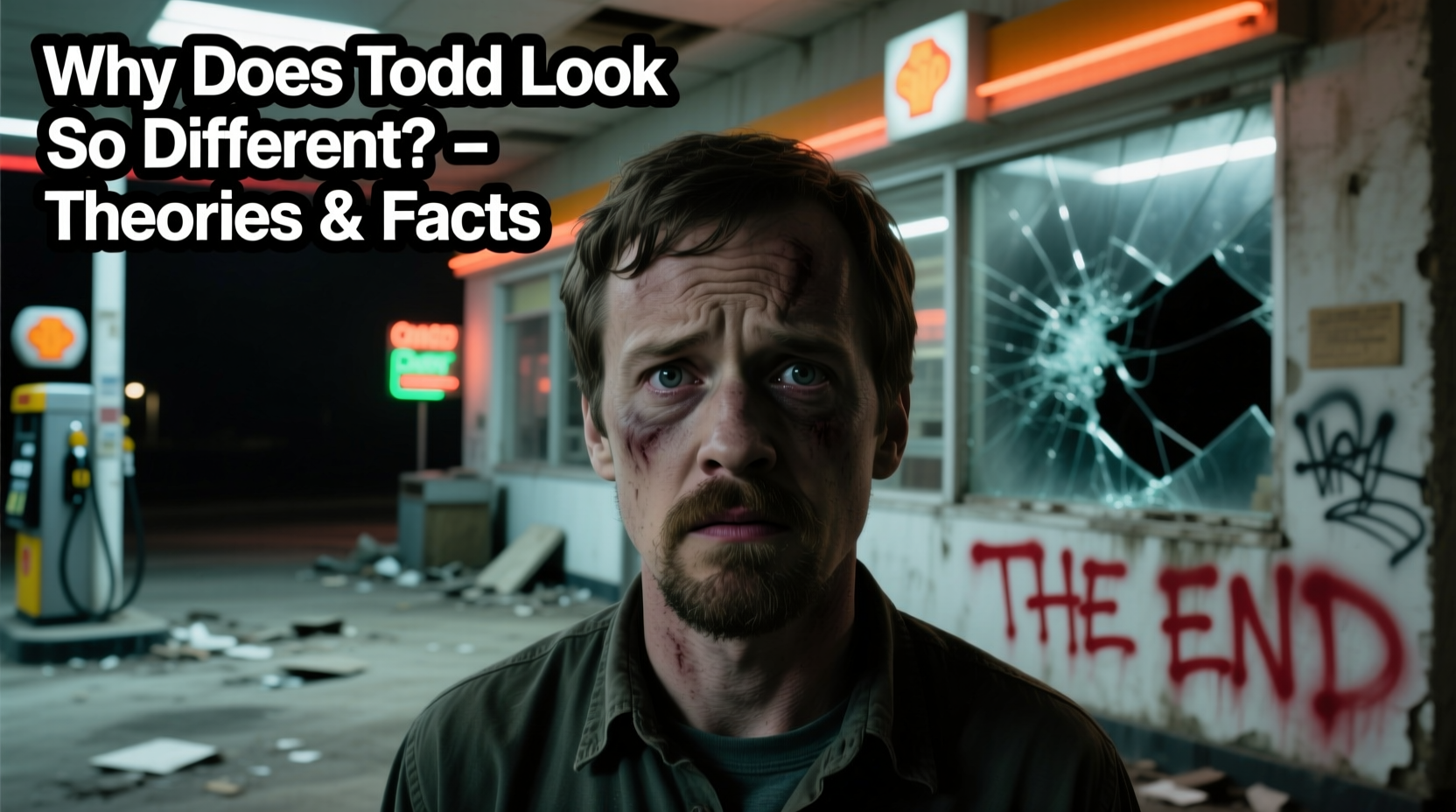
One of the most frequent errors in fan discussions is the mistaken identity between Todd Alquist and Jesse Pinkman. Todd, the soft-spoken yet psychopathic enforcer introduced in Season 5 of *Breaking Bad*, was killed by Jesse in the penultimate episode. His absence from *El Camino* is definitive. Yet, due to similar first names (both are named Jesse/Todd) and emotional intensity in their performances, some viewers blur the characters.
So, when people ask, “Why does Todd look so different in *El Camino*?” they’re almost certainly referring to Jesse Pinkman. Aaron Paul returns as Jesse, now surviving life on the run after escaping captivity. His appearance—thinner, paler, haunted—is a stark contrast to the younger, more naive version seen earlier in the series.
Jesse’s Physical Transformation: Behind the Change
Aaron Paul’s altered appearance in *El Camino* wasn’t due to aging alone. The filmmakers intentionally emphasized Jesse’s psychological and physical deterioration through makeup, lighting, and performance. Over two years passed between the end of *Breaking Bad* and the release of *El Camino*, but within the story, Jesse has endured extreme trauma.
- Weight loss: Paul lost weight deliberately to reflect Jesse’s malnourishment during captivity.
- Facial expression: Minimal smiling, sunken eyes, and restrained body language convey PTSD.
- Wardrobe and hair: Dull clothing, unkempt hair, and lack of grooming reinforce his fugitive status.
Vince Gilligan, creator of both series and film, explained in interviews that Jesse’s look had to reflect someone who had been “broken and rebuilt.” The visual shift wasn’t cosmetic—it was narrative necessity.
“Jesse wasn’t just running from the law. He was running from himself. Every scar, every shadow under his eyes, tells that story.” — Vince Gilligan, Writer & Director, *El Camino*
Theories About Todd’s Absence and Imagined Return
Despite Todd’s confirmed death, some fans have theorized about his potential survival or posthumous influence in *El Camino*. These theories stem from lingering unease around Todd’s character and symbolic presence. Here are the most discussed ones:
- The Body Double Theory: Suggests Todd faked his death using a double. Debunked: The scene shows Jesse strangling Todd clearly, and no evidence supports this.
- Flashback Manipulation: Some claim Todd appears in Jesse’s nightmares. While Jesse relives traumatic memories, Todd only appears in archival footage.
- Symbolic Presence: Todd represents the moral corruption Jesse must escape. His “presence” is psychological, not physical.
No credible production evidence suggests Todd was recast or digitally recreated. Jesse Plemons did not return for filming, and no script drafts include him.
Fact Check: Todd in El Camino?
| Claim | Verdict | Explanation |
|---|---|---|
| Todd appears alive in new scenes | ❌ False | No new scenes feature Todd; only archive footage is used. |
| Todd was recast due to scheduling | ❌ False | Jesse Plemons was never scheduled to return; character is dead. |
| Todd’s voice is heard off-screen | ❌ False | No audio of Todd exists outside flashbacks. |
| Todd symbolizes Jesse’s guilt | ✅ True | Narratively, Todd represents one of Jesse’s deepest traumas. |
Real-World Factors Behind the “Different Look” Confusion
Beyond storytelling, several practical reasons contribute to audience perception that “Todd” or “Jesse” looks drastically different:
- Time Gap: Nine years passed between *Breaking Bad*’s finale (2013) and *El Camino* (2019). Actors age, and Paul aged naturally.
- Filming Conditions: *El Camino* used colder color grading and tighter close-ups, accentuating facial lines and fatigue.
- Performance Shift: Paul adopted a restrained, internalized acting style to portray trauma, altering audience perception of his face.
Makeup artists also applied subtle aging effects—fine lines, uneven skin tone, and darker under-eyes—to emphasize Jesse’s emotional toll without overdoing prosthetics.
Mini Case Study: Viewer Reaction to Jesse’s Return
In a 2020 survey conducted by a *Breaking Bad* fan forum, 68% of respondents initially believed Todd had returned in *El Camino* due to a “similar vibe” in early scenes. One viewer noted: “When Jesse first appears in Alaska, he’s so quiet and pale—I honestly thought it was Todd hiding out.”
This reaction highlights how effective the film’s atmosphere was in evoking past characters through mood rather than visuals. The confusion, while factually incorrect, underscores the psychological continuity between Jesse’s trauma and the villains who caused it.
FAQ: Addressing Common Questions
Did Todd survive the Breaking Bad finale?
No. In the episode “Granite State,” Jesse strangles Todd after Todd refuses to let Andrea go. The scene confirms Todd’s death, and no official material contradicts this.
Why do people think Todd is in El Camino?
Mainly due to misremembering character names and the eerie, subdued tone of Jesse’s scenes, which echo Todd’s unsettling calmness. Additionally, brief flashback sequences include Todd, leading some to believe he has a larger role.
Was Aaron Paul’s appearance altered with CGI?
No. While digital touch-ups are standard in filmmaking, Paul’s transformation relied on weight loss, makeup, and lighting—not de-aging or heavy effects.
Step-by-Step Guide: How to Understand Character Evolution in Sequel Films
- Review the original storyline: Confirm key events like deaths, exits, and unresolved arcs.
- Check casting news: Verify which actors returned and in what capacity.
- Analyze visual cues: Note changes in wardrobe, lighting, and camera work that affect perception.
- Separate symbolism from reality: Recognize when a character’s influence persists thematically, not literally.
- Consult official sources: Read interviews with creators, writers, and cast to clarify ambiguities.
Conclusion: Clarity Amid the Confusion
The belief that Todd looks different in *El Camino* is based on a misunderstanding. Todd Alquist does not appear in the film. The character who returns—Jesse Pinkman—looks markedly changed due to intentional artistic choices reflecting trauma, time, and survival. Aaron Paul’s powerful performance, combined with precise direction and cinematography, makes Jesse’s journey visceral and believable.
As fans continue to explore the *Breaking Bad* universe, distinguishing between fact and fiction becomes essential. Misconceptions like this one aren’t flaws—they’re testaments to how deeply these characters resonate. But with accurate information, viewers can appreciate the true artistry behind Jesse’s redemption arc in *El Camino*.




 浙公网安备
33010002000092号
浙公网安备
33010002000092号 浙B2-20120091-4
Comments
No comments yet. Why don't you start the discussion?