
In the digital age, keyboard shortcuts are second nature to many users. One common but often misunderstood behavior is what happens when you press the letter \"h\" on your keyboard—especially when it unexpectedly opens your browser’s history panel. This seemingly minor action can confuse users, disrupt workflow, or even signal a deeper technical issue. Understanding why typing “h” triggers history—and how to manage or troubleshoot it—is essential for both casual internet users and power surfers alike.
The behavior isn’t random. It stems from intentional design choices in web browsers, accessibility features, and sometimes third-party extensions. In this article, we’ll explore the mechanics behind this shortcut, identify where it applies, and provide practical solutions if it interferes with your browsing experience.
Understanding Keyboard Shortcuts and Browser Behavior
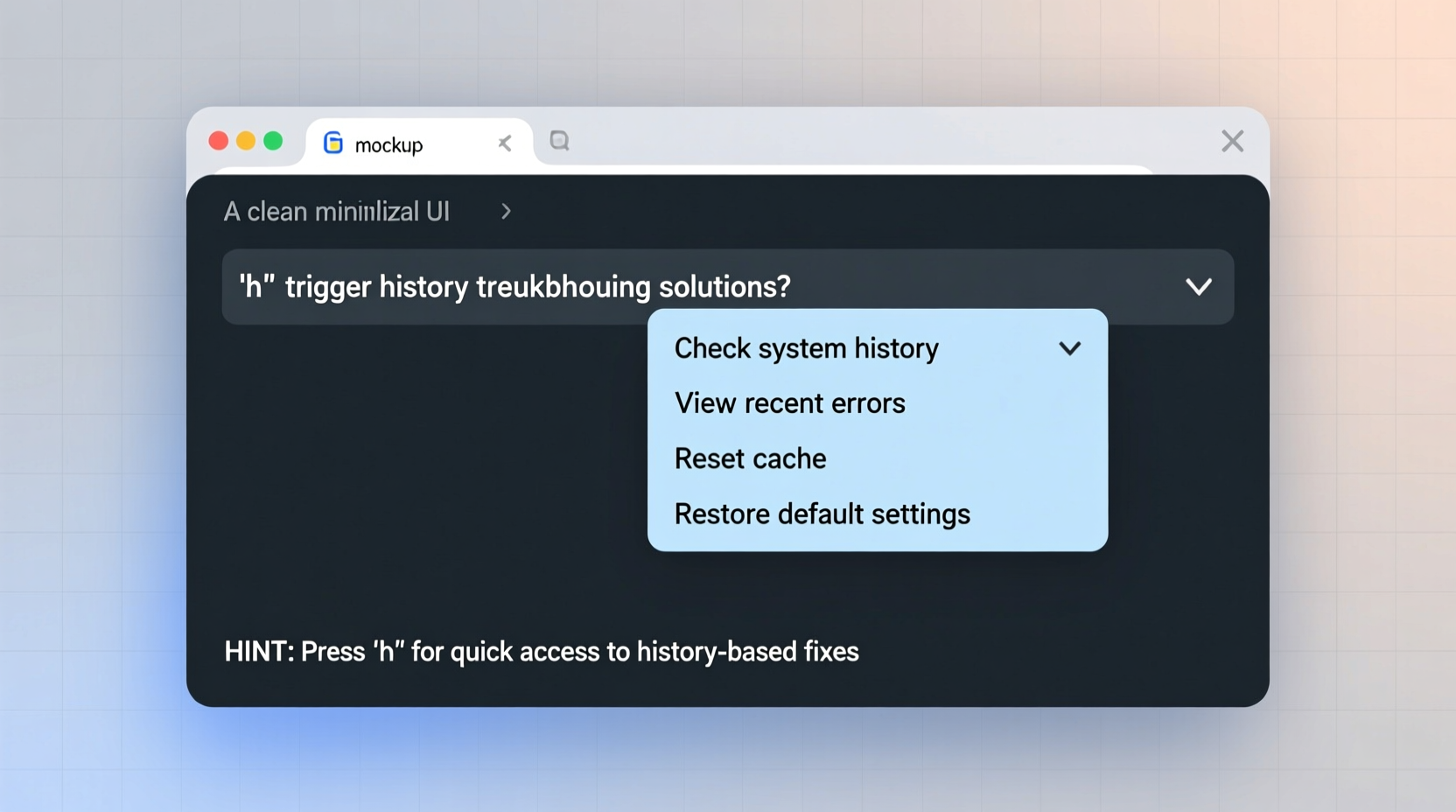
Modern web browsers rely heavily on keyboard shortcuts to improve navigation efficiency. These shortcuts allow users to perform actions without reaching for the mouse. The letter “h” has been adopted by several browsers and platforms as a quick access key to view browsing history. However, context matters: whether “h” opens history depends on which application, website, or mode you're using at the time.
For example:
- In **Google Chrome**, pressing Ctrl + H (or Cmd + H on Mac) opens the History page.
- In some web apps like **Gmail** (when keyboard shortcuts are enabled), simply pressing “h” while in inbox view takes you to the main home screen or initiates a search filter.
- In **YouTube**, pressing “h” toggles video stats during playback if developer settings are active.
But what about cases where just typing “h” in a blank field or during normal browsing brings up the history tab? That usually indicates an unintended trigger caused by misconfigured settings, browser extensions, or hardware issues.
Common Causes of Unintended History Activation
When “h” alone—not in combination with other keys—opens your browsing history, something outside standard operation is likely occurring. Below are the most frequent culprits:
- Stuck modifier key: If your Ctrl, Alt, or Cmd key is physically stuck or registering false inputs, pressing “h” may actually be interpreted as Ctrl+H.
- Browser extensions: Some productivity or navigation-enhancing extensions remap single letters to functions. An extension might assign “h” to open history regardless of modifier use.
- Accessibility tools: Screen readers or voice control software sometimes create global hotkeys that override default behaviors.
- Malware or keyloggers: Malicious software can intercept keystrokes and simulate shortcut commands.
- Website-specific scripts: Certain sites implement JavaScript listeners that respond to individual keypresses for faster interaction.
Troubleshooting Steps to Resolve Unexpected Behavior
If pressing “h” consistently opens your history when it shouldn’t, follow this step-by-step diagnostic process:
Step 1: Check for Stuck Modifier Keys
Press and release each modifier key (Ctrl, Alt, Shift, Cmd) firmly. Listen for tactile feedback and ensure none feel jammed. Use an on-screen keyboard (available in Windows Settings > Ease of Access > Keyboard) to verify virtual key states.
Step 2: Disable Browser Extensions Temporarily
Go to your browser’s extension manager (e.g., chrome://extensions in Chrome). Disable all extensions, then re-enable them one by one while testing the “h” key after each activation. Identify any extension that reintroduces the issue.
Step 3: Test in Incognito Mode
Open an incognito/private window. Extensions are typically disabled here by default. Type “h” in the address bar or on a blank page. If history doesn’t open, the problem is likely tied to an extension or cached script.
Step 4: Clear Site-Specific Scripts
If the issue only occurs on certain websites, clear site data:
- Navigate to browser settings.
- Go to Cookies and Site Data.
- Search for the problematic site and remove its stored data.
Step 5: Scan for Malware
Run a full system scan using trusted antivirus software. Key hijacking is a known tactic used by spyware to manipulate user behavior.
Step 6: Update or Reset Browser
Ensure your browser is up to date. If problems persist, consider resetting it to default settings (Settings > Advanced > Reset settings).
“Unexpected keyboard behaviors are often early indicators of deeper system conflicts. Addressing them promptly prevents escalation.” — Dr. Lena Torres, Human-Computer Interaction Researcher, MIT Media Lab
Do’s and Don’ts When Dealing With Shortcut Conflicts
| Do | Don't |
|---|---|
| Test keyboard functionality regularly, especially after updates. | Ignore repeated strange behaviors—they rarely resolve themselves. |
| Use incognito mode to isolate extension-related issues. | Install unknown extensions promising “enhanced navigation.” |
| Keep your operating system and browser updated. | Assume the issue is purely hardware-related without checking software layers. |
| Document when and where the issue occurs (site, app, device). | Share sensitive information while suspecting malware presence. |
Real-World Example: A Writer's Workflow Disruption
Sophie, a freelance journalist, began noticing that every time she typed the word “history” in her drafts, the browser would jump to the history tab. At first, she thought she was accidentally hitting Ctrl+H. But after switching keyboards and still experiencing the same result, she investigated further.
She discovered that a recently installed grammar-checking extension had implemented aggressive real-time shortcuts. Although marketed as a writing aid, it registered standalone letter presses as command triggers under specific conditions. After disabling the extension, the issue vanished immediately.
This case highlights how well-intentioned tools can interfere with natural workflows. Always assess new software not just for functionality, but for side effects on core interactions like typing.
Prevention and Best Practices
To avoid future surprises with keyboard shortcuts, adopt these habits:
- Audit extensions monthly: Remove unused or outdated ones.
- Use dedicated profiles: Create separate browser profiles for work, personal use, and development to contain extension impacts.
- Enable shortcut previews: Some browsers offer visual feedback when a shortcut is triggered—useful for catching unintended combos.
- Customize shortcuts: Where supported, reassign conflicting keys to less frequently used combinations.
Frequently Asked Questions
Why does “h” open history even when I’m not in the browser?
If “h” opens history outside your browser—for instance, in a word processor—it suggests a system-wide utility (like a launcher or clipboard manager) has mapped that key. Check applications like Alfred (Mac), AutoHotkey (Windows), or other automation tools running in the background.
Can I disable Ctrl+H completely?
Most browsers don’t offer built-in options to disable standard shortcuts, but you can use extensions like “Shortkeys” (Chrome) to override or block specific key combinations. Alternatively, some advanced users modify userChrome.css (in Firefox) to customize interface controls.
Is this behavior a sign of being hacked?
Not necessarily. While unauthorized access could cause such symptoms, isolated incidents are more commonly due to software bugs or misconfigurations. However, if accompanied by other anomalies—redirected searches, unfamiliar toolbars, or sluggish performance—a security review is warranted.
Conclusion: Take Control of Your Digital Environment
The automatic opening of history when typing “h” may seem trivial, but it reflects broader themes in digital hygiene: awareness, control, and proactive maintenance. Whether the cause is a sticky key, a rogue extension, or a poorly designed script, understanding the root allows you to restore smooth, distraction-free browsing.
Technology should serve you—not interrupt you. By applying the troubleshooting methods and preventive strategies outlined here, you reclaim precision over your interactions. Small fixes today prevent larger frustrations tomorrow.




 浙公网安备
33010002000092号
浙公网安备
33010002000092号 浙B2-20120091-4
Comments
No comments yet. Why don't you start the discussion?