
Wolverine, one of Marvel’s most enduring and complex characters, is instantly recognizable by his retractable claws. But a long-standing debate among fans centers on a fundamental question: Are Wolverine’s claws made of bone—or are they pure adamantium? The answer isn’t as simple as it seems. His claws evolved significantly across comics, movies, and character development, shifting from biological weapons to nearly indestructible instruments of combat. Understanding this transformation requires diving into decades of storytelling, scientific speculation, and creative reinterpretation.
The Original Comic Depiction: Bone Claws
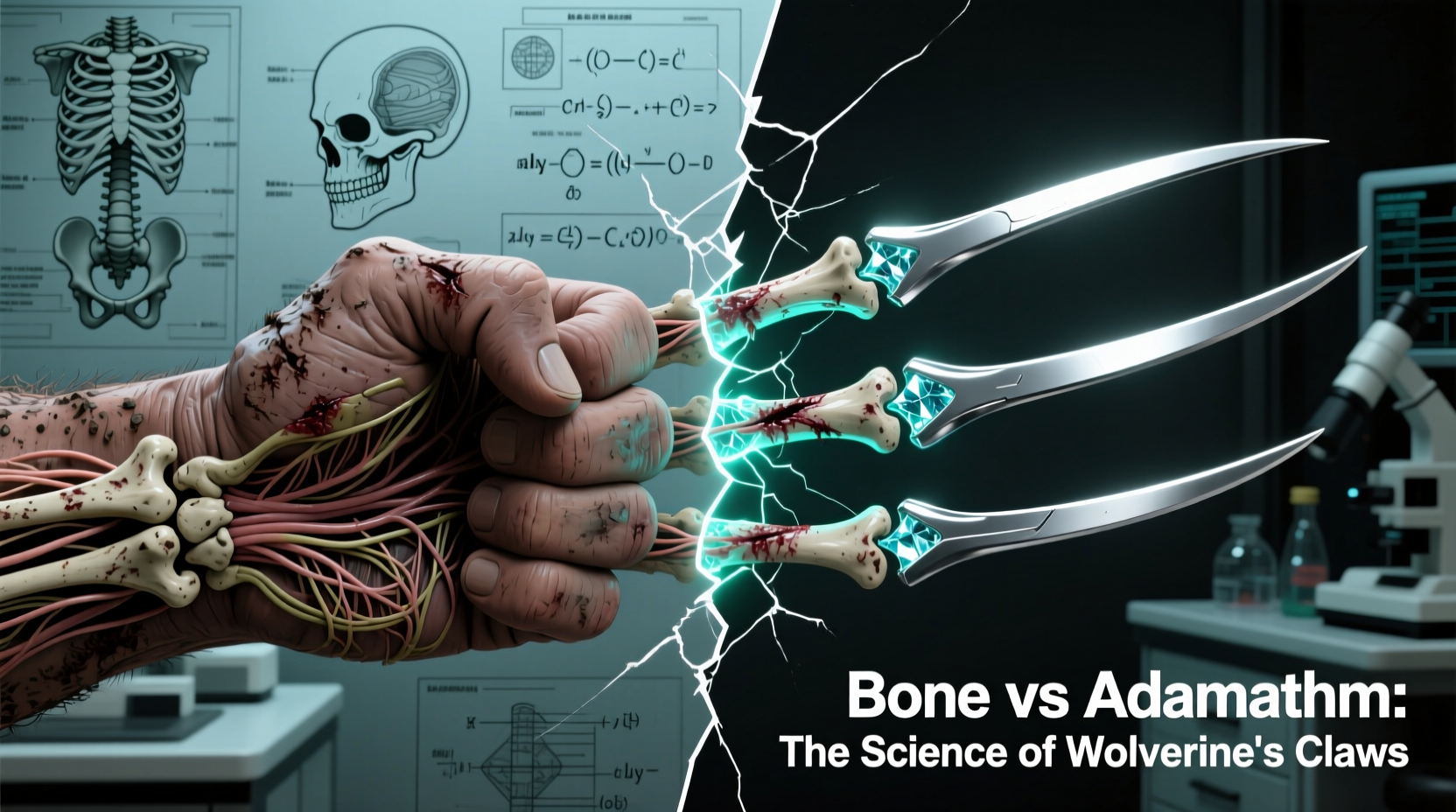
When Wolverine first appeared in *The Incredible Hulk #180* (1974), there was no mention of metal claws. Instead, the character was portrayed with natural, razor-sharp bone claws that extended from his knuckles. These were part of his mutant physiology—a rare and terrifying adaptation.
According to early Marvel canon, Wolverine’s mutation allowed him to generate three retractable claws per hand, composed entirely of bone and reinforced by his accelerated healing factor. This biological design enabled rapid extension and retraction, much like a cat’s claws, but with devastating offensive capability. Importantly, these claws existed before any known contact with the Weapon X program.
The Weapon X Program and the Adamantium Coating
The pivotal shift in Wolverine’s claw lore came during the groundbreaking 1991 *Weapon X* limited series by Barry Windsor-Smith. This story revealed that Wolverine had been subjected to the Weapon X experiment, a top-secret government project aimed at creating the ultimate living weapon.
During this procedure, molten adamantium—an unbreakable, fictional metal alloy—was bonded to his entire skeleton, including his pre-existing bone claws. This process was excruciating and nearly fatal, but his healing factor allowed him to survive. As a result, his natural bone claws became encased in adamantium, making them capable of slicing through almost any material, including other superhuman defenses.
“Wolverine’s tragedy lies in the fusion of man and machine. His body became a prison forged in metal.” — Chris Claremont, Legendary X-Men Writer
This revelation reshaped Wolverine’s identity. He was no longer just a mutant with sharp claws—he was a weaponized being whose very bones were transformed into tools of war. The adamantium not only enhanced his claws but also stabilized his skeleton, allowing him to withstand extreme physical trauma.
Claw Anatomy: Biological Structure vs. Enhanced Weaponry
To fully grasp the distinction, it helps to break down the two phases of Wolverine’s claws:
- Bone Claws (Natural Mutation): Biologically grown, retractable via tendons and muscle control, self-repairing due to healing factor.
- Adamantium-Coated Claws (Weapon X Enhancement): Bone core permanently sheathed in a layer of synthetic metal, virtually indestructible, capable of cutting through steel, vibranium, and even Captain America’s shield under specific conditions.
It’s critical to understand: the adamantium did not replace the bone—it coated it. When Wolverine loses his adamantium (as seen in pivotal arcs like *Fatal Attractions*), his original bone claws remain and continue to function.
Key Story Arcs That Clarified the Origins
Several major comic book events helped solidify the current understanding of Wolverine’s claws:
- *Weapon X* (1991): First full depiction of the adamantium bonding process and confirmation of pre-existing bone claws.
- *Fatal Attractions* (1993): Magneto forcibly removes the adamantium from Wolverine’s body, revealing that his claws are still present—but now made of bone again.
- *Healing Factor Restoration* (2000s): After periods without adamantium, Wolverine regenerates his skeleton, and later stories show the metal being reintroduced artificially.
- *Old Man Logan* (2008): Features an aged Wolverine with worn-down claws, symbolizing both physical and emotional decay.
Movie Interpretations: A Shift in Canon
The *X-Men* film series, particularly those starring Hugh Jackman, introduced a significant deviation from the comics. In *X-Men (2000)*, it is implied—though never explicitly confirmed—that Wolverine’s claws were always metallic and implanted during the Weapon X experiments.
This interpretation suggested that the claws were artificial, surgically inserted, and made entirely of adamantium. This conflicted with comic canon but served narrative simplicity for new audiences unfamiliar with decades of continuity.
Later films like *X-Men Origins: Wolverine (2009)* attempted to reconcile this by showing bone claws first, then coating them with adamantium. However, the portrayal lacked the emotional weight of the original comic reveal. The 2017 film *Logan*, widely praised for its fidelity to the character’s essence, returns to the idea of deteriorating bone claws, emphasizing vulnerability and mortality.
| Era | Claw Composition | Origin Explanation |
|---|---|---|
| Pre-1991 Comics | Bone | Natural mutation; no metal involved |
| Post-*Weapon X* Comics | Bone + Adamantium Coating | Metal bonded to existing skeleton |
| X-Men Films (2000–2006) | Implied Adamantium Implants | Suggested artificial insertion |
| X-Men Origins: Wolverine | Bone → Adamantium Coating | Aligned closer with comics |
| Logan (2017) | Bone (deteriorating) | Adamantium poisoning; healing factor failing |
Scientific Plausibility and Mutant Biology
From a speculative biology standpoint, Wolverine’s bone claws raise fascinating questions. Real-world animals like the African porcupine or certain frog species have osseous protrusions, but nothing matching Wolverine’s retractable, wrist-mounted structure.
In Marvel’s universe, his mutation activates genes responsible for hyper-dense bone growth and specialized musculature in the forearms. The claws emerge between the knuckles—not through them—minimizing nerve damage and enabling smooth retraction. His healing factor continuously repairs micro-tears in tissue, preventing infection or chronic injury.
The addition of adamantium introduces further complexity. Bonding metal to living bone would normally cause toxic shock or necrosis. But because Wolverine’s healing factor operates at a cellular level, it counteracts rejection and stabilizes the integration process—albeit at great physiological cost.
Mini Case Study: The Impact of Adamantium Loss
In the 1993 storyline *Fatal Attractions*, Magneto strips Wolverine of his adamantium skeleton in retaliation for Xavier’s brainwashing by the villain Onslaught. The scene is brutal: blood sprays as the magnetic field tears metal from bone. Wolverine survives, but his body is left severely weakened.
What followed was a transformative period. Without adamantium, his bone claws were less effective against armored foes. Yet, this vulnerability humanized him. He relied more on strategy, teamwork, and raw instinct. Fans noted a return to his roots as a survivor rather than an unstoppable weapon.
This arc proved that Wolverine’s strength wasn’t solely in his claws—but in his resilience. The loss of adamantium didn’t diminish his heroism; it deepened it.
Frequently Asked Questions
Are Wolverine’s claws made of bone or metal?
Both. His natural claws are made of bone, but they were later coated in adamantium during the Weapon X program. So, modern depictions usually show adamantium-covered bone claws.
Can Wolverine’s claws cut through anything?
Mostly, yes—but with limits. They can cut through steel, titanium, and even some forms of vibranium under extreme conditions. However, materials like secondary adamantium or energy fields may resist his blades.
Why didn’t the adamantium kill Wolverine?
The bonding process should have been fatal. However, his mutant healing factor prevented cellular death, neutralized toxins, and repaired tissue damage in real time, allowing him to survive what would be lethal to any normal human.
Conclusion: The Symbolism Behind the Claws
Wolverine’s claws are more than weapons—they are symbols of his dual nature. The bone represents his humanity, his mutation, his origin as a man shaped by pain and survival. The adamantium reflects the violence done to him, the attempts to erase his identity and turn him into a weapon.
Every time he unsheathes his claws, he confronts that duality. Are they tools of protection or destruction? Are they part of him, or were they forced upon him? These questions make Wolverine not just a superhero, but a deeply tragic figure.
Understanding the evolution from bone to adamantium isn’t just about comic book trivia—it’s about appreciating one of Marvel’s most layered characters. Whether in print or on screen, Wolverine’s claws tell a story of endurance, identity, and the cost of becoming something more—and less—than human.




 浙公网安备
33010002000092号
浙公网安备
33010002000092号 浙B2-20120091-4
Comments
No comments yet. Why don't you start the discussion?