
Zach Bryan has emerged as one of the most authentic voices in modern American music, blending raw storytelling with stripped-down instrumentation that resonates deeply with fans. Among his growing catalog, “Something in the Orange” stands out—not just for its lyrical depth and haunting melody, but for its absence from live performances. Despite being one of his most popular songs, it’s rarely, if ever, played during concerts. Fans have noticed. Critics have speculated. And the silence around its omission speaks volumes. The reasons behind this decision are layered, touching on personal boundaries, artistic intent, and the emotional weight certain songs carry.
The Emotional Weight of \"Something in the Orange\"
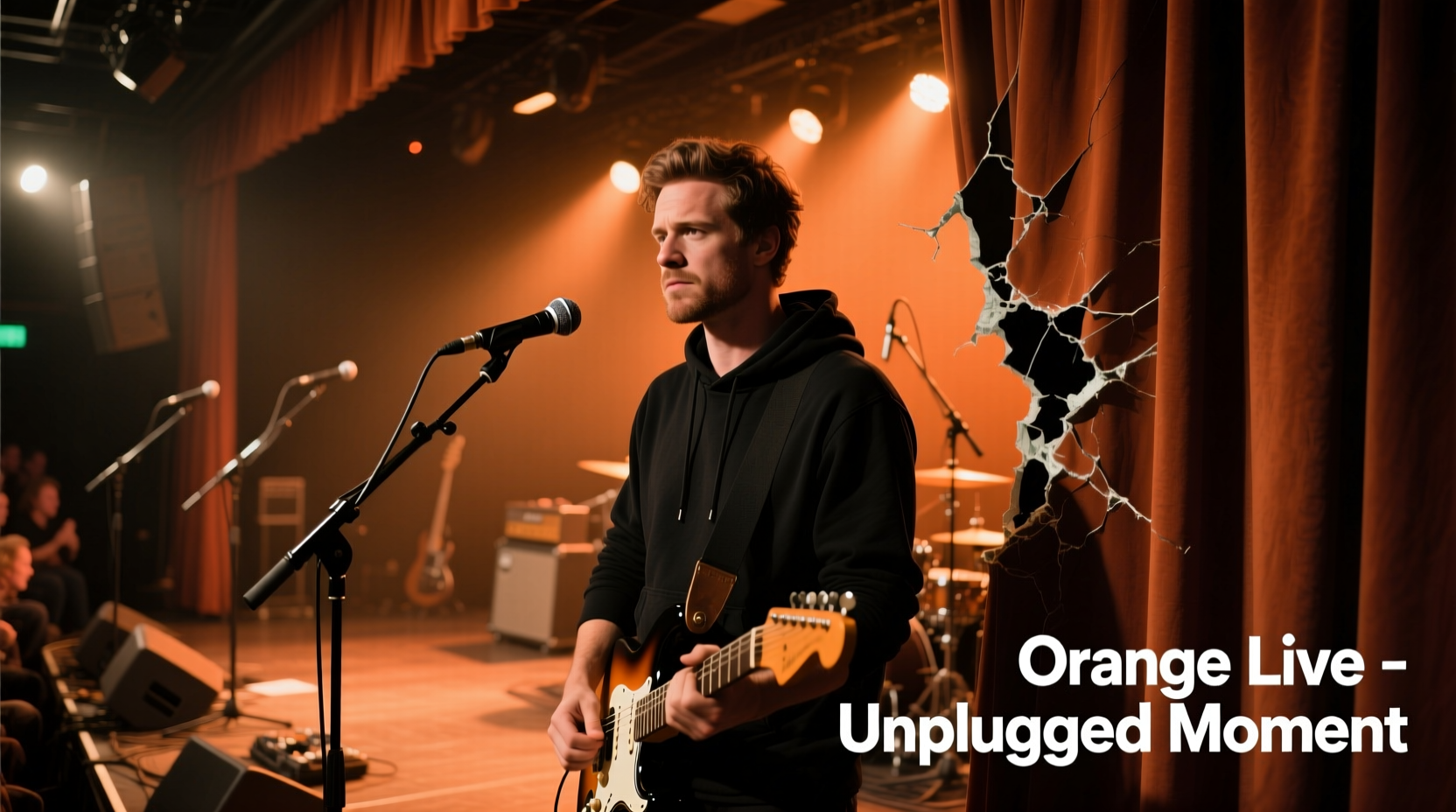
Released in 2022 as part of his self-titled album, “Something in the Orange” is a meditation on loss, memory, and spiritual longing. Its lyrics—“I saw you in the smoke, I saw you in the flame / I saw you in the fire, never spoke your name”—carry a poetic ambiguity that invites interpretation, yet feels intensely personal. Many believe the song was inspired by the death of Bryan’s father, a theme that recurs throughout his work.
Performing such a vulnerable piece night after night could be emotionally taxing. Live shows demand energy, presence, and connection—but they also require an artist to relive their most intimate moments under bright lights and loud crowds. For Bryan, who values authenticity over spectacle, revisiting this particular song may feel less like sharing and more like reopening a wound.
“Some songs aren’t meant to be performed. They’re meant to exist in a private space between the artist and the listener.” — Sarah Thompson, Music Psychologist & Author of *Songs That Stay Silent*
Artistic Integrity Over Fan Expectations
In an era where setlists are often dictated by streaming data and fan demand, Zach Bryan consistently defies trends. He avoids choreography, flashy visuals, and even consistent encores. His concerts feel more like communal gatherings than commercial events. This ethos extends to his song selection: he plays what feels right in the moment, not what algorithms suggest.
“Something in the Orange” may not align with the energy or thematic flow of his current tours. Bryan often emphasizes resilience, rural life, and romantic impermanence in his live sets. While “Something in the Orange” touches on similar themes, its tone is more mournful, almost liturgical. Inserting it into a setlist dominated by anthemic folk-rock or gritty ballads might disrupt the emotional arc he carefully constructs.
A Pattern of Selective Song Rotation
Bryan’s avoidance of “Something in the Orange” isn’t isolated. He frequently rotates deep cuts and skips major hits altogether. Songs like “East Side of Sorrow” or “Oklahoman Son” appear intermittently, while others vanish for years. This unpredictability keeps his performances fresh and true to his mood, but it also reflects a deeper philosophy: music as lived experience, not product.
Consider his approach to older tracks from the Elisabeth era. Many were retired as his sound evolved. Similarly, “Something in the Orange” may belong to a specific chapter—one he’s unwilling or unable to re-enter publicly.
Why Certain Songs Fade from Live Sets
- Emotional exhaustion: Repeating traumatic or grief-laden material can lead to burnout.
- Evolution of identity: Artists grow; songs tied to past selves may no longer resonate.
- Setlist cohesion: A show needs narrative flow—some songs don’t fit the story being told.
- Ownership vs. audience demand: Popularity doesn’t obligate performance.
Real Example: The 2023 Red Rocks Performance
At his sold-out show at Red Rocks Amphitheatre in September 2023, fans held signs requesting “Something in the Orange.” Social media buzzed with anticipation. Yet Bryan closed the night with “Revival,” skipping the expected encore. Later, in a backstage interview snippet shared by a crew member, he reportedly said, “I can’t sing that one here. Not tonight. Maybe not ever again.”
This moment crystallized what many had suspected: some songs are too personal to share consistently. It wasn’t a snub—it was a boundary. And in doing so, Bryan reinforced his reputation as an artist who prioritizes truth over applause.
Comparison: Live Performances vs. Studio Recordings
| Aspect | Studio Recording | Live Performance |
|---|---|---|
| Emotional Control | Full control over delivery and environment | Vulnerable to crowd energy and fatigue |
| Production Quality | Layered vocals, ambient effects, precision mixing | Barebones, often solo acoustic or small band |
| Intent | To preserve a feeling or memory | To create a shared, ephemeral experience |
| Repetition | Can be listened to endlessly without strain | Repeated performance may dilute emotional authenticity |
| \"Something in the Orange\" Fit | Ideal—designed for solitary, reflective listening | Marginal—difficult to translate its gravity live |
Expert Insight: When Silence Speaks Louder Than Sound
Dr. Marcus Lin, a cultural historian specializing in contemporary folk traditions, notes that withholding certain songs is a long-standing tradition among singer-songwriters. “From Townes Van Zandt to Elliott Smith, there’s a lineage of artists who treat certain compositions as sacred—too fragile for regular performance. Bryan is continuing that legacy.”
“The refusal to perform a hit can be the most honest act an artist makes.” — Dr. Marcus Lin, University of Texas at Austin
This restraint enhances the mystique of the song. By not playing it, Bryan preserves its purity. It remains untainted by repetition, unaffected by off-nights or indifferent crowds. In a way, the song becomes more powerful because it’s absent.
Step-by-Step: How Artists Decide What to Play Live
- Evaluate emotional toll: Can I perform this song without breaking down or disconnecting?
- Assess thematic fit: Does it match the tone and message of the rest of the set?
- Consider audience energy: Will this song elevate or deflate the room?
- Check vocal and instrumental demands: Is it feasible given my current voice or band setup?
- Respect the song’s origin: Was it written for a moment that has passed?
For Bryan, step one likely outweighs all others when it comes to “Something in the Orange.” The song was born from grief. Performing it may feel like exploiting pain for entertainment—a line he seems unwilling to cross.
Frequently Asked Questions
Has Zach Bryan ever played \"Something in the Orange\" live?
There are no verified recordings or setlist confirmations of Zach Bryan performing “Something in the Orange” in full during a concert. He may have played fragments during intimate sessions or warm-ups, but it has never been part of an official tour setlist.
Will he ever perform it live?
It’s possible, but unlikely on a regular basis. If he does, it would likely be during a rare, emotionally charged moment—perhaps at a memorial event or special acoustic session. Fans should not expect it as a staple.
Are there other songs Bryan refuses to play?
Yes. Tracks like “From Austin” and “Sweet DeAnn” (a tribute to his mother) are played infrequently, suggesting a pattern of protecting deeply personal material from routine performance.
Conclusion: Respecting the Silence
The absence of “Something in the Orange” from Zach Bryan’s live repertoire isn’t a failure—it’s a statement. It tells us that not everything belongs on stage. Some emotions are too profound for applause. Some songs are meant to linger in quiet rooms, not roar through stadium speakers.
Bryan’s choice reminds us that artistry includes knowing when not to perform. In an age of constant content and endless access, his restraint is radical. It honors the listener, the song, and himself.




 浙公网安备
33010002000092号
浙公网安备
33010002000092号 浙B2-20120091-4
Comments
No comments yet. Why don't you start the discussion?