
Teaching is often described as a job, a profession, or even a stepping stone to other opportunities. But for many educators, it transcends these definitions. It is not merely what they do—it is who they are. Education, at its core, is a calling: a deep, internal pull toward nurturing minds, shaping futures, and serving communities. Unlike careers chosen solely for stability or income, a calling in education arises from a sense of moral responsibility, personal fulfillment, and long-term impact. This article explores the philosophical, emotional, and societal dimensions of education as a vocation, examining why so many feel drawn to this path and how that sense of purpose transforms both teachers and students.
The Nature of a Calling
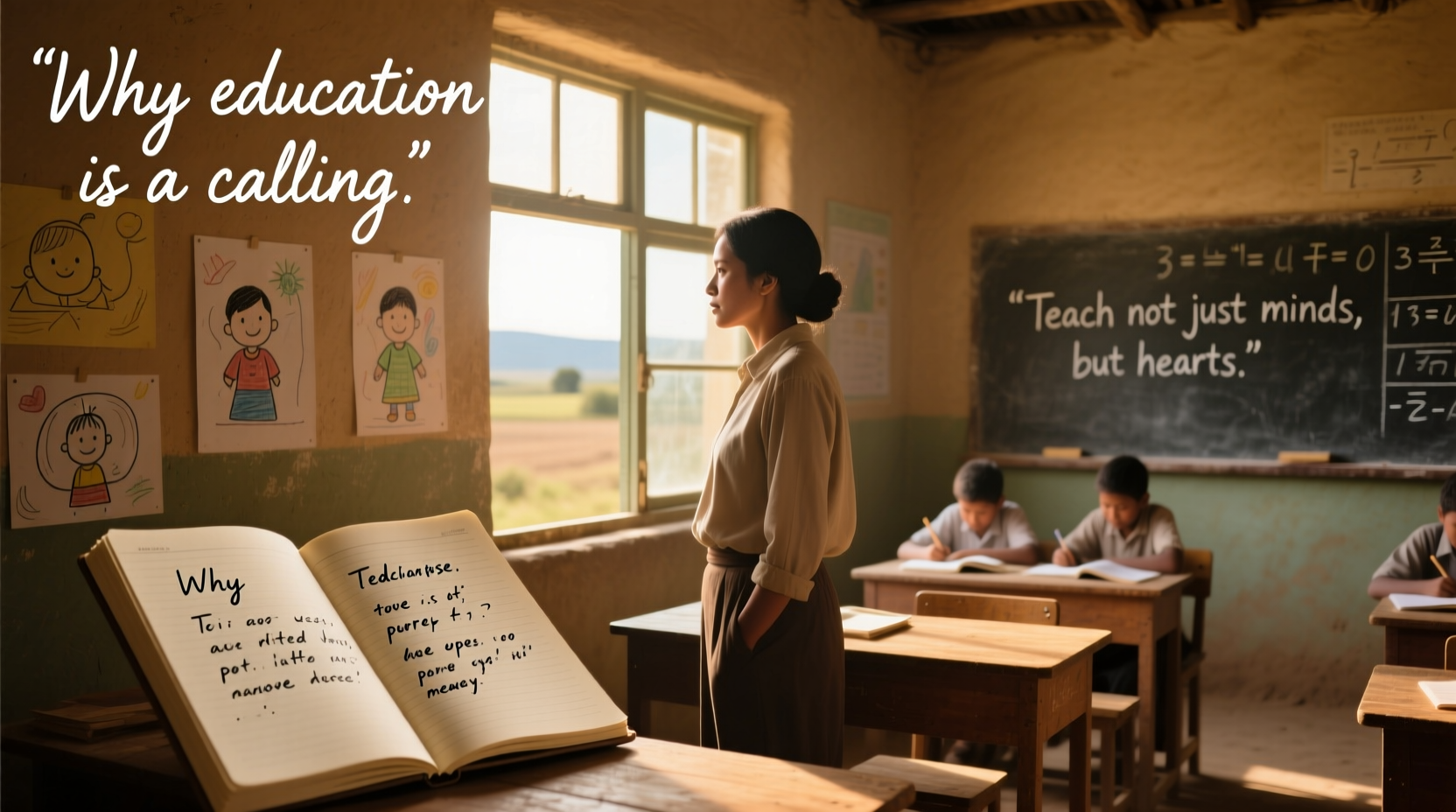
A calling is more than ambition. It’s an enduring desire to contribute meaningfully to something greater than oneself. In the context of education, this manifests as a commitment to student growth, intellectual curiosity, and social equity. People who view teaching as a calling often report higher job satisfaction, resilience during challenges, and a stronger connection to their work.
Unlike transactional professions—where effort is exchanged for compensation—teaching as a calling involves emotional investment, ethical responsibility, and long-term vision. Teachers act not only as instructors but also as mentors, advocates, and role models. They influence character development, instill values, and open doors to opportunity, especially for underserved populations.
“Teaching is the one profession that creates all other professions.” — Unknown
Purpose Beyond the Classroom
When educators embrace their role as a calling, their impact extends far beyond lesson plans and test scores. They become agents of change, fostering critical thinking, empathy, and civic engagement. A teacher who sees purpose in their work doesn’t just deliver curriculum—they ignite potential.
This sense of mission is particularly evident in schools facing systemic challenges. In under-resourced communities, dedicated teachers often serve as anchors of stability, offering consistency, encouragement, and high expectations where few others do. Their belief in every student’s capacity becomes a self-fulfilling prophecy, transforming trajectories one child at a time.
Real Impact: A Mini Case Study
Consider Maria Thompson, a middle school English teacher in rural Georgia. She noticed that several of her students lacked access to books at home. Rather than accept this barrier, she launched a classroom library using grant funds and donated materials. Over three years, her students’ reading levels improved by nearly two grade levels on average. More importantly, several students began identifying themselves as “readers” for the first time.
Maria didn’t see this project as extra work; she saw it as part of her duty. “If I can give them just one book that speaks to their experience,” she said, “I’ve done my job.” Her initiative stemmed not from obligation, but from a deep conviction that literacy is liberation—a belief central to her identity as an educator.
Historical and Philosophical Roots
The idea of education as a moral enterprise dates back centuries. Philosophers like John Dewey argued that education should prepare individuals not just for jobs, but for democratic citizenship and lifelong growth. Similarly, Paulo Freire viewed teaching as an act of love and resistance—an antidote to oppression.
In many cultures, teachers have been revered as guides and wisdom-keepers. From ancient gurus in India to Socratic mentors in Greece, educators were seen as stewards of knowledge and virtue. This historical reverence underscores the sacred dimension of teaching—not in a religious sense, but in terms of significance and trust.
| Thinker | View of Education | Modern Implication |
|---|---|---|
| John Dewey | Learning through experience and democracy | Project-based learning, student voice |
| Paulo Freire | Education as liberation | Critical pedagogy, equity-focused curricula |
| Maria Montessori | Child-centered, holistic development | Individualized instruction, autonomy |
Signs You May View Teaching as a Calling
Not everyone who teaches feels called to it—and that’s okay. But for those who do, certain patterns emerge. Here’s a checklist to help identify whether your motivation aligns with a deeper sense of purpose:
- You feel energized by student breakthroughs, not just administrative praise.
- You continue thinking about your students outside school hours.
- You invest personal time in professional development without external pressure.
- You advocate for students even when it’s inconvenient.
- You believe every child can learn, regardless of background or behavior.
- Your work gives you a sense of identity and personal fulfillment.
“Becoming a teacher was never my plan. But once I stepped into a classroom, I knew I’d found my purpose.” — Jamal Rivera, High School History Teacher
Nurturing the Calling: A Step-by-Step Guide
Even the most passionate educators face burnout, bureaucracy, and discouragement. To sustain a calling, intentional practices are essential. Follow this timeline to reconnect with your purpose:
- Month 1: Reflect on Your Why – Write a personal statement about why you teach. Revisit stories of students who inspired you.
- Month 2: Build a Support Network – Connect with like-minded colleagues through professional learning communities or mentorship circles.
- Month 3: Engage in Purposeful PD – Choose workshops focused on equity, trauma-informed practices, or student agency—not just compliance topics.
- Month 4: Initiate a Small Change – Launch a student-led project, revise a unit to include diverse voices, or start a gratitude journal for classroom wins.
- Ongoing: Practice Sustainable Self-Care – Set boundaries, take mental health days, and celebrate progress over perfection.
Challenges and Realities
Recognizing education as a calling does not erase the real difficulties of the profession. Underfunding, large class sizes, standardized testing pressures, and lack of public support can erode morale. Idealism must be balanced with pragmatism.
Yet, viewing teaching as a calling equips educators with resilience. When setbacks occur, those anchored in purpose are more likely to persist, adapt, and seek solutions rather than exit the field. Their motivation isn’t tied solely to conditions—it’s rooted in contribution.
Frequently Asked Questions
Can someone become a teacher as a second career and still feel called?
Absolutely. Many late-career educators discover their calling after working in other fields. Life experience often deepens their empathy and perspective, making them uniquely effective in the classroom.
Is feeling called to teach necessary for being a good teacher?
No. Excellence in teaching comes in many forms. Some thrive on structure, innovation, or subject mastery. A calling enhances motivation but isn’t the only path to effectiveness.
How do I stay motivated when the system feels broken?
Focus on what you can control: your classroom culture, relationships with students, and daily acts of care. Small, consistent efforts accumulate into lasting change. Remember, you don’t have to save the system to transform a life.
Conclusion: Answering the Call
Education as a calling is not about heroism or sacrifice. It’s about alignment—between one’s values and actions, between personal passion and public service. It’s recognizing that behind every standard and schedule is a human being with potential waiting to be unlocked.
In a world increasingly driven by metrics and efficiency, the idea of teaching as a calling reminds us of what truly matters: connection, growth, and hope. Whether you’re a new teacher finding your footing or a veteran rekindling your fire, your work is significant. You are not just delivering content—you are shaping the future.




 浙公网安备
33010002000092号
浙公网安备
33010002000092号 浙B2-20120091-4
Comments
No comments yet. Why don't you start the discussion?