
Estuaries—where rivers meet the sea—are among the most productive ecosystems on Earth. These transitional zones blend freshwater from land with saltwater from the ocean, creating unique environments that support an extraordinary diversity of life. Far from being mere geographical features, estuaries serve as ecological powerhouses, economic assets, and natural defenses. Their importance spans environmental, economic, and cultural dimensions, making them indispensable to both nature and human communities.
Nurseries for Marine Life
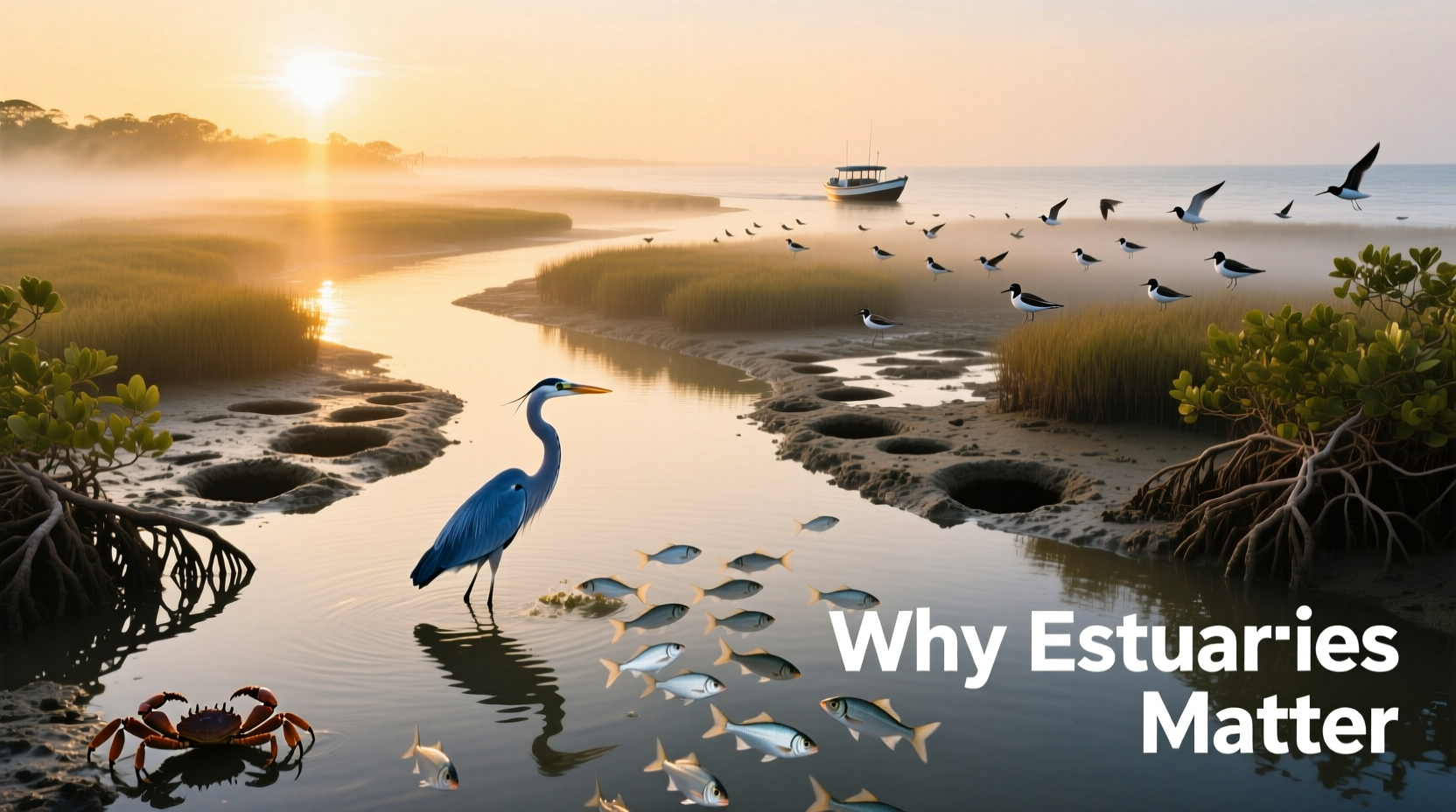
One of the most critical functions of estuaries is their role as nurseries for countless marine species. The mix of nutrients, sheltered waters, and abundant food makes these areas ideal breeding and rearing grounds for fish, crustaceans, and shellfish. Species such as salmon, striped bass, shrimp, and blue crabs spend their early life stages in estuarine habitats before migrating to open seas.
The shallow, vegetated marshes and seagrass beds provide protection from predators, while nutrient-rich sediments fuel plankton blooms—the foundation of aquatic food webs. Studies show that over 75% of commercially harvested fish species in the U.S. rely on estuaries at some point in their life cycle.
Biodiversity Hotspots
Estuaries host a remarkable variety of plant and animal life adapted to fluctuating salinity, tides, and sediment levels. Salt marshes, mangroves, tidal flats, and mudflats each support specialized organisms—from fiddler crabs and oysters to migratory birds like herons and egrets.
- Salt marsh plants like Spartina grass stabilize soil and filter pollutants.
- Mangrove forests, common in tropical estuaries, offer complex root systems that shelter juvenile fish.
- Wading birds depend on estuarine wetlands during migration, using them as rest stops and feeding zones.
This rich biodiversity not only sustains natural cycles but also provides resilience against environmental changes. When one species declines, others can often compensate, maintaining ecosystem balance.
Natural Water Filters
Estuaries act as nature’s filtration system. As river water flows into coastal bays, it carries sediments, excess nutrients (like nitrogen and phosphorus), and pollutants from agricultural runoff, urban development, and wastewater. Wetland vegetation and microbial communities in estuaries trap and break down these contaminants, improving water quality before it reaches sensitive marine environments like coral reefs or seagrass meadows.
For example, oyster reefs—common in many estuaries—can filter up to 50 gallons of water per day per oyster, removing algae, heavy metals, and particulates. This natural purification reduces harmful algal blooms and prevents eutrophication, which can lead to oxygen-depleted “dead zones.”
“Estuaries are the kidneys of the coast—they cleanse our waters and protect downstream ecosystems.” — Dr. Rebecca Alvarez, Coastal Ecologist, NOAA
Carbon Sequestration and Climate Mitigation
Emerging research highlights estuaries as significant carbon sinks. Salt marshes, mangroves, and seagrass beds capture atmospheric carbon dioxide through photosynthesis and store it in plant biomass and deep, oxygen-poor soils. Known collectively as “blue carbon” ecosystems, they sequester carbon up to four times more efficiently than terrestrial forests.
Unlike forest carbon, which can be released quickly by fire or logging, blue carbon remains locked in sediments for centuries if undisturbed. Protecting and restoring estuarine wetlands is now recognized as a key strategy in global climate change mitigation.
Coastal Protection and Storm Buffering
Estuaries serve as natural barriers against storm surges, hurricanes, and rising sea levels. Their dense vegetation and complex topography dissipate wave energy, reduce erosion, and absorb floodwaters. During Hurricane Sandy in 2012, areas with intact salt marshes experienced significantly less damage than developed shorelines lacking natural buffers.
Mangroves, in particular, have been shown to reduce wave height by up to 66% across 100 meters of forest. In regions prone to typhoons and cyclones, such as Southeast Asia and the Gulf Coast, preserving estuarine wetlands is a cost-effective alternative to engineered seawalls and levees.
| Ecosystem Type | Flood Risk Reduction | Annual Value (per hectare) | Key Protective Features |
|---|---|---|---|
| Salt Marshes | High | $11,000–$23,000 | Root networks, sediment trapping |
| Mangroves | Very High | $15,000–$67,000 | Aerial roots, wave attenuation |
| Tidal Forests | Moderate | $8,000–$14,000 | Canopy cover, soil stability |
Support for Local Economies and Livelihoods
Estuaries are economic engines. They support commercial and recreational fisheries, tourism, shipping, and aquaculture. In the United States alone, estuarine-dependent fisheries generate over $10 billion annually and support hundreds of thousands of jobs.
Communities around Chesapeake Bay, Puget Sound, and the Mississippi Delta rely heavily on crabbing, oystering, and finfish harvesting—all tied directly to estuarine health. Boating, birdwatching, and eco-tourism further boost regional income, especially in rural coastal towns.
Ports located in estuaries—such as New York Harbor or San Francisco Bay—facilitate international trade while benefiting from protected, navigable waters. However, this economic value is threatened by pollution, overfishing, and habitat loss.
Mini Case Study: The Restoration of the Elwha Estuary
After nearly a century of disruption, the Elwha River estuary in Washington State began recovering following the removal of two large dams between 2011 and 2014. Once blocked, the river’s flow had starved the estuary of sediment and prevented salmon migration.
Post-removal, scientists observed rapid regeneration: native vegetation returned, beach morphology stabilized, and all five species of Pacific salmon resumed spawning in the upper watershed. Within five years, juvenile salmon densities in the estuary increased tenfold. This real-world example demonstrates how restoring natural processes can revive entire ecosystems—and the fisheries that depend on them.
Threats to Estuarine Health
Despite their importance, estuaries face growing pressures. Urbanization leads to shoreline hardening with concrete bulkheads, destroying wetlands. Agricultural runoff introduces excessive nutrients, causing hypoxia. Climate change brings sea-level rise, which can drown marshes if they cannot migrate inland due to development.
Invasive species, such as the common reed (Phragmites australis), outcompete native plants and degrade habitat quality. Overharvesting of shellfish disrupts ecosystem engineering species that maintain water clarity and structure.
Checklist: How You Can Help Protect Estuaries
- Dispose of pet waste properly to prevent bacterial contamination.
- Plant native vegetation in your yard to reduce runoff and erosion.
- Participate in local clean-up events near rivers or coasts.
- Support policies that protect wetlands and limit coastal development.
- Choose sustainably sourced seafood certified by organizations like MSC.
- Avoid dumping oil, chemicals, or litter into storm drains.
- Advocate for green infrastructure like rain gardens and permeable pavements.
Frequently Asked Questions
What causes estuaries to smell like rotten eggs?
The odor comes from hydrogen sulfide gas, produced naturally when bacteria break down organic matter in low-oxygen sediments. While unpleasant, it’s usually harmless in small amounts and indicates active decomposition—a normal part of nutrient cycling.
Are estuaries freshwater or saltwater?
Estuaries are brackish—mixtures of freshwater and saltwater. Salinity varies depending on tides, river flow, and weather. Some parts may be nearly fresh after heavy rains, while others approach oceanic salinity during dry periods.
Can estuaries recover from pollution?
Yes, many estuaries can recover if stressors are reduced. Examples include Boston Harbor and the Thames Estuary, where improved wastewater treatment led to dramatic rebounds in water quality and wildlife populations within decades.
Conclusion: A Call to Stewardship
Estuaries are irreplaceable. They nurture fisheries, shield communities, purify water, and store carbon—all while offering beauty and recreation. Yet they remain among the most altered ecosystems globally, with over 50% degraded or lost since the 1800s.
Protecting estuaries isn’t just an environmental goal—it’s a necessity for resilient coasts and thriving communities. Whether through personal choices, civic engagement, or policy advocacy, everyone has a role to play. By valuing and defending these dynamic landscapes, we invest in a healthier planet and a more secure future.




 浙公网安备
33010002000092号
浙公网安备
33010002000092号 浙B2-20120091-4
Comments
No comments yet. Why don't you start the discussion?