
In an era defined by information and connectivity, Google has emerged as a cornerstone of modern digital life. From answering simple questions to powering global businesses, Google’s influence extends far beyond a search bar. It shapes how we learn, communicate, work, and innovate. Understanding why Google is important requires examining its multifaceted role in democratizing knowledge, accelerating technological progress, and transforming industries worldwide.
The Evolution of Information Access
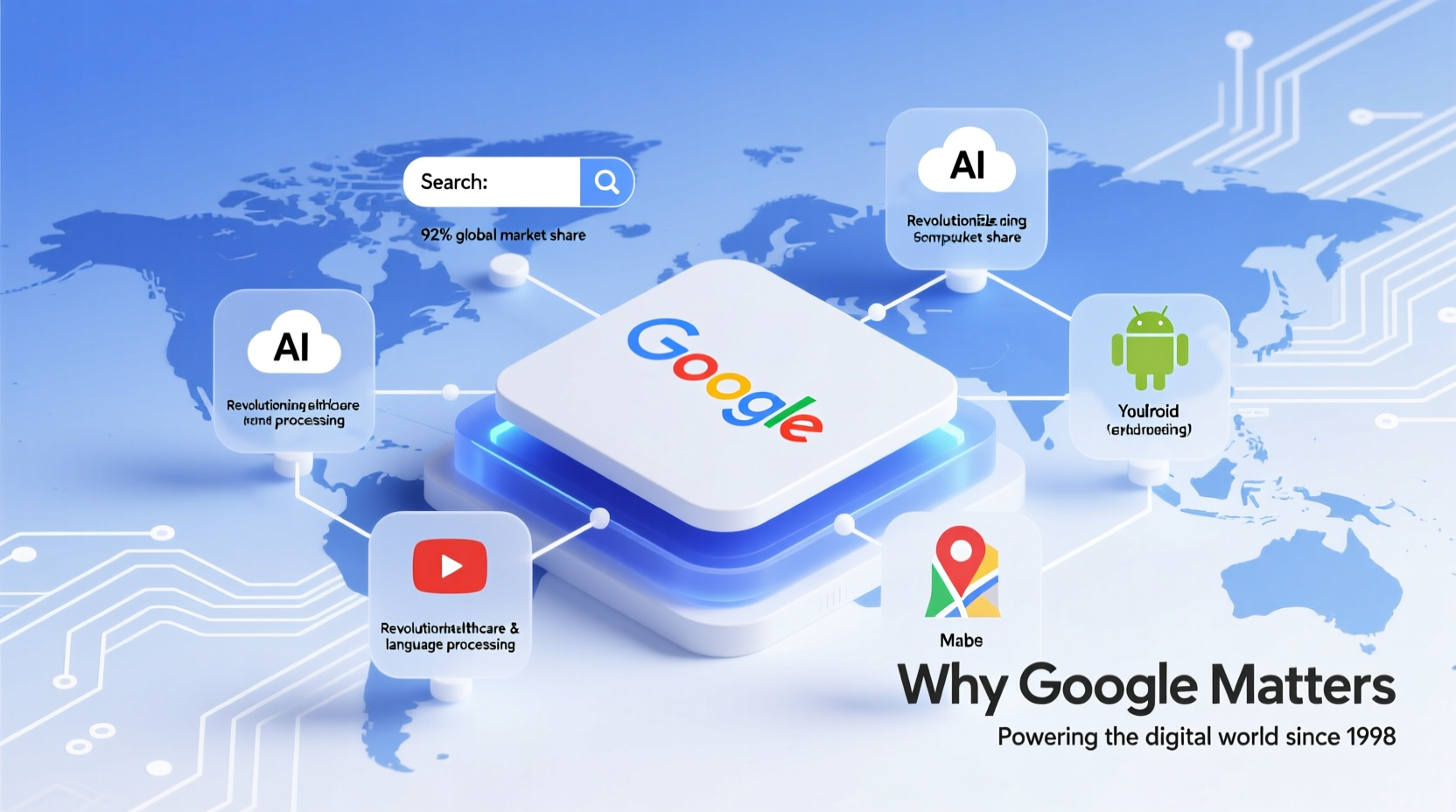
Before Google, finding reliable information online was time-consuming and often frustrating. Search engines lacked precision, returning irrelevant or outdated results. When Google launched in 1998, it introduced PageRank—a revolutionary algorithm that ranked web pages based on relevance and authority. This innovation drastically improved the quality of search results.
Today, Google processes over 8.5 billion searches per day. Its ability to deliver accurate, fast answers has made it the default gateway to knowledge for billions. Whether someone is researching medical symptoms, comparing product prices, or learning a new skill, Google provides immediate access to curated information.
Google’s Role in Global Business and Marketing
For businesses, Google is not just a tool—it's a growth engine. Google Search, Google Ads, and Google My Business have transformed how companies reach customers. Small startups can compete with established brands by leveraging targeted advertising and local SEO strategies.
Google Ads allows businesses to display ads based on user intent, ensuring visibility at critical decision-making moments. Meanwhile, organic search rankings through SEO help build long-term credibility and traffic without direct ad spend.
A 2023 study by Statista revealed that 68% of consumer journeys begin with a search engine, with Google dominating over 90% of the market share globally. This makes it indispensable for brand discovery and customer acquisition.
“Google levels the playing field. A small bakery in Lisbon can be found by tourists from Tokyo—no physical storefront required.” — Maria Tanaka, Digital Marketing Strategist
Innovation and Technological Advancement
Google doesn’t just organize existing information; it drives the creation of new technologies. Through subsidiaries like DeepMind, Waymo, and Google Research, the company pioneers advancements in artificial intelligence, autonomous vehicles, quantum computing, and renewable energy solutions.
Google Translate, powered by neural machine translation, enables real-time communication across more than 130 languages. Gmail uses AI to filter spam and detect phishing attempts. Google Maps leverages satellite imagery, real-time traffic data, and street view to provide navigation precision once thought impossible.
These tools don’t operate in isolation. They form an ecosystem that enhances productivity, safety, and accessibility. For example, during natural disasters, Google Person Finder helps reunite families, while crisis maps guide emergency responders.
Key Google Technologies and Their Real-World Impact
| Technology | Purpose | Real-World Benefit |
|---|---|---|
| Google Search | Information retrieval | Instant access to educational, health, and technical resources |
| Google Maps | Navigation & location services | Improved logistics, disaster response, and urban planning |
| YouTube | Video sharing & education | Free tutorials, remote learning, and creative expression |
| Android OS | Mobile operating system | Connects over 3 billion devices worldwide, especially in emerging markets |
| Google Cloud | Data storage & computing | Supports enterprises, startups, and research institutions with scalable infrastructure |
Educational Empowerment and Digital Literacy
Google has become a vital ally in education. Students from under-resourced schools use Google Scholar to access academic papers. Teachers rely on Google Classroom to manage assignments and communicate with students remotely. Platforms like YouTube host thousands of free lectures from top universities.
In rural India, farmers use Google Assistant in regional languages to get weather forecasts and crop prices. In sub-Saharan Africa, mobile users leverage Google Go to browse efficiently on low-bandwidth connections. These applications demonstrate how Google bridges digital divides and promotes inclusive learning.
Mini Case Study: Remote Learning in Rural Colombia
During the pandemic, a high school in La Guajira, Colombia, faced challenges delivering education due to poor internet and limited devices. Teachers began using Google Meet for live sessions and shared materials via Google Drive. Students accessed lessons on shared tablets using offline modes in Google Docs and Sheets. Within six months, student engagement rose by 45%, and exam pass rates improved significantly. The school administrator credited Google’s suite of tools for sustaining education during isolation.
Privacy, Responsibility, and Ethical Considerations
With great power comes great responsibility. Google collects vast amounts of user data to personalize experiences and serve targeted ads. While this improves relevance, it raises valid concerns about privacy and surveillance.
The company has responded with increased transparency, offering tools like Google Dashboard, Ad Settings, and automatic deletion of activity data after 18 or 36 months. However, critics argue that default settings still favor data collection over user control.
Balancing innovation with ethics remains a challenge. Google’s dominance also invites scrutiny over antitrust issues, particularly regarding preferential treatment of its own services in search results.
Actionable Checklist: Maximizing Google’s Benefits Responsibly
- Use incognito mode when searching for sensitive topics
- Enable two-factor authentication on your Google account
- Review and delete old search and location history monthly
- Leverage Google Alerts to monitor personal brand or business mentions
- Explore Google Skills Garage for free digital literacy courses
- Utilize Google Trends to understand audience behavior and seasonal demand
FAQ
Is Google the only search engine people should use?
No single tool fits all needs. While Google offers the most comprehensive index and advanced algorithms, alternatives like DuckDuckGo prioritize privacy, and specialized engines like Wolfram Alpha excel in computational queries. Using multiple sources ensures balanced, well-rounded research.
How does Google impact small businesses?
Google provides cost-effective marketing tools such as Google My Business, which boosts local visibility. Appearing in local search results and maps increases foot traffic and online inquiries. Additionally, Google Ads allows micro-budget campaigns, making digital marketing accessible even to startups with limited funds.
Can Google be trusted with personal data?
Google implements strong security measures, including encryption and regular audits. However, users should remain proactive—adjusting privacy settings, using strong passwords, and staying informed about data policies. Trust should be earned through awareness, not assumed.
Conclusion: Embracing Google’s Potential with Awareness
Google’s importance lies not just in its technology but in its transformative effect on society. It empowers individuals with knowledge, fuels entrepreneurship, accelerates scientific discovery, and connects cultures across continents. Yet, its dominance demands vigilance—ethical use, user autonomy, and equitable access must remain priorities.
Understanding why Google is important isn’t about blind admiration. It’s about recognizing its role as both a tool and a responsibility. By using Google wisely—maximizing its benefits while safeguarding privacy and critical thinking—we can harness its full potential for personal and collective progress.




 浙公网安备
33010002000092号
浙公网安备
33010002000092号 浙B2-20120091-4
Comments
No comments yet. Why don't you start the discussion?