
Medical coding is often seen as a stable, remote-friendly healthcare career with low entry barriers. But behind the scenes, many professionals are quietly leaving the field. On Reddit and other forums, stories of burnout, frustration, and disillusionment have become common. This article compiles real-life experiences from former coders, explores their reasons for quitting, and outlines practical alternative career paths that offer better work-life balance, income potential, and personal fulfillment.
The Hidden Challenges of Medical Coding
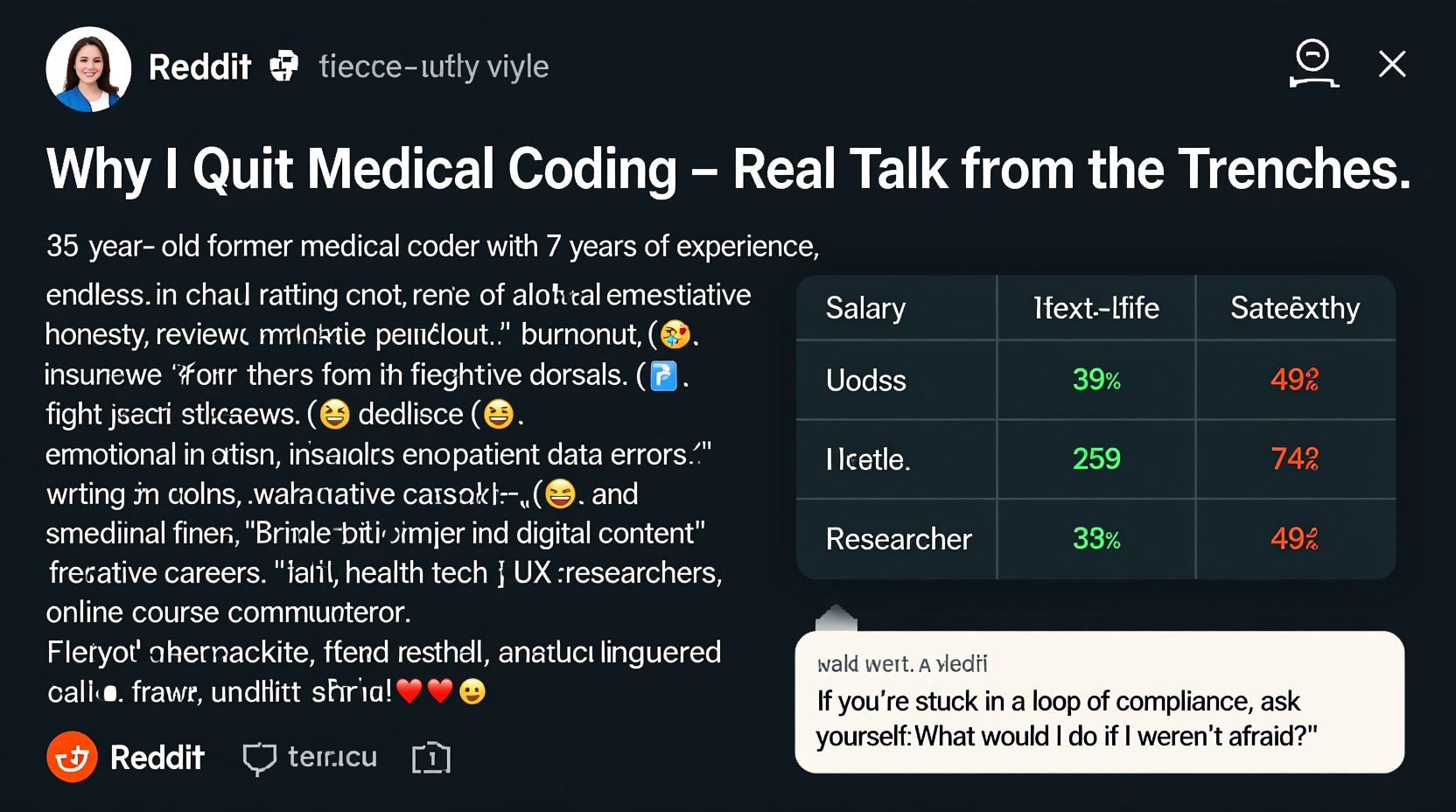
Despite being marketed as a stress-free, home-based job, medical coding comes with intense demands. Coders must navigate complex insurance rules, constantly changing regulations like ICD-10 updates, and strict productivity quotas. One Reddit user shared: “I was expected to code 40+ charts per day with zero errors. The pressure never let up.”
Many report mental fatigue from hours of staring at screens, deciphering physician notes filled with illegible handwriting or vague terminology, and dealing with denials and audits. The cognitive load is high, yet compensation often doesn’t reflect the responsibility.
Common Reasons Coders Quit (Based on Reddit Threads)
- Chronic Burnout: Repetitive tasks, high accuracy demands, and lack of variety lead to emotional exhaustion.
- Low Pay Relative to Responsibility: Many coders earn $15–$25/hour despite handling sensitive patient data and compliance risks.
- Lack of Career Growth: Promotions are rare; advancement often requires switching to auditing or management, which brings more stress.
- Poor Management & Unrealistic Expectations: Supervisors may prioritize speed over accuracy, creating ethical dilemmas.
- Isolation: Remote work sounds ideal, but without team interaction, many feel disconnected and undervalued.
“After three years of coding, I realized I wasn’t building transferable skills. I was just getting faster at something I hated.” — u/MedCodedAndDone, r/careerchange
Career Alternatives That Former Coders Are Pursuing
Leaving medical coding doesn’t mean leaving healthcare—or stability—behind. Many former coders leverage their knowledge of medical terminology, EHR systems, and healthcare workflows to pivot into roles with better pay, growth, and engagement.
Top 5 Alternative Careers Based on Real Transitions
| Career Path | Why It Appeals to Ex-Coders | Avg. Salary (US) | Time to Transition |
|---|---|---|---|
| Health Information Management (HIM) Auditor | Uses existing coding knowledge; more strategic focus | $60,000–$80,000 | 6–12 months |
| Medical Billing Specialist | Focuses on revenue cycle; less technical than coding | $45,000–$60,000 | 3–6 months |
| Healthcare Data Analyst | Leverages familiarity with EHRs and clinical data | $70,000+ | 1–2 years (with training) |
| Project Coordinator in Health IT | Remote-friendly; uses organizational and system knowledge | $55,000–$75,000 | 6–12 months |
| Wellness Coaching or Patient Advocacy | More human-centered; growing demand in preventive care | $40,000–$70,000 (varies widely) | 6–12 months |
Step-by-Step: How to Transition Out of Medical Coding
Leaving a stable job requires planning. Here’s a realistic timeline based on successful Reddit transitions:
- Month 1: Self-Assessment
Identify what you dislike about coding and what you want next—flexibility, higher pay, human interaction, creativity? - Months 2–3: Research & Skill Mapping
List transferable skills (e.g., attention to detail, HIPAA knowledge, EHR experience). Match them to target roles. - Months 4–6: Upskill Strategically
Take short courses in data analysis (Excel, SQL), project management (CAPM, PMP), or wellness coaching (NASM, ACE). - Months 7–9: Build Credibility
Volunteer for healthcare nonprofits, freelance on Upwork, or contribute to open-source health projects. - Months 10–12: Apply & Network
Update LinkedIn, join HIMSS or NAHAM groups, attend virtual conferences, and reach out to alumni.
Mini Case Study: From Burnout to Healthcare Project Management
Sarah, a certified coder from Ohio, worked remotely for a large billing company for five years. Despite good performance reviews, she felt stagnant. “I coded oncology records all day. No one ever said ‘thank you.’ I started dreading logging in.”
She discovered a post on r/careerguidance about health IT project coordinators. After researching, she realized her experience with Epic and Cerner gave her an edge. She completed a six-week Google Project Management Certificate, volunteered to manage a small EHR upgrade for a free clinic, and updated her resume to emphasize process improvement and compliance.
Within four months, she landed a hybrid role at a regional hospital managing software rollout timelines. Her salary increased by 35%, and she now leads meetings instead of working in isolation. “I still use my medical knowledge every day—but now I feel like I’m part of something bigger.”
Expert Insight: Know When to Pivot
“The healthcare industry needs people who understand clinical data but can also communicate and lead. Coders have a unique foundation—they just need to reframe their value.” — Dr. Linda Tran, Healthcare Workforce Consultant
Dr. Tran advises professionals not to see themselves solely as coders, but as information specialists. “Your ability to interpret clinical documentation is rare. Pair that with even basic project or communication skills, and you become indispensable in roles beyond coding.”
Checklist: Are You Ready to Leave Medical Coding?
- ✅ I feel mentally drained after most workdays
- ✅ My job offers no clear path for advancement
- ✅ I’ve researched at least two alternative careers
- ✅ I’ve identified transferable skills from my coding experience
- ✅ I’m willing to invest 3–6 months in learning new skills
- ✅ I’ve saved at least 3 months of living expenses for transition security
Frequently Asked Questions
Can I leave medical coding without going back to school?
Yes. Many roles—like medical billing, patient advocacy, or health IT support—require certifications or short programs (3–6 months), not full degrees. Your existing knowledge gives you a head start.
Will my coding experience be valued outside the field?
Absolutely. Employers in healthcare data, compliance, auditing, and operations value coders’ precision, regulatory awareness, and familiarity with medical records. Frame your experience strategically on resumes and in interviews.
What if I want to leave healthcare entirely?
That’s possible too. Some ex-coders transition into administrative roles, customer success in tech, or even teaching. The key is identifying your core strengths—organization, attention to detail, rule-following—and matching them to new industries.
Conclusion: Your Skills Are Bigger Than One Job Title
Quitting medical coding isn’t failure—it’s evolution. The stories on Reddit reveal a pattern: intelligent, hardworking individuals trapped in roles that don’t honor their full potential. But those same individuals are successfully moving into positions where their expertise is not only used but celebrated.
If you’re considering a change, start small. Reflect on what drains you and what energizes you. Map your current skills to new opportunities. Invest in one course, attend one networking event, update your LinkedIn profile. Momentum builds with action.




 浙公网安备
33010002000092号
浙公网安备
33010002000092号 浙B2-20120091-4
Comments
No comments yet. Why don't you start the discussion?