
The number 420 has evolved from a simple code among high school friends into a global symbol associated with cannabis culture. Today, April 20th — or 4/20 — is celebrated worldwide by millions as a day of cannabis advocacy, consumption, and community. But where did this phenomenon begin? The story behind 420 is not rooted in ancient mysticism or government conspiracy, but in a group of California teenagers in the early 1970s. Understanding its origin, evolution, and cultural significance reveals how a private joke became a powerful emblem of counterculture and reform.
The Origin: A Group of High School Students and a Missed Connection
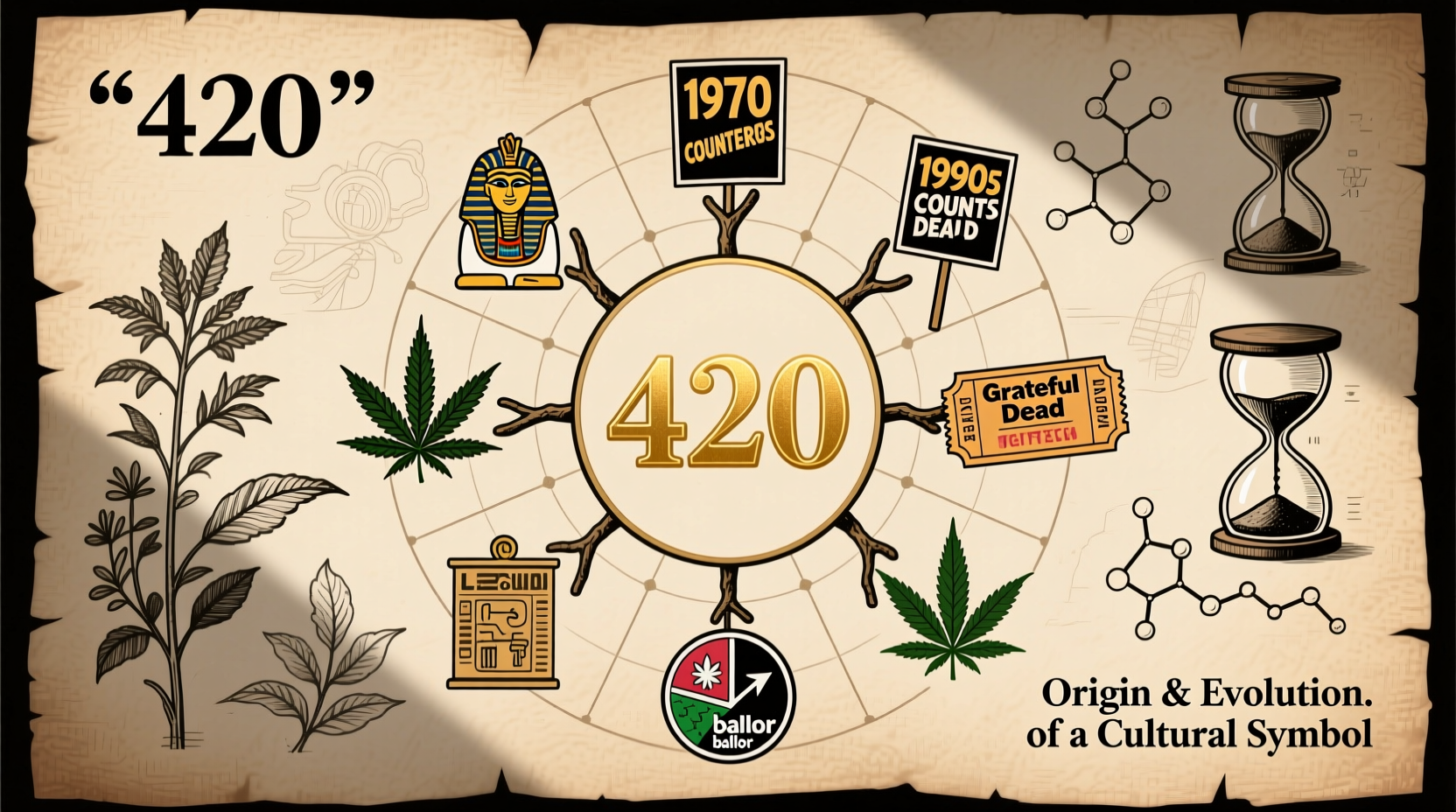
In 1971, five students at San Rafael High School in Marin County, California, began referring to themselves as “The Waldos.” They were given the nickname because they often hung out near a wall on campus. One of their friends had a brother in the U.S. Coast Guard who claimed there was an abandoned cannabis crop in Point Reyes National Seashore. The plant was supposedly marked with a police radio code—420—and the friend said the group could harvest it if they wanted.
The Waldos agreed to meet at 4:20 p.m. after school to search for the plants. Though they never found the crop, they continued using “420” as a code word for smoking marijuana. Whenever they wanted to sneak off to light up, one would say, “Hey, let’s go 420.” Their lockers were even labeled with the number as a signal to each other. The term stayed within their circle until one Waldo’s father worked for the Grateful Dead’s management team, giving the group backstage access.
Through this connection, the term spread quickly among band members and fans. By the late 1970s and early 1980s, “420” had become shorthand in the Deadhead community for smoking weed. From there, it entered broader youth culture, amplified by music, zines, and eventually the internet.
“420 started as a private joke between friends, but it took on a life of its own when the Grateful Dead adopted it. It wasn’t planned—it just resonated.” — Martin Lee, author of *Smoke Signals: A Social History of Marijuana*
From Subculture to Global Phenomenon
The transition of 420 from underground slang to mainstream awareness accelerated in the 1990s. High Times magazine played a pivotal role, promoting 4/20 (April 20th) as an annual celebration of cannabis. The magazine published maps and event listings for 420 gatherings, helping organize what had previously been spontaneous meetups.
One of the earliest documented public 420 events occurred in 1991 at the University of California, Berkeley. Students began gathering at 4:20 p.m. on April 20th to smoke in unity. The tradition grew each year, drawing hundreds, then thousands. Similar events sprouted at colleges across North America. By the 2000s, cities like Denver, Vancouver, and Toronto hosted large-scale 420 festivals, some attracting tens of thousands.
The internet further cemented 420’s place in popular lexicon. Online forums, social media hashtags, and meme culture turned the number into a viral symbol. Today, brands use 420-themed marketing, and politicians reference the date during debates on legalization. Even Google recognizes 420—typing it into the search bar triggers a subtle animation in some regions.
Common Misconceptions About 420
Over time, several myths have emerged about the origin of 420. None are accurate, but they persist due to their appeal:
- Myth: 420 refers to the number of chemical compounds in cannabis. While cannabis contains over 400 compounds, including THC and CBD, the actual number is closer to 500—not 420.
- Myth: Bob Dylan mentioned 420 in a song. No such lyric exists in Dylan’s catalog. This confusion may stem from his association with counterculture.
- Myth: Police code 420 means “marijuana smoking in progress.” Most law enforcement agencies do not use 420 for this purpose. In fact, many have denied it outright.
- Myth: It’s related to Adolf Hitler’s birthday (April 20). While April 20 is Hitler’s birthday, there is no historical link between that date and the cannabis movement. The overlap is coincidental and often exploited to discredit 420 celebrations.
The Waldos have consistently maintained their version of events, supported by dated letters, tapes, and newspaper clippings. In 2015, NPR confirmed their account through interviews and archival evidence, lending strong credibility to the high school origin story.
420 Around the World: A Cultural Timeline
What began in California now spans continents. Here's how 420 has evolved globally:
| Year | Event | Significance |
|---|---|---|
| 1971 | The Waldos coin “420” as a code for cannabis. | Origin point in San Rafael, CA. |
| 1975–1980 | Grateful Dead fans adopt the term. | National spread through concert circuits. |
| 1991 | First UC Berkeley 420 gathering. | Birth of organized public events. |
| 1998 | High Times promotes global 420 rallies. | International coordination begins. |
| 2010s | Legalization movements embrace 4/20. | Used as a platform for policy reform. |
| 2020 | Canada celebrates first legal 420 post-legalization. | Symbolic milestone for regulated markets. |
Modern Significance: Beyond Celebration
Today, 420 represents more than just a time to smoke. For many, it’s a day of activism. Advocacy groups use the occasion to push for decriminalization, expungement of records, and equitable access to legal cannabis. In states where marijuana remains illegal, 420 events often carry political weight, highlighting disparities in drug enforcement.
Conversely, commercial interests have also embraced the date. dispensaries offer 420 sales, brands launch limited-edition products, and influencers promote sponsored content. Some critics argue this commodification dilutes the original spirit of rebellion and community. Yet others see it as proof of normalization—a sign that cannabis is shedding stigma.
Notably, 420 has influenced language and digital culture. Emojis, GIFs, and memes featuring “420” circulate widely online. Tech companies have occasionally faced scrutiny for censoring the term, raising questions about free speech and algorithmic bias.
Mini Case Study: Denver’s 420 Festival
In Denver, Colorado—the epicenter of U.S. cannabis legalization—the annual 420 festival at Civic Center Park draws over 30,000 attendees. What began as a small protest in 2009 grew into a full-day event featuring live music, educational booths, and guest speakers from the cannabis industry. Organizers emphasize harm reduction, sustainability, and inclusion. In 2023, the city implemented temporary amnesty zones where minor possession wouldn’t be prosecuted during the event. This collaboration between activists and local government illustrates how 420 can serve as a bridge between counterculture and civic engagement.
How to Observe 420 Responsibly
If you choose to participate in 420, doing so responsibly enhances both personal safety and public perception. Consider the following checklist:
- Know your local laws—public consumption may still be illegal even in legal states.
- Use designated consumption areas if available.
- Stay hydrated and avoid mixing substances.
- Don’t drive under the influence.
- Respect non-participants; keep smoke away from children and sensitive individuals.
- Dispose of waste properly—use ash catchers and pack out trash.
Frequently Asked Questions
Is 420 an official holiday?
No, 420 is not a government-recognized holiday. However, it is widely acknowledged in pop culture and celebrated informally around the world.
Can I get in trouble for saying “420”?
In most places, simply using the number is protected speech. However, in certain contexts—such as schools or workplaces with strict policies—it could lead to disciplinary action if interpreted as promoting drug use.
Does 420 have any connection to hemp or industrial cannabis?
While primarily linked to recreational and medicinal use, some hemp advocates use 420 to promote sustainable agriculture and eco-friendly products made from industrial hemp.
Conclusion
The significance of 420 lies not in the digits themselves, but in what they represent: community, resistance, and the ongoing journey toward cannabis normalization. From a secret handshake among California teens to a global rallying cry, 420 has transcended its origins to become a cultural touchstone. Whether used for celebration, protest, or education, it continues to shape conversations about freedom, health, and justice.




 浙公网安备
33010002000092号
浙公网安备
33010002000092号 浙B2-20120091-4
Comments
No comments yet. Why don't you start the discussion?