
A cat’s tongue feels like sandpaper the moment it makes contact with your skin. While this might seem odd—or even uncomfortable—there’s a powerful biological reason behind its rough texture. Unlike human tongues, which are soft and smooth, a cat’s tongue is covered in hundreds of tiny, backward-facing spines called papillae. These structures aren’t just for show; they play essential roles in grooming, feeding, and even thermoregulation. Understanding the anatomy and function of a cat’s tongue reveals how evolution has finely tuned felines for survival and self-maintenance.
The Anatomy of a Cat’s Tongue: More Than Just Roughness
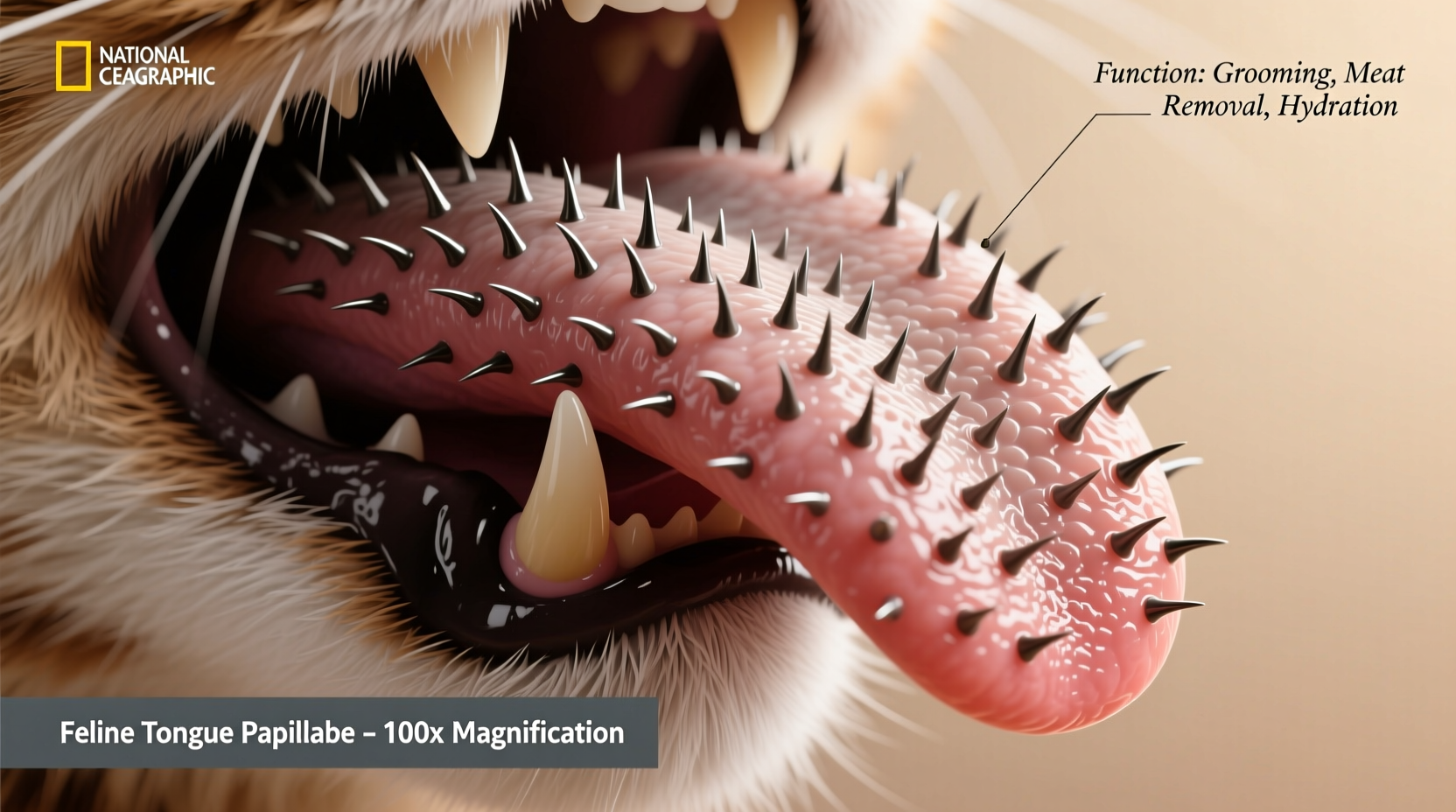
The roughness of a cat’s tongue comes from keratinized filiform papillae—small, spine-like projections made of keratin, the same protein found in human fingernails and hair. These papillae are arranged in a V-shaped pattern across the dorsal (top) surface of the tongue and curve backward toward the throat. Each papilla acts like a tiny hook, designed to catch and pull debris, loose fur, and parasites from the cat’s coat during grooming.
Researchers at Georgia Tech used 3D scanning technology to study the domestic cat’s tongue in detail. They discovered that each papilla is not solid but hollow at the tip, capable of wicking saliva deep into the fur. This allows cats to distribute their saliva evenly across their coats, aiding in cooling and cleaning. The saliva contains enzymes that help break down dirt and oils, making the tongue a highly efficient natural grooming tool.
“Cat tongues are engineering marvels—each papilla serves as both a detangling comb and a built-in shampoo applicator.” — Dr. Alexis Noel, Biomechanics Researcher, Georgia Tech
Grooming: A Cat’s Primary Survival Tool
Grooming isn’t just about cleanliness for cats—it’s a vital behavior linked to health, temperature control, and stress reduction. Cats spend up to 50% of their waking hours grooming themselves, a habit rooted in necessity. Their rough tongues allow them to:
- Remove loose hair and prevent matting
- Distribute natural skin oils for a healthy coat
- Regulate body temperature through evaporative cooling
- Eliminate parasites and foreign particles
- Self-soothe during anxious moments
The backward-facing orientation of the papillae ensures that when a cat licks its fur, the spines rake through the hair efficiently, pulling out tangles and collecting debris. This mechanical action reduces the risk of skin infections and helps maintain insulation, especially in outdoor or long-haired breeds.
Hunting and Feeding Advantages of a Rough Tongue
In the wild, a cat’s tongue plays a crucial role beyond grooming. The papillae help remove meat from bones during feeding. When a cat consumes prey, the rough surface of the tongue acts like a scraper, stripping flesh and connective tissue efficiently. This adaptation allows felines to extract maximum nutrition from their kills without needing teeth designed for shredding.
Domestic cats retain this instinct, which is why many exhibit licking behavior around food bowls or chew toys. Even though they no longer hunt for survival, the tongue’s design remains optimized for processing animal-based diets. The ability to grip and manipulate food particles also aids in breaking down kibble or wet food, facilitating easier swallowing.
How Saliva Wicking Enhances Grooming Efficiency
One of the most fascinating discoveries in recent feline research is the saliva-wicking capability of papillae. The hollow tips absorb saliva from the mouth and deliver it directly to the base of the fur. This process is far more effective than simply wetting the fur superficially. It ensures deep penetration, helping to cool the skin and dislodge embedded dirt.
This mechanism is particularly useful in hot environments. As the saliva evaporates, it lowers the cat’s body temperature—similar to sweating in humans. Because cats have very few sweat glands (mainly on their paw pads), this evaporative cooling via grooming is a critical thermoregulatory strategy.
Comparative Tongue Structures Across Species
Not all animals have rough tongues, but many carnivores do. Below is a comparison of tongue textures among different species and their functional purposes:
| Species | Tongue Texture | Primary Function |
|---|---|---|
| Domestic Cat | Very rough (keratinized papillae) | Grooming, feeding, cooling |
| Lion | Extremely rough | Stripping meat from bone, social grooming |
| Dog | Smooth with minor bumps | Lapping water, limited grooming |
| Cow | Rough, bristly | Grasping grass, cleaning calves |
| Human | Smooth with taste buds | Taste, speech, swallowing |
This table highlights how tongue structure correlates with ecological niche and behavior. Cats and other obligate carnivores prioritize grooming and meat processing, while herbivores use their tongues for foraging and maternal care.
Real-Life Example: A Rescue Cat’s Recovery Through Grooming Behavior
When a stray domestic shorthair named Luna was brought into a rescue shelter, she was severely matted and infested with fleas. Despite her poor condition, staff noticed she spent long periods grooming her front legs and chest—areas she could still reach. Over time, with medical treatment and assisted brushing, Luna gradually regained full mobility and began grooming more thoroughly.
Her recovery wasn’t just physical; the return of consistent grooming signaled improved mental health. Veterinarians noted that the act of licking released endorphins, helping reduce her anxiety. Within weeks, her coat regained its shine, and her overall demeanor became calmer. This case illustrates how deeply ingrained grooming is in feline well-being—and how the tongue’s design supports both physical and emotional healing.
Frequently Asked Questions
Can a cat’s rough tongue hurt humans?
While a cat’s tongue won’t cause injury under normal circumstances, prolonged licking can lead to skin irritation or minor abrasions due to the abrasive nature of the papillae. Some people develop redness or small bumps after extended contact, especially on sensitive skin.
Do all cats have equally rough tongues?
Yes, all cats—regardless of breed—have papillae-covered tongues. However, larger cats (like lions or Maine Coons) may have slightly larger papillae due to size differences, making their tongues feel even rougher.
Should I brush my cat if it grooms itself?
Even excellent self-groomers benefit from brushing, especially long-haired breeds. Regular brushing reduces hairball formation, prevents matting, and strengthens the bond between cat and owner. It also allows you to monitor skin health and detect issues early.
Actionable Care Tips for Cat Owners
To support your cat’s natural grooming habits and overall health, consider the following checklist:
- Brush your cat weekly – Helps remove loose fur and prevents excessive hair ingestion.
- Provide fresh water daily – Hydration supports saliva production and skin health.
- Inspect the mouth regularly – Look for signs of inflammation, discoloration, or difficulty eating.
- Use dental-friendly treats – Supports oral hygiene, which affects tongue and overall health.
- Minimize stressors – Anxiety can lead to over-grooming or grooming avoidance.
Conclusion: Respecting Nature’s Design
The roughness of a cat’s tongue is not an oddity—it’s a masterpiece of evolutionary engineering. From delivering saliva deep into fur to aiding in feeding and temperature regulation, every aspect of the feline tongue serves a purpose. As cat owners, understanding this biology allows us to better appreciate their behaviors and provide informed care.
Next time your cat gives you a rough lick, remember: you’re feeling millions of years of adaptation at work. By supporting their natural instincts with proper nutrition, grooming assistance, and a low-stress environment, you honor the intricate design that makes cats such remarkable creatures.




 浙公网安备
33010002000092号
浙公网安备
33010002000092号 浙B2-20120091-4
Comments
No comments yet. Why don't you start the discussion?