
In scientific research, the pursuit of truth hinges on precision, objectivity, and reproducibility. At the heart of this rigorous process lies a fundamental component: the control. Whether in biology labs, psychological studies, or industrial testing, a well-designed control group or condition separates meaningful results from misleading noise. Without it, researchers risk drawing false conclusions based on coincidences, biases, or unaccounted variables. A control acts as a benchmark—providing a baseline against which experimental outcomes can be measured. It’s not just a procedural formality; it's the cornerstone of credible experimentation.
The Role of a Control in Scientific Validity
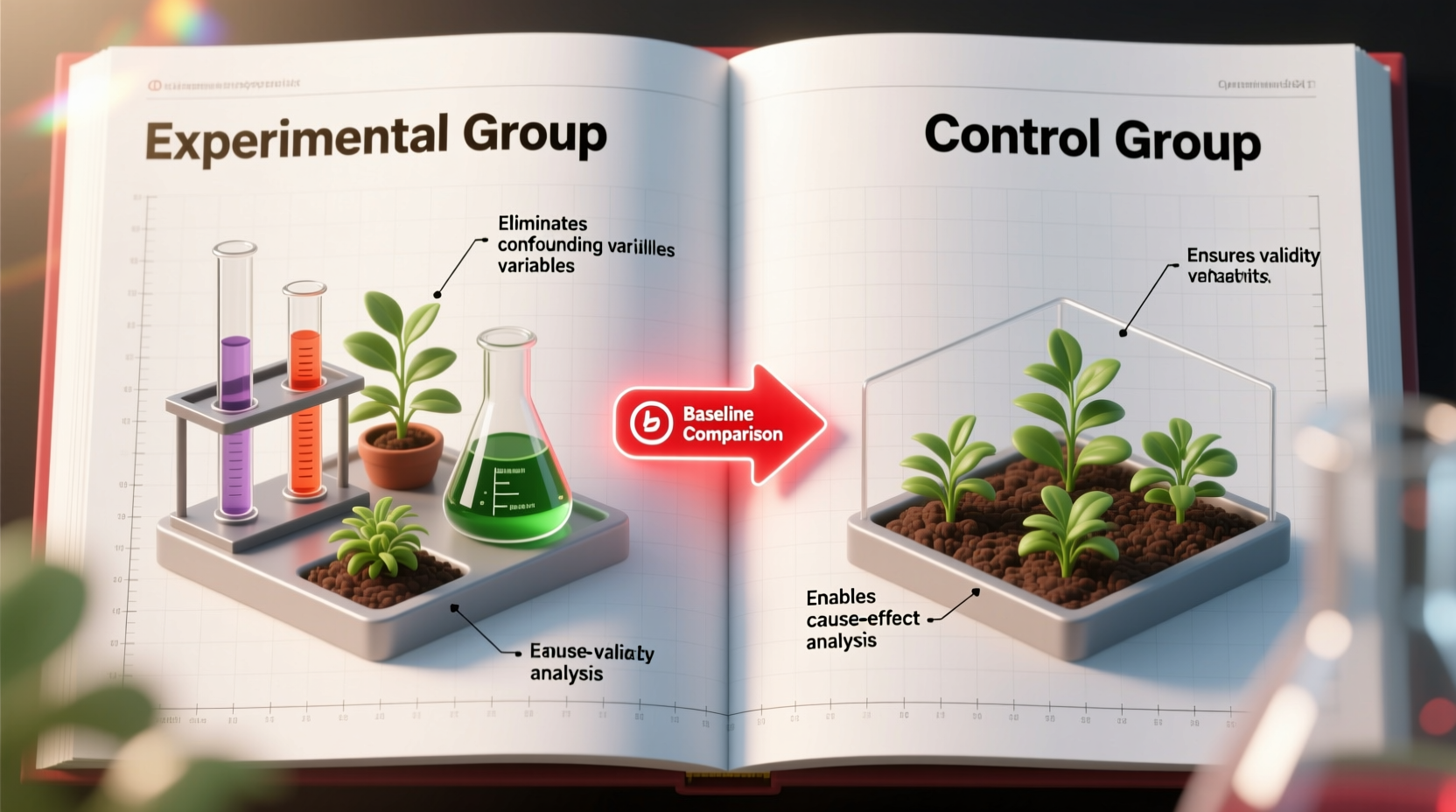
A control serves as a reference point that remains unchanged throughout the experiment while all other variables are manipulated. This allows scientists to isolate the effect of the independent variable—the factor being tested—on the dependent variable—the outcome observed. For example, if a researcher tests a new fertilizer on plant growth, the control group would receive no fertilizer or a standard one, while the experimental group receives the new formula. Any difference in growth can then be more confidently attributed to the fertilizer itself rather than environmental factors like light or water, which are kept consistent across both groups.
Without a control, there’s no way to determine whether changes in the outcome stem from the treatment or from external influences. The control minimizes confounding variables—factors that could distort results—and strengthens internal validity, ensuring that the observed effects are likely due to the intended manipulation.
“Controls are the silent guardians of scientific integrity. They don’t generate flashy results, but without them, no result can be trusted.” — Dr. Alan Reyes, Experimental Design Specialist, MIT
Key Reasons Why Controls Are Essential
There are several compelling reasons why controls are indispensable in experimental design:
- Establishes Causality: A control helps demonstrate cause-and-effect relationships. When only one variable differs between groups, any change in outcome can reasonably be linked to that variable.
- Reduces Bias: Human expectations or unconscious influences can skew results. A properly blinded control (where participants or researchers don’t know who received the treatment) reduces placebo effects and observer bias.
- Improves Reproducibility: Experiments with clear control conditions are easier for other scientists to replicate, a critical step in validating findings.
- Identifies Placebo Effects: In medical trials, patients may report improvement simply because they believe they’re receiving treatment. A placebo control group helps distinguish real physiological effects from psychological ones.
- Enables Quantitative Comparison: Controls provide numerical baselines. For instance, if a drug reduces symptoms by 40% compared to a control, that metric becomes actionable data.
Types of Controls and Their Applications
Not all controls function the same way. Different experimental goals require different types of control setups:
| Type of Control | Description | Best Used In |
|---|---|---|
| Positive Control | A group expected to produce a known positive result; verifies that the experimental setup works. | Virology tests, diagnostic assays |
| Negative Control | A group that should show no effect; confirms that observed changes aren’t due to contamination or error. | Microbiology, PCR testing |
| Placebo Control | Participants receive an inert substance; accounts for psychological effects. | Clinical drug trials |
| Standard Treatment Control | Compares new treatment against current best practice. | Medical innovation studies |
| No-Treatment Control | Participants receive no intervention; establishes natural progression. | Educational interventions, behavioral studies |
Choosing the right type of control depends on the hypothesis and context. For example, in vaccine trials, a placebo control (often saline injection) helps determine efficacy, while a positive control might involve using a previously validated vaccine to confirm immune response detection methods are functioning.
Real Example: The Polio Vaccine Trial (1954)
One of the most significant uses of a control in medical history occurred during the Jonas Salk polio vaccine trial. Over 1.8 million children participated, with some receiving the actual vaccine and others a placebo injection. The study was double-blind—neither the children nor the doctors knew who received which. The stark difference in infection rates between the two groups provided irrefutable evidence of the vaccine’s effectiveness. Without the placebo control, public health officials couldn’t have confidently concluded that the vaccine worked, delaying widespread adoption and prolonging the epidemic.
Common Pitfalls in Using Controls
Even when researchers include controls, mistakes can undermine their value. These include:
- Poor Matching: If control and experimental groups differ significantly in age, health, or environment, comparisons become invalid.
- Small Sample Size: Tiny control groups increase the risk of random variation skewing results.
- Lack of Randomization: Non-random assignment can introduce selection bias—for example, assigning healthier subjects to the treatment group.
- Unblinded Trials: When participants or researchers know who is in which group, expectations can influence behavior and reporting.
- Ignoring Confounding Variables: Failing to account for diet, lifestyle, or genetic factors can make results misleading.
Checklist: Designing an Effective Control Group
To ensure your control enhances, rather than weakens, your experiment, follow this checklist:
- ✅ Define the purpose of the control clearly before starting.
- ✅ Match the control group closely to the experimental group in demographics and conditions.
- ✅ Randomly assign subjects to groups when possible.
- ✅ Use blinding (single or double) to reduce bias.
- ✅ Maintain identical procedures except for the variable under test.
- ✅ Ensure adequate sample size for statistical power.
- ✅ Document all conditions and deviations meticulously.
FAQs About Controls in Experiments
Can an experiment work without a control group?
While some exploratory or observational studies may lack formal controls, experiments aiming to prove causation generally cannot. Without a control, it’s impossible to rule out alternative explanations for results. Exceptions exist in fields like astronomy or paleontology, where controlled manipulation isn’t feasible, but even then, researchers use comparative baselines to simulate control logic.
What’s the difference between a control group and a constant variable?
A control group is a subset of subjects that do not receive the experimental treatment. Constant variables (or constants) are factors kept the same across all groups—like temperature, time of day, or equipment used. Both are essential: constants ensure consistency, while the control group provides a comparison standard.
Is a control always necessary in classroom science projects?
Yes, especially when students aim to draw reliable conclusions. Even simple projects—like testing which liquid makes plants grow fastest—require a control (e.g., water) to compare against vinegar, soda, or coffee. Teaching control use early builds strong scientific thinking skills.
Conclusion: Building Trust Through Rigorous Design
The importance of a control in an experiment cannot be overstated. It transforms speculation into evidence, anecdote into data, and opinion into knowledge. From pharmaceutical breakthroughs to environmental policy decisions, the reliability of scientific claims rests on whether proper controls were used. Researchers who invest time in designing robust control conditions don’t just protect their own credibility—they uphold the integrity of science itself.




 浙公网安备
33010002000092号
浙公网安备
33010002000092号 浙B2-20120091-4
Comments
No comments yet. Why don't you start the discussion?