
The term \"chopper\" is widely used today to describe a helicopter, appearing in everything from news reports and military jargon to pop culture and casual conversation. But why exactly is a helicopter called a chopper? The answer lies in a blend of onomatopoeia, military slang, technological evolution, and cultural diffusion. This article explores the linguistic roots, historical context, and modern-day applications of the nickname, offering a comprehensive look at how this compact term became synonymous with rotary-wing aircraft.
The Onomatopoeic Origin: Sound as a Naming Force
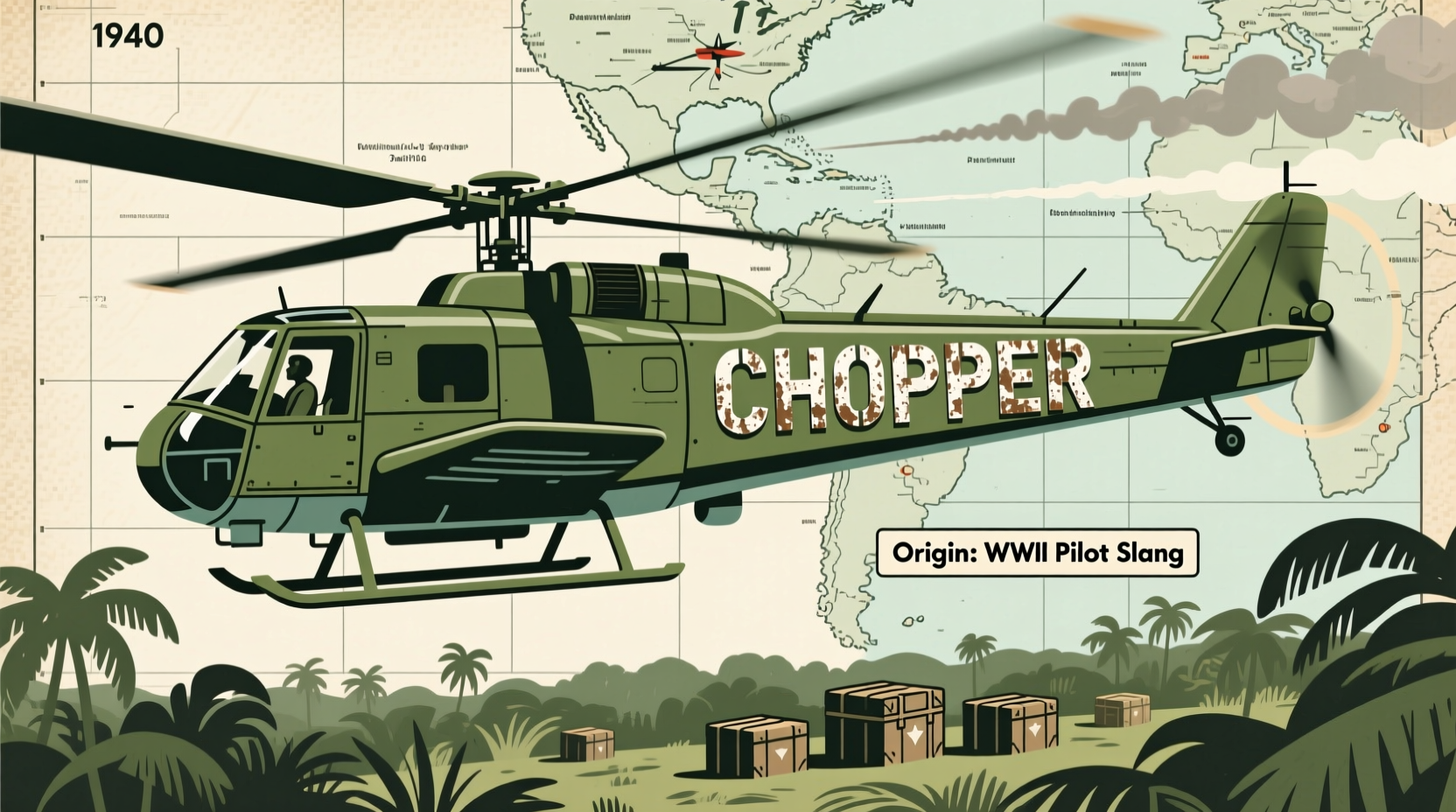
One of the most compelling reasons behind the nickname “chopper” is sound. Helicopters produce a distinct rhythmic noise as their rotor blades slice through the air—often described as a “chop-chop-chop” sound. This auditory signature gave rise to the term through onomatopoeia, where words mimic natural sounds.
Early aviators and ground crews began referring to helicopters informally based on what they heard. The repetitive thumping or chopping noise of the main rotor, especially noticeable during low-altitude flight or hover, closely resembles the word “chop.” Over time, “chopper” emerged as a natural shorthand.
Military Slang and the Vietnam War Era
While the term may have originated from sound, it gained widespread popularity during the Vietnam War. American soldiers deployed in Southeast Asia relied heavily on helicopters for troop transport, medical evacuation, and combat support. In the field, brevity and clarity were essential, leading to the adoption of informal, vivid nicknames.
The Bell UH-1 Iroquois, commonly known as the “Huey,” became one of the most iconic helicopters of the war. Troops began calling it—and helicopters in general—a “chopper” due to its loud, choppy rotor noise. Military radio communications, unit logs, and personal memoirs from the era are filled with references to “choppers inbound” or “waiting for the next chopper out.”
“Out there, you didn’t say ‘helicopter’—you said ‘chopper.’ It was faster, clearer, and it just fit the rhythm of the war.” — Sgt. James R. Holloway, U.S. Army (Ret.), Vietnam Veteran
This wartime usage cemented “chopper” in the public consciousness. News coverage, documentaries, and films like *Apocalypse Now* and *Platoon* reinforced the term, embedding it into mainstream English.
Linguistic Evolution: From Slang to Standard Usage
Language evolves through use, and “chopper” followed a classic path from niche slang to widely accepted colloquialism. While “helicopter” remains the formal, technical term, “chopper” has become an acceptable informal alternative in many contexts.
The shift reflects broader patterns in English, where shorter, punchier words often displace longer ones in casual speech. Compare “television” to “TV,” or “refrigerator” to “fridge.” Similarly, “helicopter” (seven syllables) gives way to “chopper” (two syllables), making it ideal for quick communication—especially in high-pressure environments like emergency response or aviation operations.
Contextual Usage of “Chopper” Today
The term now appears across multiple domains:
- Aviation & Emergency Services: Police and rescue units often refer to their aircraft as “choppers” in radio traffic and press briefings.
- Media & Journalism: Headlines like “Chopper Captures Fire Spread in Real Time” are common in broadcast news.
- Pop Culture: Movies, music, and video games use “chopper” for dramatic effect—e.g., “Get to the chopper!” from *Predator*.
- Everyday Speech: People might say, “I saw a chopper flying over the city,” without thinking twice.
Chopper vs. Other Helicopter Nicknames
“Chopper” isn’t the only nickname for helicopters. Others include “helo” (military abbreviation), “whirlybird,” and “rotorcraft.” Each carries subtle connotations:
| Nickname | Origin/Usage | Tone/Context |
|---|---|---|
| Chopper | Onomatopoeic; popularized in Vietnam War | Casual, rugged, media-friendly |
| Helo | Military shortening of “helicopter” | Professional, operational |
| Whirlybird | Descriptive of spinning rotors | Playful, sometimes outdated |
| Rotorcraft | Technical/engineering term | Formal, precise |
Among these, “chopper” stands out for its visceral, action-oriented feel—making it ideal for headlines, storytelling, and urgent scenarios.
Common Misconceptions and Clarifications
Despite its popularity, some misconceptions surround the term:
- Myth: “Chopper” refers only to military helicopters.
Reality: It applies to any helicopter, including civilian, medical, and news aircraft. - Myth: “Chopper” is unprofessional or incorrect.
Reality: While informal, it’s widely understood and used even by professionals in non-technical settings. - Myth: The term originated with motorcycles.
Reality: “Chopper” was applied to helicopters first; motorcycle usage came later, borrowing the edgy, mechanical connotation.
Step-by-Step: How “Helicopter” Became “Chopper”
The evolution of the term can be broken down into key stages:
- 1940s–1950s: Early helicopters enter service; operators begin noting the “chopping” sound of rotors.
- Early 1960s: U.S. military deploys helicopters in Vietnam; troops adopt “chopper” as field slang.
- Mid-to-Late 1960s: Media coverage broadcasts the term nationwide; journalists adopt it for brevity and impact.
- 1970s–1980s: Film and television embrace “chopper” in war movies and action genres.
- 1990s–Present: Term becomes part of global English, used in aviation, news, and everyday language.
Mini Case Study: The Los Angeles News Chopper Phenomenon
In cities like Los Angeles, traffic and crime reporting rely heavily on aerial footage. Local TV stations operate fleets of helicopters, each branded with flashy logos and call signs like “Sky 9” or “NewsNet Heli-Cam.” Despite their sophisticated equipment, these aircraft are almost universally referred to as “news choppers” on air.
During a major freeway pursuit in 2022, a reporter narrated live: “We’re tracking the suspect vehicle from our chopper at 500 feet.” The use of “chopper” added urgency and immediacy, resonating with viewers. Engineers and pilots within the station also use the term casually, showing how deeply embedded it has become—even in professional broadcasting.
Frequently Asked Questions
Is “chopper” an official aviation term?
No, “chopper” is not used in formal aviation documentation or air traffic control. Pilots and controllers use “helicopter” or the abbreviated “helo” in official communications. However, “chopper” is acceptable in informal or media contexts.
Can “chopper” refer to anything else?
Yes. In other contexts, “chopper” can mean a kitchen tool (meat chopper), a modified motorcycle (custom chopper), or even a type of axe. Context determines meaning, though in aviation discussions, it clearly refers to helicopters.
Do non-English languages use similar terms?
Some do. For example, in German, “Hubschrauber” is the formal term, but “Chopper” is often used in media and youth slang, borrowed directly from English. This reflects the global influence of American military and pop culture.
Expert Insight: Language and Aviation Culture
“Aviation has always developed its own lexicon—short, sharp words that cut through noise and stress. ‘Chopper’ fits perfectly: it’s descriptive, easy to say over radio static, and instantly recognizable. It’s not just slang; it’s functional language.” — Dr. Lena Torres, Linguist and Aviation Communication Researcher, MIT
Conclusion and Call to Action
The nickname “chopper” for helicopter is more than just a casual shortcut—it’s a linguistic artifact shaped by sound, war, media, and human communication needs. From the jungles of Vietnam to the skies above modern cities, the term has proven its staying power through utility and cultural resonance.
Understanding the origins of everyday words enriches our appreciation of language and history. Whether you're an aviation enthusiast, a history buff, or simply curious about word origins, recognizing how “chopper” took flight offers a fascinating glimpse into the intersection of technology and culture.




 浙公网安备
33010002000092号
浙公网安备
33010002000092号 浙B2-20120091-4
Comments
No comments yet. Why don't you start the discussion?