
The modern bathroom is a marvel of convenience, yet many of the words we use for it remain informal, even humorous. Among the most widely used slang terms for a toilet is “the john.” It rolls off the tongue in casual conversation: “I need to use the john,” or “He’s been in the john for 20 minutes.” But have you ever stopped to wonder—why is a toilet called a john? The answer isn’t as straightforward as one might think. While no single theory is universally accepted, several compelling historical threads suggest how this peculiar nickname came to be.
This article explores the linguistic evolution of bathroom terminology, investigates the leading theories behind the term \"john,\" and sheds light on how social attitudes toward sanitation shaped everyday language. From royal inventors to military slang, the journey of this word reveals more about culture than you might expect.
The Evolution of Bathroom Terminology
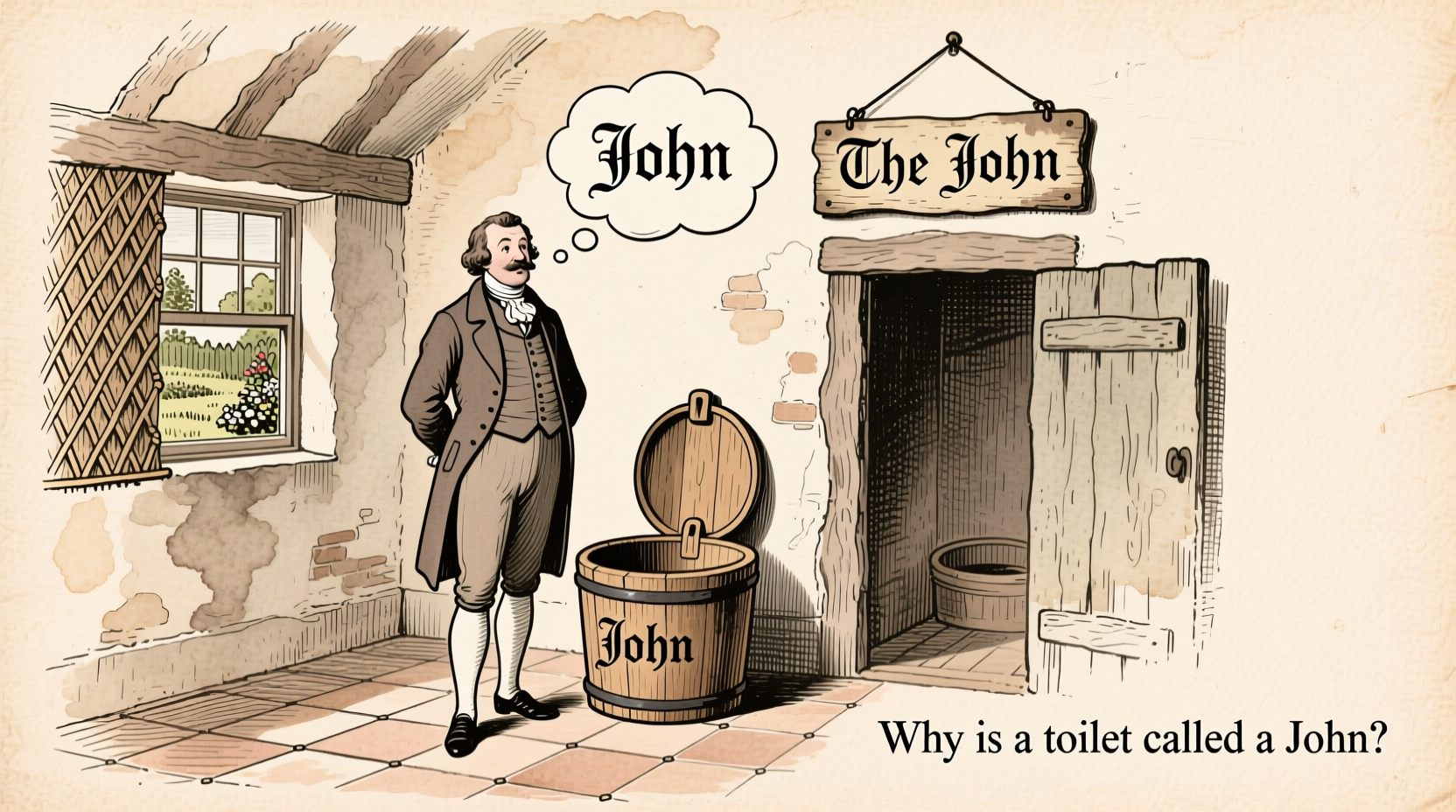
Throughout history, people have used euphemisms to refer to bodily functions and the spaces where they occur. In ancient Rome, public latrines were known as *foricae*, while medieval households relied on chamber pots stored under beds—often referred to as “close stools.” As indoor plumbing developed in the 19th century, so did the vocabulary surrounding sanitation.
The flush toilet, as we know it, began gaining traction after Sir John Harington patented a water closet in 1596. However, widespread adoption didn't happen until over two centuries later. During that time, polite society avoided direct references to toilets, favoring phrases like “water closet,” “lavatory,” “bathroom,” or “restroom.” Slang terms emerged alongside these formal names, often reflecting humor, modesty, or regional dialects.
By the early 20th century, American English had adopted several colloquialisms: “can,” “crapper,” “head” (on ships), and eventually, “john.” Understanding why “john” stuck requires examining both linguistic patterns and cultural context.
Leading Theories Behind the Name “John”
Several theories attempt to explain the origin of calling a toilet “the john.” None are definitively proven, but each carries historical weight and plausibility.
1. Sir John Harington – The Inventor Theory
The most popular explanation traces back to Sir John Harington (1561–1612), godson of Queen Elizabeth I and an English courtier with a flair for invention. In 1596, he designed and installed a flushing water closet at his home, Kelston Manor, near Bath. He published a satirical manual titled *The Metamorphosis of Ajax*—a pun on “a jakes,” an old slang term for an outdoor privy.
Harington’s device featured a cistern, valve, and drainage system, making it a precursor to the modern flush toilet. Though not widely adopted at the time, his contribution was significant. Some linguists suggest that over time, “Harington’s invention” may have been shortened colloquially to “the Harrington,” then further reduced to “the John.”
“Harington’s design was centuries ahead of its time. It’s plausible that his name became associated with early toilets, especially as plumbing gained popularity.” — Dr. Evelyn Reed, Historian of Victorian Technology
2. Thomas Crapper – A Misattributed Legacy
Many assume the term “john” stems from Thomas Crapper, the British plumber who held several patents related to flush toilets in the late 1800s. However, this is a myth. Crapper did not invent the flush toilet, nor is there evidence he coined any slang terms.
Still, his name entered popular folklore due to its phonetic similarity to “crap,” reinforcing a false narrative. While “crapper” became slang for toilet in American English during World War I (used by soldiers stationed in England), it likely contributed to confusion rather than being the source of “john.”
3. “John” as a Generic Male Name
Another theory lies in the use of “John” as a placeholder name for an average man—similar to “Joe” in “everyman” expressions like “Average Joe” or “John Doe.” In this context, “the john” could simply mean “a place for John,” implying a utilitarian space for basic human needs.
Linguistic parallels exist: “the ladies’ room” refers to women, while “the men’s room” serves “John.” Over time, “men’s room” may have been informally shortened to “the john,” especially in spoken American English. This usage reflects a broader pattern of using generic first names in slang (e.g., “talking to Jack” meaning “talking to someone”).
4. Military Slang and Early 20th-Century Usage
Evidence suggests “john” emerged in American military and industrial settings in the early 1900s. Soldiers and laborers often used blunt, abbreviated language. “Going to the john” may have started as blue-collar slang, spreading through barracks, factories, and railroads.
A 1919 U.S. Army training manual references “the john” in passing, indicating it was already in informal use. Its simplicity and neutrality made it ideal for quick, discreet communication—especially in shared facilities where privacy was limited.
Comparing Theories: A Summary Table
| Theory | Key Figure/Concept | Plausibility | Supporting Evidence |
|---|---|---|---|
| Sir John Harington | Elizabethan inventor of an early flush toilet | High | Historical record of invention; name association possible |
| Thomas Crapper | Famous plumber wrongly credited with inventing the toilet | Low | No link between Crapper and the term “john”; likely confusion with “crapper” |
| Generic Name “John” | Placeholder for “everyman” | High | Common in American slang; parallels like “Joe” or “Jane” |
| Military Origins | Early 20th-century U.S. armed forces usage | Medium-High | Documented use in 1919; spread through working-class speech |
How Language Reflects Social Attitudes
The persistence of slang like “john” speaks volumes about societal discomfort with bodily functions. Euphemisms allow people to discuss private matters indirectly. Compare “going to the bathroom” (which may not involve bathing) or “powdering one’s nose” (a feminine-coded phrase). These soften the reality of excretion, making it socially palatable.
“John” fits this pattern—it’s brief, gendered (male), and mildly humorous. It avoids clinical terms like “toilet” or “latrine,” which can sound cold or institutional. Humor also plays a role: calling it “the john” subtly mocks the seriousness of a basic necessity, helping people navigate embarrassment.
Mini Case Study: The Office Restroom Sign
In a mid-sized corporate office in Chicago, management replaced traditional “Men” and “Women” restroom signs with playful labels: “Gents,” “Ladies,” and in one instance, “The John.” Employees responded positively—foot traffic logs showed no change, but internal surveys revealed higher comfort levels discussing bathroom breaks.
One employee noted, “Calling it ‘the John’ made it feel less formal. Like it’s okay to take a break without apologizing.” This small linguistic shift highlights how language affects perception—even in mundane spaces.
FAQ: Common Questions About the Term “John”
Is “john” used outside the United States?
Primarily, yes. “John” is mostly an Americanism. In the UK, people are more likely to say “loo,” “toilet,” or “bog.” Canadians often use “washroom,” though “john” is understood due to media exposure.
When did “the john” first appear in print?
The earliest known written use dates to around 1919 in U.S. military documents. It gained wider popularity in the 1930s and 1940s in newspapers and fiction.
Are there other slang terms with similar origins?
Yes. “Crapper” comes from Thomas Crapper’s name (despite the myth), “lavvy” is British slang from “lavatory,” and “WC” (water closet) remains common in Europe. Many reflect either branding, abbreviation, or humor.
Conclusion: Language Lives in the Everyday
The question “Why is a toilet called a john?” opens a window into history, linguistics, and human behavior. Whether rooted in Sir John Harington’s ingenuity, the universality of the name “John,” or early 20th-century American slang, the term endures because it’s simple, unpretentious, and quietly humorous.
Language evolves not just through dictionaries, but through daily use—especially in places we’d rather not talk about. Next time you say, “I’ll be right back—I’m just going to the john,” remember: you’re part of a long tradition of turning necessity into normalcy, one euphemism at a time.




 浙公网安备
33010002000092号
浙公网安备
33010002000092号 浙B2-20120091-4
Comments
No comments yet. Why don't you start the discussion?