
Academic writing is more than a formal requirement for degrees or research publications—it’s a foundational skill that shapes how ideas are communicated, evaluated, and advanced in scholarly and professional environments. Whether you're a student drafting your first research paper, a graduate working on a thesis, or a professional contributing to a peer-reviewed journal, the ability to write clearly, logically, and rigorously is indispensable. It’s not just about following rules; it’s about cultivating precision, credibility, and critical thinking. In an age of information overload, academic writing provides structure, accountability, and depth to discourse.
Develops Critical Thinking and Analytical Skills
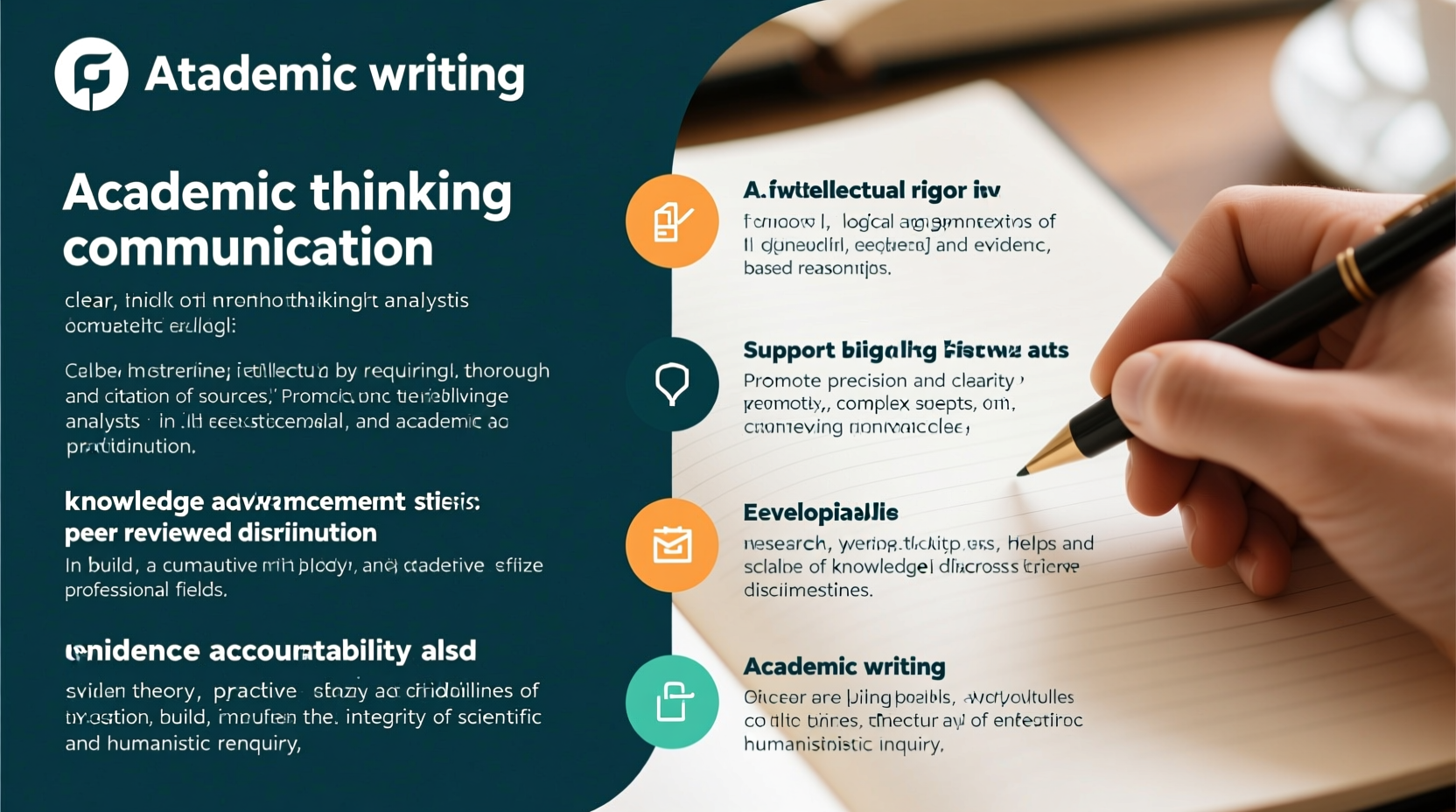
At its core, academic writing demands more than summarizing facts. It requires analysis, synthesis, and evaluation of information. When constructing an argument, writers must assess sources, identify biases, compare perspectives, and draw evidence-based conclusions. This process strengthens cognitive abilities essential not only in academia but also in decision-making across industries such as law, medicine, public policy, and technology.
For example, when analyzing conflicting studies on climate change, a student must weigh methodologies, data reliability, and theoretical frameworks before forming a supported position. This level of engagement fosters intellectual independence and sharpens reasoning skills over time.
Enhances Communication with Precision and Clarity
Unlike casual or creative writing, academic writing prioritizes clarity, objectivity, and precision. Ambiguity is minimized through defined terminology, logical flow, and structured organization. This ensures that complex ideas can be understood consistently by readers, regardless of their background.
Consider scientific research: if a medical study uses vague language like “patients felt better,” it lacks measurable value. But stating “73% of participants reported a 40% reduction in symptom severity” provides clear, quantifiable insight. Academic conventions such as passive voice, third-person narration, and standardized formatting (APA, MLA, Chicago) further ensure neutrality and reproducibility.
“Clear writing reflects clear thinking. The discipline of academic writing forces authors to organize their thoughts and eliminate ambiguity.” — Dr. Rebecca Lang, Professor of Rhetoric at Columbia University
Supports Knowledge Advancement and Innovation
Academic writing is the primary vehicle through which new knowledge is shared, validated, and built upon. Every peer-reviewed article, dissertation, or conference paper contributes to a larger body of work. Without rigorous documentation and transparent methodology, discoveries cannot be replicated, challenged, or expanded.
This cumulative nature of scholarship enables progress. For instance, breakthroughs in mRNA vaccine development were possible because decades of prior academic research had been clearly documented and accessible. Each study laid groundwork for the next, accelerating innovation during urgent global health crises.
Moreover, academic writing encourages interdisciplinary dialogue. A sociologist reading a neuroscience paper may draw unexpected connections about human behavior, leading to novel theories or solutions.
Builds Credibility and Professional Authority
Well-crafted academic writing establishes the author as a credible voice within their field. Proper citation, adherence to ethical standards, and methodological transparency signal professionalism and integrity. These qualities are essential when influencing policy, securing funding, or gaining recognition in competitive academic or research environments.
Consider two job candidates applying for a research position: one has several co-authored papers published in reputable journals; the other lacks any written scholarly output. Despite similar qualifications, the candidate with a publication record demonstrates proven ability to conduct, analyze, and communicate research effectively—making them a stronger hire.
| Skill Developed | Real-World Application | Long-Term Benefit |
|---|---|---|
| Logical structuring of arguments | Presenting business proposals or legal briefs | Improved persuasion and clarity in communication |
| Source evaluation and citation | Conducting market research or policy analysis | Greater accuracy and trustworthiness in reports |
| Data interpretation and reporting | Writing technical documentation or white papers | Stronger problem-solving and decision-making |
| Revision and peer feedback integration | Collaborating on team projects or grant applications | Increased adaptability and openness to critique |
Facilitates Global Collaboration and Standardization
Academic writing follows widely accepted conventions that transcend geographic and linguistic boundaries. English serves as the dominant medium, but the structural norms—abstracts, introductions, literature reviews, methods, results, discussion (IMRaD)—are recognized internationally. This standardization allows researchers from different countries to collaborate efficiently and understand each other’s work without ambiguity.
For example, a scientist in Japan can read a clinical trial report from Sweden and immediately grasp its purpose, design, and findings due to consistent formatting and terminology. This interoperability accelerates global scientific cooperation and helps address transnational challenges like pandemics, climate change, and cybersecurity threats.
Mini Case Study: From Classroom to Policy Change
María Lopez, a graduate student in public health, conducted a year-long study on food insecurity in urban neighborhoods. Her thesis, written using rigorous academic standards, included demographic data, interviews, statistical analysis, and policy recommendations. After defending her work, she submitted an adapted version to a regional health journal.
The paper gained attention from city planners who cited it in a proposal to expand community nutrition programs. Within 18 months, three new food hubs opened in underserved areas. María’s academic writing didn’t just fulfill a degree requirement—it became a catalyst for real-world change because it was credible, well-documented, and accessible to decision-makers.
Step-by-Step Guide to Strengthening Academic Writing Skills
- Start with reading: Immerse yourself in high-quality academic articles in your discipline to internalize tone, structure, and citation practices.
- Outline rigorously: Before writing, map out your argument, evidence, and transitions to maintain logical coherence.
- Draft with clarity: Focus on expressing ideas simply and directly. Avoid jargon unless necessary and always define technical terms.
- Cite responsibly: Use reference management tools (e.g., Zotero, EndNote) to track sources and apply correct citation styles.
- Revise iteratively: Allow time between drafts to re-read critically. Ask: Is my argument sound? Is evidence sufficient?
- Seek feedback: Share your work with peers or mentors. Constructive criticism improves both content and expression.
- Edit for formality: Remove contractions, slang, and emotional language. Ensure consistency in tense and voice.
Frequently Asked Questions
Is academic writing only important for students and researchers?
No. While it originates in educational settings, academic writing skills benefit professionals in think tanks, government agencies, NGOs, and corporate R&D departments. The ability to produce well-reasoned, evidence-based documents enhances strategic planning, reporting, and stakeholder communication.
Can academic writing be creative?
Yes—within limits. Creativity lies in original thinking, innovative research questions, and insightful interpretations. However, presentation remains formal and structured. The creativity is in the ideas, not the stylistic flair.
How does academic writing differ from general writing?
General writing often prioritizes engagement, brevity, and personal voice. Academic writing emphasizes objectivity, evidence, and precision. It avoids anecdotes unless illustrative, minimizes personal opinion, and relies on citations to support claims.
Checklist: Key Elements of Strong Academic Writing
- ✔ Clear thesis or research question stated early
- ✔ Logical paragraph structure with topic sentences
- ✔ Evidence from credible, peer-reviewed sources
- ✔ Proper in-text citations and reference list
- ✔ Objective tone and formal language
- ✔ Coherent transitions between sections
- ✔ Critical analysis, not just summary
- ✔ Adherence to required formatting guidelines
Conclusion
Academic writing is far more than a box to check in school. It is a powerful tool for shaping thought, advancing knowledge, and driving meaningful impact. Its benefits extend beyond the classroom into careers, communities, and global challenges. By mastering this form of communication, individuals gain the ability to contribute meaningfully to conversations that matter.




 浙公网安备
33010002000092号
浙公网安备
33010002000092号 浙B2-20120091-4
Comments
No comments yet. Why don't you start the discussion?