
Artificial intelligence has transformed industries—from healthcare to finance to creative arts—offering unprecedented efficiency and innovation. Yet, as AI systems grow more powerful, they are increasingly subject to restrictions, filters, and oversight. This phenomenon, often referred to as \"AI censorship,\" isn't about silencing technology for political control alone. It reflects a complex interplay of ethical responsibility, legal compliance, and societal protection. Understanding why AI is censored requires unpacking the motivations behind these limitations, the risks they aim to mitigate, and the broader implications for freedom, transparency, and innovation.
The Role of Ethical Safeguards in AI Development
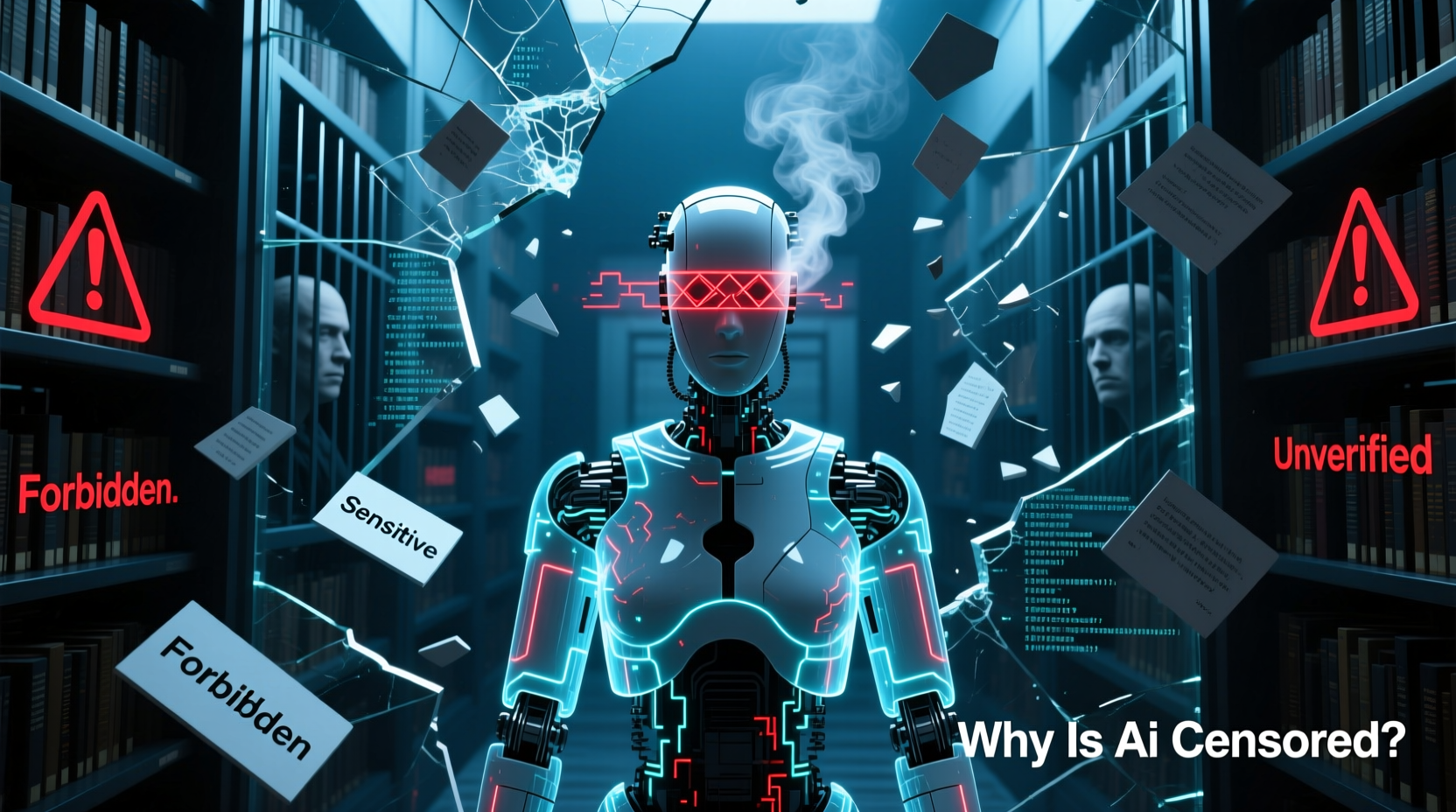
AI systems learn from vast datasets, many of which contain human-generated content—including biased, offensive, or harmful material. Without intervention, AI models can reproduce or amplify these patterns. Developers implement censorship mechanisms not to suppress truth but to prevent harm. For example, language models are trained to avoid generating hate speech, misinformation, or instructions for illegal activities. These filters are part of a broader ethical framework designed to align AI behavior with social norms and human dignity.
Consider generative AI tools used in customer service. If left unchecked, such systems might produce responses that are discriminatory or factually incorrect, damaging trust and potentially violating anti-discrimination laws. Censorship here acts as a guardrail, ensuring outputs remain respectful, accurate, and safe.
“AI should empower people, not endanger them. Ethical constraints aren’t roadblocks—they’re foundations.” — Dr. Reina Patel, AI Ethics Researcher at Stanford University
Legal and Regulatory Compliance
Governments worldwide are introducing regulations that mandate AI accountability. The European Union’s AI Act, for instance, classifies AI systems by risk level and imposes strict requirements on high-risk applications like facial recognition or hiring algorithms. In such cases, censorship—or more accurately, content moderation and decision transparency—is legally required.
These rules compel developers to limit certain functionalities. An AI used in law enforcement may be restricted from making autonomous decisions about arrests. Similarly, educational AI tools must avoid promoting extremist ideologies or age-inappropriate content. Compliance isn’t optional; failure to adhere can result in fines, legal action, or market exclusion.
Balancing Free Expression and Harm Prevention
One of the most contentious aspects of AI censorship lies in its impact on free speech. Critics argue that overzealous filtering can suppress legitimate discourse, especially around politically sensitive topics. For example, an AI assistant declining to discuss certain historical events or social movements may appear neutral but could reflect underlying biases in training data or corporate policy.
However, proponents emphasize that unrestricted AI could become a vector for disinformation, deepfakes, or cyberbullying. The challenge is finding balance: allowing open inquiry while preventing real-world harm. Platforms like Reddit or X (formerly Twitter) use AI moderators to flag toxic content—but human oversight remains essential to avoid misjudgments.
Real Example: Social Media Moderation Gone Awry
In 2023, a university student attempting to research online extremism found their queries blocked by an AI-powered educational platform. The system flagged terms related to terrorism studies as prohibited content, even though the intent was academic. This incident highlights how well-intentioned censorship can inadvertently hinder knowledge access when context is ignored. After public feedback, the platform updated its model to distinguish between malicious use and scholarly inquiry.
Technical Limitations and Bias in AI Filtering
Not all AI censorship stems from deliberate policy. Some limitations arise from technical shortcomings. Models trained primarily on Western, English-language data may misinterpret cultural nuances, leading to false positives. A phrase acceptable in one region might be flagged as offensive elsewhere due to linguistic or contextual differences.
Bias also plays a role. Studies show that AI content filters disproportionately flag speech from marginalized communities, particularly when slang or dialects are involved. This raises concerns about systemic discrimination embedded within supposedly neutral algorithms.
| Issue | Impact | Mitigation Strategy |
|---|---|---|
| Cultural Insensitivity | Over-flagging non-offensive expressions | Diversify training data across regions and languages |
| Context Blindness | Blocking educational or satirical content | Implement context-aware NLP models |
| Corporate Risk Aversion | Excessive filtering to avoid backlash | Adopt transparent moderation policies |
| Regulatory Pressure | Uniform restrictions regardless of user need | Allow adjustable safety settings where appropriate |
Step-by-Step: Designing Responsible AI with Balanced Oversight
Developers and organizations can build AI systems that respect both safety and openness through a structured approach:
- Define Ethical Principles: Establish core values such as fairness, transparency, and accountability before coding begins.
- Audit Training Data: Screen datasets for bias, toxicity, and representational gaps.
- Implement Layered Filters: Use multiple moderation levels—e.g., strong blocks for illegal content, warnings for sensitive topics.
- Enable User Controls: Allow users to adjust content sensitivity settings based on age, purpose, or preference.
- Integrate Human Review: Combine automated detection with human moderators for nuanced decisions.
- Monitor & Update: Continuously evaluate performance and adapt to emerging threats or feedback.
Checklist: Ensuring Ethical AI Deployment
- ✅ Conduct third-party bias audits before launch
- ✅ Disclose known limitations in system documentation
- ✅ Provide clear appeal processes for content removals
- ✅ Train teams on ethical AI standards and cultural competence
- ✅ Log moderation decisions for transparency and review
- ✅ Support multilingual and multicultural understanding in filters
Frequently Asked Questions
Is AI censorship the same as government censorship?
No. While governments may impose legal restrictions, much AI censorship comes from private companies enforcing community guidelines or safety protocols. However, collaboration between tech firms and state actors can blur this line, raising concerns about overreach.
Can I disable AI filters for research purposes?
Some platforms offer developer modes or enterprise tiers with reduced filtering for academic or professional use. Always check terms of service and ensure compliance with institutional ethics boards when conducting sensitive research.
Does censoring AI stifle innovation?
When done thoughtfully, safeguards enhance innovation by building public trust. Unregulated AI risks backlash, legal challenges, and loss of user confidence—hindering long-term progress more than responsible constraints ever could.
Conclusion: Toward Transparent and Accountable AI
The question isn't whether AI should be censored, but how it should be governed. Blanket suppression undermines trust and learning, while total permissiveness invites abuse. The future of AI depends on creating systems that are both powerful and principled—capable of discerning harmful intent without penalizing curiosity or diversity of thought.
As users, developers, and policymakers, we must demand transparency in how AI decisions are made. We need open dialogue about what gets filtered, why, and who decides. Only then can we build intelligent systems that serve humanity equitably, ethically, and without unnecessary restriction.




 浙公网安备
33010002000092号
浙公网安备
33010002000092号 浙B2-20120091-4
Comments
No comments yet. Why don't you start the discussion?