
If you've stepped outside recently and noticed a hazy sky, an unfamiliar smell in the air, or even a scratchy throat, you're not alone. Millions of people across urban and suburban areas are increasingly asking: Why is air quality bad today? The answer lies in a combination of environmental factors, human activity, and atmospheric conditions—all measured and communicated through the Air Quality Index (AQI). Understanding how this system works and what drives pollution levels empowers you to make informed decisions about your health and daily routine.
What Is the Air Quality Index (AQI)?
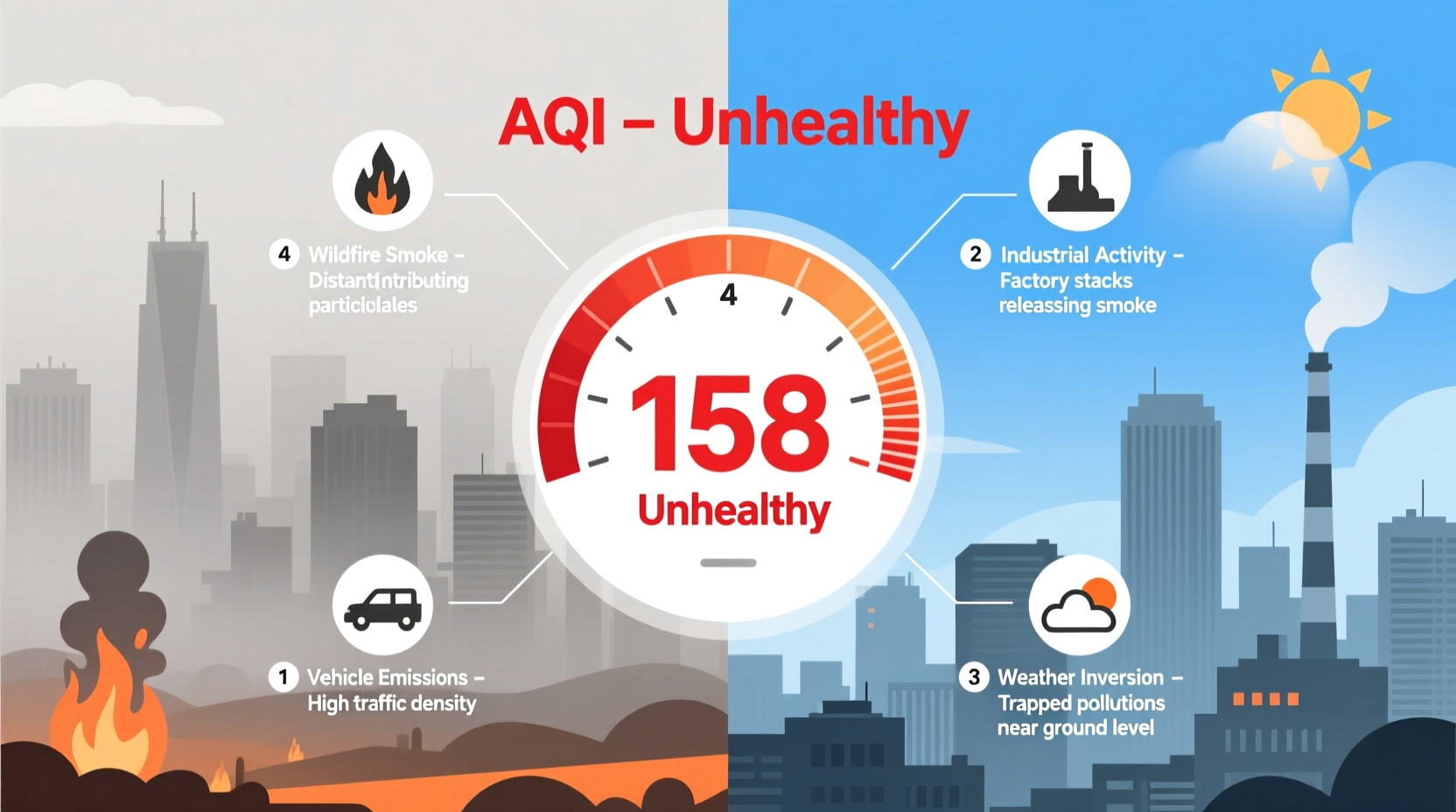
The Air Quality Index (AQI) is a standardized scale used by environmental agencies—like the U.S. Environmental Protection Agency (EPA)—to communicate how clean or polluted the air is and what associated health effects might be of concern. It converts complex air quality data into a simple number between 0 and 500, making it easier for the public to understand risk at a glance.
The AQI measures five major pollutants regulated under the Clean Air Act:
- Ground-level ozone
- Particulate matter (PM2.5 and PM10)
- Carbon monoxide
- Sulfur dioxide
- Nitrogen dioxide
Each pollutant is monitored, and the highest individual AQI value determines the overall AQI for the day. For example, if PM2.5 levels are high but ozone is low, the overall AQI will reflect the particulate matter reading.
AQI Categories and Health Implications
| AQI Range | Category | Health Concern | Recommended Actions |
|---|---|---|---|
| 0–50 | Good | Little to no risk | Enjoy normal outdoor activities |
| 51–100 | Moderate | Unusually sensitive individuals should consider limiting prolonged exertion | Most people can remain active |
| 101–150 | Unhealthy for Sensitive Groups | Children, older adults, and those with respiratory conditions at risk | Reduce prolonged outdoor exposure |
| 151–200 | Unhealthy | Everyone may begin to experience health effects | Avoid extended outdoor exertion |
| 201–300 | Very Unhealthy | Increased likelihood of serious symptoms | Stay indoors; use air purifiers |
| 301–500 | Hazardous | Emergency conditions; entire population affected | Remain indoors; avoid all outdoor activity |
Common Causes of Poor Air Quality Today
Air quality fluctuates due to both natural and human-made factors. On days when the AQI is high, several overlapping conditions often contribute:
- Traffic emissions: Rush hour congestion increases nitrogen oxides and particulate matter from vehicle exhaust.
- Industrial activity: Factories and power plants emit sulfur dioxide and fine particles, especially in manufacturing zones.
- Wildfires: A growing contributor, particularly in western U.S. states and regions like Australia and Canada. Smoke carries PM2.5 deep into lungs.
- Weather patterns: Temperature inversions trap pollutants near the ground, preventing dispersion. Low wind speeds also reduce air circulation.
- Construction and dust: Urban development stirs up PM10, which can irritate eyes and throats.
- Seasonal changes: Summer heat accelerates ozone formation; winter heating increases wood-burning smoke.
“Short-term exposure to elevated PM2.5 during wildfire season can have immediate cardiovascular impacts, even in healthy adults.” — Dr. Lena Patel, Environmental Health Researcher, Harvard T.H. Chan School of Public Health
How to Protect Yourself When Air Quality Is Poor
You don’t need to stay indoors indefinitely, but taking smart precautions reduces your exposure and long-term health risks. Here’s a practical checklist to follow when the AQI rises above 100:
📋 Air Quality Action Checklist
- Check real-time AQI using a trusted source (e.g., AirNow.gov).
- Limit outdoor exercise, especially during midday when ozone peaks.
- Close windows and doors if outdoor pollution is high.
- Use a HEPA air purifier indoors to filter fine particles.
- Avoid idling your car or using gas-powered lawn equipment.
- Wear an N95 mask if you must go outside during hazardous conditions.
- Stay hydrated and monitor symptoms like coughing or shortness of breath.
Real-Life Example: A Week of Wildfire Smoke in Portland
In September 2020, residents of Portland, Oregon, woke up to an eerie orange sky caused by regional wildfires. The AQI soared to over 450—officially in the “Hazardous” range. Schools closed, outdoor workers were sent home, and emergency shelters opened for vulnerable populations.
Local hospitals reported a 30% increase in asthma-related visits within 48 hours. Many residents who had never experienced breathing issues began coughing or feeling fatigued. One resident, Maria Tran, shared: “I thought I was just getting a cold, but after three days of headaches and chest tightness, I checked the AQI and realized it was at emergency levels. I sealed my bedroom with tape and towels and ran an air purifier. My symptoms improved within a day.”
This case highlights how rapidly air quality can deteriorate—and how critical awareness and preparedness are.
Step-by-Step: Responding to a High AQI Day
When you see that air quality has declined, follow this timeline to minimize harm:
- Morning (7–9 AM): Check the AQI on your phone. If above 100, reschedule outdoor workouts or walks.
- Midday (10 AM–4 PM): Ozone levels typically peak. Keep windows closed and avoid driving unnecessarily.
- Evening (5–8 PM): Monitor updates. If smoke or haze persists, run an air purifier in bedrooms before sleeping.
- Night (After 8 PM): Evaluate symptoms. Seek medical advice if experiencing wheezing, dizziness, or chest pain.
- Next Morning: Reassess AQI. Only resume outdoor routines if levels have returned to “Good” or “Moderate.”
Frequently Asked Questions
Is it safe to exercise outside when the AQI is 120?
No. An AQI of 120 falls into the “Unhealthy for Sensitive Groups” category. Increased breathing during exercise pulls more pollutants into your lungs. Opt for indoor workouts like yoga, treadmill sessions, or strength training until air quality improves.
Can air purifiers really help during pollution spikes?
Yes, but only if they use true HEPA filters and are appropriately sized for the room. Units with activated carbon also help remove odors and some gaseous pollutants. Avoid ozone-generating \"ionizers,\" which can worsen indoor air quality.
Why does air quality vary so much between cities?
Geography, population density, industrial presence, and climate all play roles. For example, Los Angeles struggles with ozone due to sunlight and traffic, while Delhi faces extreme PM2.5 from vehicles, construction, and crop burning. Coastal cities may benefit from sea breezes that disperse pollutants, whereas inland basins trap smog.
Take Control of Your Air Quality Awareness
Understanding why air quality is bad today isn’t just about checking a number—it’s about recognizing patterns, knowing your personal risk, and acting decisively. Whether it’s wildfire season, high-ozone summer days, or winter inversion events, being informed gives you power over your environment and health.
Start today: download an AQI tracking app, invest in a reliable air purifier, and share this knowledge with family and neighbors. Breathing easier begins with awareness.




 浙公网安备
33010002000092号
浙公网安备
33010002000092号 浙B2-20120091-4
Comments
No comments yet. Why don't you start the discussion?