
The United States spends more on healthcare per capita than any other nation, yet its population consistently ranks among the least healthy in the developed world. Life expectancy lags behind countries like Japan, Germany, and Canada. Chronic diseases such as diabetes, heart disease, and obesity are widespread. This paradox raises a critical question: why is America so unhealthy? The answer lies not in a single cause but in a complex interplay of socioeconomic, behavioral, environmental, and systemic factors that differentiate the U.S. from its global peers.
Socioeconomic Inequality and Access to Care
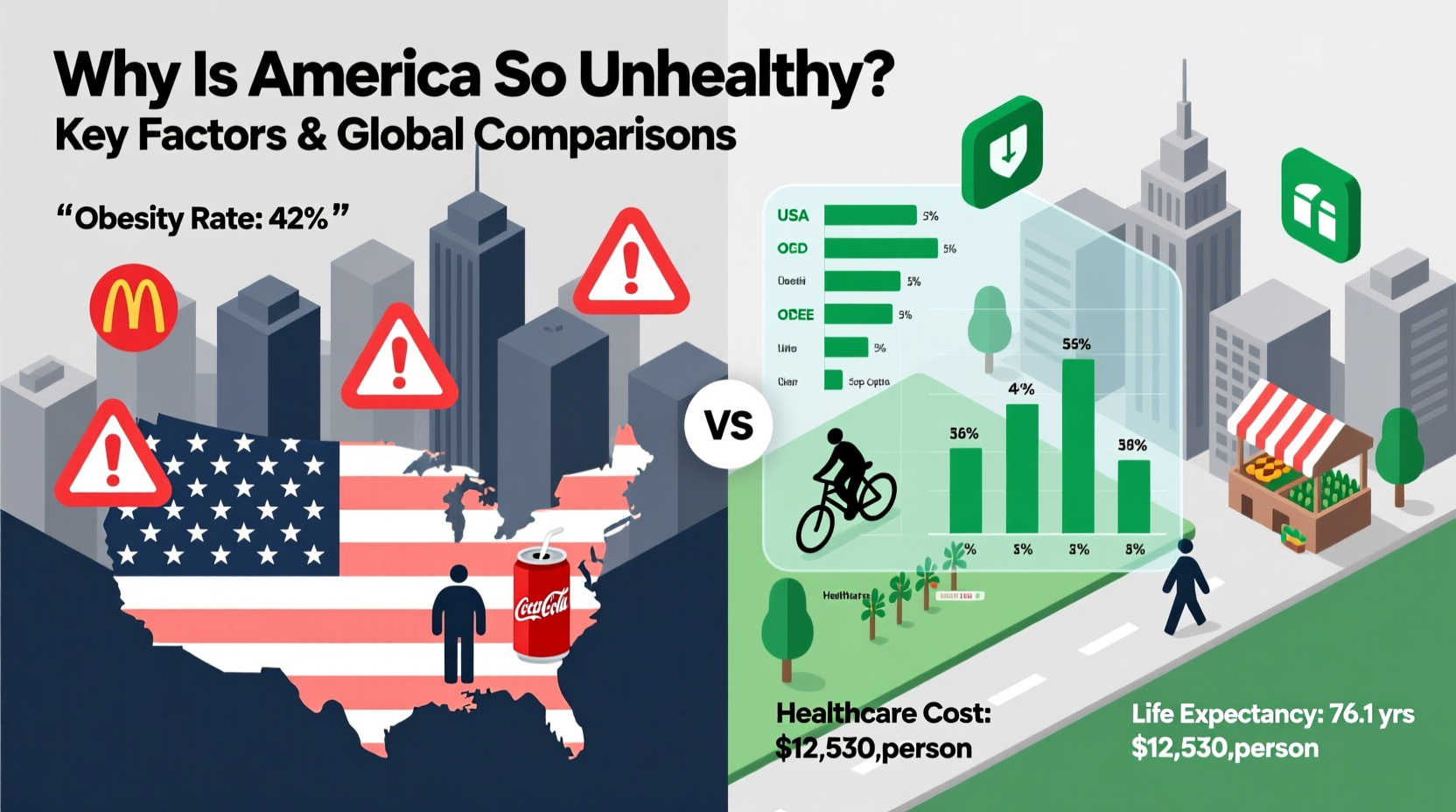
America’s fragmented healthcare system creates stark disparities in access and outcomes. Unlike most high-income nations with universal healthcare models, the U.S. relies heavily on employer-based insurance, leaving millions underinsured or uninsured. According to the Kaiser Family Foundation, over 27 million non-elderly Americans were uninsured in 2023. Even those with coverage often face high deductibles and out-of-pocket costs that deter preventive care.
Income inequality further exacerbates health gaps. Lower-income communities frequently lack access to quality nutrition, safe exercise spaces, and consistent medical services. A CDC report shows that individuals in the lowest income bracket are twice as likely to suffer from chronic conditions like hypertension and type 2 diabetes compared to their higher-income counterparts.
“Health is not just about medicine—it’s about equity. When zip code determines life expectancy, we have a systemic failure.” — Dr. David Williams, Harvard School of Public Health
Diet and the Ultra-Processed Food Epidemic
The American diet is dominated by ultra-processed foods—items high in added sugars, refined grains, unhealthy fats, and sodium. These products now make up nearly 60% of the average American’s daily caloric intake, according to research published in Nutrients. Compare this to diets in Mediterranean countries, where whole grains, fresh produce, legumes, and olive oil form the foundation of eating patterns.
Fast food culture and aggressive marketing of sugary beverages contribute significantly to poor nutrition. Children are particularly vulnerable; one in five U.S. kids is obese by age 11, a rate triple that of many European nations.
| Country | Obesity Rate (Adults) | Ultra-Processed Food Intake (% Calories) | Life Expectancy (Years) |
|---|---|---|---|
| United States | 42% | 58% | 76.1 |
| Japan | 4.3% | 17% | 84.6 |
| Italy | 10% | 23% | 83.0 |
| Germany | 23% | 35% | 81.3 |
This comparison highlights a strong correlation between processed food consumption and both obesity rates and overall longevity. The U.S. stands out not only for its high intake of processed items but also for its relatively low fruit and vegetable consumption—just 10% of adults meet federal guidelines.
Physical Inactivity and Urban Design
Only 24% of Americans meet the recommended physical activity guidelines of 150 minutes of moderate exercise per week. Sedentary lifestyles are fueled by car-dependent urban planning, long commutes, desk jobs, and limited walkability in suburban and rural areas.
In contrast, cities like Copenhagen and Amsterdam prioritize pedestrian infrastructure, bike lanes, and public transit. Over 60% of Copenhagen residents bike to work or school, integrating physical activity seamlessly into daily routines. In the U.S., less than 1% commute by bicycle.
Urban design plays a silent but powerful role in public health. Neighborhoods without sidewalks, parks, or recreational facilities discourage movement. Children in low-income areas are especially affected—many schools have cut physical education due to budget constraints or academic pressure.
Step-by-Step Guide to Building Daily Activity
- Start small: Add a 10-minute walk after meals.
- Track movement: Use a pedometer or smartphone app to monitor steps.
- Replace sedentary habits: Stand during phone calls or use a standing desk.
- Commute actively: Park farther away or take public transit to increase walking.
- Join a group: Walking clubs or fitness classes improve accountability.
Stress, Sleep Deprivation, and Mental Health
Chronic stress and inadequate sleep are rampant in the U.S. workforce. Nearly 80% of Americans report feeling stressed about money, work, or relationships, according to the American Psychological Association. Long working hours, job insecurity, and limited paid leave contribute to burnout and mental health decline.
Sleep deprivation affects over 35% of U.S. adults, far above the OECD average. Poor sleep is linked to obesity, weakened immunity, depression, and cardiovascular disease. Countries like Sweden and Norway, which emphasize work-life balance and offer generous parental and sick leave, report lower stress levels and better sleep hygiene.
Mental health stigma and insufficient access to counseling services remain barriers. Despite rising suicide and depression rates, only 45% of Americans with mental illness receive treatment.
Mini Case Study: The Diabetes Divide
Consider Maria, a 48-year-old retail worker in rural Mississippi. She works 10-hour shifts with no breaks for exercise, lives in a food desert where fresh produce is scarce, and earns too much to qualify for Medicaid but not enough to afford private insurance. At her last check-up, she was diagnosed with prediabetes.
Now compare her to Lars, a warehouse supervisor in Malmö, Sweden. He works 7.5 hours a day, receives subsidized gym access through his union, shops at a local market filled with affordable fruits and vegetables, and has free access to primary care. Lars maintains a healthy weight and normal blood sugar levels despite a family history of diabetes.
Their stories reflect broader national trends. The U.S. spends $327 billion annually on diabetes care, while Sweden’s per-capita cost is less than half. Prevention, not just treatment, is the missing link in the American model.
Checklist: Steps Toward a Healthier Lifestyle
- ✔ Replace sugary drinks with water or herbal tea
- ✔ Cook at home using whole, unprocessed ingredients
- ✔ Aim for 7–9 hours of sleep each night
- ✔ Incorporate 30 minutes of movement daily
- ✔ Schedule annual physicals and screenings
- ✔ Seek mental health support when needed
- ✔ Advocate for workplace wellness programs
Frequently Asked Questions
Why does the U.S. have higher obesity rates than Europe?
The combination of large portion sizes, pervasive fast food, agricultural subsidies for corn and soy (used in processed foods), and lower taxes on sugary drinks contributes to higher calorie consumption. Additionally, European countries implement stronger public health campaigns and food labeling laws that guide healthier choices.
Is healthcare quality worse in the U.S.?
No—the U.S. excels in advanced medical technology, specialist care, and treatment for acute conditions. However, its focus on treatment over prevention, combined with unequal access, leads to poorer population-wide outcomes despite high spending.
Can individual choices overcome systemic issues?
Personal responsibility matters, but it operates within structural constraints. A person cannot “choose” fresh food if none is available nearby, nor can they exercise safely in unsafe neighborhoods. Sustainable change requires policy-level interventions alongside individual action.
Conclusion: A Call for Collective Action
The roots of America’s health crisis run deep—from food policy and urban planning to economic inequality and cultural norms. While individual habits matter, lasting improvement demands systemic reform. We must push for equitable healthcare access, restructure food systems to favor whole foods, redesign cities for active living, and normalize mental health care.
Change begins with awareness, but it thrives through action. Whether you’re choosing water over soda, advocating for safer sidewalks, or supporting legislation for paid family leave, every effort counts. Health isn’t just personal—it’s political, economic, and communal. Let’s build a healthier America together.




 浙公网安备
33010002000092号
浙公网安备
33010002000092号 浙B2-20120091-4
Comments
No comments yet. Why don't you start the discussion?