
In recent years, a quiet but unsettling wave has swept across YouTube: analog horror. Once a niche genre buried in obscure corners of the internet, it’s now experiencing a renaissance, capturing millions of views and inspiring countless creators. This subgenre—characterized by distorted VHS footage, eerie public service announcements, and cryptic government tapes—taps into something primal in modern audiences. It doesn’t rely on jump scares or gore; instead, it unsettles through implication, ambiguity, and a haunting sense of realism. But what exactly is fueling this resurgence? The answer lies at the intersection of nostalgia, digital fatigue, evolving storytelling, and the unique psychology of fear in the online age.
The Roots of Analog Horror
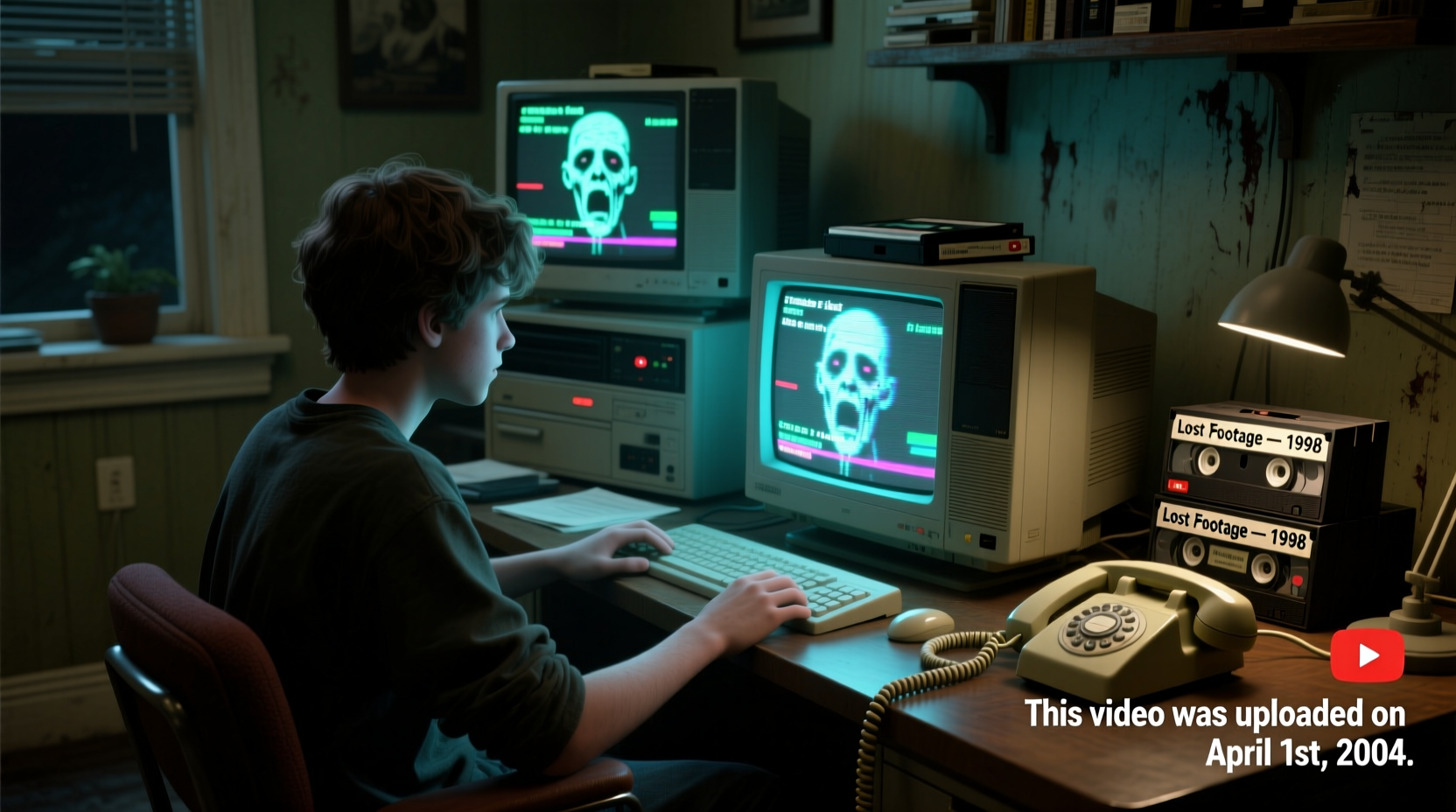
Analog horror draws its aesthetic from the pre-digital era—specifically the 1970s through the 1990s—when media was recorded on magnetic tape, broadcast via analog signals, and displayed with visible static, tracking errors, and color distortion. Early examples include found-footage films like The Blair Witch Project and Paranormal Activity, but the true blueprint for modern analog horror came from web-based projects such as Local 58 by Kris Straub. Launched in 2015, Local 58 presented fake emergency broadcasts from a rogue TV station, mimicking the look and tone of real public alerts. Its success demonstrated that audiences were receptive to slow-burn, atmospheric horror delivered through a faux-authentic medium.
What set analog horror apart was its commitment to verisimilitude. Unlike traditional horror shorts with actors and scripts, these videos often lacked dialogue, featured no central protagonist, and unfolded through fragmented clips, technical manuals, or corrupted recordings. The absence of conventional narrative structure forced viewers to piece together meaning, amplifying unease and encouraging deep community engagement.
Nostalgia as a Psychological Trigger
One of the most powerful drivers behind analog horror’s revival is nostalgia—but not the warm, sentimental kind. Instead, it leverages what psychologists call “nostalgic dread,” a bittersweet longing for the past tinged with discomfort. For millennials and older Gen Z viewers, the visual language of CRT televisions, VHS tracking lines, and dial-up modems evokes childhood memories of late-night TV, educational films in school, and early internet browsing. These memories are emotionally loaded, making the corruption of that familiar aesthetic all the more disturbing.
When a video begins with the hum of a cathode-ray tube powering on or the hiss of a tape rewinding, it triggers subconscious associations with vulnerability—being alone at home, watching forbidden content after bedtime, or encountering strange programming during a power outage. Analog horror exploits this emotional resonance, transforming comforting relics of the past into instruments of fear.
Digital Fatigue and the Return to Lo-Fi Aesthetics
As audiences grow weary of hyper-polished, algorithm-driven content, there’s a growing appetite for raw, unfiltered media. The internet, once a space of discovery and unpredictability, now feels increasingly homogenized—dominated by high-definition thumbnails, auto-play recommendations, and influencer branding. In contrast, analog horror offers a stark alternative: grainy visuals, unpredictable pacing, and a deliberate rejection of modern production values.
This lo-fi aesthetic isn’t just stylistic—it’s thematic. The imperfections of analog media become metaphors for instability, misinformation, and technological decay. In an era where deepfakes and AI-generated content blur the line between truth and fiction, analog horror plays on our distrust of digital authenticity. Paradoxically, the “less real” a video looks, the more believable its horrors feel. A shaky camera, muffled audio, and garbled text suggest something was recorded in secret, hidden from official channels—making the viewer complicit in uncovering a suppressed truth.
The Role of Community and Speculation
Unlike mainstream horror films designed for passive viewing, analog horror thrives on active participation. Viewers don’t just watch—they dissect. Frame-by-frame analysis, timeline mapping, and collaborative theorizing have turned series like The Mandela Catalogue, Eventide Media, and Off Season into sprawling mythologies. Reddit threads, Discord servers, and YouTube comment sections become extensions of the narrative, where fans exchange clues, decode symbols, and debate interpretations.
This participatory culture mirrors the early days of creepypasta and ARGs (Alternate Reality Games), where stories evolved through collective imagination. The lack of definitive answers in analog horror isn’t a flaw—it’s a feature. Ambiguity invites speculation, and speculation breeds obsession. As one fan put it: “I don’t want to know what the red-eyed man is. I want to keep wondering.”
“The best horror doesn’t show you the monster—it makes you afraid of your own imagination.” — Dr. Lena Park, Media Psychologist at NYU
Psychological Storytelling: Fear Through Suggestion
Analog horror bypasses traditional scare tactics in favor of psychological manipulation. Rather than showing violence, it implies it. Instead of revealing threats, it obscures them. This technique, known as “negative capability,” allows the mind to fill in gaps with its worst fears. A flickering screen might suggest a presence just off-camera. A distorted voice could be human—or something impersonating one. The longer the uncertainty lasts, the deeper the anxiety sets in.
Studies in cognitive psychology show that humans are hardwired to detect patterns and agency, even where none exist—a phenomenon called pareidolia. Analog horror weaponizes this instinct. Static becomes faces. Random noise turns into whispers. A simple test pattern can feel like a warning. By presenting just enough information to trigger pattern recognition but not enough to confirm it, creators maintain a state of low-grade dread that lingers long after the video ends.
Why YouTube Is the Perfect Platform
No other platform is better suited for analog horror than YouTube. Its open upload model allows independent creators to experiment freely. Its recommendation algorithm rewards engagement, pushing mysterious, bingeable content into users’ feeds. And its search functionality enables fans to dive deep into interconnected lore.
Moreover, YouTube’s interface itself becomes part of the experience. Watching a video titled “EMERGENCY BROADCAST SYSTEM – TRANSMISSION #4” in a dim room, with autoplay queued, enhances immersion. The platform’s familiarity makes the intrusion of horror more jarring—like finding a cursed tape among your old home movies.
| Feature | Traditional Horror | Analog Horror (YouTube) |
|---|---|---|
| Production Quality | High-budget, cinematic | Low-fi, intentionally degraded |
| Pacing | Fast cuts, escalating tension | Slow burn, ambient dread |
| Viewer Role | Passive observer | Active investigator |
| Distribution | Theaters, streaming platforms | User-generated, viral spread |
| Narrative Clarity | Clear plot and resolution | Fragmented, open-ended |
A Mini Case Study: The Rise of \"The Mandela Catalogue\"
No example illustrates the rise of analog horror better than The Mandela Catalogue, created by Alex Kister. What began in 2021 as a single eerie video titled “Vol. 1” evolved into one of the most influential horror franchises on YouTube. Set in a fictional town plagued by “alternates”—doppelgängers that mimic humans but lack souls—the series uses fake safety training videos, missing persons reports, and distorted religious broadcasts to build its world.
The first volume opens with a serene choir performance abruptly interrupted by glitching audio and flashing images. There’s no explanation, no introduction—just a slow descent into madness. Viewers reported feeling physically uncomfortable, citing headaches and paranoia after watching. The video went viral, amassing over 20 million views and spawning hundreds of fan theories, art pieces, and derivative works.
Kister’s approach exemplifies modern analog horror: minimal exposition, maximal atmosphere, and a deep respect for audience intelligence. He never explains the rules of his universe, allowing fans to construct their own interpretations. In interviews, he’s described his goal as creating “a horror that lives in your peripheral vision,” one that feels less like entertainment and more like exposure to something forbidden.
How to Create Effective Analog Horror: A Step-by-Step Guide
For aspiring creators, entering the analog horror space requires more than just adding VHS filters. Authenticity and intentionality are key. Follow this process to craft compelling content:
- Define the Mythos: Establish core rules. What is the threat? Who is recording this? Why was it hidden?
- Choose a Format: Pick a realistic medium—training video, news broadcast, surveillance feed, or educational film.
- Research Period Details: Study real analog media from the era. Note font styles, color palettes, audio tones, and common glitches.
- Write Minimalist Scripts: Use clinical, bureaucratic language. Avoid dramatic narration.
- Apply Authentic Degradation: Use tools like AVTD (Analog Video Toolkit) to simulate tracking errors, color bleed, and signal loss.
- Release Strategically: Upload episodes sporadically to mimic lost transmissions. Encourage speculation with cryptic titles.
- Engage (Without Explaining): Respond to fans without confirming theories. Let the mystery breathe.
Frequently Asked Questions
Is analog horror based on real events?
No, analog horror is fictional. However, its power comes from mimicking real archival formats—like emergency broadcasts or industrial training videos—making it feel plausible. Some series incorporate real historical events (e.g., Cold War paranoia) to deepen authenticity.
Why do analog horror videos often lack clear endings?
Open endings preserve mystery and encourage discussion. Unlike traditional narratives, analog horror prioritizes mood and implication over resolution. An unresolved threat feels more persistent—and therefore more frightening—than one that’s defeated.
Can analog horror be adapted into mainstream media?
Potentially, but it risks losing its essence. The genre’s strength lies in its grassroots, underground nature. Studio adaptations often over-explain or over-produce, stripping away the ambiguity that makes analog horror effective. That said, elements of the style—such as distorted media and unreliable narration—have already influenced shows like Stranger Things and Black Mirror.
Checklist: Elements of Compelling Analog Horror
- Authentic period-accurate visuals and audio
- Found-footage or archival framing device
- Minimalist or absent music
- Use of bureaucratic or institutional language
- Gradual escalation of unease (no sudden jumpscares)
- Implied rather than shown threats
- Encouragement of viewer interpretation
- Consistent internal logic, even if unexplained
Conclusion: The Future of Fear
Analog horror’s resurgence isn’t a passing trend—it’s a reflection of how we consume fear in the digital age. In a world saturated with content, audiences crave experiences that feel hidden, dangerous, and real. Analog horror delivers that by weaponizing nostalgia, exploiting psychological vulnerabilities, and transforming YouTube into a haunted archive.
As technology advances, the contrast between pristine digital media and decaying analog artifacts will only grow sharper. This tension ensures that analog horror will remain relevant, evolving alongside new fears about AI, surveillance, and information control. For creators, the challenge is to honor the genre’s roots while pushing its boundaries. For viewers, the invitation is to lean closer, squint at the static, and ask: What am I really seeing?




 浙公网安备
33010002000092号
浙公网安备
33010002000092号 浙B2-20120091-4
Comments
No comments yet. Why don't you start the discussion?