
The state of Arkansas has long puzzled English speakers across the country—not because of its geography or culture, but because of a single syllable in its name. Most people expect it to rhyme with “Kansas,” pronounced \"AR-kan-ziz.\" But residents of the state insist on a different version: \"AR-kan-saw,\" with the final syllable sounding like “saw.” This divergence isn’t arbitrary; it’s rooted in history, language, and cultural identity. Understanding why Arkansas is pronounced this way requires delving into Native American languages, French colonial influence, and the politics of pronunciation.
The Native American Roots of the Name
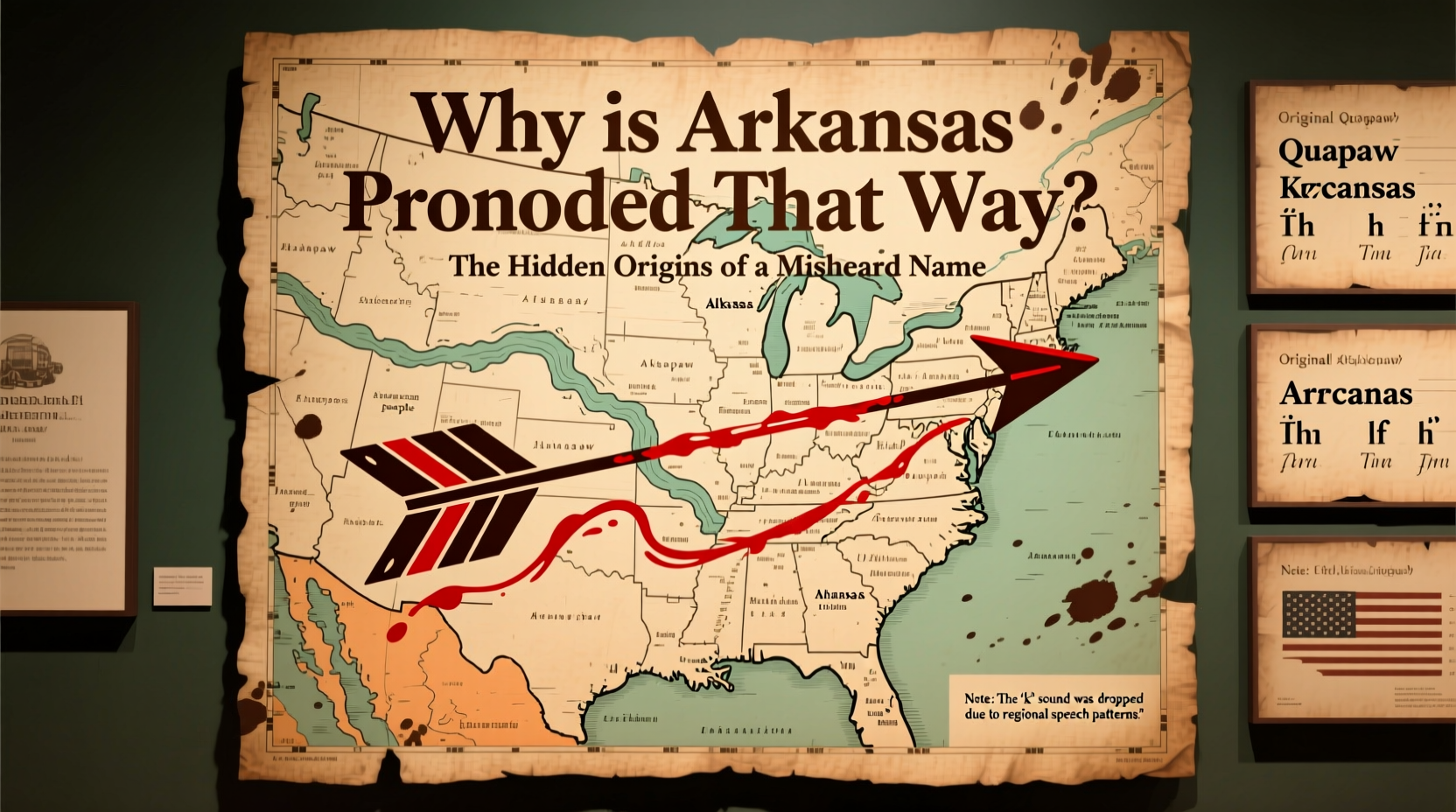
The word “Arkansas” originates from the indigenous Quapaw people, who lived along the Mississippi River in what is now eastern Arkansas. The Algonquian-speaking Illinois tribe referred to the Quapaw as “Akakaze,” meaning “people of the south wind.” French explorers in the 17th century encountered the Illinois term and adapted it phonetically into their own language. They recorded variations such as “Arcansa” and “Akansa,” depending on the interpreter and region.
The spelling and pronunciation were further influenced by the French tendency to soften consonants and emphasize vowel sounds. When French trappers and missionaries interacted with local tribes, they began using “Arkance” or “Arcansas” to refer to both the people and the river that would later bear the same name—the Arkansas River.
“Pronunciation is often a reflection of who had the power to define it.” — Dr. Lillian Chen, Historical Linguist at Tulane University
French Influence and Colonial Spelling
When France claimed the Louisiana Territory in the late 1600s, the Arkansas River became a key landmark. French maps and journals consistently used spellings like “Rivière des Archansas” or “Fleuve des Arkances.” These renderings preserved the nasalized vowels and silent final “s” typical of French phonology. In French, a final “s” is often not pronounced—so “Arkansas” would naturally be said as “Ar-kan-saw,” with emphasis on the first syllable and a drawn-out final vowel.
This linguistic pattern carried forward even after the territory changed hands. Although Spain briefly controlled the region and later the United States acquired it through the Louisiana Purchase in 1803, the French-influenced pronunciation remained entrenched among settlers and officials familiar with the original usage.
The Battle Over Pronunciation: Statehood and Identity
As Arkansas moved toward statehood in the 1830s, confusion grew about how to pronounce its name. Settlers from other parts of the U.S., particularly those from Kansas and other Midwestern states, assumed it should follow the same pattern: ending in “-ziz.” However, locals—who had inherited the French-based pronunciation—resisted this change fiercely.
In 1881, the Arkansas General Assembly took an unprecedented step: it officially ruled on pronunciation. A committee was formed to settle the debate once and for all. After reviewing historical documents, early French records, and input from scholars, the committee concluded that the correct pronunciation was “AR-kan-saw,” with the final syllable rhyming with “gore” or “door.”
The decision wasn’t merely linguistic—it was symbolic. By affirming “AR-kan-saw,” the state asserted its unique cultural heritage and distanced itself from external assumptions. It was a declaration of regional pride.
Timeline of Key Events in Arkansas’ Naming History
- 1673: French explorers Marquette and Joliet document the “Akansa” tribe along the Mississippi.
- 1762: France cedes Louisiana Territory, including Arkansas, to Spain; French linguistic influence remains strong.
- 1803: U.S. acquires the Louisiana Purchase; American settlers begin arriving, bringing new pronunciations.
- 1836: Arkansas becomes the 25th state; debate intensifies over proper pronunciation.
- 1881: Arkansas General Assembly formally adopts “AR-kan-saw” as the official pronunciation.
Arkansas vs. Kansas: A Tale of Two States
The contrast between Arkansas and Kansas is central to understanding the confusion. While both names derive from the same Algonquian root—referring to the “downstream” or “south wind” people—their pronunciations diverged due to colonial influence.
Kansas, admitted as a state in 1861, was settled primarily by English-speaking Americans with little exposure to French traditions. As a result, the pronunciation defaulted to anglicized rules: “KAN-ziz.” Arkansas, having been under French control longer and retaining stronger regional ties to its colonial past, preserved the original cadence.
| State | Origin of Name | Colonial Influence | Final Syllable Pronunciation | Official Stance |
|---|---|---|---|---|
| Arkansas | Quapaw via Algonquian “Akakaze” | French | saw (rhymes with “law”) | Legally affirmed in 1881 |
| Kansas | Kaw (Kansa) Nation | American English | ziz (rhymes with “was”) | No formal ruling |
Modern Usage and Common Mistakes
Despite the official ruling, mispronunciation persists—especially outside the South. National media, politicians, and tourists often say “AR-kan-ziz,” unintentionally offending locals. For many Arkansans, hearing the wrong pronunciation feels like a dismissal of their history and identity.
Schools in Arkansas teach the correct version from an early age. The Arkansas Department of Parks and Tourism even includes pronunciation guidance in press kits for journalists. Yet, the battle continues in courtrooms, classrooms, and cable news segments.
Mini Case Study: The Senator’s Slip-Up
In 2014, a U.S. senator from the Northeast referred to “AR-kan-ziz” during a Senate floor debate. A junior senator from Arkansas politely interrupted: “I believe the gentleman means AR-kan-saw.” The moment went viral on social media, sparking a wave of memes and commentary. What could have been a minor gaffe turned into a national conversation about regional respect and linguistic accuracy. Within days, several news outlets published guides on correct state pronunciations, placing Arkansas at the top of the list.
Frequently Asked Questions
Why don’t we pronounce Arkansas like Kansas?
Because the two states have different colonial histories. Arkansas retains a French-influenced pronunciation where the final “s” is silent and the last syllable sounds like “saw.” Kansas follows standard English pronunciation patterns, ending in “ziz.”
Is it really illegal to say “AR-kan-ziz”?
No, it’s not illegal—but it is incorrect according to the official stance of the Arkansas legislature. There are no fines or penalties, but using the wrong pronunciation may mark you as an outsider.
Does the pronunciation vary within Arkansas?
Minimally. While accents differ between regions (e.g., Ozarks vs. Delta), nearly all native Arkansans pronounce it “AR-kan-saw.” You’re more likely to hear variation in stress or rhythm than in the final syllable.
How to Get It Right: A Quick Checklist
- Start with emphasis on the first syllable: AR-ka-saw
- Pronounce the second syllable as “ka” (not “ken”)
- End with “saw,” like the tool, not “siz”
- Avoid adding a “z” sound at the end
- Listen to native speakers: Try clips from Arkansas Public Radio or state government videos
Conclusion
The pronunciation of “Arkansas” is more than a quirk of speech—it’s a living artifact of history, language, and regional pride. From Native American roots to French transcription and legislative decree, every layer of its story reveals how deeply pronunciation can reflect identity. Getting it right isn’t just about linguistic accuracy; it’s a sign of respect for the people and heritage behind the name.




 浙公网安备
33010002000092号
浙公网安备
33010002000092号 浙B2-20120091-4
Comments
No comments yet. Why don't you start the discussion?