
In recent years, the phrase “Let’s go Brandon” has become a ubiquitous slogan in American political discourse. What began as a coded jab at President Joe Biden has evolved into a full-blown cultural phenomenon, appearing on bumper stickers, T-shirts, and even shouted at public events. But how did a seemingly innocuous name like “Brandon” become synonymous with criticism of a sitting U.S. president? The answer lies in a moment of media misdirection, public frustration, and the rapid spread of internet humor.
The Viral Moment: A NASCAR Interview Gone Awry
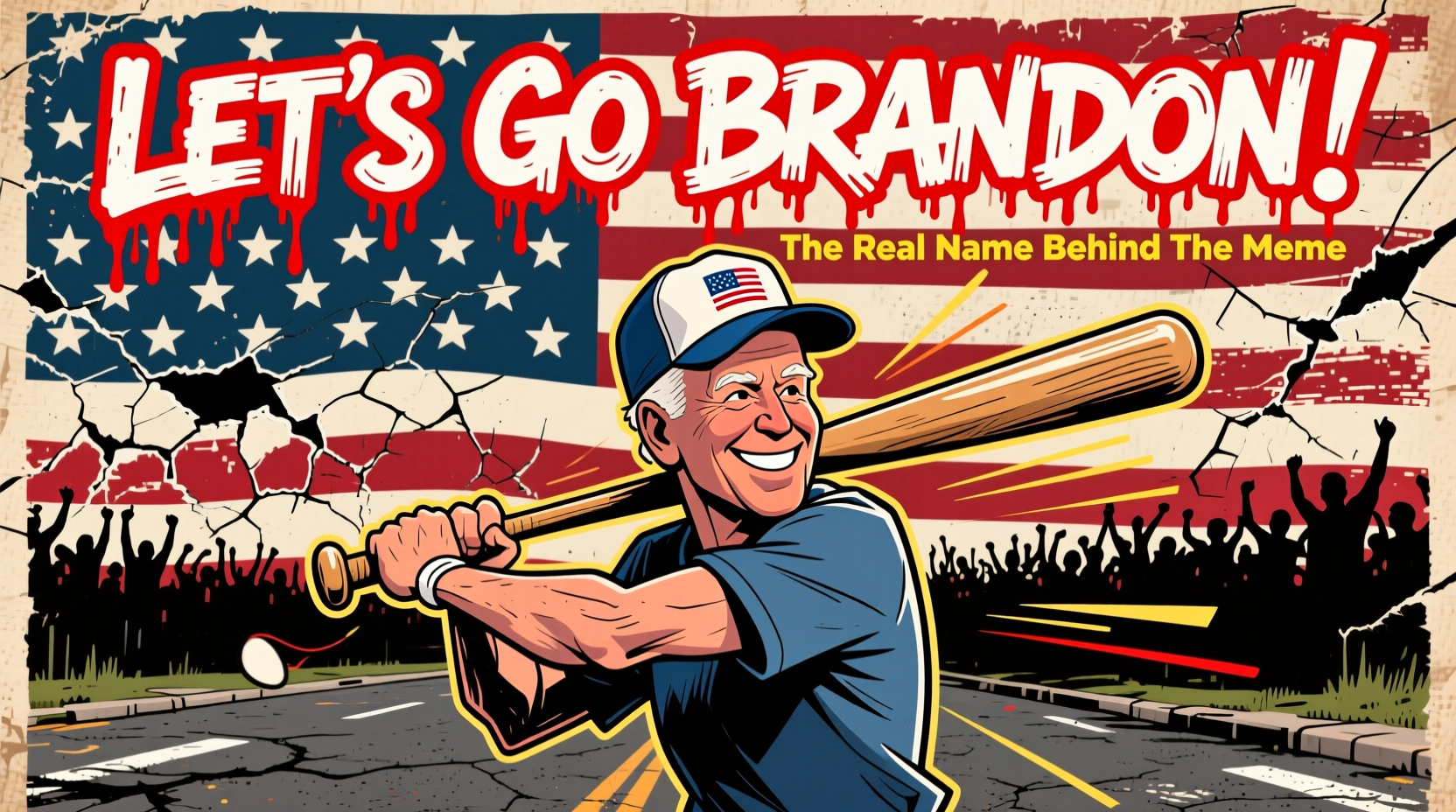
The origin of “Let’s go Brandon” traces back to October 2021, during a post-race interview at the Talladega Superspeedway. NBC Sports reporter Kelli Stavast was interviewing driver Brandon Brown, who had just won his first career NASCAR Xfinity Series race. As she spoke with him, the crowd behind them could be clearly heard chanting “Fuck Joe Biden!” — a politically charged outburst reflecting growing discontent among certain segments of the public over pandemic policies, inflation, and other issues.
Rather than acknowledge the explicit chant, Stavast diplomatically reframed it, saying: “You can hear the chants there—‘Let’s go Brandon!’” Her attempt to sanitize the crowd’s message inadvertently created a euphemism that would soon take on a life of its own.
“Sometimes, all it takes is one awkward moment on live TV for a meme to be born. This was political satire in real time.” — Dr. Rebecca Tran, Media Analyst at George Washington University
The clip went viral almost instantly. Viewers recognized the disconnect between what was actually being said and how it was reported. The phrase “Let’s go Brandon” quickly became a satirical substitute for the more vulgar expression, allowing critics of the Biden administration to express dissent in a way that was both humorous and deniable.
Why “Brandon”? The Symbolism Behind the Name
Brandon Brown, the actual racecar driver, had no connection to politics. Yet his name became a stand-in for anti-Biden sentiment. The use of “Brandon” functions as a form of linguistic irony — a way to mock both the president and the perceived dishonesty of mainstream media, which many believe downplays or ignores negative public reactions to Democratic leaders.
The substitution works because it’s absurd. There’s no logical reason why a random man named Brandon should represent the president. That very absurdity is what makes the meme effective. It thrives on contrast: a harmless name used to veil a pointed political critique.
How the Phrase Spread: From Meme to Movement
Within days of the interview, “Let’s go Brandon” exploded across social media platforms. Twitter, Facebook, TikTok, and Reddit users adopted the phrase in posts, videos, and remixes. Musicians created parody songs. Conservative commentators repeated it on air. Even Republican lawmakers began using it in speeches and interviews.
The phrase gained traction not just because it was funny, but because it offered a socially acceptable way to voice opposition. In workplaces, schools, and family gatherings where direct insults might be frowned upon, saying “Let’s go Brandon” allowed people to signal their views without crossing overtly offensive lines.
By late 2021 and early 2022, the slogan had transcended its origins. It appeared at football games, political rallies, and even in congressional hearings. During a December 2021 press conference, a reporter asked President Biden if he had any message for those saying “Let’s go Brandon.” Biden responded with a smirk: “I think they’re talking about the NASCAR driver.” The acknowledgment only fueled the meme further.
Timeline of Key Events
- October 2, 2021: NASCAR interview airs; crowd chants “Fuck Joe Biden,” reporter says “Let’s go Brandon.”
- October 4–7, 2021: Clip goes viral on social media; meme spreads rapidly.
- October 2021: Parody song “Let’s Go Brandon” by country artist Aidan Knight reaches top 10 on iTunes.
- November 2021: Fox News hosts and conservative influencers begin using the phrase regularly.
- December 2021: President Biden acknowledges the slogan during a press briefing.
- 2022–2023: Phrase appears on merchandise, at protests, and in campaign rhetoric.
Political and Cultural Implications
The rise of “Let’s go Brandon” reflects broader shifts in how political discourse unfolds in the digital age. Traditional forms of protest—rallies, letters to editors, phone calls to representatives—are increasingly supplemented by viral language and online signaling.
More than just a joke, the phrase represents a form of resistance against perceived media bias. For many who use it, the humor lies not only in mocking Biden but in exposing what they see as the unwillingness of journalists to report uncomfortable truths. The gap between the real chant and the sanitized version became a symbol of distrust in institutional narratives.
| Aspect | Meaning Behind \"Let's Go Brandon\" |
|---|---|
| Linguistic Evasion | Using a benign phrase to mask a critical or vulgar sentiment |
| Media Critique | Highlighting perceived dishonesty or soft-pedaling in journalism |
| Political Identity | A signal of alignment with conservative or anti-establishment views |
| Cultural Rebellion | Rejecting politically correct norms through irony and satire |
Mini Case Study: High School Football Game Controversy
In October 2022, a high school football game in rural Indiana made national headlines when fans began chanting “Let’s go Brandon!” after a touchdown. Administrators initially tried to stop the chant, citing concerns about divisiveness. However, parents and students argued it was protected free speech and a form of lighthearted expression.
The incident sparked debate: Was this an inappropriate politicization of a youth event, or a legitimate exercise of First Amendment rights? Local news coverage split along ideological lines. Conservative outlets framed it as a victory for free speech; liberal commentators called it a sign of toxic polarization seeping into everyday life.
Ultimately, the school district issued a statement saying they would not censor fan chants unless they were directly threatening or obscene. The episode illustrated how deeply embedded the phrase had become in American culture—even at the community level.
Do’s and Don’ts When Engaging With Political Slang
- Do recognize the context in which phrases like “Let’s go Brandon” are used — often as satire, not literal commentary.
- Do understand that such language can serve as a barometer of public sentiment, especially among disaffected groups.
- Don’t assume everyone using the phrase is being malicious; many use it ironically or humorously.
- Don’t dismiss the underlying grievances simply because the expression is meme-driven.
Frequently Asked Questions
Is “Let’s go Brandon” illegal or hate speech?
No, “Let’s go Brandon” is not illegal nor classified as hate speech. It is considered political satire and protected under the First Amendment. While some find it disrespectful, courts have consistently upheld the right to use ironic or mocking language about public officials.
Did Joe Biden ever respond directly to the “Brandon” nickname?
Yes. During a press conference in December 2021, Biden acknowledged the phrase with a smile, saying, “I think they’re talking about the NASCAR driver.” He did not elaborate further, choosing humor over confrontation.
Does Brandon Brown support the use of his name in the meme?
Brandon Brown has expressed mixed feelings. In interviews, he stated he doesn’t control how people use his name but emphasized that he wants to remain neutral and focused on his racing career. He also noted that the sudden attention was overwhelming but led to increased sponsorship opportunities.
Conclusion: More Than Just a Meme
“Let’s go Brandon” started as a flubbed interview line but grew into a powerful example of how language evolves in the digital era. It’s not merely a joke—it’s a reflection of political alienation, media skepticism, and the creative ways people resist authority through humor.
Whether you find it clever or crass, the phrase underscores a reality: in today’s hyperconnected world, a single moment can ignite a nationwide conversation. Understanding its origin helps us grasp not just a punchline, but the mood of a nation navigating deep divisions with laughter, irony, and sometimes, a surprising amount of staying power.




 浙公网安备
33010002000092号
浙公网安备
33010002000092号 浙B2-20120091-4
Comments
No comments yet. Why don't you start the discussion?