
Big Ben stands as one of the most instantly recognizable symbols of London—and by extension, the United Kingdom. Its towering silhouette against the Thames skyline, the deep chime echoing across Westminster, and its frequent appearance in film, television, and global news have cemented its status as a world-famous landmark. But beyond its visual and auditory presence, Big Ben carries centuries of historical weight, architectural innovation, and political symbolism. Understanding why Big Ben is so famous requires peeling back the layers of its construction, cultural impact, and enduring legacy.
The Origins and Construction of Big Ben
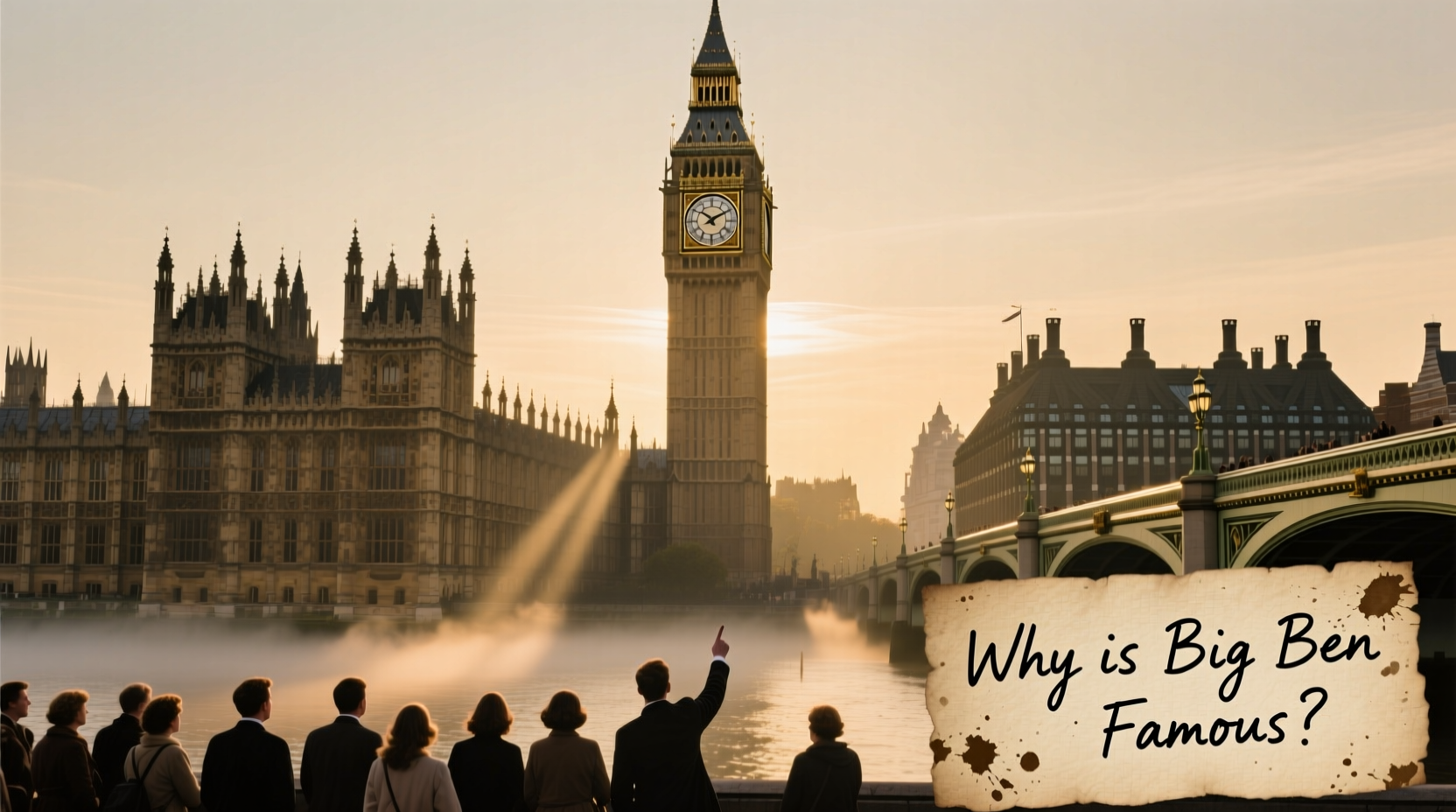
The story of Big Ben begins in the mid-19th century, following the devastating fire of 1834 that destroyed much of the old Palace of Westminster. As architects competed to design a new parliamentary complex, Charles Barry won the commission with a Gothic Revival masterpiece. Integral to his design was a grand clock tower—initially called the Clock Tower, later renamed Elizabeth Tower in 2012 to mark Queen Elizabeth II’s Diamond Jubilee.
The clock mechanism itself was engineered by Edmund Beckett Denison, a lawyer and amateur horologist, in collaboration with clockmaker Edward John Dent. Their goal was not just aesthetic appeal but unprecedented accuracy. At the time, it was considered the largest and most precise striking clock in the world.
The bell inside the tower, which most people refer to as \"Big Ben,\" actually has a fascinating backstory. The first casting in 1856 cracked during testing. A second bell, weighing 13.7 tons, was cast in 1858 at the Whitechapel Bell Foundry and hoisted into place. Even this bell developed a crack in 1859 after only a few months of operation. Rather than replace it again, engineers rotated the bell slightly and fitted a lighter hammer, allowing the crack to become part of its distinctive tone—a low E note that now resonates globally.
“Big Ben isn’t just a clock; it’s a statement of Victorian confidence in engineering, precision, and national identity.” — Dr. Jonathan Ross, Historian of British Architecture
Why Is Big Ben Famous? Key Reasons
Several factors contribute to Big Ben's fame, making it more than just a tall clock:
- Architectural Grandeur: Standing at 96 meters (315 feet), the Elizabeth Tower combines elegance with structural ambition. Its Gothic detailing, spire, and intricate stonework make it a masterpiece of 19th-century design.
- Engineering Precision: The Great Clock remains accurate to within two seconds per week—an extraordinary feat for mechanical technology of its era.
- Cultural Symbolism: Big Ben has come to represent British resilience, particularly during World War II when its chimes were broadcast worldwide via the BBC, signaling continuity amid chaos.
- Global Media Presence: From James Bond films to live news coverage of New Year’s Eve, Big Ben appears in countless movies, documentaries, and broadcasts, reinforcing its image in popular culture.
- National Identity: It is frequently used as a stand-in for the UK government or Parliament in editorial cartoons and international reporting.
A Timeline of Major Events in Big Ben’s History
To appreciate the full scope of Big Ben’s significance, consider these pivotal moments:
- 1834: Fire destroys the original Palace of Westminster.
- 1840s: Charles Barry and Augustus Pugin develop designs for the new Houses of Parliament and clock tower.
- 1859: The current Big Ben bell is installed and strikes for the first time on July 11.
- 1941–1945: During WWII, the clock face lights remain off during blackouts, but the chimes continue broadcasting hope across Europe.
- 1960: Electric motors are added to assist winding, though the clock remains mechanically driven.
- 1983–1985: First major restoration project addresses weathering and mechanical wear.
- 2012: The Clock Tower is officially renamed Elizabeth Tower in honor of Queen Elizabeth II’s 60-year reign.
- 2017–2022: A five-year conservation project includes repairs to stonework, clock mechanisms, and the belfry. The bell fell silent for four years—the longest silence in its history—for safety during scaffolding work.
Common Misconceptions About Big Ben
Despite its fame, many people misunderstand what “Big Ben” actually refers to. This confusion often stems from casual usage in media and tourism.
| Misconception | Reality |
|---|---|
| Big Ben is the name of the entire clock tower. | No—Big Ben specifically refers to the Great Bell inside the tower. The structure was originally the Clock Tower; now Elizabeth Tower. |
| The clock has always been perfectly accurate. | While highly reliable, it has occasionally stopped due to weather extremes—snow once halted it in 1962. |
| It rings every quarter-hour without exception. | Ringing ceased during wartime for security and during major restorations like 2017–2022. |
| There is only one Big Ben bell. | There are five bells in total, including the four quarter bells that play the Westminster Quarters melody. |
Visiting Big Ben: What You Need to Know
While tourists cannot currently tour the interior of the Elizabeth Tower unless they are UK residents arranging through their Member of Parliament, viewing Big Ben from the outside remains a must-do London experience. The best vantage points include Westminster Bridge, the South Bank, and Parliament Square.
For those planning a visit, here’s a checklist to enhance your experience:
- Arrive early to avoid crowds and capture clear photos.
- Time your walk to hear the chime on the hour.
- Combine your stop with visits to Westminster Abbey, the Houses of Parliament, and the London Eye nearby.
- Download a self-guided audio tour app for historical context while walking.
- Check Parliament’s official website for updates on public access opportunities.
A Real Example: Big Ben During the Pandemic
In March 2020, as the UK entered lockdown due to the global pandemic, a touching moment unfolded. Normally, Big Ben chimes every 15 minutes. But to honor NHS workers and reflect the nation’s solemn mood, Parliament decided to temporarily silence the quarter bells—while allowing the hourly chime to continue.
Then, in a symbolic gesture, Big Ben struck 70 times on April 29, 2021, marking the 70th anniversary of the National Health Service’s founding. Each chime represented a year of service, broadcast live on national television. This moment reminded millions that Big Ben is not merely a timepiece—it’s a voice of the nation during times of crisis and celebration alike.
Frequently Asked Questions
Is Big Ben still the most accurate mechanical clock in the world?
No longer the most accurate, but it remains remarkably precise for a 160-year-old mechanical system. Modern atomic clocks far surpass it, yet Big Ben’s reliability under variable conditions continues to impress horologists.
Can tourists go inside Big Ben?
Currently, only UK residents can book guided tours through their local MP. International visitors are encouraged to enjoy exterior views and virtual tours available online via the UK Parliament website.
Why does Big Ben sound slightly flat?
The famous \"crack\" in the bell alters its tonality, producing a slightly off-pitch E note. Engineers decided to keep the crack rather than recast the bell again, preserving both history and character.
Conclusion: A Legacy That Keeps Time
Big Ben’s fame rests on more than just its size or sound. It embodies a confluence of engineering brilliance, historical endurance, and emotional resonance. From guiding Londoners through foggy nights to symbolizing unity during war and pandemics, it has evolved into a living monument—one that doesn’t just mark time but helps shape how Britain sees itself.
Whether you’ve heard its chime on a midnight broadcast, seen it flash across a movie screen, or stood beneath its shadow on a rainy London evening, Big Ben invites reflection on the passage of time and the strength of tradition. Its continued preservation ensures that future generations will know not just *what* Big Ben is, but *why* it matters.




 浙公网安备
33010002000092号
浙公网安备
33010002000092号 浙B2-20120091-4
Comments
No comments yet. Why don't you start the discussion?