
Bitcoin, once again proving its reputation for volatility, has entered a pronounced downtrend in recent months. After reaching an all-time high near $69,000 in March 2024, the flagship cryptocurrency has shed over 30% of its value, dropping below $48,000 by mid-June. Investors and analysts alike are asking: why is Bitcoin falling? The answer lies not in a single event, but in a confluence of macroeconomic pressures, regulatory developments, on-chain data shifts, and evolving market sentiment.
This article dissects the key forces behind Bitcoin’s current decline, offering a data-driven analysis of the broader financial environment, institutional behavior, and technical indicators that signal both risk and opportunity in today’s crypto markets.
Macroeconomic Pressures Weighing on Bitcoin
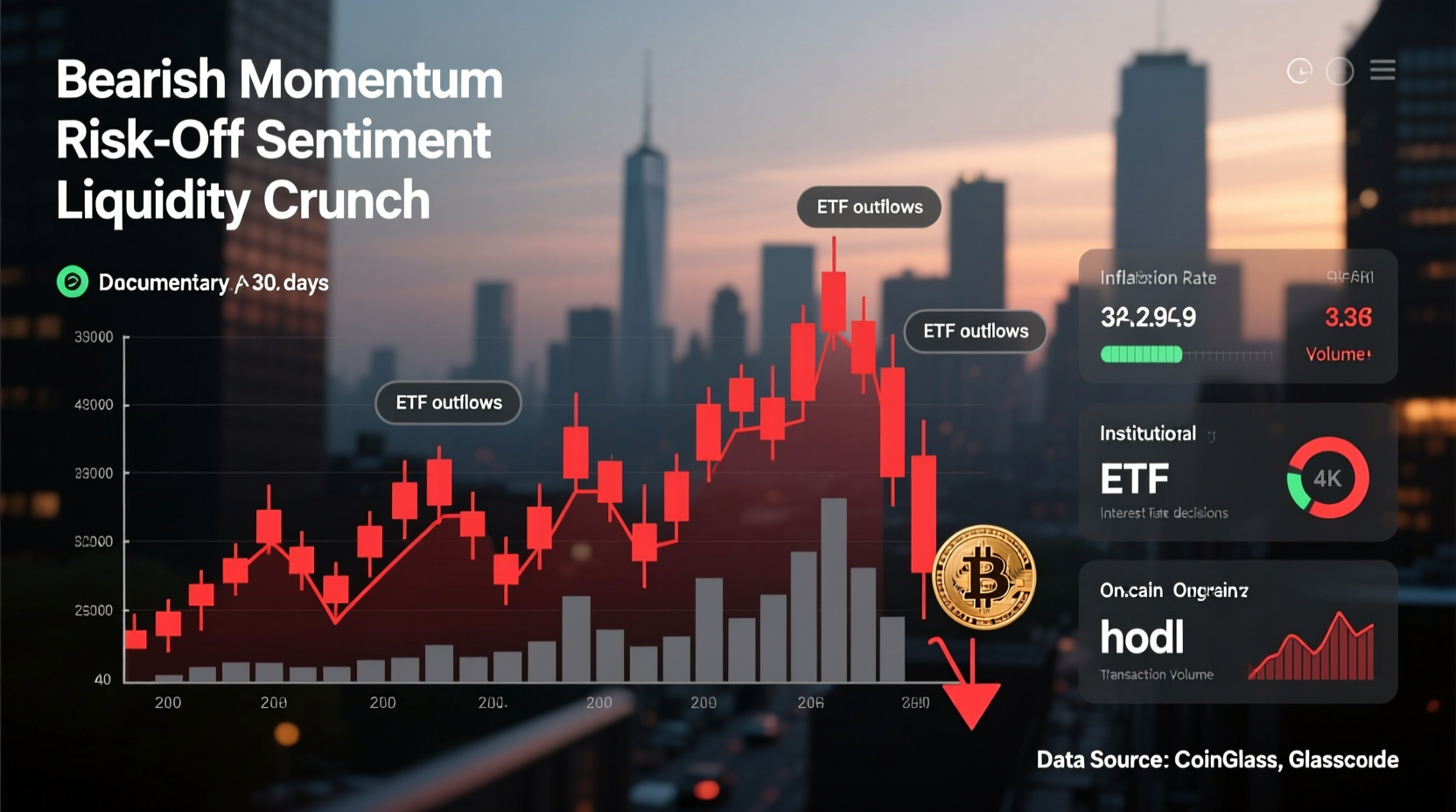
Bitcoin no longer trades in isolation. As institutional adoption grows, its correlation with traditional financial markets—especially U.S. equities and bond yields—has strengthened. Several macroeconomic factors are currently exerting downward pressure:
- Rising Interest Rates: The Federal Reserve has maintained a hawkish stance, keeping interest rates elevated to combat persistent inflation. Higher rates make yield-bearing assets like Treasury bonds more attractive, reducing demand for speculative assets including Bitcoin.
- Strong U.S. Dollar (DXY): A robust dollar increases the cost of holding non-yielding assets. Bitcoin, priced in USD globally, tends to weaken when the dollar index climbs. In Q2 2024, the DXY rose over 5%, coinciding with BTC’s decline.
- Inflation Data Revisions: Hotter-than-expected CPI and PPI reports in May dampened hopes for near-term rate cuts, triggering risk-off behavior across asset classes.
As economist Mohamed El-Erian noted, “Cryptocurrencies are now part of the financial ecosystem. When liquidity tightens, they feel it first.” This shift marks a maturation of the asset class—but also exposes it to systemic risks previously absent during its early, decentralized days.
“Bitcoin is no longer immune to macro shocks. It behaves like a risk asset now, not a hedge.” — Lyn Alden, Macro Strategist and Founder of Lyn Alden Investment Research
Market Sentiment and Investor Behavior
Sentiment indicators reveal growing caution among traders. The Crypto Fear & Greed Index, which measures market psychology through volatility, volume, social media, and surveys, dropped from 78 (‘Extreme Greed’) in March to 32 (‘Fear’) by June 2024.
This shift reflects several behavioral patterns:
- Profit-Taking After ATH: Many long-term holders (LTHs) sold portions of their holdings after the March peak, locking in gains accumulated since the 2020–2021 bull run.
- Leverage Winding Down: Open interest in Bitcoin futures declined by 18% on major exchanges, signaling reduced speculative positioning.
- Retail Pullback: Google Trends data shows a 40% drop in searches for “buy Bitcoin” in the U.S. and EU since April, suggesting cooling retail enthusiasm.
On-Chain Data: What the Blockchain Reveals
Blockchain analytics provide objective insight into supply dynamics and holder confidence. Key metrics point to distribution pressure:
| Metric | Current Value | Interpretation |
|---|---|---|
| Exchange Net Inflow (7-day avg) | +2,100 BTC | More Bitcoin moving to exchanges = higher sell pressure |
| Long-Term Holder Supply | 64.3% | Down from 66.1% in March; some accumulation weakening |
| MVRV Ratio | 1.8 | Below 2.0 suggests asset is fairly valued or slightly undervalued |
| Puell Multiple | 0.45 | Low miner revenue relative to historical averages; stress on miners |
The increase in exchange inflows is particularly telling. When coins move from cold storage to exchanges, it often indicates an intention to sell. Additionally, the Puell Multiple—a measure of miner profitability—has fallen below 0.5, a level historically associated with capitulation phases where weaker mining operations shut down.
Regulatory and Geopolitical Headwinds
Global regulatory scrutiny intensified in 2024, contributing to uncertainty:
- The U.S. SEC delayed multiple spot Ethereum ETF applications, casting doubt on future approvals for additional crypto products.
- Germany seized and began auctioning 50,000 BTC from the defunct Mt. Gox estate, flooding the market with large-volume sell orders.
- China reiterated its crypto ban, while India proposed new tax rules targeting capital gains from digital assets.
The Mt. Gox situation alone introduced significant psychological pressure. Although only a fraction of the 141,685 BTC held by the estate has been liquidated so far, the mere anticipation of ongoing sales has weighed on trader confidence.
A Real-World Example: The Mt. Gox Effect
In late May 2024, German authorities transferred 12,000 BTC to Kraken for auction. Within 48 hours, Bitcoin dropped nearly 9%. While other factors were at play, the timing and scale of the transfer triggered panic among leveraged traders. Liquidations exceeded $800 million in 72 hours, amplifying the downturn. This illustrates how concentrated sell-side events—even if expected—can destabilize short-term price action.
Technical Analysis: Is the Bearish Trend Exhausted?
From a chart perspective, Bitcoin is testing critical support levels. The weekly chart shows BTC approaching the 200-week moving average (~$46,200), a level that has acted as strong support in past cycles.
Key resistance zones lie at $52,000 and $58,000. A reclaim above $52K could signal a resumption of the uptrend, while a break below $46K might open the path toward $40,000—though such a move would likely trigger deep bargain hunting from long-term investors.
The Relative Strength Index (RSI) on the daily chart sits at 42, nearing oversold territory without yet confirming a reversal. Meanwhile, the 200-day MA continues to slope upward, indicating underlying bullish momentum despite short-term weakness.
Step-by-Step: Evaluating Market Bottoms
- Watch Exchange Reserves: Declining balances suggest accumulation, a positive sign.
- Monitor Miner Activity: Reduced hash rate or increased sell-offs may prolong bearish pressure.
- Analyze Funding Rates: Negative funding in perpetual swaps indicates bearish sentiment, often preceding reversals.
- Identify On-Chain Support Levels: Look for clusters of long-term holder accumulation zones (e.g., $42K–$46K).
- Wait for Momentum Shift: A close above $52,000 with rising volume confirms potential recovery.
What Should Investors Do Now?
Volatility is inherent to Bitcoin. Rather than reacting emotionally, investors benefit from a structured approach. Consider this checklist before making decisions:
- ✅ Assess your risk tolerance and investment horizon
- ✅ Review portfolio allocation—avoid overexposure to crypto
- ✅ Dollar-cost average (DCA) rather than timing the bottom
- ✅ Secure private keys and use cold storage for long-term holds
- ✅ Stay updated on macroeconomic calendars and Fed policy signals
Frequently Asked Questions
Is Bitcoin crashing or just correcting?
This appears to be a correction within a broader bull cycle, not a crash. Unlike 2018 or 2022, there is no systemic collapse in infrastructure or widespread exchange failures. On-chain fundamentals remain strong, and institutional inflows via ETFs continue, albeit at a slower pace.
Will Bitcoin recover in 2024?
Historically, Bitcoin has recovered from 30%+ drawdowns within 3–6 months during bull markets. With the halving effect still unfolding and global liquidity expected to ease in H2 2024, many analysts project a rebound toward $70,000 by year-end—if macro conditions improve.
Should I sell my Bitcoin now?
Selling out of fear rarely works. If your original thesis for owning Bitcoin remains valid—such as hedging against monetary debasement or portfolio diversification—this dip may offer a buying opportunity. However, never invest more than you can afford to hold through volatility.
Conclusion: Navigating Uncertainty with Clarity
Bitcoin’s current decline is not a failure of the asset, but a reflection of its integration into the global financial system. It responds to interest rates, regulatory news, and investor psychology—just like stocks or commodities. Understanding these dynamics empowers smarter decisions.
While short-term pain is real, history shows that patience and discipline reward long-term holders. Whether you're accumulating, holding, or re-evaluating your strategy, grounding your actions in data—not emotion—is the key to navigating turbulent markets.




 浙公网安备
33010002000092号
浙公网安备
33010002000092号 浙B2-20120091-4
Comments
No comments yet. Why don't you start the discussion?