
Bumblebee, one of the most beloved characters in the Transformers universe, stands out not only for his loyalty and bravery but also for a defining trait: he doesn’t speak with a conventional voice. Instead, he communicates through radio broadcasts, sound clips, and expressive body language. This unique characteristic has evolved over decades across movies, animated series, and comic books. Understanding why Bumblebee is mute—and how that silence enhances rather than diminishes his presence—reveals deeper layers about storytelling, emotional connection, and character design in modern sci-fi.
The Origins of Bumblebee’s Silence
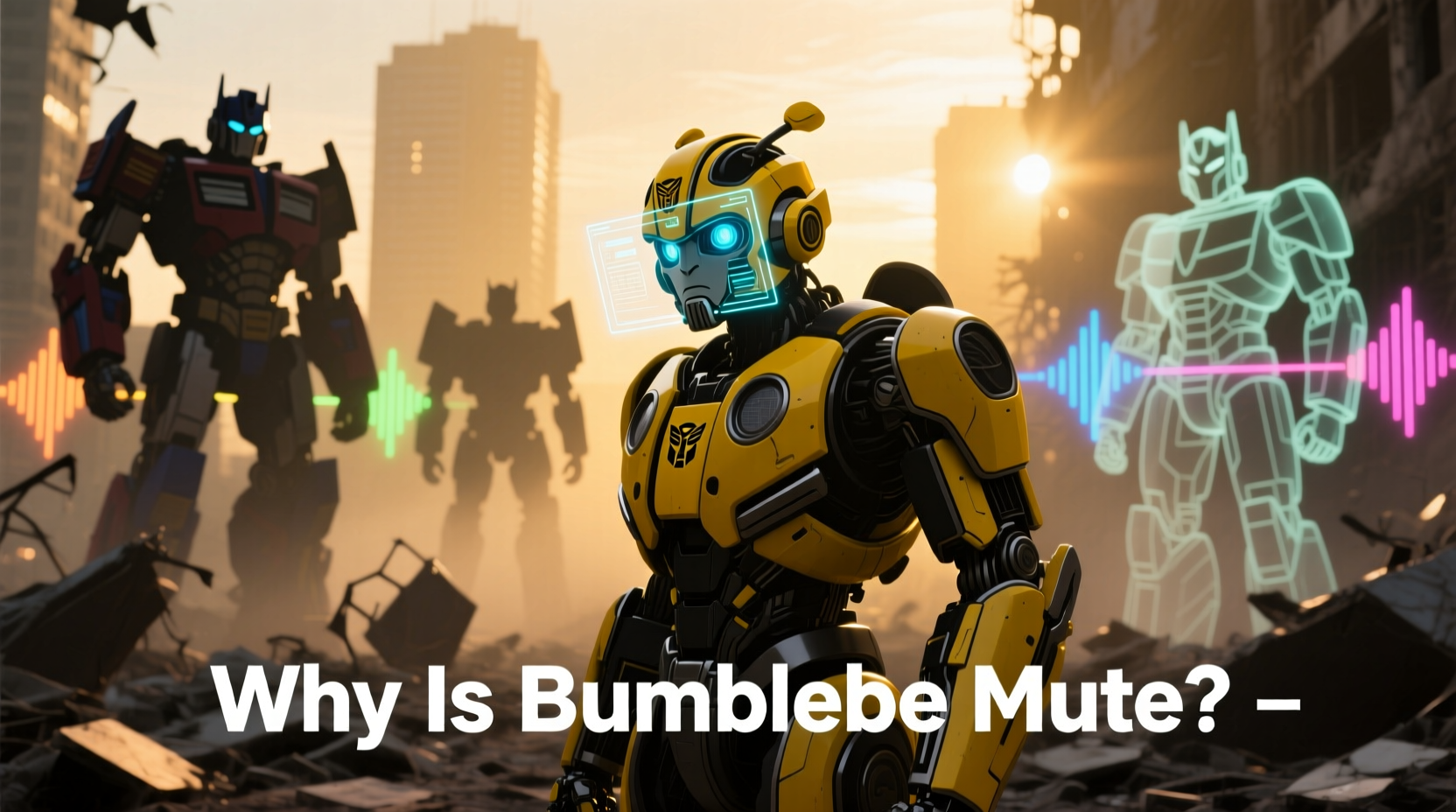
Bumblebee first appeared in the original 1984 Transformers animated series as a small, agile Autobot scout. In early episodes, he spoke with a normal robotic voice, much like other Transformers. However, during a battle with Megatron, Bumblebee sustained severe damage to his vocal processors—a narrative device used to explain his subsequent reliance on radio transmissions and pre-recorded audio snippets to communicate.
This injury wasn't just a plot convenience; it served a symbolic purpose. By stripping Bumblebee of his voice, creators emphasized vulnerability in a world dominated by powerful, aggressive war machines. His muteness made him more relatable to human audiences, especially younger viewers who saw in him a hero capable of courage despite limitations.
Evolution Across Media
The portrayal of Bumblebee’s voice—or lack thereof—has shifted depending on the medium and creative direction:
- Animated Series (1980s–2000s): After initial injury, Bumblebee used short radio bursts and visual cues. Later revivals restored his voice temporarily, but the “damaged vocoder” trope remained central.
- Live-Action Films (2007–present): Michael Bay’s film series rebooted Bumblebee’s muteness as both a tactical limitation and an emotional anchor. His communication via dashboard radio clips became iconic.
- Standalone Film – Bumblebee (2018): This origin story explicitly shows the moment his voice box is destroyed by Shatter and Dropkick, reinforcing the trauma behind his silence.
- Comics (IDW Publishing): Often depict Bumblebee regaining speech after repairs, yet choose to remain mostly silent as a personal tribute to past struggles.
Narrative Purpose of Silence
Muteness in fiction is rarely arbitrary. In Bumblebee’s case, silence functions as a storytelling tool that amplifies empathy, tension, and character depth.
Without traditional dialogue, filmmakers rely on tone, music, and performance to convey emotion. Bumblebee’s head tilts, antenna movements, and vehicle-mode revving become linguistic substitutes. Audiences learn to \"read\" him like a living creature—more pet, sibling, or companion than machine.
“Silence forces us to listen differently. Bumblebee doesn’t need words because his actions scream loyalty.” — Dr. Lena Torres, Narrative Analyst, USC School of Cinematic Arts
In the 2018 Bumblebee film, director Travis Knight leveraged this silence to build a bond between Bumblebee and Charlie Watson, a teenage girl grieving her father. Their relationship develops without verbal exchange, echoing real-life connections formed through shared experience rather than conversation.
Emotional Resonance Through Non-Verbal Communication
Non-verbal storytelling allows for universal understanding. A beep, a flicker of lights, or a well-timed classic rock song can carry emotional weight across cultures. For example:
- Hearing “The Touch” by Stan Bush when Bumblebee transforms into action mode evokes inspiration and nostalgia.
- Playing “Everybody Wants to Rule the World” during a quiet scene underscores themes of longing and belonging.
- Sudden silence after a battle highlights loss and introspection.
This approach mirrors techniques used in silent films and modern visual media where music and timing replace exposition.
Comparison Across Transformers Characters
| Character | Voice Status | Communication Style | Emotional Impact |
|---|---|---|---|
| Bumblebee | Mute (vocal processor damaged) | Radio clips, beeps, body language | High empathy, youthful, vulnerable |
| Optimus Prime | Full voice | Deep, authoritative speech | Leadership, gravitas, moral clarity |
| Ratchet | Full voice | Medical jargon, sarcasm | Professionalism, dry humor |
| Jazz | Full voice | Casual, rhythmic delivery | Coolness, adaptability |
The contrast makes Bumblebee unique. While others command with words, he earns trust through consistency and expression. His silence becomes a strength, not a deficit.
Behind the Scenes: Creative Decisions
The decision to keep Bumblebee mute in live-action films was deliberate. Producer Lorenzo di Bonaventura explained in a 2018 interview that giving Bumblebee a standard voice would dilute his mystique and make him “just another robot.”
Instead, sound designers at Skywalker Sound crafted a vocabulary of electronic chirps, revs, and musical references. Each sound was mapped to emotional states—curiosity, alarm, joy—creating what they called a “mechanical dialect.”
Step-by-Step: How Bumblebee Communicates Without Words
- Identify Intent: The scene determines whether Bumblebee is expressing curiosity, warning, or affection.
- Select Audio Cue: Sound editors choose from a library of beeps, engine revs, or licensed music snippets.
- Sync with Movement: Animators align headlight flashes, door creaks, or tire screeches with audio.
- Contextualize with Environment: Background music fades to highlight Bumblebee’s “voice” during key moments.
- Reinforce Through Repetition: Recurring sounds (e.g., a specific horn honk) become associated with particular emotions.
Mini Case Study: The Beach Scene in Bumblebee (2018)
In a pivotal moment, Charlie attempts to teach Bumblebee how to drive. Frustrated, she yells at him, only for Bumblebee to respond by playing “Back in Black” by AC/DC through his radio. The crowd laughs, tension breaks, and their friendship solidifies.
This scene works because the music replaces apology, humor, and reconciliation—all without a single spoken line. It demonstrates how cultural touchstones (classic rock) can serve as emotional shorthand. Viewers familiar with the song understand Bumblebee’s defiant yet playful attitude instantly.
Frequently Asked Questions
Can Bumblebee speak in any version of the Transformers?
Yes. In several comic book arcs and animated series, Bumblebee undergoes repairs that restore his original voice. However, many versions choose to keep him partially or fully mute for continuity and emotional effect.
Why doesn’t anyone fix Bumblebee’s voice?
Within the story, Autobots lack the necessary parts during wartime. Symbolically, his voice damage represents lasting trauma from conflict. Fixing it might undermine his identity as a resilient survivor.
Is Bumblebee’s muteness realistic for a robot?
From an engineering standpoint, a damaged vocal processor is plausible. But the persistence of the flaw serves narrative goals more than technical accuracy. Like Captain Pike’s wheelchair in Star Trek, it reflects history and resilience.
Checklist: Understanding Silent Characters in Storytelling
- ✅ Identify the reason for silence (injury, choice, design)
- ✅ Develop alternative communication methods (sound, gesture, music)
- ✅ Maintain consistency in non-verbal cues
- ✅ Use silence to enhance emotional scenes
- ✅ Avoid over-relying on exposition to explain intentions
- ✅ Let other characters interpret the silent one’s behavior
Conclusion: Why Silence Speaks Volumes
Bumblebee’s muteness is not a limitation—it’s a narrative superpower. It invites audiences to engage more deeply, to interpret feelings beyond words, and to connect with a character who expresses himself in unconventional ways. In a franchise filled with explosive dialogue and larger-than-life personalities, Bumblebee’s quiet presence reminds us that heroism doesn’t always roar. Sometimes, it beeps, blares a radio tune, or simply rolls up beside you when you’re feeling alone.




 浙公网安备
33010002000092号
浙公网安备
33010002000092号 浙B2-20120091-4
Comments
No comments yet. Why don't you start the discussion?