
It’s a familiar sight every election season: polls close on Tuesday night, but headlines continue to report that California is “still counting votes” for days—or even weeks—after Election Day. To some, this raises questions about delays or transparency. In reality, it reflects a deliberate, legally grounded system designed to ensure accuracy, inclusivity, and integrity in one of the nation’s largest and most diverse electorates.
California doesn’t delay results to obscure outcomes. Instead, its vote-counting process prioritizes completeness. With nearly 20 million registered voters and a strong emphasis on mail-in and provisional ballots, the state follows a methodical timeline to verify and count every eligible vote. Understanding this process helps clarify why final results often take time—and why that’s not only normal but essential.
How California’s Vote Counting Timeline Works
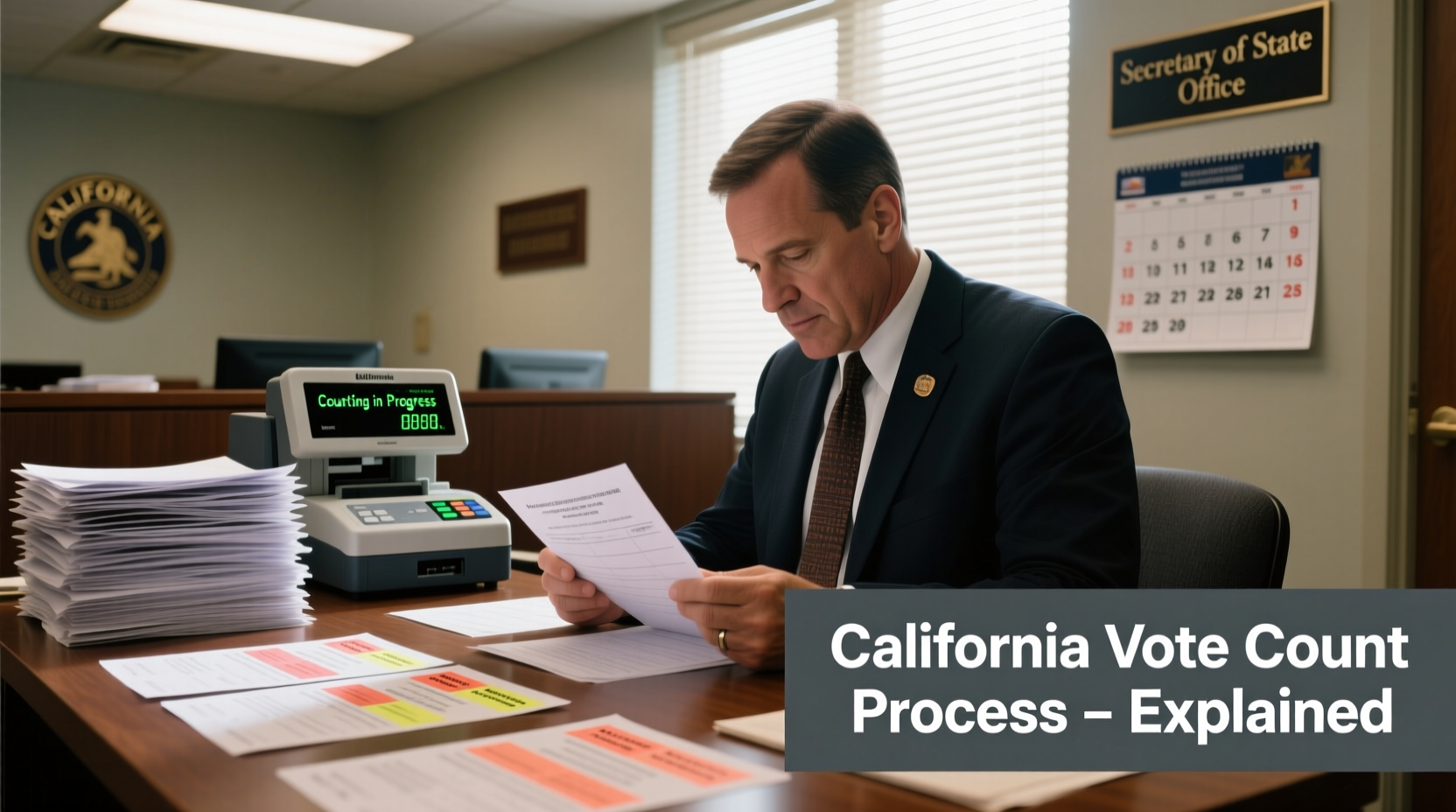
Unlike states that halt processing once polls close, California begins handling ballots well before Election Day. Under state law, election officials can start verifying and pre-processing mail-in ballots as early as 29 days prior to the election. This includes checking signatures, sorting ballots, and preparing them for tabulation—but no actual counting occurs until after polls close at 8:00 PM on Election Day.
Here’s a simplified breakdown of the post-election timeline:
- Election Night (Day 0): In-person ballots cast on Election Day are counted first. A large portion of early mail-in ballots received before Election Day are also processed and reported by midnight.
- Day 1–3: Ballots postmarked by Election Day but arriving later (up to 7 days after) are delivered, verified, and added to the count. These include military, overseas, and domestic late-arriving ballots.
- Day 4–7: County elections offices conduct logic and accuracy testing, finalize adjudication of contested ballots (e.g., signature mismatches), and certify their initial results.
- Day 8–28: The statewide canvass begins. Counties submit certified totals to the Secretary of State, who compiles and audits the data.
- Day 28–30: Official certification of results by the California Secretary of State.
This phased approach ensures that no valid vote is excluded due to logistical delays, especially for those who mailed ballots close to the deadline or voted provisionally.
Why Mail-In Ballots Take Longer to Count
Mail-in voting is central to California’s electoral model. Since 2020, all active voters receive a ballot by mail, though they may still choose to vote in person. While convenient, mail-in ballots require more administrative steps than in-person voting:
- Signature verification against voter registration records
- Postmark validation for late-arriving ballots
- Processing through centralized county facilities rather than precinct scanners
- Adjudication for ballots with unclear marks or damaged forms
Each of these steps takes time and must comply with strict legal standards. For example, if a signature doesn’t match, the voter is notified and given an opportunity to “cure” the discrepancy. This safeguard protects against disenfranchisement while maintaining security.
The Role of the 7-Day Postmark Rule
California allows mail-in ballots to be counted if they are postmarked by Election Day and received within seven days afterward. This policy accommodates postal delays, natural disasters, or last-minute mailing errors. In 2022, over 200,000 ballots arrived during this grace period—each requiring verification before counting.
Critics sometimes frame this as a source of delay, but election administrators view it as a necessary accommodation. As Dana Scherer, Chief Deputy Registrar in San Mateo County, explains:
“Every extra day we have to receive ballots means one more chance for a service member abroad, a college student far from home, or someone without reliable transportation to have their voice heard.” — Dana Scherer, Elections Administrator
County-Level Processing and Variability
California has 58 counties, each operating its own elections office with some variation in staffing, technology, and volume. Urban counties like Los Angeles and San Diego process millions of ballots, while rural counties may handle fewer than 10,000. This decentralization contributes to differences in reporting speed.
For instance, Los Angeles County uses automated systems to pre-process ballots but still requires human review for any discrepancies. Meanwhile, smaller counties may lack the resources for round-the-clock processing, leading to slower updates.
To illustrate, here’s a comparison of three counties’ typical post-election processing pace:
| County | Total Ballots (2022 General) | % Reported on Election Night | Final Certification Date |
|---|---|---|---|
| Los Angeles | 5,710,000 | 62% | December 8 |
| Sacramento | 980,000 | 78% | December 5 |
| Modoc (rural) | 4,800 | 95% | November 21 |
Note that even fast-reporting counties don’t finalize results immediately. All must undergo post-election audits and reconciliation before official certification.
Common Misconceptions About Vote Counting Delays
Several myths persist about why California takes longer to report final results. Addressing them clarifies the reality behind the process:
- Myth: Delays mean something suspicious is happening.
Reality: Extended counting is required by state law and court rulings to protect voting rights. - Myth: Only “doubtful” ballots are counted late.
Reality: Most late-reported ballots are routine mail-ins that simply arrived after Election Day. - Myth: Other states finish faster, so California should too.
Reality: States with earlier deadlines often discard valid ballots. California chooses inclusion over speed.
Mini Case Study: The 2022 Gubernatorial Race
In the 2022 California gubernatorial election, incumbent Governor Gavin Newsom held a commanding lead on election night. However, his margin increased significantly over the following week as millions of mail-in ballots were counted. In some districts, late-arriving ballots shifted the outcome of local races by several percentage points.
One city council race in Long Beach saw the trailing candidate gain over 1,200 votes during the post-election count—enough to overtake the initial leader. The shift wasn’t due to fraud or error, but because the majority of uncounted ballots came from neighborhoods with higher mail-in voting rates and younger demographics.
This case underscores a key point: early results are incomplete snapshots, not final verdicts. The full picture emerges only after all eligible ballots are processed.
What Voters Can Do: Stay Informed and Patient
Understanding the timeline is the first step. Here’s a checklist for voters who want to follow the process responsibly:
- Track your ballot online via CaliforniansVote.com
- Review your county elections website for daily update schedules
- Avoid sharing or reacting to partial results as definitive outcomes
- If you vote by mail, ensure your ballot is signed and postmarked by Election Day
- Respond promptly to any “cure” notices from your county registrar
Frequently Asked Questions
Does counting votes for days mean the election is undecided?
No. Most races are mathematically decided once enough ballots are counted to establish an insurmountable lead. However, official certification requires all ballots to be included, which takes time.
Are provisional ballots counted?
Yes. Provisional ballots are used when a voter’s eligibility is in question (e.g., wrong polling place). Each is reviewed individually, and if valid, it is counted. This process can take up to a week.
Can I trust the results if they change after election night?
Absolutely. Changes reflect the addition of legally cast ballots, not manipulation. California’s system includes multiple layers of audit, observation, and transparency to ensure accuracy.
Conclusion: Patience Is Part of Democracy
California’s extended vote-counting process isn’t a sign of inefficiency—it’s a commitment to fairness. By allowing time for every lawful ballot to be verified and counted, the state upholds the principle that every vote matters, regardless of how or when it was cast.
In an era of instant information, it’s natural to expect immediate results. But democracy isn’t a live scoreboard; it’s a careful, deliberate act of collective decision-making. When you see headlines saying California is “still counting votes,” remember: that’s not a red flag. It’s a promise being kept.




 浙公网安备
33010002000092号
浙公网安备
33010002000092号 浙B2-20120091-4
Comments
No comments yet. Why don't you start the discussion?