
Carbon is more than just the backbone of organic chemistry—it is the very foundation of life on Earth. Without carbon, the complex molecules that define living organisms would not exist. From the DNA in our cells to the food we eat and the fuels we burn, carbon plays a central role in nearly every biological and chemical process. Its unique atomic properties allow it to form stable bonds with itself and other elements, creating the vast diversity of compounds necessary for life. Understanding why carbon is indispensable reveals not only the mechanics of biology but also the delicate balance of Earth’s ecosystems.
The Unique Chemistry of Carbon
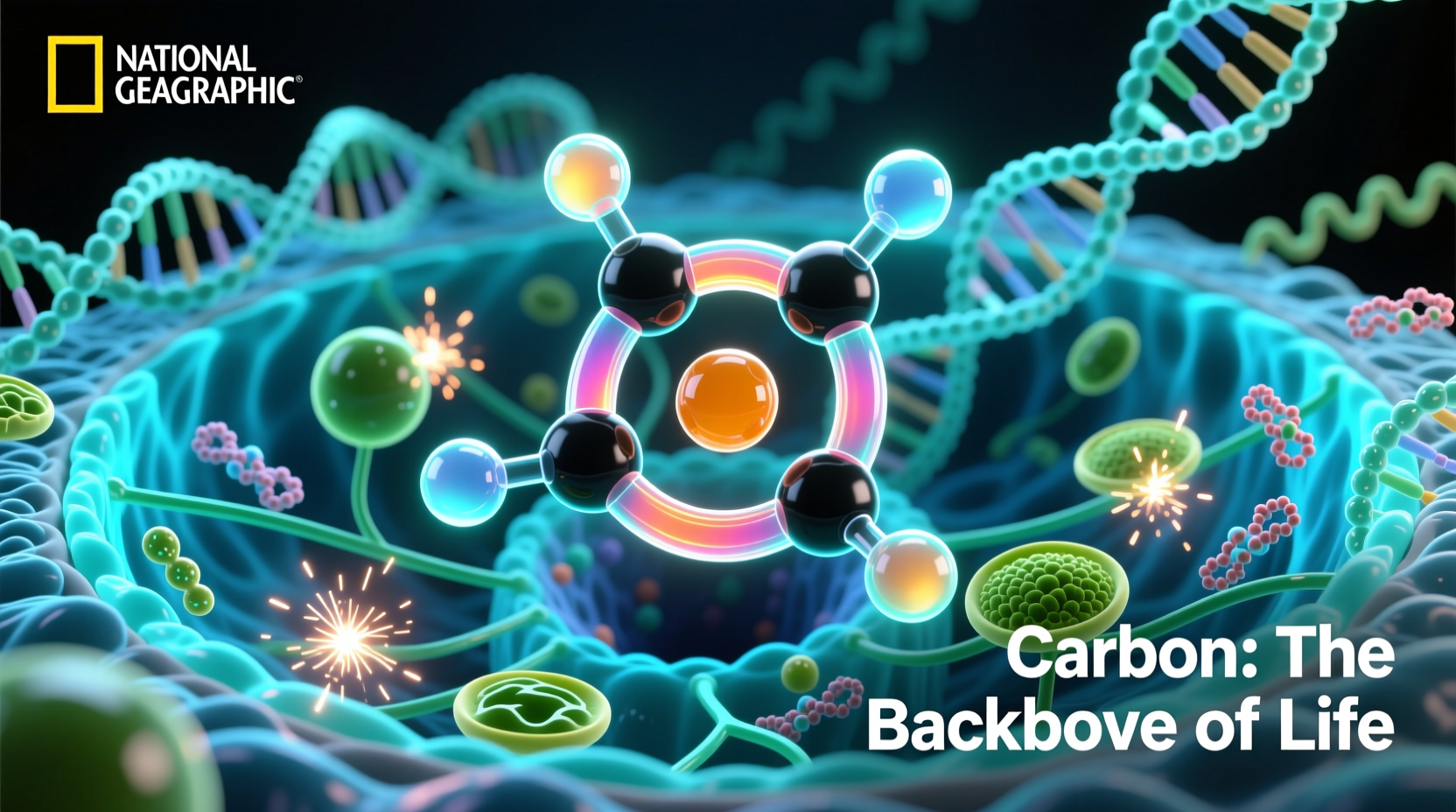
At the atomic level, carbon has four valence electrons, enabling it to form up to four strong covalent bonds with other atoms, including hydrogen, oxygen, nitrogen, and especially other carbon atoms. This ability allows for the creation of long chains, branched structures, and rings—molecular architectures that are essential for biological complexity.
No other element offers the same versatility. Silicon, often proposed as a potential alternative in speculative biology, forms weaker bonds with itself and is less efficient at creating diverse, stable compounds under Earth-like conditions. Carbon’s small atomic size and high electronegativity balance enable it to participate in both polar and non-polar interactions, making it ideal for building proteins, lipids, carbohydrates, and nucleic acids.
Building Blocks of Life: Organic Molecules
All known life forms are based on organic molecules—compounds primarily composed of carbon and hydrogen. These include the four major classes essential to biological function:
- Carbohydrates: Provide energy and structural support (e.g., glucose, cellulose).
- Lipids: Store energy, form cell membranes, and act as signaling molecules (e.g., fats, phospholipids).
- Proteins: Perform structural, enzymatic, and regulatory roles (built from amino acids containing carbon backbones).
- Nucleic Acids: Store and transmit genetic information (DNA and RNA rely on carbon-based sugar-phosphate chains).
Each of these molecules depends on carbon’s ability to form stable, varied structures. For example, the double helix of DNA is held together by hydrogen bonds between nitrogenous bases, all of which are carbon-rich heterocyclic compounds. Without carbon’s tetravalency and bond strength, such intricate information storage would be impossible.
“Life as we know it is carbon-based because no other element can form the stable, diverse, and self-replicating molecular networks required.” — Dr. James Lovelock, Biogeochemist and originator of the Gaia hypothesis
The Carbon Cycle: Sustaining Earth’s Balance
Beyond individual organisms, carbon circulates through Earth’s biosphere, atmosphere, hydrosphere, and geosphere in a dynamic process known as the carbon cycle. This cycle regulates climate, supports food webs, and maintains atmospheric composition.
Plants absorb carbon dioxide during photosynthesis, converting it into glucose and releasing oxygen. Animals consume plants, incorporating carbon into their tissues. When organisms die, decomposers return carbon to the soil or atmosphere. Over geological time, some carbon becomes fossilized, forming coal, oil, and natural gas—reservoirs that, when burned, release CO₂ back into the air.
| Process | Role in Carbon Cycle | Human Impact |
|---|---|---|
| Photosynthesis | Removes CO₂ from atmosphere | Deforestation reduces capacity |
| Respiration | Releases CO₂ back into air | Increased with population growth |
| Combustion | Releases stored carbon rapidly | Major driver of climate change |
| Sedimentation | Buries carbon in rocks/oil | Disrupted by mining and drilling |
This cycle maintains a balance that has supported life for billions of years. However, human activities—especially fossil fuel combustion and land-use changes—have accelerated carbon release, disrupting this equilibrium and contributing to global warming.
Real-World Example: The Amazon Rainforest
The Amazon rainforest acts as one of Earth’s largest carbon sinks, absorbing approximately 2 billion tons of CO₂ annually. Its dense vegetation captures atmospheric carbon through photosynthesis, storing it in biomass and soil. However, widespread deforestation for agriculture and logging is reversing this effect. In some regions, the Amazon now emits more carbon than it absorbs due to forest fires and decomposition of cleared biomass.
This shift illustrates how vital intact ecosystems are for carbon regulation. When forests are destroyed, not only is stored carbon released, but the planet loses a critical mechanism for sequestering future emissions. Conservation efforts in the Amazon are therefore not just about biodiversity—they are essential for stabilizing the global carbon cycle.
Carbon in Energy and Industry
Carbon is also central to human energy systems. Fossil fuels—coal, oil, and natural gas—are hydrocarbons formed from ancient organic matter. Their high energy density comes from carbon-carbon and carbon-hydrogen bonds, which release energy when broken during combustion.
While these fuels have powered industrial development, their use underscores a paradox: the same element that sustains life also threatens it when mismanaged. Transitioning to renewable energy sources like solar and wind reduces reliance on carbon-based fuels, helping mitigate climate disruption while preserving carbon’s beneficial roles in biology.
Checklist: Supporting Sustainable Carbon Use
- Reduce fossil fuel consumption through public transit or electric vehicles.
- Support reforestation and conservation initiatives.
- Adopt a plant-rich diet to lower carbon footprint from livestock.
- Recycle organic waste via composting to return carbon to soil.
- Advocate for clean energy policies and carbon pricing.
Frequently Asked Questions
Can life exist without carbon?
Based on current scientific understanding, life as we know it cannot exist without carbon. While hypothetical alternatives like silicon-based life have been explored in science fiction, silicon lacks the chemical versatility and bond stability of carbon under Earth-like conditions. No naturally occurring self-replicating, complex systems have been found that do not rely on carbon.
Why is carbon called the “backbone of life”?
Carbon earns this title because it forms the core structure of nearly all biological molecules. Its ability to create long, stable chains and rings allows for the complexity needed in proteins, DNA, and cellular components. Other elements play crucial roles, but none match carbon’s structural and functional centrality.
How does carbon affect climate change?
Carbon dioxide (CO₂) is a greenhouse gas that traps heat in the atmosphere. Human activities, especially burning fossil fuels and deforestation, have increased atmospheric CO₂ levels by over 50% since the Industrial Revolution. This excess carbon disrupts Earth’s energy balance, leading to global warming, extreme weather, and ocean acidification.
Conclusion: Honoring Carbon’s Dual Role
Carbon is both the essence of life and a key player in planetary health. It builds the molecules that make us who we are, drives ecological cycles that sustain ecosystems, and powers civilizations—yet it also demands responsible stewardship. Recognizing carbon’s irreplaceable role should inspire greater care in how we manage its flow through nature and industry.
By protecting forests, reducing emissions, and supporting sustainable practices, we honor carbon not just as an element, but as the thread connecting all living things. The future of life on Earth depends on understanding—and respecting—its fundamental chemistry.




 浙公网安备
33010002000092号
浙公网安备
33010002000092号 浙B2-20120091-4
Comments
No comments yet. Why don't you start the discussion?