
In recent months, Cardano (ADA) has re-emerged as one of the most watched cryptocurrencies in the market. After a prolonged bear phase, ADA has shown consistent upward momentum, sparking renewed interest among investors and analysts alike. But what’s driving this resurgence? Is it sustainable? And where could the price go next? This article dives deep into the catalysts behind Cardano’s price increase, analyzes on-chain and macroeconomic data, and offers grounded price predictions based on current trends and historical patterns.
Fundamental Drivers Behind Cardano’s Price Surge
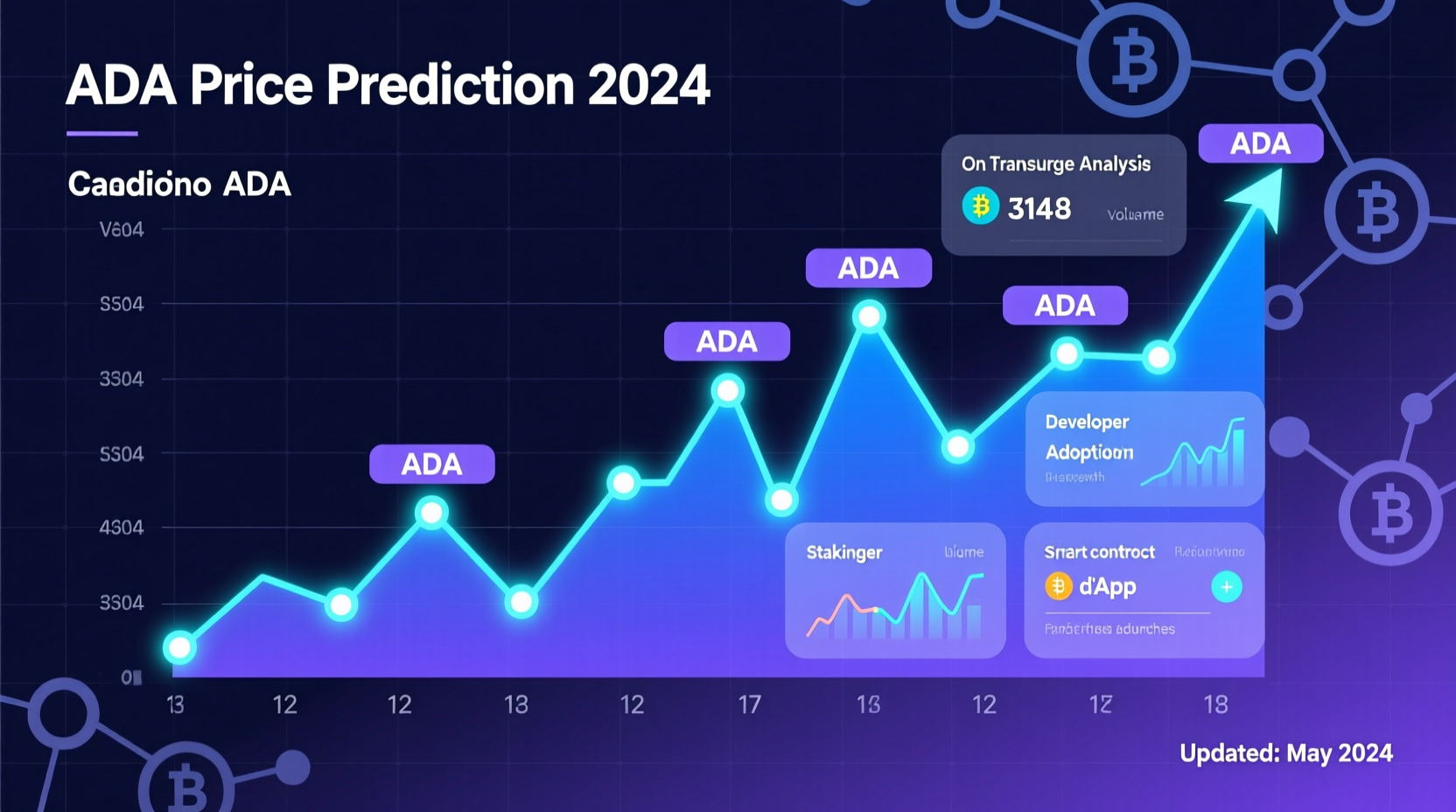
The rise in Cardano’s price isn’t solely speculative—it stems from a confluence of technical upgrades, ecosystem growth, and broader market sentiment shifts. Unlike meme coins driven purely by hype, Cardano’s value proposition is rooted in long-term development and academic rigor.
- Hydra Layer-2 Scaling Solution: The rollout of Hydra, Cardano’s layer-2 scaling protocol, has significantly improved transaction throughput. With each node capable of processing up to 1,000 transactions per second, network efficiency has increased, making ADA more attractive for decentralized applications (dApps).
- Ecosystem Expansion: Over 1,500 dApps are now live on Cardano, including DeFi platforms like Minswap and SundaeSwap, along with NFT marketplaces and identity solutions such as Atala Prism. Increased utility drives demand for ADA as a staking and transactional asset.
- Staking Adoption: More than 70% of circulating ADA is currently staked—a sign of strong holder confidence. High staking rates reduce liquid supply, creating structural scarcity that supports price appreciation.
Market Sentiment and Macro Catalysts
Beyond internal developments, external factors have played a crucial role in boosting investor appetite for ADA.
The approval of spot Ethereum ETFs in mid-2024 indirectly benefited altcoins like Cardano by legitimizing smart contract platforms in the eyes of institutional investors. As capital flows into Ethereum, spillover demand has reached other proof-of-stake blockchains perceived as undervalued.
Additionally, the U.S. Federal Reserve’s dovish pivot—slowing quantitative tightening and signaling potential rate cuts—has reignited risk-on behavior in crypto markets. Lower interest rates reduce the opportunity cost of holding non-yielding assets, making cryptocurrencies more appealing.
“Cardano’s combination of peer-reviewed research and real-world deployment puts it in a unique position among layer-1 blockchains.” — Dr. Linda Lin, Blockchain Economist at Delphi Digital
Price Prediction Analysis: 2024–2025 Outlook
Predicting cryptocurrency prices involves balancing technical indicators, adoption curves, and macroeconomic variables. Below is a data-driven forecast for ADA across three scenarios.
| Year | Conservative Estimate | Base Case | Bull Case |
|---|---|---|---|
| 2024 Q3 | $0.65 | $0.75 | $0.90 |
| 2024 Year-End | $0.80 | $1.05 | $1.40 |
| 2025 Mid-Year | $1.10 | $1.60 | $2.25 |
These projections assume continued progress on scalability, stable regulatory clarity, and sustained bullish momentum in the broader crypto market. A failure to deliver key upgrades or a prolonged macro downturn could delay or negate these targets.
Technical Indicators Supporting Growth
On-chain analytics reinforce optimism. The 50-day moving average recently crossed above the 200-day (a “golden cross”), a historically reliable bullish signal. Relative Strength Index (RSI) remains in neutral territory (around 62), suggesting upward room before overbought conditions set in.
Moreover, exchange outflows have accelerated—over 300 million ADA moved to cold wallets in Q2 2024—indicating long-term holding behavior rather than short-term speculation.
Step-by-Step: How to Evaluate Cardano’s Future Potential
Investors should adopt a structured approach when assessing ADA’s trajectory. Follow this timeline to make informed decisions:
- Week 1: Review Cardano’s GitHub activity and roadmap updates. High commit frequency signals active development.
- Week 2: Analyze on-chain metrics using tools like Cointext or CardanoScan. Track active addresses, transaction volume, and staking participation.
- Week 3: Compare ADA’s valuation to peers (e.g., Polkadot, Solana) using P/F (price-to-fees) and NVT (network value to transactions) ratios.
- Month 2: Monitor macroeconomic indicators—Fed policy, inflation data, and BTC dominance—to gauge overall market risk appetite.
- Ongoing: Subscribe to IOG (Input Output Global) newsletters and community forums for early insights into upcoming upgrades.
Common Risks and Challenges Ahead
Despite positive momentum, several risks could cap gains or trigger corrections.
- Competition: Blockchains like Sui, Aptos, and even Ethereum post-upgrades offer high speed and low fees, challenging Cardano’s niche.
- Regulatory Uncertainty: If global regulators classify ADA as a security, it could restrict trading access and dampen institutional investment.
- Development Pace: While methodical, Cardano’s slow rollout can frustrate users expecting rapid innovation.
Real-World Example: How One Investor Capitalized on ADA’s Momentum
In early 2023, Maria, a fintech analyst from Lisbon, began dollar-cost averaging into ADA at $0.28. She didn’t chase pumps but focused on milestones: she increased her buys after the Vasil hard fork and again following the first Hydra demo.
By mid-2024, she had built a 50,000 ADA position. When the price hit $0.70, she took partial profits (selling 20%) to lock in gains while maintaining core exposure. Her strategy combined patience, milestone tracking, and disciplined rebalancing—proving that consistent, informed investing beats timing the market.
Checklist: Preparing for Cardano’s Next Growth Phase
Use this checklist to ensure you're positioned effectively whether you’re new to ADA or expanding your holdings:
- ✅ Verify your wallet supports native tokens and NFTs (Daedalus or Yoroi recommended)
- ✅ Delegate ADA to a reputable stake pool with low fees and consistent uptime
- ✅ Enable transaction alerts via blockchain explorers
- ✅ Set price alerts at key levels ($0.80, $1.00, $1.50)
- ✅ Review tax implications of staking rewards in your jurisdiction
- ✅ Stay updated through official channels—avoid misinformation on social media
Frequently Asked Questions
What makes Cardano different from other blockchains?
Cardano stands out due to its research-first approach. Every upgrade undergoes academic peer review before implementation. It also uses a provably secure proof-of-stake consensus (Ouroboros), which is more energy-efficient than proof-of-work systems.
Can Cardano reach $5 in the next two years?
Reaching $5 by 2026 would require a market cap exceeding $1.7 trillion—larger than Bitcoin’s peak. While not impossible in a hyper-bull scenario, it’s highly unlikely under current adoption curves. A more realistic ceiling for 2025 is $2.25 barring black-swan events.
Is staking ADA safe?
Yes. Staking does not lock your funds or transfer ownership. You retain full control of your ADA and can unstake at any time. Just ensure you use trusted wallets and never share your recovery phrase.
Final Thoughts and Call to Action
Cardano’s recent price increase reflects more than just market cycles—it signals growing confidence in its technology and long-term vision. While volatility remains inherent to crypto, ADA’s fundamentals are stronger now than at any point since its 2021 peak.
Whether you're an investor, developer, or observer, the time to engage thoughtfully is now. Don’t follow the crowd blindly. Do your research, assess risk tolerance, and build a strategy aligned with real-world adoption—not just price charts.




 浙公网安备
33010002000092号
浙公网安备
33010002000092号 浙B2-20120091-4
Comments
No comments yet. Why don't you start the discussion?