
The foundation of modern biology rests on a simple yet profound idea: all living things are composed of cells. This concept, known as cell theory, is more than just a scientific observation—it’s a unifying principle that shapes how we understand life itself. From the tiniest bacterium to the largest blue whale, every organism operates within the framework established by this theory. Its significance extends beyond textbooks; it influences medical research, biotechnology, evolutionary studies, and even our understanding of disease. To truly appreciate biology, one must first grasp why cell theory matters, what it defines, and how it revolutionized science.
What Is Cell Theory? A Clear Definition
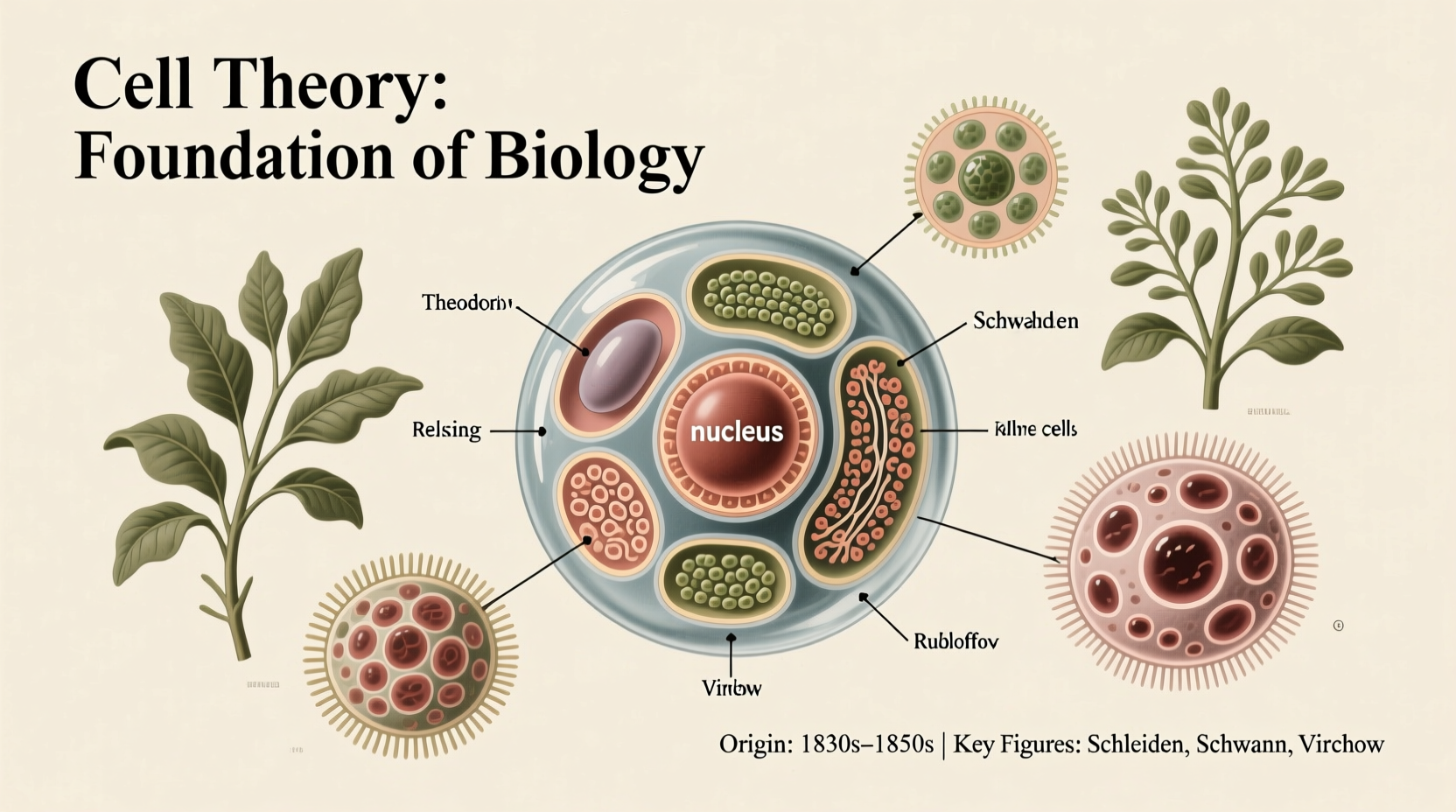
Cell theory is a scientific principle that outlines the fundamental characteristics of cells and their role in life. It consists of three core tenets:
- All living organisms are composed of one or more cells.
- The cell is the basic structural and functional unit of life.
- All cells arise from pre-existing cells through division.
These statements may seem straightforward today, but they were groundbreaking when formulated in the 19th century. Before microscopes revealed the microscopic world, people had no concept of cells. The development of cell theory bridged the gap between observable anatomy and invisible biological processes, laying the groundwork for cellular and molecular biology.
The theory applies universally—whether studying plants, animals, fungi, or microorganisms. Even viruses, which lack cellular structure, are understood in contrast to cells, further emphasizing the centrality of the cell in defining life.
Historical Development: How Cell Theory Emerged
The journey to establishing cell theory was a collaborative effort spanning decades and continents. It began in 1665 when Robert Hooke, an English scientist, examined a thin slice of cork under a primitive microscope. He observed tiny box-like structures, which he called “cells” due to their resemblance to monks’ living quarters. Though Hooke only saw dead cell walls, his discovery marked the beginning of cellular exploration.
A century later, advancements in microscopy allowed scientists like Anton van Leeuwenhoek to observe living cells in pond water, blood, and sperm. These observations hinted at a hidden world teeming with microscopic life. However, it wasn’t until the 1830s that German botanist Matthias Schleiden and zoologist Theodor Schwann proposed that both plants and animals are made of cells, forming the basis of the first two principles of cell theory.
Rudolf Virchow, another German physician, completed the triad in 1855 with the declaration \"Omnis cellula e cellula\" (“All cells come from cells”), rejecting the then-popular idea of spontaneous generation. His work cemented the third pillar of cell theory and reinforced the continuity of life at the cellular level.
“Every animal appears to be a community of cells… acting together in harmony.” — Theodor Schwann
Why Is Cell Theory Significant? Five Key Reasons
The importance of cell theory cannot be overstated. It serves as the cornerstone of biological sciences for several compelling reasons:
1. Unifies All Life Forms
Despite the vast diversity of life—ranging from single-celled amoebas to complex mammals—all organisms share the same basic building block: the cell. This universality allows scientists to study simpler organisms (like yeast or bacteria) to gain insights into human biology, accelerating discoveries in genetics, metabolism, and disease mechanisms.
2. Guides Medical Advancements
Understanding that diseases originate at the cellular level has transformed medicine. Cancer, for instance, is now recognized as uncontrolled cell division. Infections are studied in terms of how pathogens invade or disrupt host cells. Treatments such as chemotherapy, antibiotics, and gene therapy are designed based on cellular function and dysfunction.
3. Enables Biotechnological Innovation
Technologies like cloning, stem cell therapy, and CRISPR gene editing rely entirely on manipulating cells. Without the conceptual framework of cell theory, these breakthroughs would lack direction. Scientists can reprogram cells, grow tissues in labs, and engineer microbes to produce insulin—all because they operate under the assumption that cells are the functional units of life.
4. Supports Evolutionary Biology
Comparative cell biology reveals evolutionary relationships. Similarities in organelles, DNA structure, and metabolic pathways across species support common ancestry. For example, mitochondria in human cells resemble free-living bacteria, providing evidence for the endosymbiotic theory of evolution.
5. Establishes Scientific Rigor
Cell theory replaced speculative ideas about life (such as vitalism or spontaneous generation) with testable, evidence-based principles. It set a precedent for using observation, experimentation, and peer review in biology—practices that define modern science.
Practical Applications: A Mini Case Study
Consider the development of the polio vaccine. In the mid-20th century, researchers needed a way to grow the virus safely for testing. Thanks to cell theory, they knew viruses require living host cells to replicate. Dr. Jonas Salk used cultured monkey kidney cells to propagate the poliovirus, then inactivated it to create a vaccine. This approach succeeded because scientists understood cells not only as structural units but also as functional systems capable of supporting viral life cycles.
This real-world application demonstrates how theoretical knowledge translates into life-saving solutions. Without the acceptance of cell theory, such targeted biomedical research would have been impossible.
Common Misconceptions and Clarifications
Despite its widespread acceptance, misunderstandings about cell theory persist. Below is a table addressing frequent errors and corrections:
| Misconception | Clarification |
|---|---|
| Cells can appear spontaneously from non-living matter. | No—cell theory explicitly states that all cells come from existing cells. Spontaneous generation has been disproven. |
| Viruses are considered cells. | No—viruses lack cellular structure and cannot reproduce independently. They challenge but do not invalidate cell theory. |
| All cells look the same. | While all cells share basic components, they vary widely in shape, size, and function (e.g., neurons vs. red blood cells). |
| Only multicellular organisms have specialized cells. | Even unicellular organisms exhibit functional specialization through internal structures like flagella or vacuoles. |
Step-by-Step: How to Apply Cell Theory in Learning Biology
Students and educators can use cell theory as a lens to explore broader biological concepts. Follow this sequence to deepen understanding:
- Observe: Use microscopes to examine plant and animal cells. Identify nuclei, membranes, and cytoplasm.
- Compare: Contrast prokaryotic and eukaryotic cells. Note similarities reinforcing common descent.
- Connect: Link cell functions (like respiration or protein synthesis) to organ and system-level activities.
- Infer: Analyze diseases (e.g., cystic fibrosis) by tracing defects back to cellular mechanisms.
- Extend: Explore exceptions (like syncytia in muscles) to refine—not reject—the theory.
Frequently Asked Questions
Does cell theory apply to all forms of life?
Yes, with the exception of viruses, which are not considered alive by most definitions. All recognized living organisms—from archaea to trees to humans—are composed of cells and conform to cell theory.
Are there any exceptions to cell theory?
A few apparent exceptions exist, such as skeletal muscle fibers (which are multinucleated and form from fused cells) and certain giant algae like Acetabularia. However, these do not disprove the theory; instead, they illustrate variations within its framework. Even these cases originate from pre-existing cells.
How did technology influence the development of cell theory?
Microscopy was essential. Early light microscopes enabled the initial discovery of cells. Later improvements in magnification and staining techniques allowed scientists to see subcellular structures, validating the complexity within the “basic unit” of life.
Conclusion: Embracing the Foundation of Life Science
Cell theory is not merely a historical milestone—it remains a dynamic and essential framework in contemporary science. It provides clarity in a complex world, offering a consistent model to investigate health, disease, evolution, and biotechnology. By recognizing that life operates at the cellular level, researchers and students alike gain a powerful tool for inquiry and innovation.
Understanding why cell theory is significant goes beyond academic interest. It empowers us to make informed decisions about healthcare, environmental issues, and ethical questions in genetic engineering. As science advances, the principles of cell theory continue to guide discovery, reminding us that even the most complex systems begin with something remarkably small.




 浙公网安备
33010002000092号
浙公网安备
33010002000092号 浙B2-20120091-4
Comments
No comments yet. Why don't you start the discussion?